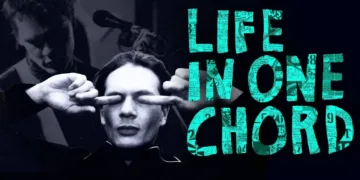


























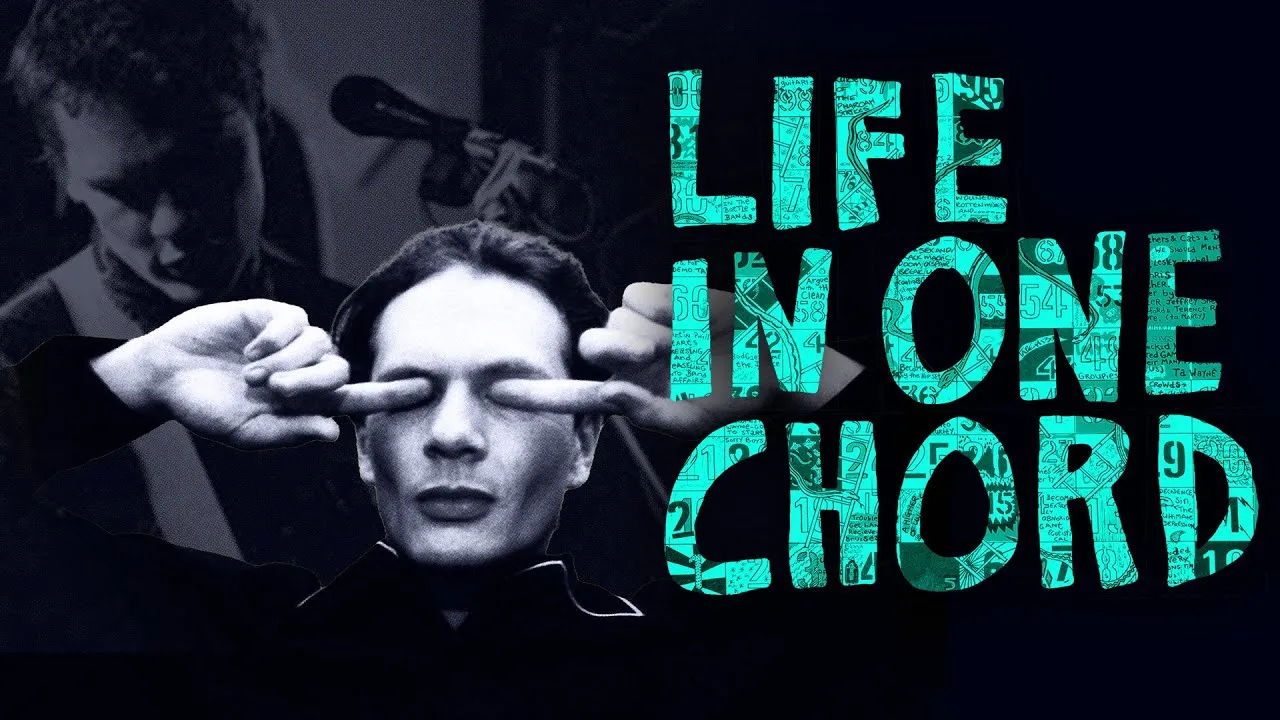

Margaret Gordon’s Life in One Chord offers a candid and often exhilarating study of Shayne Carter, tracking both the life and the music of a central figure in the New Zealand scene. Carter, whose work with bands such as Straitjacket Fits and Dimmer defined a significant slice of the Dunedin Sound era, comes across as a songwriter driven by volatile energy and a sharply honed sense of melody.
The documentary shapes itself around his recent memoir, Dead People I Have Known, using its anecdotes and reflections as a chronological spine. The tone stays self-aware and conversational, which suits an intimate portrait of a musician who treats his own story with a mix of honesty and wry distance.
Gordon charts his path from adolescent punk experiments to influential later projects and presents a career marked by constant evolution and an unwavering commitment to an abrasive personal vision. The film serves as a vital retrospective on an artist whose impact on local music warrants wider recognition.
The Architecture of the Misfit
The film excels when it studies Carter’s personality in close detail and links that study to the emotional charge of his songs. On camera he is an absorbing presence, with a distinctly cynical yet self-aware humor. One key example is his suggestion that broadcaster Carol Hirschfeld should read passages from his memoir, a move that undercuts any sense of solemn hagiography and highlights his resistance to self-aggrandizement.
Gordon builds a clear connection between his personal history and his status as a perpetual outsider. The documentary lays out the circumstances that shaped this identity: a difficult childhood with an alcoholic mother and a violent stepfather, and the experience of being part-Māori raised in a Pākehā environment. Friends and peers, including Francisca Griffin and John Collie, speak plainly about his fractious nature and temper, and their testimony supports the film’s refusal to soften his more abrasive traits.
This character portrait gains weight when the film turns to early trauma, particularly the accidental death of his childhood friend and Double Happys bandmate, Wayne Elsey, known as Randolph. The emotional shock of that event comes through with force, and it explains the deep melancholy that runs through Carter’s work.
The documentary singles out the song “Randolph’s Going Home” as a direct, formative response to the loss, a piece of music that channels grief into structure and sound. Here the viewer feels how his writing functions as a mechanism for processing some of life’s most devastating experiences. The sequence invites a strong emotional response and shows how biographical detail can intensify the way the art lands.
From Jangle-Pop to Abrasive Vision
Gordon maps Carter’s musical progression with a careful sense of cause and effect, presenting a writer who refuses to settle. The early stages sit in the raw, youthful punk of Bored Games, then move into the foundational indie rock of Double Happys with Elsey. These bands place him firmly inside the 1980s Dunedin Sound, next to contemporaries like The Clean and The Chills. His most widely known period arrives with Straitjacket Fits, where his “spikier material” plays against Andrew Brough’s lighter, Byrds-inspired jangle-pop.
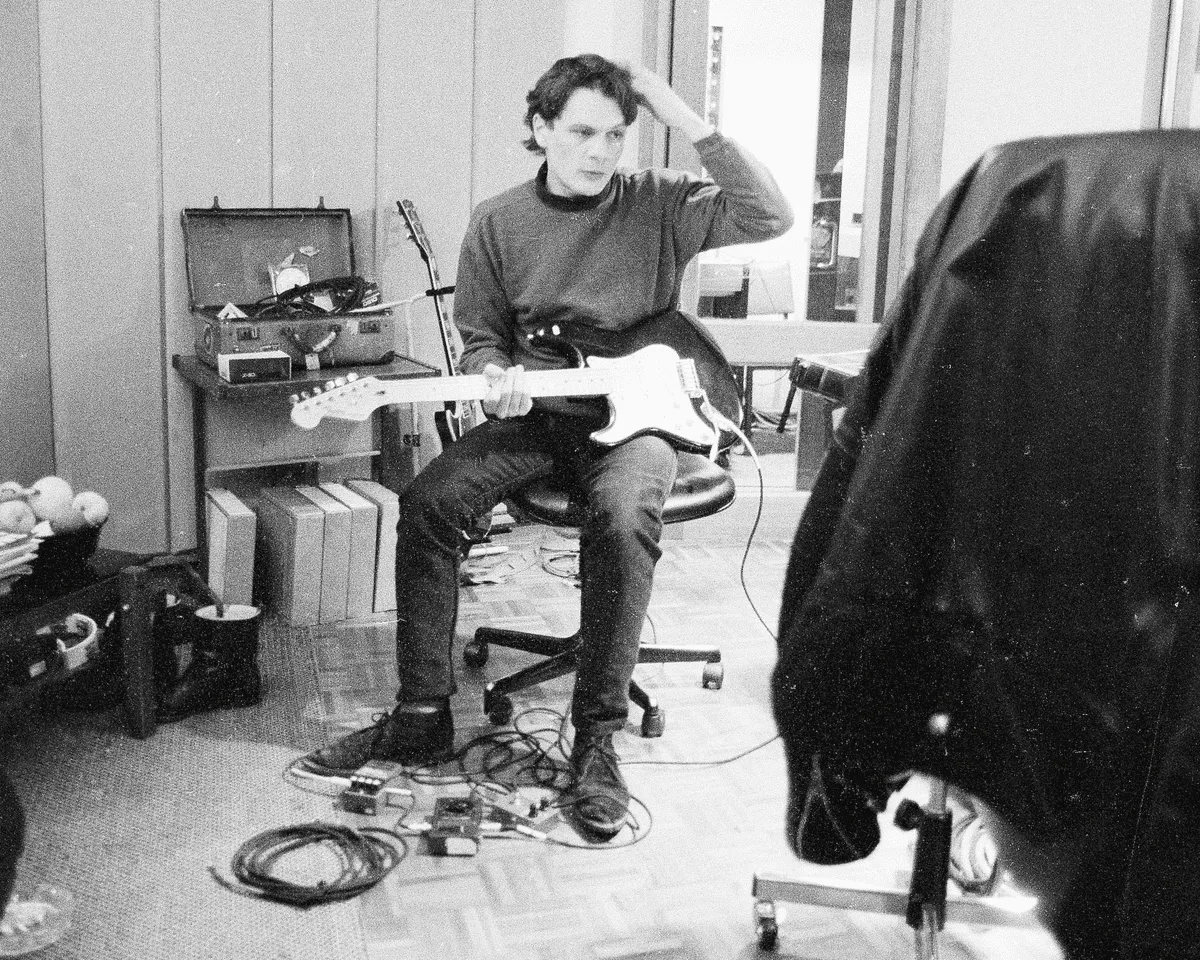
That sweet and sour contrast drives the band’s critical acclaim and feeds the international hype, hinting at arena-scale possibilities that never quite materialize. The documentary traces how creative tensions erode that balance and lead to Brough’s departure, a turning point that removes a key element from the group’s sound.
After this, Carter’s shift to Dimmer illustrates his uncompromising artistic will. Tracks like “Crystalator” lean into an abrasive, deeply personal sound that the film frames as either evidence of a maverick streak or a kind of calculated self-sabotage that keeps mainstream success at arm’s length. The documentary also pays close attention to performance footage.
A sequence of Straitjacket Fits playing in driving rain, continuing through the set while the threat of electrocution hangs over the stage, stands out as a highlight. The image of the band powering through the storm captures their raw intensity and offers an emotional sense of what this cult favorite group might have become on a larger scale.
Cinematic Rhythm and Structural Depth
Margaret Gordon shapes the documentary with a layered, collage-like aesthetic that mirrors Carter’s multifaceted career. The film works with familiar tools such as retrospective interviews and archival performance clips, then threads in more personal structural devices. Carter leads a wry tour through his old Dunedin neighborhoods, and these streets and houses trigger memories that anchor his musical story in modest suburban spaces.
The choice to have Carol Hirschfeld read from the memoir gives the film a steady structural through-line and binds his written voice to the chronological arc of the narrative. This approach keeps the pacing clear and the sense of forward movement strong. The structure can feel loose at first. Carter’s candid, magnetic presence quickly becomes the engine that pulls the viewer through his history.
The decision to include commentary from the late Andrew Brough functions as an essential counterweight to Carter’s account, since Brough can voice his disappointment about his time in Straitjacket Fits in his own words. The closing stretch of the film stands out for both craft and emotional impact.
Gordon finishes on a mock-positive exchange in which Carter laughs and claims to have reached a state of “magnificent resolution”, then immediately undercuts that claim by telling the director he will return to his “dark” self the following week. This final beat captures the restless nature of the artist and suggests that the urge to create, for figures like Carter, remains tied to a continual state of internal friction.
Life in One Chord is a compelling documentary that dives into the life and career of New Zealand musician Shayne Carter, best known as the frontman of seminal bands like Straitjacket Fits and Dimmer. The film premiered in August 2025 at the New Zealand International Film Festival (NZIFF). Directed by Margaret Gordon, the documentary uses Carter’s memoir, Dead People I Have Known, as its foundation to explore his upbringing, his part in the influential Dunedin Sound movement, and the complex, uncompromising artistic vision that defined his music. As of today, December 3, 2025, the film is showing at select cinemas and film festivals in New Zealand and Australia, and its general release schedule for other platforms may vary.
Full Credits
Title: Life in One Chord
Distributor: Madman Films, Ridinghat Films, Belmont Productions
Release date: August 2025 (World Premiere at NZIFF)
Rating: M
Running time: 93 minutes, 94 minutes
Director: Margaret Gordon
Writers: Margaret Gordon (Story), Shayne Carter (Memoir Dead People I Have Known)
Producers and Executive Producers: Margaret Gordon, Rick Harvie
Cast: Shayne Carter, Carol Hirschfeld (Narrator), John Collie, Andrew Brough, David Kilgour, Hamish Kilgour, Chris Knox, Martin Phillipps, Leslie Paris, Natasha Griffiths, Roger Shepherd, Peter Jefferies
Director of Photography (Cinematographer): James Ellis
Editors: Patrick McCabe
Composer: Jackson Harry
The Review
Life in One Chord
Life in One Chord is a powerful and necessary documentary for anyone interested in the raw mechanics of creative life and the New Zealand indie scene. It uses a compelling narrative structure, driven by Shayne Carter's complex, uncompromising personality, to explore how trauma and an outsider identity shape artistic output. The film excels in showcasing vibrant archival footage and providing an honest, warts-and-all account of a cult artist. It's a candid and emotionally resonant portrait of an enduring musical force.
PROS
- Offers an unusually frank, self-aware, and complex portrait of Shayne Carter.
- Effectively handles the inclusion of personal trauma, particularly the death of Wayne Elsey, linking it directly to the music's depth.
- The live clips, especially the intense Straitjacket Fits performance, are energetic and compelling.
- Uses Carter's memoir and various stylistic elements to create a cohesive, fast-paced history.
- Gives essential context to an influential figure often underappreciated on the global stage.
CONS
- The emphasis on Carter's difficult nature can be intense, as acknowledged by his peers in the film.
- While essential for fans, the deep focus on the Dunedin Sound scene may require some pre-existing knowledge for non-Kiwi viewers to fully grasp the wider context.