



























![Kingdom Hearts Collection [I-III] Review](https://gazettely.com/wp-content/uploads/2026/10/Kingdom-Hearts-Collection-I-III-1-360x180.webp "Kingdom Hearts Collection [I-III] Review: KHII Holds Steady as Newer Entries Fluctuate 40")
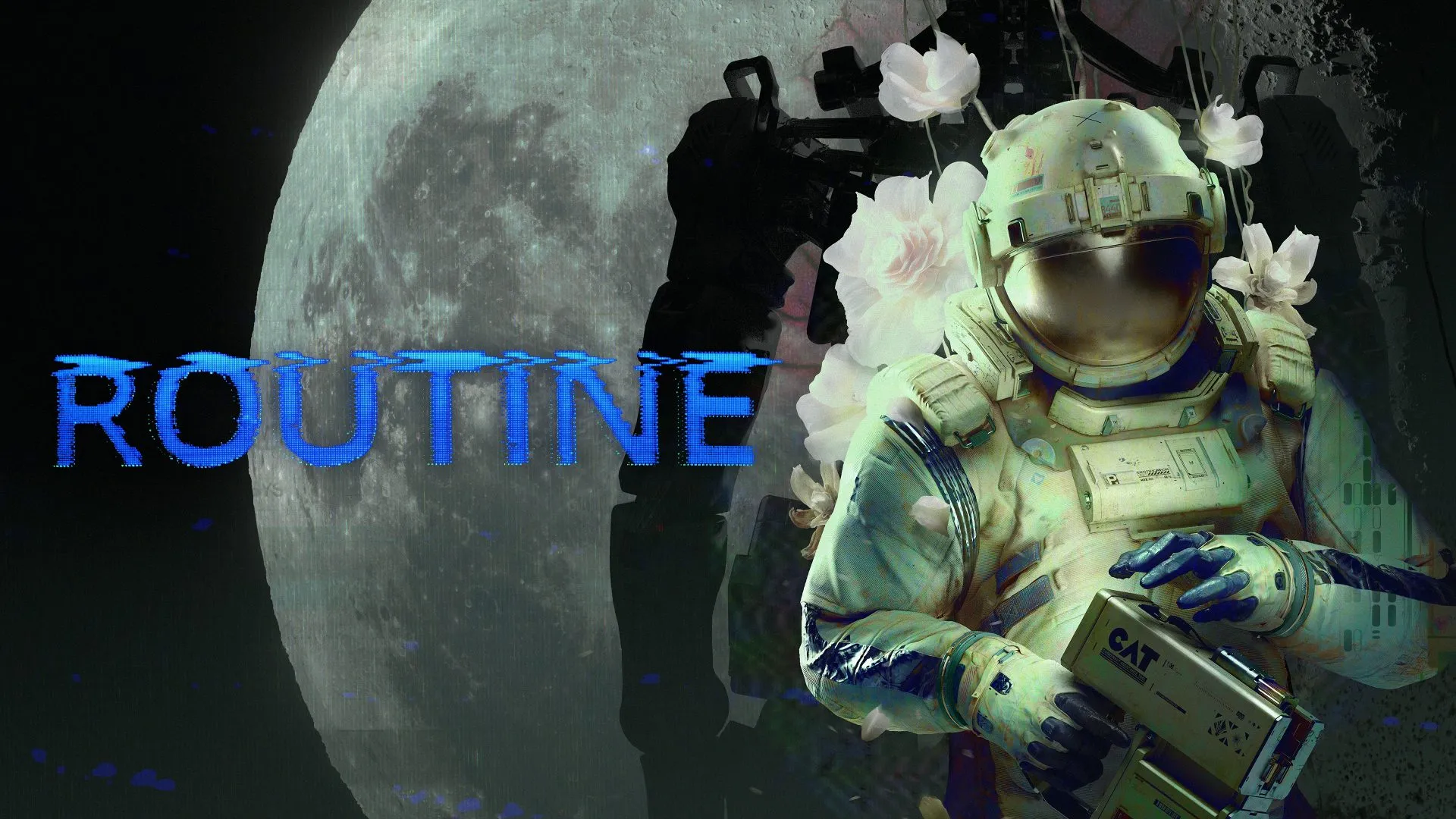

A broken ID badge, dragged from the dust beneath a printer, opens the assignment. The player takes on the role of a Space Engineer, a blue-collar worker sent to the sprawling Union Plaza lunar base to diagnose what should be a routine system malfunction. The maintenance call quickly exposes a scene of stark abandonment. The station feels vast, silent, and drained of life, as if activity has been violently cut off in an instant.
This first stretch positions ROUTINE as a focused first-person sci-fi horror game that anchors itself in stealth and evasion-focused play, with combat fantasy largely absent from the design. The experience strips away conventional heroics and pushes the player into a survival mindset.
Union Plaza itself functions as a crafted piece of retrofuturism, a future imagined from an early-1980s perspective. The cassette-era style lingers in the bulky, dented machinery, the sickly glow of CRT displays, and the worn surfaces of already decaying technology. Within this decaying moon base, the Type-05 (T5) security robots stalk the corridors, former maintenance helpers that now define the most persistent danger in the environment.
The C.A.T. and the Demand for Deliberate Interaction
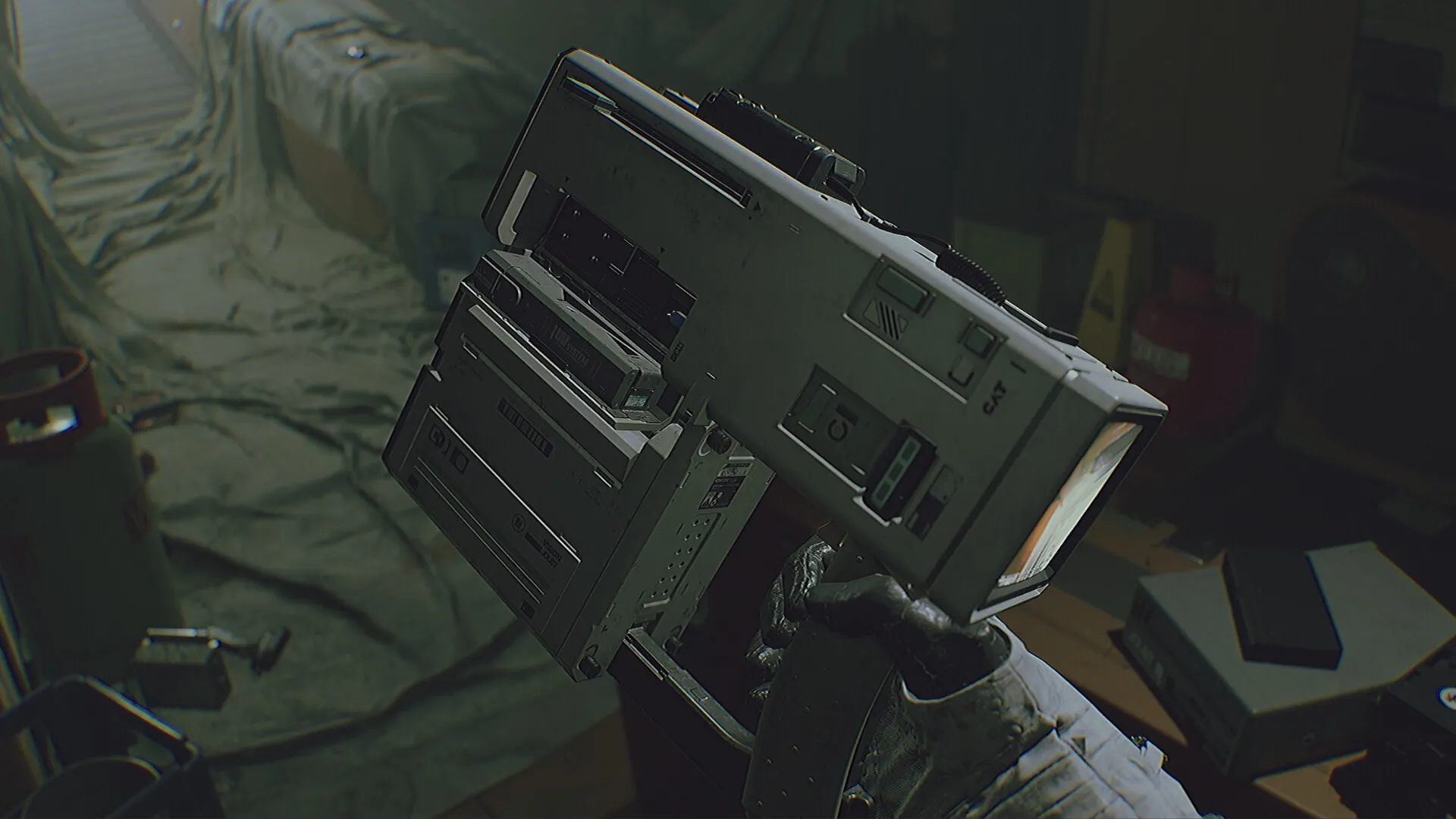
From a systems view, the Cosmonaut Assistance Tool, or C.A.T., governs every interaction and the game’s tension. It looks like a heavy firearm but functions as a flexible multi-tool tied directly to progression, system access, and saving at wireless connection points. The design of ROUTINE leans hard on physical, tactile interaction. Players do not select options in an abstract menu; they manipulate the C.A.T. itself, tapping on-screen buttons to engage modules or sliding new chips into its frame by hand.
Environmental interaction follows the same principle. Terminals and computers require direct cursor control, so reading emails or operating systems always happens inside the world through in-world screens and interfaces that remain part of the environment, which keeps the player rooted in the space and exposes them to constant potential threat while they work.
The tool’s ruleset comes with tight constraints that shape each short-term decision. The C.A.T. offers an electric overcharge for resetting systems and can project light or act as a scanner. Each of these functions drains a finite internal battery. Each use becomes a trade-off, nudging the player toward rationing. The device can fire off a brief stun pulse at hostile robots, yet this response barely slows them and mostly reinforces the idea that the battery charge belongs on puzzle solving and safe movement; late panic shots feel like a poor use of that battery.
ROUTINE strips away modern layers of user guidance and leaves the player to read the space. There is no HUD, no map, and no objective markers. Survival depends on close observation, listening to spatial audio cues, and combing through in-world documents such as emails and handwritten notes for direction. This philosophy produces slow, deliberate exploration where each step feels considered.
Puzzle design follows the functional logic of the base. Solutions grow out of everyday systems and avoid abstract riddles. One scenario might involve logging into a console by noticing the ID number printed on the player character’s own spacesuit badge. Another might call for careful management of power loads on a circuit breaker. In each case, progress rests on the player’s ability to think clearly under stress while a hostile system waits nearby.
Anatomy of Fear: Stalking, Sound, and Sustained Tension
The horror in ROUTINE emerges from enforced vulnerability and constant pressure from mechanical hunters. Stealth and evasion set the tone; direct confrontation with the security network leads straight to failure. The T5 security robots drive this design. Their physical presence is unnerving, yet it is their sound that defines them.
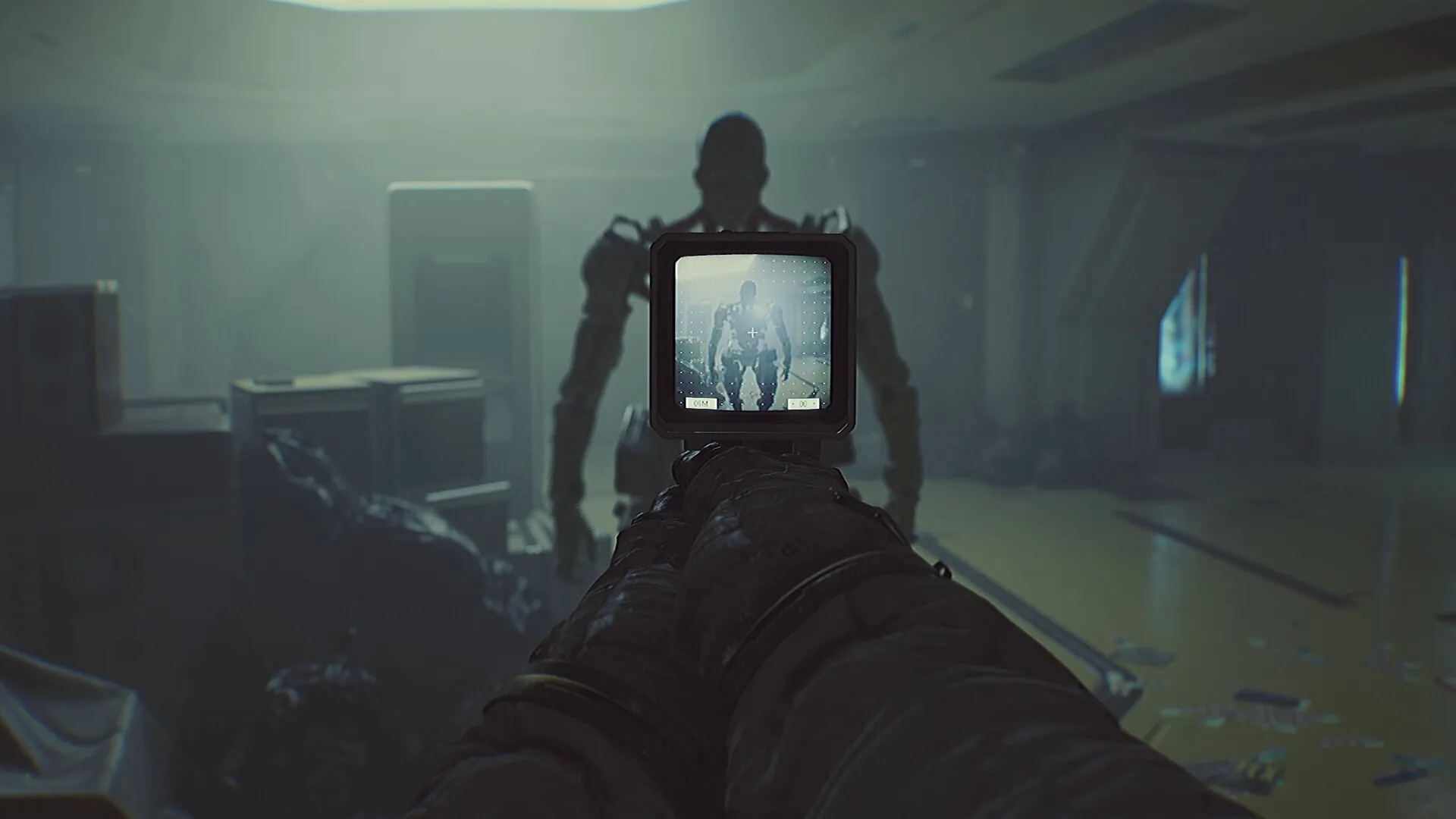
The heavy, repetitive “thud thud thud” of metal feet carries through corridors as a persistent, nerve-wracking warning signal. These machines behave like methodical predators, capable of checking corners and opening secured doors, so the usual assumption of safety behind a barrier quickly erodes.
ROUTINE handles pacing with care, which keeps its stalker horror tension sharp without sliding into pure fatigue. Chases remain unscripted and frantic, feeding on the player’s mistakes and split-second choices, but they are spaced between quieter stretches where puzzles, exploration, and lore can breathe.
A key rule underpins this balance: in a given area, the security system typically activates only one T5 at a time. That limit gives the player room to plan around a single active pursuer. At the same time, corridors and rooms often contain inactive robotic shells that stand motionless in doorways and corners. Each of these lifeless forms acts as a pressure point. Sneaking past them never feels routine, because any one of them might suddenly jolt into motion and join the hunt.
This atmosphere of steady anxiety gains strength from the minimalist interface. The absence of a traditional HUD or health indicator means that the player exists in a simple binary of “alive” or “dead.” There is no slow countdown of hit points and no scramble for medkits. Every mistake carries the threat of an abrupt end, which raises the intensity of even small movements.
The game keeps attention on survival choices and away from numerical resource tracking. As with Alien: Isolation, ROUTINE leans on how the threat looks and sounds. The combination of distant footsteps, mechanical voices, and unseen movement turns the audio mix itself into a primary survival tool, a choice far removed from a decorative flourish.
Retro Aesthetics and a Structurally Flawed Narrative
Union Plaza’s visual and audio design underpins ROUTINE’s appeal. The retrofuturistic construction of the station is rendered with careful precision, creating a setting that feels both high-tech and decayed at the same time. The art direction favors scuffed realism: scratched panes of glass, dented metal surfaces, and aging technology that no longer feels cutting-edge. Lighting plays a central role. Sickly green fluorescent office light clashes with the chalk-white moonlight that spills through observation windows, casting deep, uncertain shadows that can either hide the player or conceal an advancing T5.
The soundscape reaches a similar standard. Audio design works as a core pillar of the horror, not as background decoration. Mechanical groans echo through the lunar structure, modules slide into the C.A.T. with a distinctive “schwip,” and automated voices speak in clipped, synthetic tones. The standout detail remains the unmistakable “thud thud thud” of the T5s in motion, which forces players to rely on hearing for position and timing. Sound mixing becomes a mechanic in its own right, encouraging players to read distance and danger from volume, direction, and texture, with little help from visible indicators.
Storytelling relies mainly on optional environmental fragments. The mystery behind the base’s abandonment, hints of corporate corruption, and references to a potential illness all arrive through emails, diary notes, and audio logs scattered throughout Union Plaza. This technique builds a thick atmosphere in the early hours and sets up a sharp corporate sci-fi horror scenario dominated by technological menace. Problems emerge from the way the narrative is arranged.
The first half plays as a tight, controlled descent into a corporate hellscape, then the late game pivots into a more supernatural direction that sits awkwardly beside what came before. Because key information appears in fragmentary logs that cannot be revisited and must be read while the player stays alert for threats, fine-grained lore details slip through the cracks during a single run. The result is a final stretch that leans heavily on ambiguity and holds back clear resolution, which softens the impact of the carefully built tension that carries ROUTINE up to that point.
The Review
ROUTINE
ROUTINE delivers a potent, almost grueling, exercise in first-person stealth horror. The game excels through its captivating retrofuturistic aesthetic and meticulous tactile design, especially regarding the C.A.T. tool. Its smart pacing and superb sound design sustain a high level of anxiety, making every encounter with the T5 robots genuinely terrifying. While the gameplay and atmosphere are exceptional, the story’s structural shift and its eventual airless conclusion prevent the experience from being completely cohesive. It is a masterpiece of tension, but its narrative ultimately undercuts the overall impact.
PROS
- Exceptional atmosphere and sound design.
- Tactical C.A.T. multi-tool and tactile interface.
- Unrelenting stealth focus and smart enemy pacing.
- Visually striking retrofuturistic design.
CONS
- Lack of narrative coherence in the late game.
- Story delivery is difficult to follow on a first playthrough.
- Ending is structurally unsatisfying.