







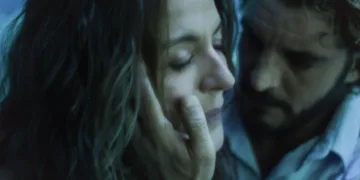
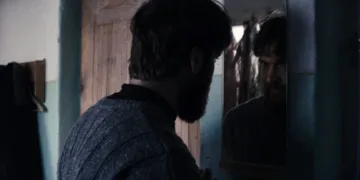
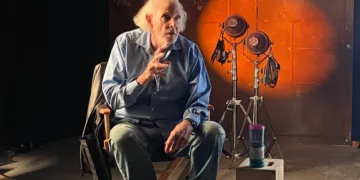











The film begins with a crisp negotiation with death. Catherine E. Coulson phones a mortician to put her own plans in order, speaking with calm pragmatism. That single call sets the documentary’s temperature. Richard Green, a longtime presence in David Lynch’s social orbit, frames his subject without leaning on the familiar rhythms of celebrity portraiture. His attention stays on a woman who helped hold up a particular stretch of independent American filmmaking. Long before television turned her into an icon, she moved through the avant-garde as a steady builder.
Green leans on grainy home movies and archival snapshots to thin out the mask of the persona people think they know. The material pushes past the famous character and toward the person behind the wood. Coulson comes through as a professional who understood how the business worked long before audiences learned her face.
The documentary keeps returning to the sense that her life carried history well before the first camera rolled on the series that fixed her in popular memory. She lived inside a creative circle that valued authenticity and experimentation, and Green catches that ethic through her willingness to meet mortality with humor. From the start, the film treats her as a central presence with her own gravity, not a supporting figure borrowed from someone else’s legend.
The Architect of the Image
Technical jobs in 1970s Hollywood left little room for women, and Coulson earned standing through skill that spoke for itself. Her working life starts in San Francisco’s counter-culture theater scene, inside an acting troupe called The Circus. From there, she shifts toward the mechanical craft of filmmaking, building expertise in camera operation and cinematography.
The documentary places her on large-scale work as an assistant Director of Photography on Star Trek II: The Wrath of Khan, then pivots to her collaboration with John Cassavetes on The Killing of a Chinese Bookie. The contrast between those projects matters because it shows her comfort across different visual grammars, from industrial machinery to intimate, handmade texture.
Her defining stretch arrives with the five-year production of Eraserhead. Coulson takes on a range of tasks, from technical camera duties to script supervision, functioning as the connective tissue that kept the work moving. Green presents her as a vital collaborator for David Lynch, someone who could take surreal ideas and give them physical form on set.
That kind of all-hands commitment calls to mind the working cultures associated with Indian parallel cinema, where a small, committed group carries multiple responsibilities so a director’s vision can survive tight conditions. The documentary frames Coulson as part of that tradition of craft-first filmmaking, where the crew’s labor becomes the invisible architecture of what audiences later celebrate.
Green also emphasizes how her command of light and performance joined precision with feeling. She handled punishing physical demands with a quiet steadiness, and that steadiness made her valuable across decades. The film’s portrait places her in the room as a peer to the directors she supported, anchored by the authority of someone who knew the lens from the inside out.
A Sanctuary of Shared Humanity
Coulson’s personal history, as presented here, describes someone who put community before personal spotlight. She is shown as a caretaker for artists who struggled under the pressures of their own creativity, and the documentary treats that caretaking as an act of sustained attention rather than a sentimental label. Her marriage to Jack Nance occupies a key place in this story. Green describes her devotion through the costs it demanded, including the toll on her own health. A specific incident lands with blunt clarity: David Lynch calls an ambulance after she collapses from the strain of caring for everyone around her.

Within her circle she is known as Cookie, a nickname that signals warmth and reliability. Cast members such as Kyle MacLachlan and Michael Horse describe her as the glue that held the set together. The film gives her philosophy a plainspoken form through the way she spoke about “wounded birds” or “stray dogs,” a language of protection aimed at people who needed shelter.
That instinct sits beside her continued drive for her own artistic life. Green notes her many years at the Oregon Shakespeare Festival, marking a long commitment to the discipline of the stage. Later, the documentary describes her finding personal peace in a second marriage and taking joy in raising an adopted daughter.
The portrait treats her presence as a kind of sanctuary built through daily acts of care. That maternal energy becomes a defining trait, especially against an industry shaped by transaction and image management. The film positions her as emotional ballast for influential artists in her orbit, someone whose steadiness allowed others to take risks.
Finality and the Screen
The documentary’s last movement focuses on the meeting point between reality and fiction during production of the 2017 series revival. Coulson receives a Stage 4 lung cancer diagnosis in 2015, and she keeps that information from Lynch for as long as she can. Green frames the choice as a matter of pride and professionalism. She wanted her participation to register as work, without pity shaping how it was received.
Practical limits force the production into improvisation. Coulson is too weak to travel to filming locations, so a local crew brings the equipment to her home in Oregon. Lynch directs her through a digital connection, feeding her lines while she breathes through an oxygen tube. The documentary lingers on how the mechanics of that setup, the technology, the fragility of the moment, become part of the meaning. Her performance turns into a direct meditation on mortality. She draws from her physical reality to give her character an exit that feels haunted and honest.
The release of this film carries added weight because it arrives after the recent death of David Lynch. Green treats the footage as the closing chapter of a lifelong friendship between two people who used their time to convert pain into art. The documentary also tracks Coulson’s long relationship with the fan community, built through decades of festival appearances and her dedication to keeping the show’s history alive.
In her final scenes, she presents death as a passage handled with dignity, and the film frames that dignity as an artistic act. She remains present to the camera until the end, with the steadiness of someone who spent a lifetime turning care, craft, and courage into work that outlasts the moment it was made.
I Know Catherine, the Log Lady is an intimate documentary that explores the life and legacy of Catherine E. Coulson, the woman behind the iconic Twin Peaks character known as the Log Lady. Following its festival circuit in 2024, the film saw an official wide release on May 9, 2025. It details her early years in theater and her pioneering work as a camera operator before documenting the emotional process of filming her final scenes for the 2017 series revival while she faced a terminal illness. As of today, January 5, 2026, the film is primarily available for viewing through its official website and at various independent cinema screenings worldwide.
Full Credits
Title: I Know Catherine, the Log Lady
Distributor: History of Cool, Next Step Studios, Independent Theaters
Release date: May 9, 2025
Running time: 117 minutes
Director: Richard Green
Writers: Richard Green
Producers and Executive Producers: Richard Green, Jenny Sullivan, Marc Sirinsky
Cast: Catherine E. Coulson, David Lynch, Kyle MacLachlan, Mark Frost, Michael Horse, Grace Zabriskie, Kimmy Robertson, Dana Ashbrook
Director of Photography (Cinematographer): Timothy Eaton
Editors: Richard Green
The Review
I Know Catherine, the Log Lady
The documentary offers a powerful look at a woman who shaped independent cinema from behind the scenes. It succeeds by treating her technical skills and personal loyalty with heavy weight. The footage of her final performance provides a raw look at mortality. The editing feels hectic at times, but the emotional honesty carries the film. It provides a necessary perspective on the labor required to create art.
PROS
- Extensive use of private archival materials.
- Sincere focus on her technical background.
- Powerful accounts from her closest collaborators.
CONS
- Hectic editing style disrupts the flow.
- Soundtrack choices occasionally feel misplaced.