
























![Kingdom Hearts Collection [I-III] Review](https://gazettely.com/wp-content/uploads/2026/10/Kingdom-Hearts-Collection-I-III-1-360x180.webp "Kingdom Hearts Collection [I-III] Review: KHII Holds Steady as Newer Entries Fluctuate 37")



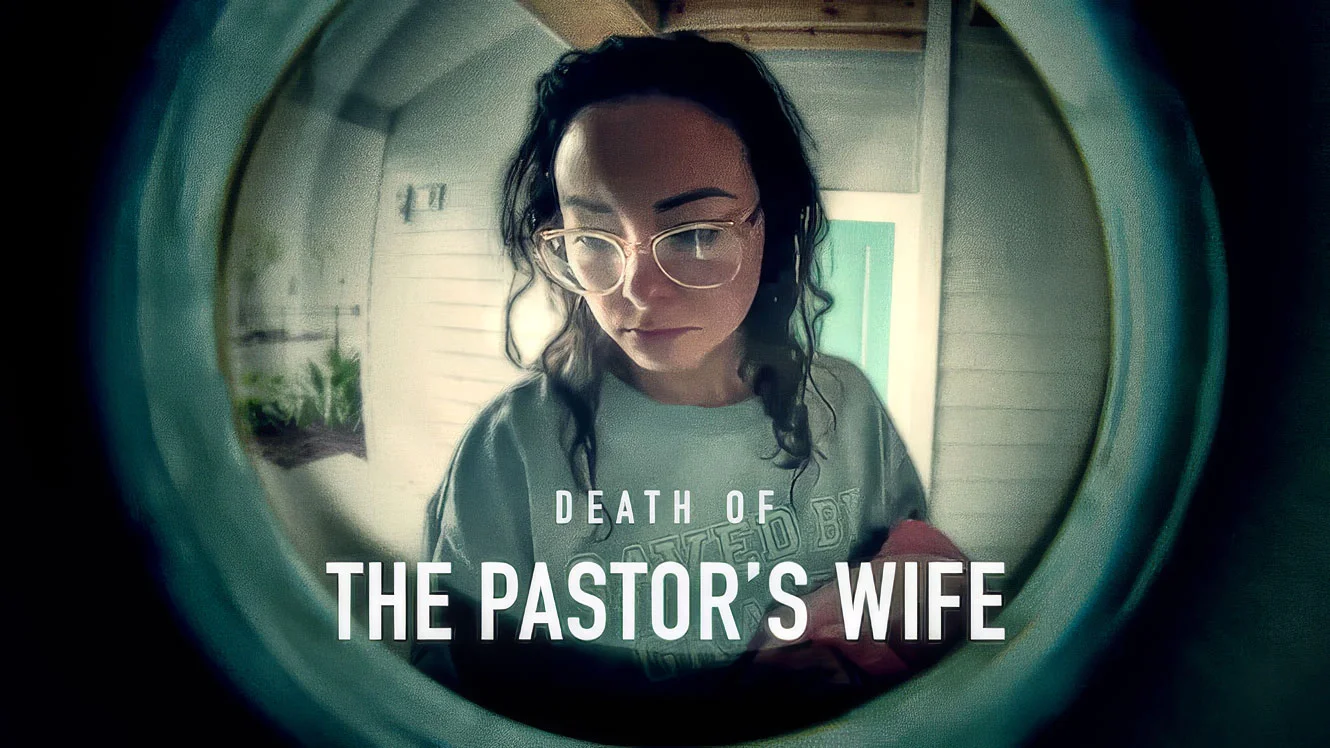

True-crime television has trained audiences to recognize the emergency call as a narrative trigger. A voice reaches a dispatcher after every earlier opportunity for intervention has failed, and the series can then reconstruct the path to that moment. Death of the Pastor’s Wife uses that convention with unusual discomfort because Mica Miller is the person making the call about herself.
The three-part Netflix series, directed by Julia Willoughby Nason and Michael Gasparro, begins near Lumber River State Park in North Carolina, where Mica called 911 on April 27, 2024, shortly before her death at age 30. The medical examiner ruled it a suicide. The filmmakers resist turning that ruling into a cheap mystery box. Their primary subject is the life preceding it: Mica’s marriage to Myrtle Beach pastor John-Paul Miller and allegations that she endured years of emotional, sexual, spiritual, financial and physical abuse.
That choice matters. Streaming true crime often rewards the unanswered question because uncertainty keeps viewers clicking. Here, the unanswered question is less important than the documented pattern surrounding it.
Power Behind the Pulpit
Mica’s relationship with Solid Rock Church began long before her marriage to Miller. Her family moved from Kansas to Myrtle Beach when she was 13 and joined the congregation. She later became a worship leader, then Miller’s assistant and babysitter. Miller officiated Mica’s first marriage when she was 18. Years later, after an affair and the collapse of both existing marriages, Mica married him at 23.
Presented chronologically, those details show how religious authority can become inseparable from personal authority. Miller did not enter Mica’s life simply as a romantic partner. He was already pastor, employer and spiritual leader.
The church footage makes that hierarchy disturbingly concrete. Miller tells women from the pulpit that failing to satisfy a husband sexually leaves him vulnerable to temptation. The directors barely need to editorialize. His own sermons establish a worldview in which male entitlement acquires religious vocabulary, delivered from a stage to an audience conditioned to hear it as guidance.
Mica’s journals and relatives describe the private version of that power. She wrote that she had been abused emotionally, sexually, spiritually, financially and physically. Family testimony describes repeated calls, messages, alleged social-media impersonation and pressure whenever she tried to distance herself.
One sequence is especially revealing. The day after Mica died, Miller conducts a church service filled with performance, including a parody song and comments about the Bible resembling a Steven Spielberg movie, before announcing her death near the end. The scene says plenty about who controlled the microphone.
Letting Mica Occupy the Frame
Nason and Gasparro previously directed Murdaugh Murders: A Southern Scandal and American Murder: Gabby Petito, and their familiarity with streaming true crime is visible in the series’ dense assembly of texts, police calls, social posts, home videos, surveillance images and interviews. The difference lies in how consistently those materials return attention to Mica.

Her siblings and friends supply much of the emotional history, describing moments that looked one way while Mica was living through them and acquired a darker meaning later. The accumulation is stronger than any isolated revelation. A message becomes part of a pattern. A phone call gains context from the next one.
The most ethically complicated device is the family-approved AI recreation of Mica’s voice, used to read material from her journals. Television is moving into uncomfortable territory here. A dead person’s voice can now be technologically reconstructed with a realism that previous documentary makers simply did not possess, and family consent does not erase every question surrounding that practice.
Yet the use here has a clear purpose. Mica’s written words are allowed to interrupt the people explaining her life. For a story filled with institutions, relatives, investigators, online commentators and a husband who commanded a pulpit, retaining space for Mica herself carries particular force.
The three-episode length is mostly disciplined, though repeated testimony occasionally slows the investigative pulse. That may frustrate viewers arriving for forensic twists. The series is interested in something less tidy: how control can become ordinary through repetition.
The Question Beyond the Death
The documentary is careful with the distinction between suspicion and proof. Mica’s death was ruled a suicide, and Miller had an alibi for his location at the time. The series does not establish that he killed her. What it does establish through its assembled testimony and records is why those closest to Mica remain haunted by the circumstances around her final months.
Leaving a controlling relationship is often imagined culturally as a single decisive act. Mica’s story exposes how inadequate that idea can be. Separation did not, according to the accounts presented, end the calls, surveillance, alleged impersonation or psychological pressure.
That makes the series’ institutional dimension especially potent. Churches grant leaders moral authority. Marriage laws define intimate obligations. Police and courts divide conduct into categories that can miss the cumulative effect of repeated harassment. True-crime television usually arrives after these systems have finished acting, then edits their failures into episodes for an audience. There is an uncomfortable industry irony there.
In December 2025, a federal grand jury indicted Miller on charges of cyberstalking and making false statements to federal investigators. He pleaded not guilty. Those charges are separate from Mica’s death, a distinction the series needs and preserves.
Mica drove herself to Lumber River State Park. Death of the Pastor’s Wife leaves viewers with the harder social question of how many hands can shape a person’s choices without ever touching the steering wheel.
Death of the Pastor’s Wife premiered on Netflix on August 26, 2026. This three-part true crime docuseries examines the life, controversial marriage, and mysterious death of Mica Miller, wife of a South Carolina pastor.
Where to Watch Death of the Pastor’s Wife Online


Full Credits
Title: Death of the Pastor’s Wife
Distributor: Netflix
Release date: August 26, 2026
Rating: TV-MA
Running time: 42 minutes
Director: Julia Willoughby Nason, Mike Gasparro
Producers and Executive Producers: Tom Cappello, Alana Goldstein, Keely Walker Muse, Yotam Guendelman, Julia Willoughby Nason, Mike Gasparro
Cast: Mica Miller, John-Paul Miller
The Review
Death of the Pastor’s Wife
Death of the Pastor’s Wife is strongest when it treats Mica Miller’s death as a story about power rather than a puzzle awaiting a sensational reveal. Her recordings, journals and relatives’ testimony expose how religious authority can give coercive control both language and cover. The family-approved recreation of Mica’s voice raises ethical questions, yet it keeps her words from disappearing beneath the machinery of true-crime television. Three episodes sometimes linger on familiar testimony, but the restraint matters. This is television asking what happens when institutions hear warning signs and still fail to protect the person making them.
PROS
- Mica remains the narrative focus
- Strong use of firsthand material
- Careful treatment of abuse allegations
- Revealing church footage
- Disciplined three-episode structure
CONS
- Investigative momentum occasionally stalls
- AI voice recreation may divide viewers
- Few definitive answers about the death







