

























Danny objects when a younger friend calls someone a “junkie.” He knows the word can make a person disappear behind a judgment. Kim Bartley’s Lemonade is attentive to that kind of disappearance: the way a history of foster care can become the first fact people know about someone, and then the only fact they think they need. Danny’s correction is brief. He cannot change the other person’s life, but he can refuse to help flatten it.
Later, he tells Mila, the girl who lives across the street, that he is afraid to say he grew up in foster care. The hesitation gives his earlier objection a second meaning. Danny can defend someone else against a label while still fearing what one might do to him. Lewis Brophy lets that fear sit beneath the young man’s guarded manner, so the admission feels costly rather than conveniently revealing. Bartley is at her best when she allows such small exchanges to show how Danny understands the world.
His eighteenth birthday gives that world an especially strange rule. Danny must leave the staffed care home where he has lived, and a court hearing awaits him after an incident involving a stolen car. He wants to see his younger brother Jack, but Jack’s foster family has kept them apart. The law can declare Danny an adult on a precise date. It cannot, by the same act, give him a stable home or repair a family relationship. Paperwork has never been much of a parent.
I found myself resisting the film’s insistence that Danny deserved my sympathy. During the car incident, he tends to a kitten while his friends cause trouble. It is a sweet detail with a conspicuous job: before we can weigh his involvement, we are shown evidence of his innocence of spirit. Why should Danny have to pass that test? A film concerned with the damage done by labels seems, for a moment, anxious to supply him with the right one.
That suspicion became harder to maintain whenever Lemonade turned from proving Danny’s goodness to showing what care demands of other people. Mags, who works at the home, keeps firm boundaries with him and has also looked after his dog Tess for years. Neither action cancels the other. Her affection has obligations and limits, which gives it a texture the kitten scene lacks. Bartley understands that kindness can be dependable without being able to grant everything Danny needs.
Josh (Barry Keoghan), Danny’s former caseworker, presents a more difficult version of the same idea. Danny believes Josh let him down when they were younger, and their renewed contact cannot begin from a clean slate simply because Josh wants to help. Josh has his own history of care and separation, along with a troubled relationship with his brother Gav. His patience with Danny carries the uneasy recognition of someone who knows the terrain and still cannot always find a way through it. Keoghan plays him with restraint; Brophy meets that calm with a distrust that feels earned. Their scenes have force because Josh’s intentions and Danny’s memories are both allowed to matter.
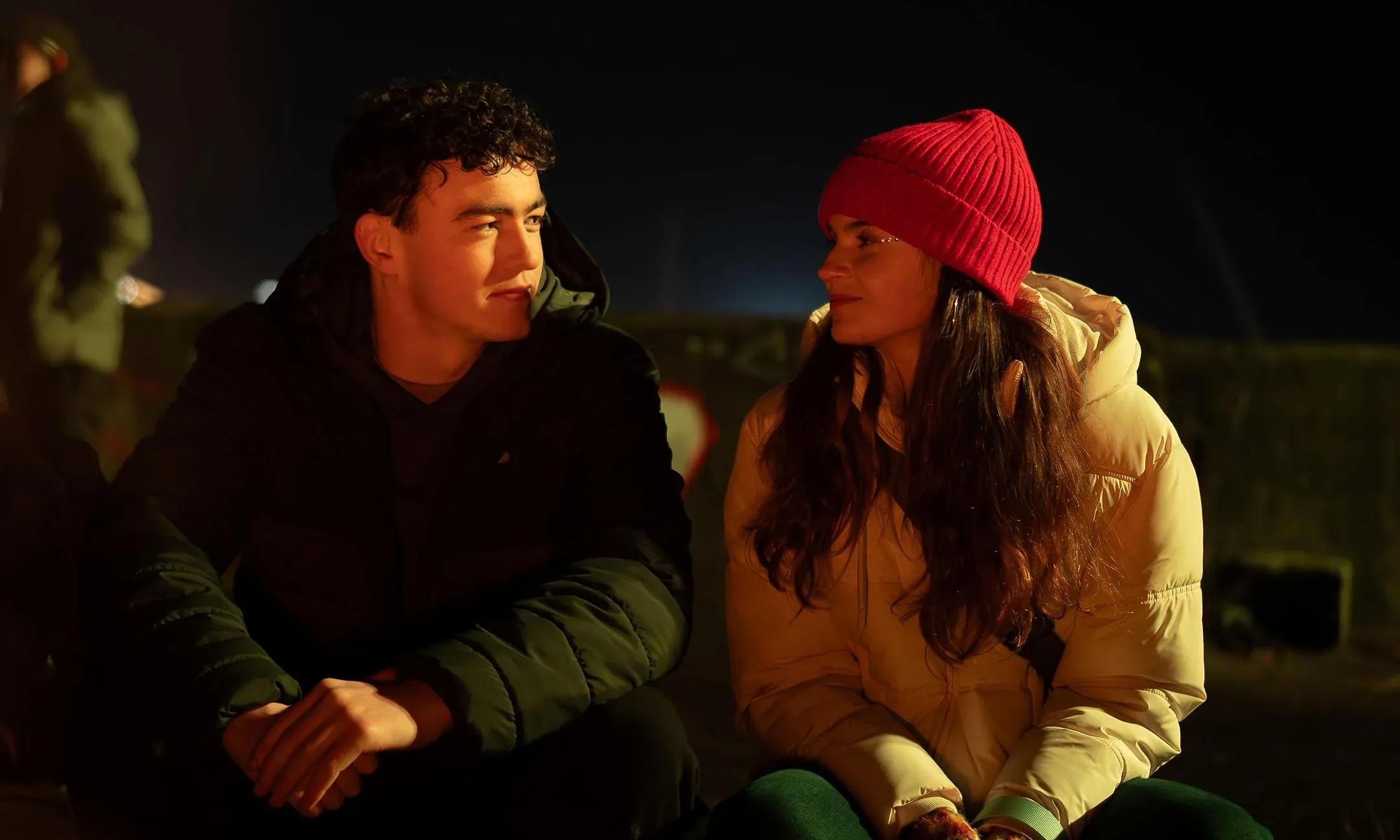
Bartley’s screenplay does not always extend that patience to its other relationships. Mila gives Danny room for his admission about foster care, yet the romance around that moment has little of the resistance or history that makes his bond with Josh interesting. She also carries the film’s title on a “make lemonade” tattoo, explaining the phrase before it returns later in narration. The message is plain enough. Repeating it makes the hope sound simpler than the film’s own people have shown it to be.
The plot can have a similar effect. A court date, a friend’s invitation toward further trouble, a strained family, and a new romance press on Danny in close succession. Young people leaving care can face several crises at once; the concern here is how neatly each pressure arrives to test a particular part of him. Bartley’s most persuasive details are less obedient. Mags can care for Tess and still enforce a boundary. Josh can offer support without gaining Danny’s trust on demand. Danny can reject a cruel word while remaining afraid of being judged himself.
The reunion with Jack earns its emotion because separation has shaped Danny’s choices throughout the film. It offers him contact he has wanted for years, not a magical settlement of the court case or the practical demands of living on his own. For a film drawn toward an easy slogan, Lemonade leaves its most affecting question there: what can the people who love Danny give him now, and what will he still have to face when they go home?
Lemonade world-premiered at the Toronto International Film Festival on September 12, 2026. The Irish drama follows a teenager approaching his eighteenth birthday as he prepares to leave foster care and reconnects with a former social worker.
Full Credits
Title: Lemonade
Distributor: Underground Films, Rocliffe Productions
Release date: September 12, 2026 (Toronto International Film Festival)
Director: Kim Bartley
Writers: Kim Bartley
Producers and Executive Producers: Rachel Lysaght, Farah Abushwesha, Barry Keoghan
Cast: Lewis Brophy, Barry Keoghan, Carla Tous, Connie Doona, Graham Earley, Eileen Walsh, Imelda May
Director of Photography (Cinematographer): Colm Hogan
Composer: Siôn Trefor, Ioana Șelaru, Galia Arad
The Review
Lemonade
Lemonade is most convincing when care takes the form of a difficult conversation, a firm boundary, or someone looking after Danny’s dog. Lewis Brophy and Barry Keoghan give those exchanges their weight. The kitten scene, crowded plot, and repeated title metaphor are less trusting of the audience. Bartley’s hope survives those missteps because the film understands that support can matter deeply without solving everything.
PROS
- Brophy’s guarded, affecting performance
- Nuanced tension between Danny and Josh
- Specific, credible acts of care
CONS
- Mila’s romance feels underwritten
- The title metaphor is overexplained
- Some plot pressures feel arranged