








As a longtime admirer of films that rearrange form—whether it’s Godard’s sudden jump cuts or the raw immediacy of modern indie dramas—I approached Alex Thompson’s Rounding with eager anticipation. This 91‑minute psychological horror/medical drama unfolds in a snowbound rural hospital in the fictional town of Greenville, where every sterile corridor feels both routine and ominous.
We meet Dr. James Hayman, a medical resident haunted by a breakdown after an assisted suicide incident, who arrives here hoping for a clean slate. His fixation on Helen Adso, a teenager with inexplicable asthma crises, propels the story into darker territory.
Thompson’s direction marries the measured pace of ward “rounds” with fleeting, unsettling imagery that lingers at the edge of perception. Nate Hurtsellers’s cinematography bathes scenes in icy blues and stark shadows, while Quinn Tsan and Macie Stewart’s score weaves a subtle, pulsing undercurrent—think a muted jazz riff that suddenly fractures. What opens as a clinical procedural soon exposes deep psychological fissures, urging us to question every whispered diagnosis and every darkened hallway.
Mapping the Rounds: Narrative Structure
Dr. James Hayman’s story opens with a stark flashback: torn between compassion and protocol, he assists in ending a patient’s suffering, only to witness her panic and recoiled plea—an event that fractures his confidence and propels him from a big‑city hospital into the frozen quiet of Greenville.
Here, under Dr. Harrison’s watchful eye, James learns the ritual of daily rounds: a measured procession through rooms, chart updates, whispered bedside reports. His brusque manner clashes with the softer rhythms of this small‑town ward, where empathy is as vital as diagnosis.
When 19‑year‑old Helen Adso arrives with puzzling asthma attacks, her mother’s push for a risky lung transplant sets James’s instincts awhirl. He pores over test results in dimly lit offices, stakes out the Adso home on frigid evenings, and brushes aside Julian’s warning that “this isn’t your case.” Every hallway glance and whispered conversation tightens the tension, tipping routine into obsession.
Midway, James is conscripted into an acting class—an offbeat prescription to soften his bedside delivery. His wounded foot, a souvenir of tense morning runs through snow, gnaws at him, and shadows in the auditorium flicker into his waking mind. That first vivid hallucination—a flicker of movement in the corner of the frame—arrives like a dissonant jazz chord, jolting us from grounded drama into psychological distress.
The climax erupts when James confronts Karen Adso in a silent hospital wing. Accusations of factitious disorder by proxy collide with his own unraveling sanity. A sudden glimpse of a multi‑headed creature shatters our trust in everything we’ve seen. In the final moments, James’s fate hangs suspended: did he expose a cruel deception, or has guilt warped his vision? Thompson’s nonlinear cuts and sudden flashbacks keep us off balance, pacing the story with peaks of certainty that collapse under the weight of doubt.
Directing Rounds: Vision and Script
Alex Thompson’s singular eye for tension is on full display in Rounding. After the warm, humanist touch of Saint Frances and the theatrical intimacy of Ghostlight, Thompson returns to body‑horror textures—think a stripped‑down Jacob’s Ladder—but set in Elmhurst’s frozen wards. He transforms unremarkable corridors into pressure cookers of dread, using narrow framings that echo Truffaut’s penchant for framing characters in confined spaces.
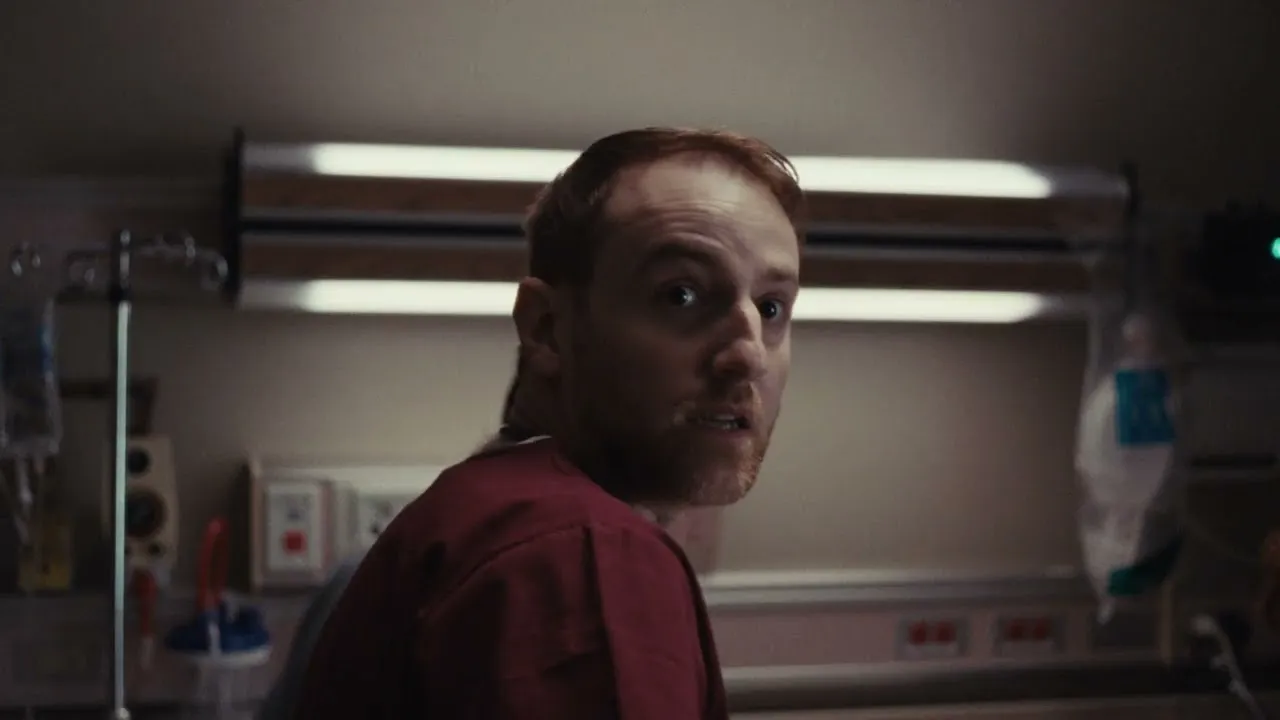
Thompson leans into genre fusion, marrying the meticulous rhythms of a hospital procedural with jolting supernatural hints. One moment you’re tracking chart updates, the next the flicker of a shadow suggests something otherworldly. It’s reminiscent of Greta Gerwig’s playful tonal shifts—only here, the playfulness gives way to genuine fright.
Co‑written by Thompson and his brother Christopher, the screenplay scores high on character beats: James’s awkward phone calls to his mother carry real pathos, and Dr. Harrison’s gentle reprimands feel earned. Yet the script sometimes buckles under symbolism—an onscreen prologue about Apollo’s “enkoimesis” feels as heavy as a medical textbook. I appreciate its ambition, but it briefly slows the pulse.
Dialogue largely feels lived‑in: shorthand between doctors, the staccato urgency of code blues, even a few dry quips that crack the tension. And then there’s the acting‑class detour—an offbeat narrative pivot that echoes Baumbach’s willingness to insert whimsical vignettes, though here it tacks rather than flows.
Symbolic layering runs deep: James’s broken cross necklace, demon paintings in dim glass frames, and the recurring motif of snow as both cleanse and tomb. Editor Nate Hurtsellers punctuates these visuals with crisp cuts—sharp enough to startle—alternating with lingering takes that invite us into James’s fraying mind. Occasionally, those extended moments undercut suspense by overstaying their welcome, but they also let us breathe and then lean in again.
Embodying the Rounds: Performances
Smallwood carries the film on his shoulders, translating James’s inner turmoil into every gesture. His panic attacks ripple through his body—shallow breaths, restless limbs—and his limping runs through fresh snow feel as urgent as a jazz solo hitting its climax. That broken cross necklace he touches in quiet moments becomes a wordless confession of guilt, guiding us from his composure to full unraveling.

Flanigan’s Helen is a study in restraint. She moves through hospital corridors with almost ballet‑like control, and her unwavering eye contact suggests she knows more than she says. In scenes where she simply listens, the silence speaks volumes—her gaze lingers like a shot of still French New Wave tension.
Spence finds the razor’s edge between devotion and menace. She offers gentle comfort—soft words in a cramped waiting room—then snaps to sharp suspicion when James presses her. Those tonal shifts feel earned, as though a beloved parent might harbor darker motives beneath warm smiles.
Potts steadies the film with quiet authority. His voice is calm but firm, a beacon when James drifts too far. He embodies the moral center, reminding us that empathy can coexist with responsibility.
The acting‑class peers bring levity and texture, while nurses and orderlies populate the ward with believable chatter. Their moments of banter and routine checks ground the story, making every unsettling turn feel all the more jarring.
Crafting the Chill: Technical Artistry
Nate Hurtsellers’s lens turns Greenville into a character of its own. The wintry palette—pale blues and grays—feels borrowed from a late‑period Godard, yet the high‑contrast shadows trap James in claustrophobic corridors. Wide framings of his solitary figure against endless white fields underscore his isolation, echoing French New Wave compositions without ever feeling derivative.

Quinn Tsan and Macie Stewart’s score is a masterclass in restraint. Sparse piano notes hover beneath hushed hospital beeps, and sudden silences—hallway vents falling eerily quiet—become a tool as sharp as any jump scare. The ambient creak of a stretcher wheel or the distant call of an intercom ratchets tension more effectively than a swelling string section.
Editor Nate Hurtsellers (doubling as DP) balances rhythmic cutbacks during clinical rounds with lingering takes in hallucination sequences. These sustained shots allow dread to bloom organically, while quick, almost jarring edits punctuate moments of shock, much like a staccato drum hit in a Coltrane solo.
Production design grounds the surreal in the tangible: peeling paint in decaying waiting rooms, a cramped basement apartment where every footstep overhead reverberates. Makeup and VFX are used sparingly but memorably—James’s festering foot wound feels viscerally real, and Ben Gojer’s creature design flickers into view just long enough to unsettle without overstaying its welcome.
Together, these elements weave an atmosphere of unrelenting unease, supporting each narrative twist with a technical backbone that feels both precise and emotionally charged.
Under the Surface: Themes & Symbolism
In Rounding, James’s decision to assist a patient’s death reverberates through his waking hours as vivid hallucinations and self‑destructive behavior. His guilt crystallizes in the broken cross necklace he fingers in private—an unspoken plea for forgiveness that echoes the fractured narratives of a Coltrane improvisation, where each dissonant note demands resolution.

The film interrogates medical ethics as ritual. “Rounding” itself becomes a ceremony of power: doctors deliver grim news in hushed tones, wielding authority over life and death. When James suspects Helen’s mother of manufacturing her daughter’s illness, his boundary‐crossing investigation raises uncomfortable questions about abuse of trust. Watching him spy through frosted windows recalls contemporary debates over patient privacy and surveillance culture.
Thompson threads religious and mythic references through the story. An opening prologue on Apollo’s “enkoimesis” hovers above clinical reality, while demon paintings in the hallway suggest that belief can shape perception. James’s fractured faith and scientific training vie for dominance, and his visions of a multi‑headed creature blur the line between pathology and the supernatural.
Reality and illusion dance in tandem: nonlinear flashbacks strip away context until we doubt every memory. This unreliability mirrors the uncertainty of modern information flows—truth fragments across screens and whispers. The final monster glimpse, rendered with unnerving restraint, functions less as camp spectacle and more as psychological cipher.
Beyond the hospital’s walls, Rounding touches on small‑town healthcare struggles and stigma surrounding mental‐health care. In an era when burnout among caregivers is headline news, the film offers a probing look at empathy’s limits—and what happens when compassion fractures under pressure.
Last Rounds: Final Thoughts
Thompson’s latest balances strong performances with a haunting atmosphere. Smallwood’s lead work carries weight, and the hospital’s frozen corridors feel lived-in yet uncanny. The score and cinematography sustain tension at every turn. However, the script occasionally wanders into too many symbolic detours, and pacing dips when narrative riffing overrides momentum.

Emotionally, James’s descent is gripping—you feel his guilt twist in your chest, root for him as he trespasses ethical lines. Brace for medical distress and visceral dread.
Fans of boundary‑blurring horror with intimate character drama will find much to admire; those seeking straightforward scares might chafe at the introspective turns. Its blend of procedural detail and psychological frisson recalls classic mind‑bending thrillers, reworked through an indie lens. If Thompson continues on this path, his next effort could cement him as a major voice in artful horror, and Smallwood as a star to watch. Its mysteries linger.
Full Credits
Director: Alex Thompson
Writers: Alex Thompson, Christopher Thompson
Producers: James Choi, Pierce Cravens, Leah Gaydos, Julianna Imel, Edwin Linker, Alex Thompson, Ian Keiser
Cast: Namir Smallwood (Dr. James Hayman), Sidney Flanigan (Helen Adso), Michael Potts (Dr. Emil Harrison), Rebecca Spence (Karen Adso), Cheryl Lynn Bruce (Vivian Spurlock), David Cromer (Mark), Max Lipchitz (Carol Hontolas)
Director of Photography (Cinematographer): Nate Hurtsellers
Editor: Michael S. Smith
Composers: Macie Stewart, Quinn Tsan
The Review
Rounding
Rounding delivers a compelling lead performance, chilling atmosphere, and an inventive fusion of medical drama and psychological horror. Its symbolic ambitions occasionally scatter the focus and slow the pace, but James Hayman’s unraveling journey grips from first frame to last. This thoughtful indie thriller may test patience but rewards viewers seeking both depth and dread.
PROS
- Namir Smallwood’s riveting lead turns.
- Wintry, claustrophobic cinematography that sustains unease.
- Clever fusion of hospital procedural and psychological horror.
- Precise sound design and editing elevate tension.
- Rich thematic threads on guilt, ethics, and perception.
CONS
- Symbolic detours sometimes overcrowd the narrative.
- Pacing lulls in a few mid‑film sequences.
- Secondary characters lack depth.
- Hallucinatory moments can jar momentum.