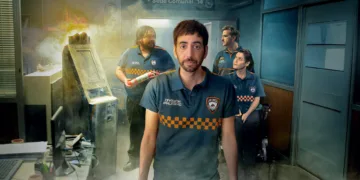


























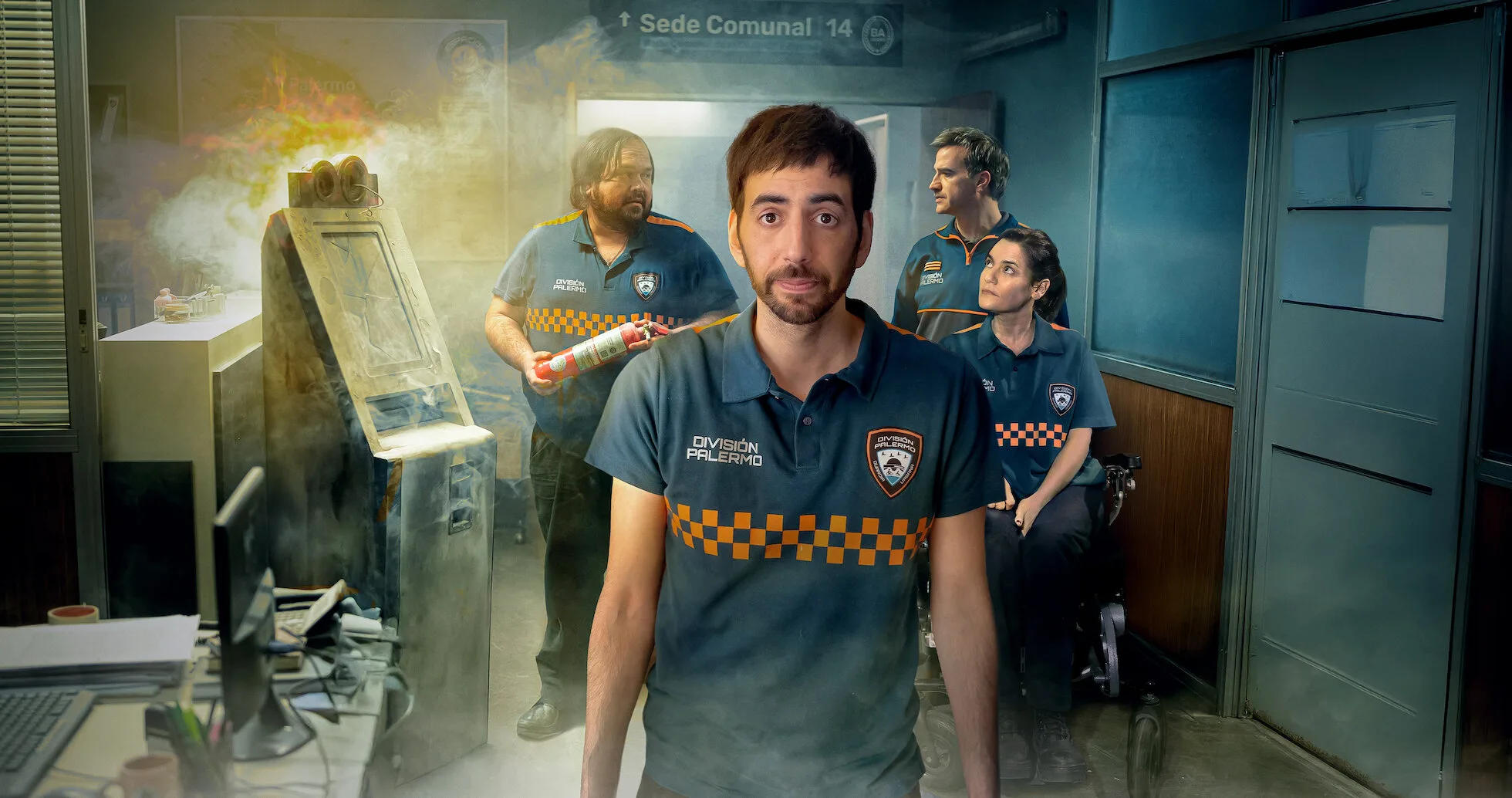

In an era where streaming platforms increasingly sanitize content to avoid offense, Community Squad emerges as a provocative anomaly that challenges the very foundations of contemporary comedy television. Created by and starring Santiago Korovsky, this Argentinian series returns for its second season as a workplace comedy that deliberately courts controversy, set within Buenos Aires’ urban guard system and centered on the Palermo neighborhood’s community squad.
The show’s willingness to blend slapstick humor with shocking violence signals a resistance to the homogenization of global streaming content, positioning itself as a bold experiment in satirical storytelling. Felipe Rozenfeld, Korovsky’s bumbling protagonist, serves as the perfect vehicle for institutional critique—a well-meaning but incompetent squad member whose very existence highlights the absurdity of bureaucratic diversity initiatives.
The second season expands this concept by introducing additional squads across Buenos Aires neighborhoods, transforming what began as localized satire into a city-wide examination of political theater. This expansion reflects the show’s confidence in its satirical framework while simultaneously testing whether its particular brand of humor can scale without losing its edge or cultural specificity.
Narrative Complexity and Character Multiplication
The season’s central narrative thrust propels Felipe into the Intelligence services, recruited specifically for his “forgettable face”—a casting choice that becomes both comedic device and meta-commentary on the invisibility of certain social archetypes. His undercover mission investigating Milton at Cuero Café specialty coffee shop provides the series with its most coherent plot thread, while the introduction of Dave—dubbed “Felipe 2.0″—creates a fascinating doubling effect that interrogates notions of replaceability and institutional tokenism.
This character multiplication extends beyond mere plot mechanics to reveal the show’s sophisticated understanding of how diversity initiatives function in practice. Dave’s superior competence across all metrics exposes the uncomfortable truth that diversity hiring often operates on assumptions about mediocrity, while Felipe’s romantic subplot with Sofia provides emotional grounding that prevents the series from becoming purely cynical. The Korean mafia subplot introduces genuine stakes, suggesting that the show’s violence serves purposes beyond shock value.
Supporting storylines featuring Miguel’s promotion aspirations and his rivalry with AI replacement Botty tap into contemporary anxieties about automation and workplace hierarchies. The episode involving tasers and the resulting “electrical accident” demonstrates how the series uses mishaps to expose the gap between political rhetoric and practical implementation. These multiple narrative threads create a dense storytelling environment that mirrors the complexity of real institutional dysfunction while maintaining comedic momentum.
Also Read






Satirical Weaponization of Social Progress
Community Squad’s most audacious achievement lies in its weaponization of contemporary social justice language and initiatives as comedic material. The series doesn’t simply mock diversity efforts; it exposes their performative nature by pushing them to absurd extremes. The autism stereotype subversion with Luciana—who deflates Esteban’s assumption about numerical genius by simply reading the number printed on a paper clip box—exemplifies the show’s sophisticated approach to deconstructing both prejudice and well-meaning misconceptions.
The “diversity quota” concept becomes a recurring comedic engine that generates humor while simultaneously critiquing the commodification of identity categories. Rather than punching down at marginalized communities, the series targets the institutional frameworks that reduce complex human experiences to checkboxes on bureaucratic forms. This approach allows the show to be simultaneously progressive and transgressive, challenging both traditional prejudices and contemporary orthodoxies.
The series’ commitment to politically incorrect humor operates within a framework of satirical purpose rather than mere provocation. The bank robbery sequence involving disabled individuals represents the show’s willingness to explore taboo territory while maintaining a coherent critique of how society both infantilizes and underestimates marginalized groups. This balance between offense and insight distinguishes Community Squad from mere shock comedy, positioning it as a genuine cultural intervention.
Performance Ecosystem and Production Intelligence
Santiago Korovsky’s dual role as creator and lead performer creates a unique creative ecosystem where satirical vision and comedic execution align seamlessly. His portrayal of Felipe embodies institutional incompetence without descending into caricature, maintaining enough humanity to anchor the series’ more outrageous moments. The expanded cast integration, particularly the addition of Juan Minujín and Alejandra Flechner, demonstrates the series’ ability to incorporate new talent without diluting its established comedic chemistry.
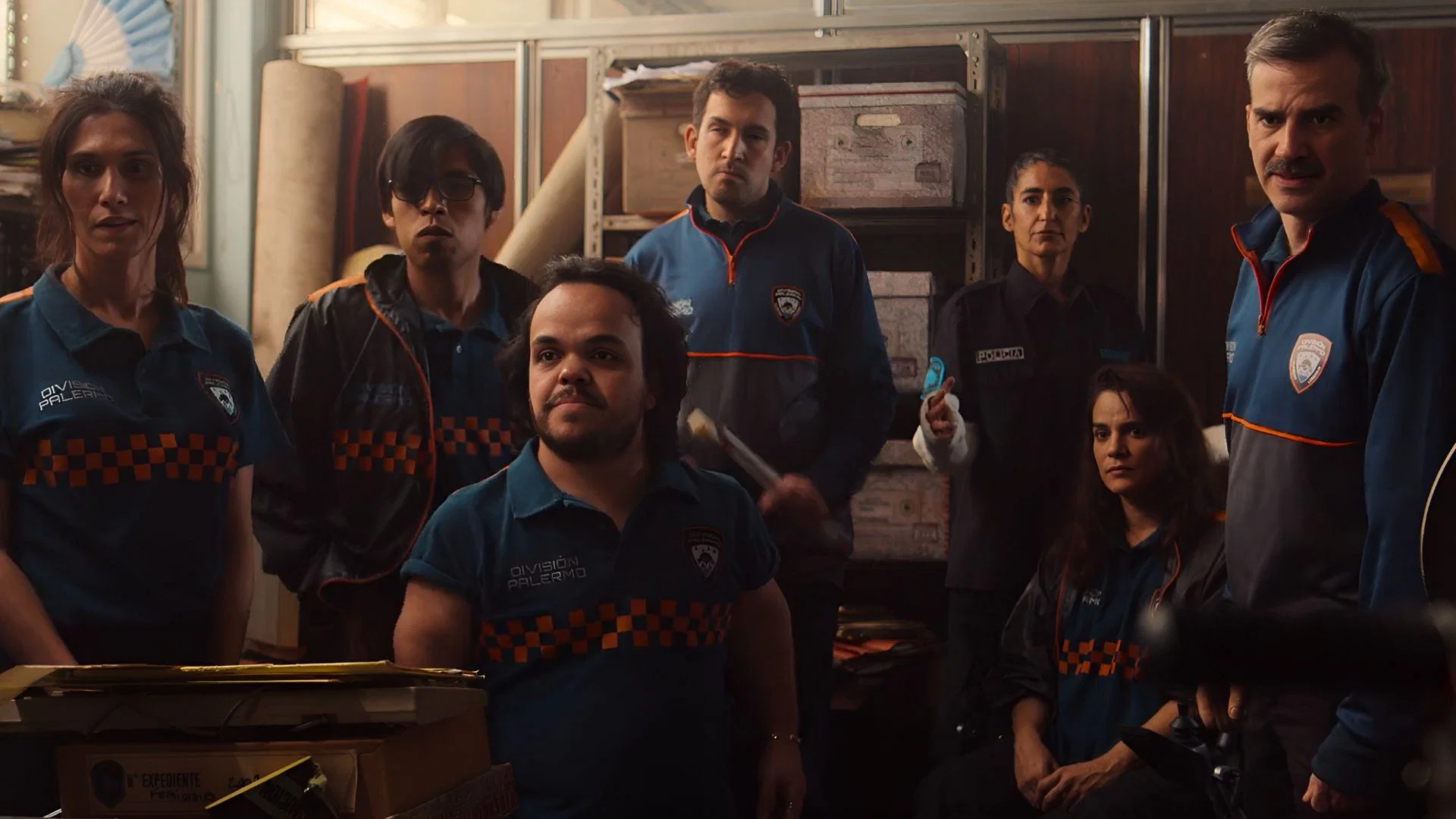
Martín Garabal and Charo López’s performances as the insensitive police officers Esteban and Paloma provide crucial structural support, embodying the institutional prejudices that the series critiques while maintaining comedic timing that prevents their characters from becoming purely villainous.
Their presence creates a comedic contrast that highlights Felipe’s relative enlightenment while avoiding the trap of moral superiority. The six-episode format proves strategically effective, preventing the series from exhausting its satirical targets while maintaining narrative momentum.
This concise structure reflects an understanding of how streaming consumption patterns favor density over duration, allowing the series to deliver concentrated social commentary without overstaying its welcome. The integration of violence within the comedy framework feels more organic than forced, suggesting that the series has found a sustainable balance between its competing tonal elements that could influence future genre-blending experiments in streaming television.
Full Credits
Directors: Santiago Korovsky, Rafael López Saubidet, Diego Nuñez Irigoyen
Writers: Santiago Korovsky, Ignacio Sánchez Mestre, Florencia Percia, Martín Garabal, Martina López Robol, Mariana Wainstein
Producers: Nicolás Goldar Parodi, Hugo Sigman, Matías Mosteirín, Leticia Cristi
Executive Producers: Santiago Korovsky, Diego Copello, Nicolás Goldar Parodi
Cast: Santiago Korovsky, Daniel Hendler, Pilar Gamboa, Martín Garabal, Marcelo Subiotto, Charo López, Carlos Belloso, Agustín Rittano, Sergio Prina, Fabián Arenillas
Director of Photography (Cinematographer): Christian Cottet
Composers: Iván Wyszogrod, Sergei Grosny
The Review
Community Squad Season 2
Community Squad Season 2 stands as a rare example of comedy that refuses to be domesticated by streaming platform sensitivities. While occasionally uneven in its tonal balance, the series succeeds in creating genuinely subversive entertainment that challenges both institutional dysfunction and contemporary cultural orthodoxies. Korovsky has crafted a satirical weapon that cuts through performative progressivism while maintaining genuine social insight. This is essential viewing for those seeking comedy with actual stakes.
PROS
- Fearless satirical approach to sensitive social topics
- Sophisticated deconstruction of diversity initiatives
- Strong ensemble cast chemistry
- Efficient six-episode structure
- Genuine cultural commentary beyond mere provocation
CONS
- Tonal inconsistency between comedy and violence
- Some jokes may alienate rather than enlighten
- Occasional reliance on shock value over substance
- Limited mainstream appeal due to provocative content