














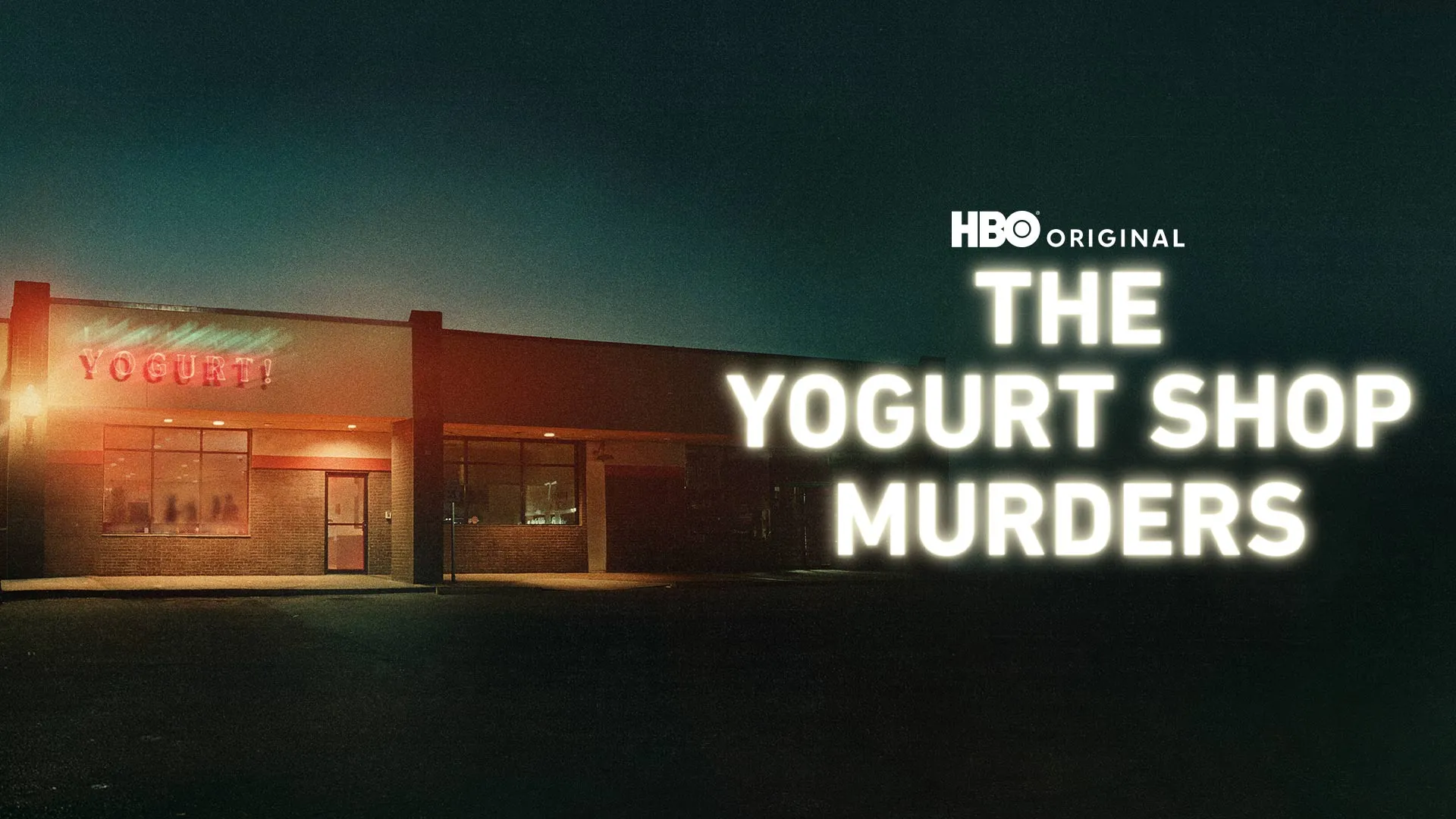

Before Austin, Texas, was a tech hub synonymous with breakfast tacos and music festivals, it was a city that lost its innocence. On a December night in 1991, four teenage girls—Amy Ayers, Eliza Thomas, and sisters Jennifer and Sarah Harbison—were executed inside an I Can’t Believe It’s Yogurt shop.
The crime scene was a nightmare of brutality; the girls were bound and shot, and the store was set ablaze, a final act of violence that also incinerated most of the evidence. The murders sent a shockwave of fear through the community, creating an infamous case that would confound law enforcement for decades.
HBO’s The Yogurt Shop Murders revisits this wound, not as a simple true crime procedural hunting for a killer, but as a somber meditation on the unending fallout. It’s less about who did it and more about what the “it” did to everyone left behind. This is not a search for answers so much as an excavation of the pain, a look back at a civic wound that has stubbornly refused to scar over.
Grief is the Protagonist
In an age where true-crime documentaries often feel like grim, high-speed scavenger hunts, director Margaret Brown makes a radical choice: she slows down. Her approach in The Yogurt Shop Murders is one of profound patience and intimacy, turning the series into something that feels less like a police report and more like a series of delicately painted portraits.
The focus is steadfastly shifted from the gory particulars of the crime to the quiet, persistent hum of grief that has defined the lives of those left behind. Brown’s camera doesn’t pry; it observes. It lingers on old photographs, allowing the smiling faces of the four girls to register not as victims in a cold case file, but as people who lived and breathed.
The series rejects the frantic pace of its genre peers, replacing jump cuts and dramatic reenactments with long, often silent takes where the weight of three decades of sorrow can be felt in the space between words.
Also Read




The narrative’s emotional weight rests entirely on the shoulders of the victims’ families, particularly Sonora Thomas, sister of Eliza, and Barbara Ayres-Wilson, mother to Jennifer and Sarah. They are the series’ unflinching anchors, their quiet dignity a stark contrast to the procedural chaos of the case. They are not here to plead for attention; rather, they seem to be participating in a ritual they have been forced to endure time and again.
When Thomas reads from her own writing, reflecting on the public’s grim fascination with her family’s tragedy, the series becomes brilliantly self-aware. It understands the queasy, complicated relationship we, the viewers, have with these stories. It’s a moment of profound insight that implicates the very act of watching.
Brown also beautifully resurrects the Austin of the era, a place that feels a world away from the city of today. Through home videos and archival footage, we see details like Amy Ayers’s deep involvement in the Future Farmers of America, riding horses on her family’s ranch. These vignettes are not mere biographical filler; they are specific, tangible reminders of the vibrant young lives that were extinguished, making their absence all the more palpable.
The series’ opening credits, set to a haunting cover of Daniel Johnston’s “Devil Town,” brilliantly establishes this sense of a corrupted Eden, a small town’s soul being curdled. It is a study of trauma over time, tracking grief as it twists, evolves, and calcifies across three agonizing decades of false leads, dashed hopes, and the relentless glare of media attention.
Rewind, Replay, Regret
The investigation itself, as chronicled by Brown, was a masterclass in fumbling in the dark, a tragicomedy of errors that had devastating consequences. In a move that feels like a grim and direct echo of the West Memphis Three case documented in Paradise Lost, detectives first chased shadows down a rabbit hole of cultural panic.
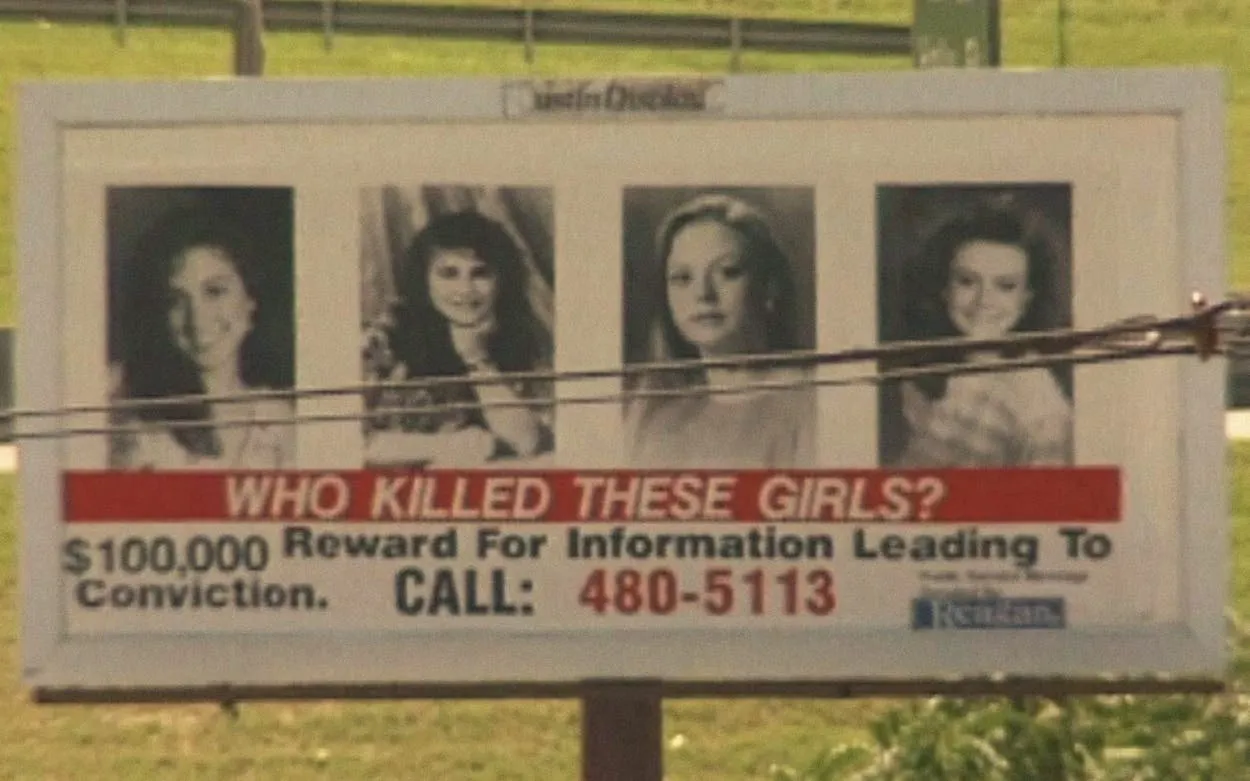
The early 90s were rife with anxiety about outsider youth, and the Austin police were swept up in the “satanic panic” that defined the era. The investigation fixated on local goth kids, “people in black,” and anyone who didn’t fit the clean-cut Texan mold.
The series presents this chapter through grainy news reports and retrospective interviews, effectively capturing the hysteria that derailed the search for truth from the very beginning. It was a classic case of seeing monsters where there were only teenagers in black t-shirts.
The story then lurches forward to 1999, a full eight years later, when four men were finally arrested. This is where the series becomes truly, profoundly infuriating. Brown doesn’t just tell us about the confessions; she forces the viewer to sit inside the claustrophobic interrogation rooms and watch them get made. It is an excruciating experience.
We see exhausted, vulnerable young men being psychologically dismantled over hours of relentless questioning. The camera captures the insidious techniques of suggestion and manipulation, as investigators feed crucial details of the crime to the suspects, rewarding them for “correct” answers and punishing them for “wrong” ones until a coherent, and entirely fabricated, narrative is built. These are not confessions; they are scripts, co-written under extreme duress. The result was the wrongful conviction of two men, who would lose years of their lives in prison.
The documentary’s most brilliant structural choice is its use of another, unfinished film. Brown incorporates a trove of footage from a 2009 documentary attempt by filmmaker Claire Huie. This creates a fascinating nesting doll of timelines.
We see key figures—investigators, lawyers, family members—as they were during the crime, then as they were in 2009, and then as they are today. Huie herself appears on screen, sometimes cringing with embarrassment at her earlier, less refined filmmaking, creating a remarkable layer of self-reflection.
The series becomes a dialogue with its own past, examining the very ethics and mechanics of telling such a story. This layered approach turns the series into a haunting exploration of how memory and narrative warp over time, showing how the “truth” can become a fragile, contested thing, constantly being rewritten by time, trauma, and the telling itself.
The Afterlife of a Crime
The Yogurt Shop Murders is ultimately a powerful and deeply unsettling examination of memory’s profound fallibility. It demonstrates that recollection is not a pristine recording but a messy, creative act, susceptible to suggestion and decay. The coerced confessions stand as damning proof that a person’s memory is a fragile, malleable thing, easily broken under pressure.
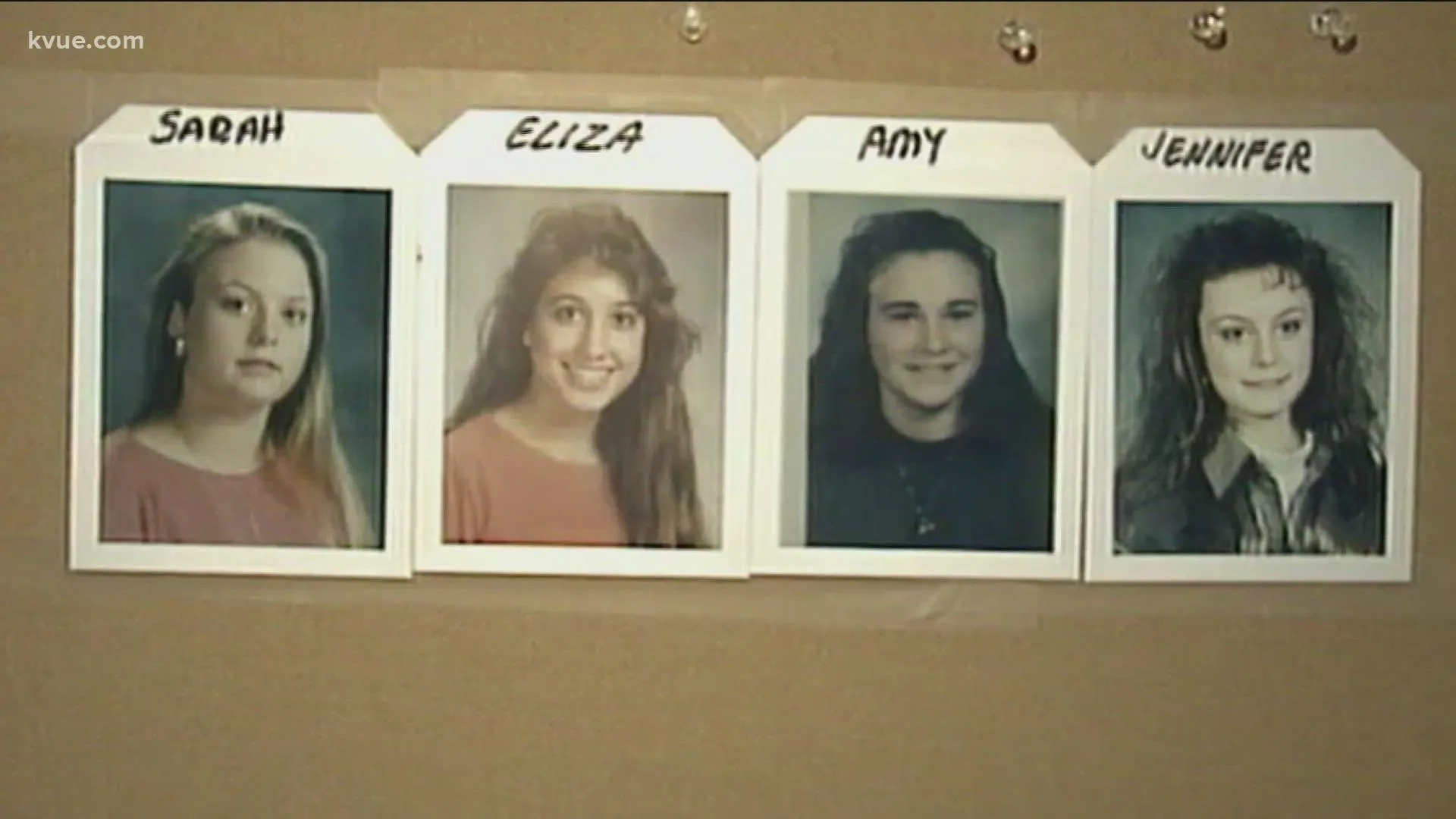
Sonora Thomas voices this perfectly when she says, “Sometimes I think I have a memory, but it’s a photograph,” articulating the way trauma flattens lived experience into a series of static, looping images. The series explores how we build stories to make sense of the senseless, and how those stories can imprison the innocent.
This leads to a potent critique of a criminal justice system that values closure over truth. The documentary portrays an institution so invested in its own narrative that it finds it nearly impossible to admit error, even when confronted with exonerating scientific evidence. When modern DNA testing failed to link any of the convicted men to the crime scene, it should have been a moment of clarity.
Instead, it was just another turn of the screw. The men were released, but the case was thrown back into a state of limbo, leaving the families adrift once more in a sea of uncertainty. It highlights a system’s stubborn inertia, where clearing a case can become more important than actually solving it.
The series holds a mirror up to the audience, too, asking us to consider our own role in the true-crime industrial complex. Are we watching to bear witness, to seek justice, or simply to consume a thrilling story? The show refuses to provide the satisfying narrative beats that lesser documentaries offer. There is no last-minute reveal, no definitive finger pointed at the real killer. It denies us that catharsis.
Instead, it ends on a quiet, almost unbearably poignant image: two of the victims’ family members, decades later, simply holding hands across a table. It is a moment of shared, unspoken understanding that communicates more than any voiceover could. It leaves you wondering what justice even looks like when the damage is this complete, and whether some wounds are not meant to heal, but simply to be carried.
The Yogurt Shop Murders is a four-part HBO documentary series directed and executive produced by Margaret Brown. It premiered on HBO on August 3, 2025, and is available to stream on Max.
Full Credits
Director: Margaret Brown
Producers: Alice Henty, Michael Bloch
Executive Producers: Margaret Brown, Nicole Stott, Emily Osborne, Emma Stone, Dave McCary, Mickey Stanley, Beth Garrabrant, Ali Herting, Avi Belkin, Limor Gott Ronen, Nancy Abraham, Lisa Heller, Sara Rodriguez
Cast: John Jones, Maureen Maher, CeCe Moore, Erin Moriarty, Richard Schlesinger, Tracy Smith, Sonora Thomas, Peter Van Sant
Director of Photography (Cinematographer): Justin Zweifach
Editors: Michael Bloch, Geoffrey Richman, Tyler H. Walk, Camilla Hayman, Lance Edmands, Drew Blatman
Composer: Claudia Sarne
The Review
The Yogurt Shop Murders
Margaret Brown’s docuseries is a landmark achievement in true crime. It brilliantly subverts genre expectations, transforming a haunting cold case into a profound meditation on grief, fallible memory, and the stubborn inertia of the justice system. It refuses to offer easy answers or cheap thrills, instead delivering a devastating, humane, and unforgettable viewing experience that will linger long after the credits roll. It’s essential, challenging television.
PROS
- Masterful, patient direction that prioritizes human emotion over forensic details.
- A deeply empathetic focus on the victims' families, giving them agency in their own story.
- Innovative narrative structure that uses archival footage to explore the passage of time and the distortion of memory.
- A powerful and intelligent critique of the justice system and the ethics of the true-crime genre itself.
- Emotionally resonant and unflinchingly honest from start to finish.
CONS
- The deliberate, meditative pacing may feel slow for viewers accustomed to faster-moving procedurals.
- Its refusal to provide a definitive resolution to the case can be frustrating for those seeking closure.
- The subject matter is emotionally heavy and can be a difficult, upsetting watch.