


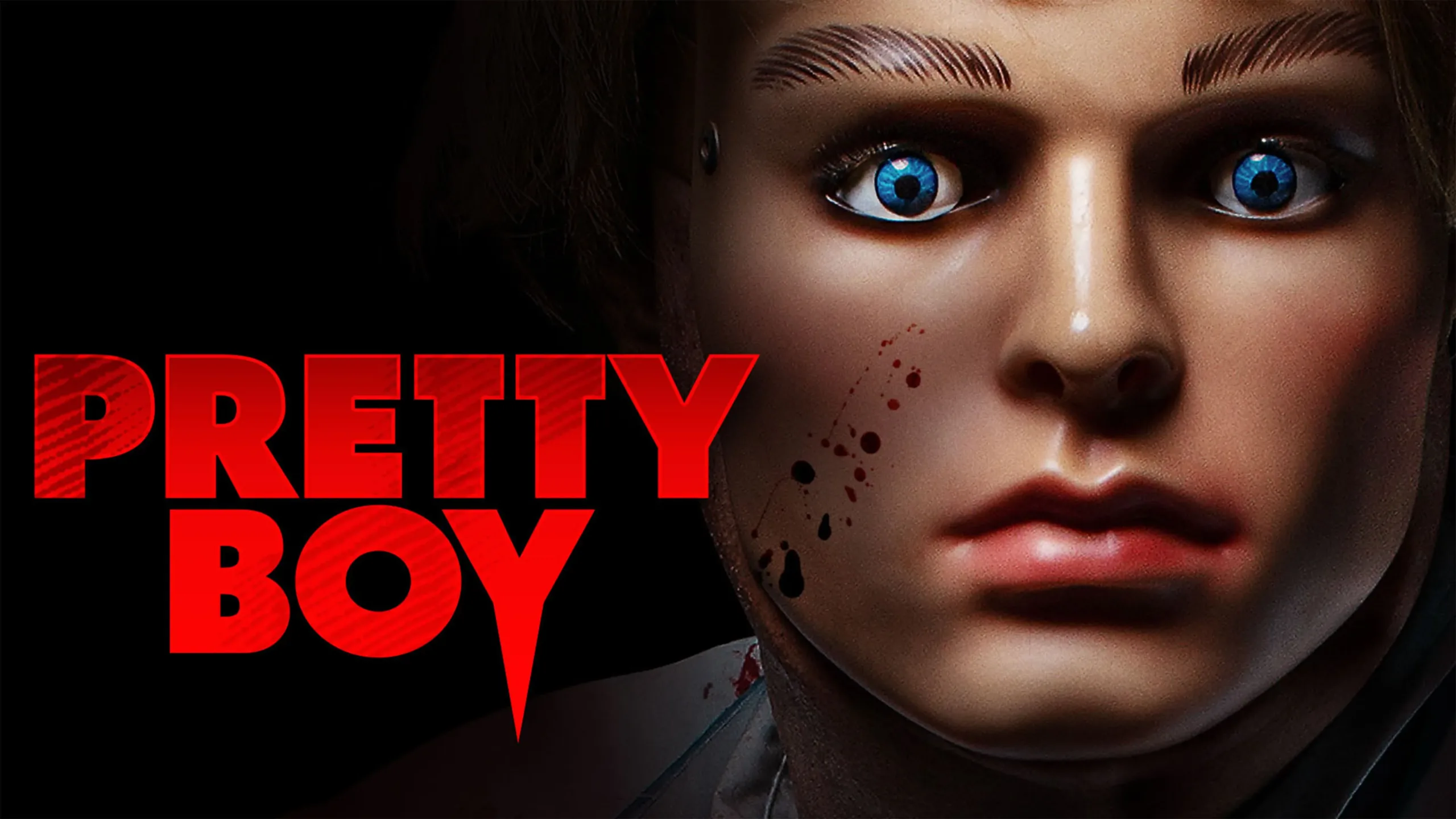

A man in a blood-splattered white tuxedo carries an unconscious woman through the Hollywood Hills. This is how Pretty Boy begins, with its titular killer (Jed Rowen) and his captive, the blind actress Faye (Sarah French), in the immediate aftermath of the 2019 film Blind.
Their destination is an impromptu Valentine’s Day party, a house pulsing with synth music and populated by a fresh set of victims. The film wastes no time declaring its identity. It is a loving homage to 1980s slasher cinema, a world of straightforward motives and stylized violence.
The premise is simple: the killer has a new playground, and the partygoers are about to receive their bloody valentines. Director Marcel Walz establishes this retro framework from the opening frames, setting the stage for a cat-and-mouse game between a killer obsessed and a heroine who refuses to be helpless. The movie presents itself as a continuation of a story, yet its primary allegiance is to a bygone era of horror.
Candy-Colored Carnage
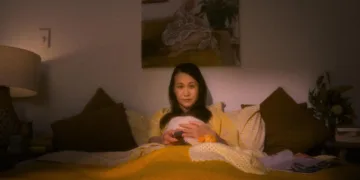
The film’s greatest strength is its confident visual language, a polished aesthetic that feels more sophisticated than its independent production might suggest. The cinematography uses deliberate, eye-catching compositions to build atmosphere, such as a tense sequence where the killer rocks back and forth in a chair beside Faye’s bed, moving in and out of the camera’s focus.
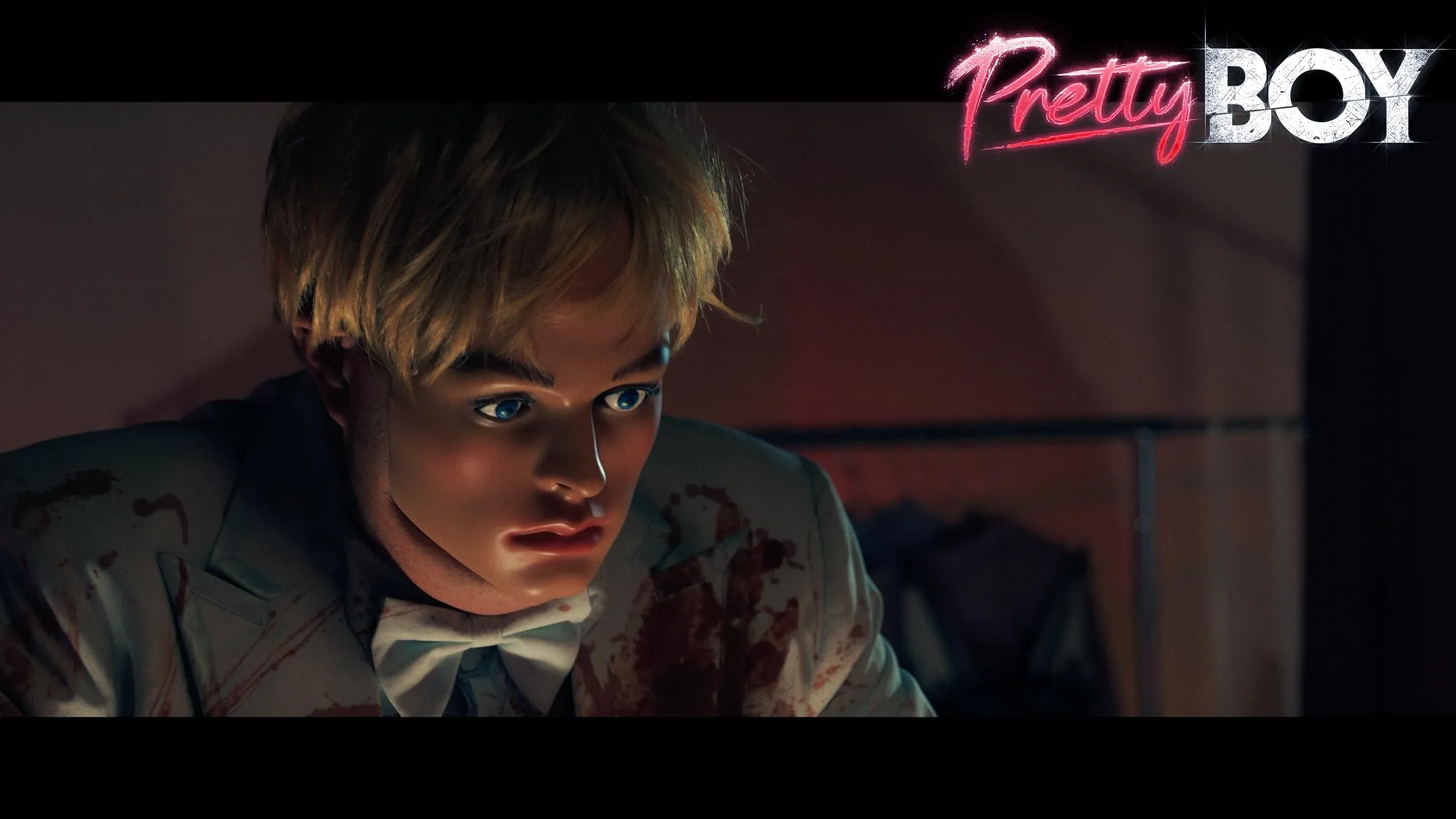
Another memorable shot finds him suddenly illuminated in a dark garage by a victim’s headlights. Inside the party house, the screen is soaked in deep pink and blue light, casting the events in a lurid, dreamlike glow. This neon-drenched aesthetic makes the location feel both celebratory and menacing, a valentine soaked in dread. The killer himself is a memorable creation.
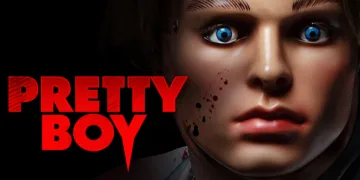
Pretty Boy’s blank, doll-like mask and formal white tuxedo present an unnerving contrast, a figure of perverse innocence turned monstrous. Combined with Jed Rowen’s hulking, erratic physical performance, the design stands out in a genre crowded with masked figures.
Also Read



The film’s commitment to its ’80s sensibility is completed by a brooding synth-pop score that throbs through the narrative, cementing a mood of stylish, nostalgic terror and immersing the viewer completely in its world.
A Heroine Among Archetypes
A slasher film is often only as good as its final girl, and in Faye, Pretty Boy has a strong anchor. Sarah French portrays the blind heroine with a conviction that elevates the material. Her performance communicates resilience and intelligence; Faye is a character defined by her capability, not her vulnerability, subverting the theme of the feeble victim.
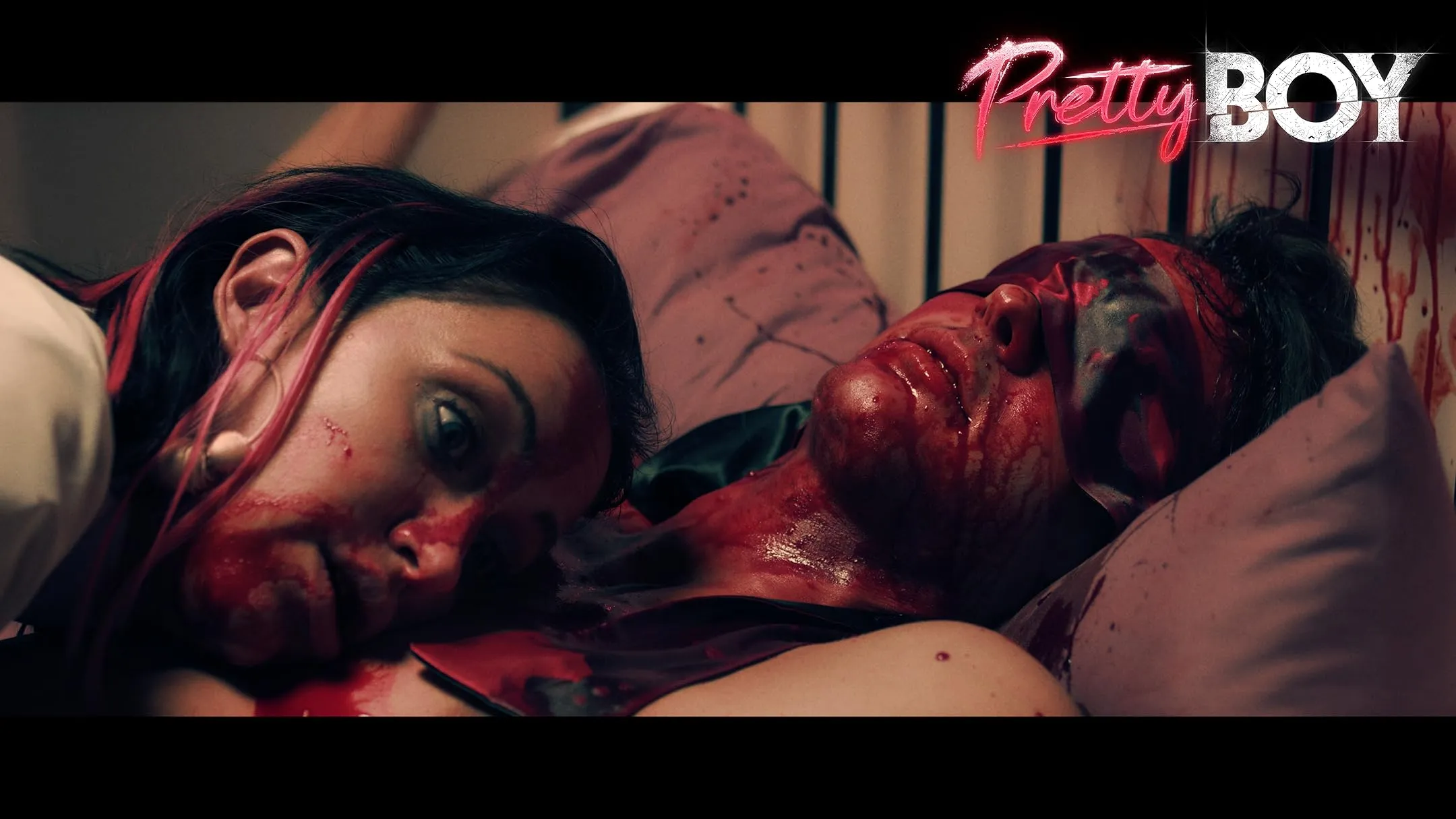
She provides a center of gravity in a film that often feels lightweight. The same cannot be said for the partygoers who become Pretty Boy’s victims. They are a collection of familiar slasher archetypes: the flamboyantly affluent host, the nerdy shy-guy, and the vapid sexpot.
The script gives them little to do besides recite flat, placeholder dialogue before meeting their gruesome ends. These characters are functions of the plot, not people, which gives the actors very little substance to build a performance.
Their deaths, while gory and creative homages to genre classics like the eye-popping kill from Friday the 13th Part III, lack any real weight. With no emotional investment in their survival, the audience watches these scenes with detachment. The killings become technical exercises in gore, spectacles of violence rather than moments of genuine terror.
The Film at War with Itself
For its first hour, Pretty Boy is a successful exercise in style, a fast-paced and unapologetically fun slasher. The film moves with purpose, delivering on its promise of retro carnage with delectable energy. Then, in its final act, the narrative takes a sharp turn and loses its way.
Faye escapes the party house and stumbles into the home of Pretty Boy’s sadistic parents, and the movie abruptly transforms into something else entirely. The campy fun evaporates, replaced by a grim and slow psychological horror that attempts to unpack the killer’s traumatic origins. The tonal whiplash is severe and disorienting.
This exploration of Pretty Boy’s backstory, which recontextualizes him as a victim akin to a character from The Texas Chainsaw Massacre, is convoluted and raises more questions than it answers. The pacing grinds to a halt as the film delves into this depraved family history.
The story concludes on an abrupt, unresolved note that provides no closure, feeling less like an artistic choice and more like a lazy setup for a sequel. This fractured finale betrays the gleeful energy of what came before, leaving a sense of deep dissatisfaction and the impression of an incomplete work.
Pretty Boy is a 2021 horror film directed by Marcel Walz and written by Joe Knetter. It premiered at the Popcorn Frights Film Festival on August 13, 2021, in the US and at FrightFest on August 27, 2021, in the UK. The film is available to rent or purchase digitally on platforms like Apple TV+, Amazon Prime Video, Fandango at Home, and others.
Full Credits
Director: Marcel Walz
Writers: Joe Knetter
Producers and Executive Producers: Oliver Diehm, Phillip B. Goldfine, Ivan Bernard Hruska, Ruediger W. Kuemmerle (Producers); Jon Vangdal Aamaas, James Cullen Bressack, James T. Bruce IV, Binh Dang, Nick Ford, Daren Hammer, René Krzok (Executive Producers)
Cast: Sarah French, Jed Rowen, Devanny Pinn, Heather Grace Hancock, Jake Red, Andrew Rohrbach, Robert Felsted Jr., Fritzi Marth, Sarah Nicklin, Ben Stobber, Tyler Gallant, Dave Sheridan, Maria Olsen, Robert Rusler, Thomas Haley
Director of Photography (Cinematographer): Michael Su
Editors: Kai Edmund Bogatzki
Composer: Klaus Pfreundner
The Review
Pretty Boy
Pretty Boy is a film of frustrating contradictions. It presents a confident, visually arresting homage to 80s slashers, anchored by a compelling performance from its lead actress. The polished cinematography and moody synth score create an immersive world of candy-colored carnage. This stylish potential is squandered by one-dimensional characters and a disastrous final act that abandons its strengths for a grim, convoluted backstory. The jarring tonal shift and abrupt ending make the film feel like two different movies stitched together, with the latter half completely undermining the former.
PROS
- Polished cinematography and a striking use of neon-colored lighting.
- Sarah French gives a convincing and resilient performance as the heroine, Faye.
- The killer's look is memorable and unsettling.
- The first two-thirds successfully capture the atmosphere of an 80s slasher.
CONS
- The partygoers are one-dimensional archetypes with flat dialogue.
- The final act pivots from a fun slasher to a grim psychological horror, which feels out of place.
- The narrative slows down considerably in its final third.
- The conclusion is abrupt, unresolved, and fails to provide closure.