





























Zhannat Alshanova’s debut feature, Becoming, opens on the impassive face of seventeen-year-old Mila. She projects a familiar teenage apathy, a cool disdain for her surroundings that acts as armor. This practiced indifference, however, barely conceals a child’s deep vulnerability. Mila is adrift, living with her younger sister in a sterile hotel at the whim of their flighty mother, Dalida, who perpetually flits from one romantic crisis to the next.
This unstable foundation places the film within a recognizable coming-of-age framework, yet its Kazakh setting offers a specific cultural texture. The story charts a young woman’s search for identity and structure in an environment defined by the absence of reliable guidance, a quest that mirrors a nation still defining itself.
The Architecture of Neglect
Mila’s isolation is a direct result of her family’s emotional architecture. Her mother provides for her daughters materially, leaving cash for taxis and lodging them in a resort, but remains profoundly absent in any meaningful way. Dalida is absorbed by her own arrested development, pursuing a lover abroad and treating her children as an afterthought.
Her promises of “special together-time” are repeatedly broken, teaching Mila that maternal presence is conditional and unreliable. This dynamic creates a quiet, persistent state of emotional insecurity. The film presents this family unit not as a specifically Kazakh problem, but as a distinctly modern one, using the globally understood language of middle-class ennui, smartphones, and transient hotel living.
By doing so, Alshanova bypasses ethnographic cliché to focus on the universal psychology of neglect. This environment forces Mila into a premature and unwelcome maturity; she becomes a reluctant guardian to her younger sister, Lina, who has retreated into the isolating digital world of video games as a coping mechanism. The emotional neglect carves a profound void in Mila’s life, a lack of stability that becomes the primary force propelling her toward any system that might offer the validation her home fails to provide.
The Promise of the Water
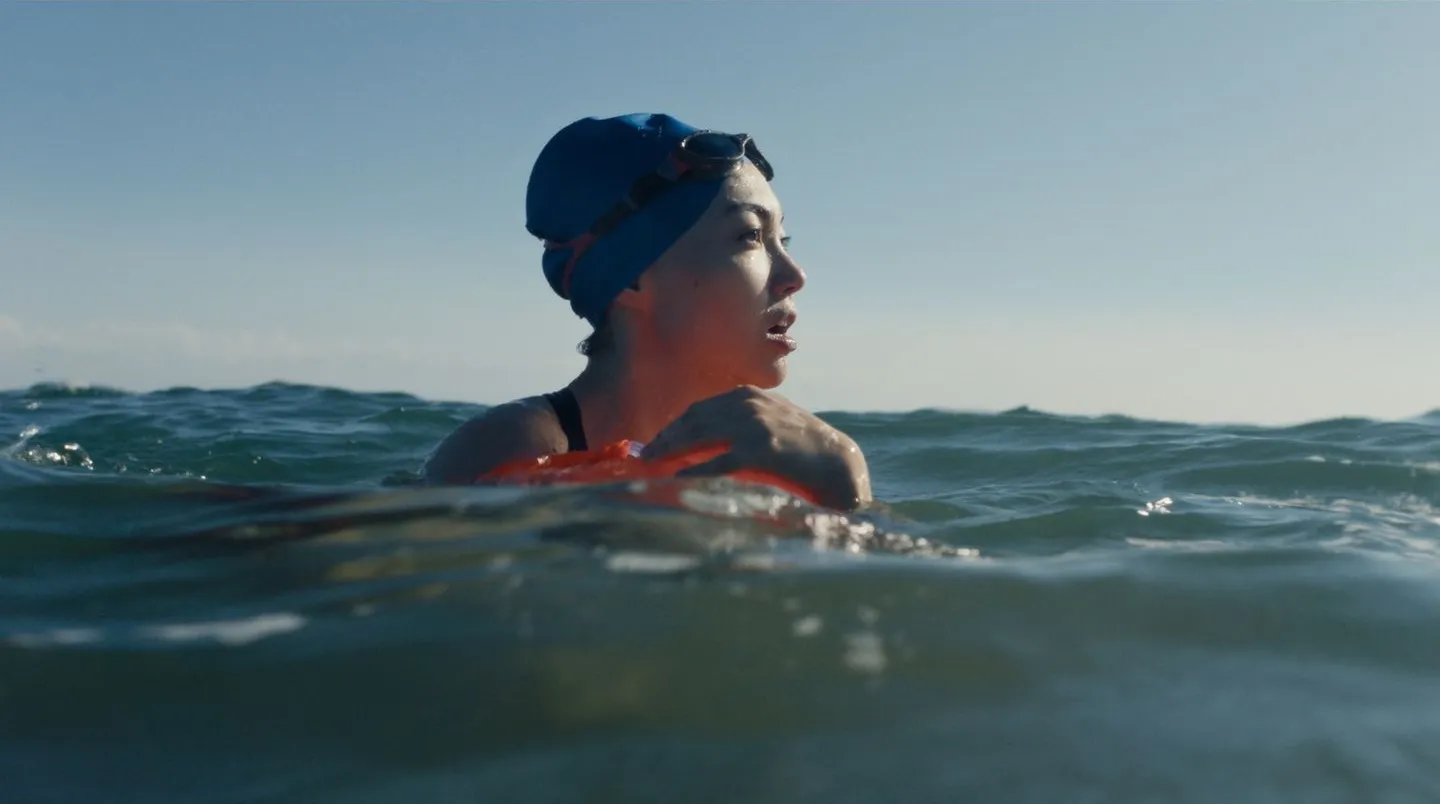
Mila finds a potential anchor in an open-water swimming team. She is drawn to their enigmatic coach, Vlad, whose tough-love authority presents a stark contrast to her mother’s chaotic impulsiveness. Vlad offers direction, criticism, and goals—a framework for existence that is completely alien to her.
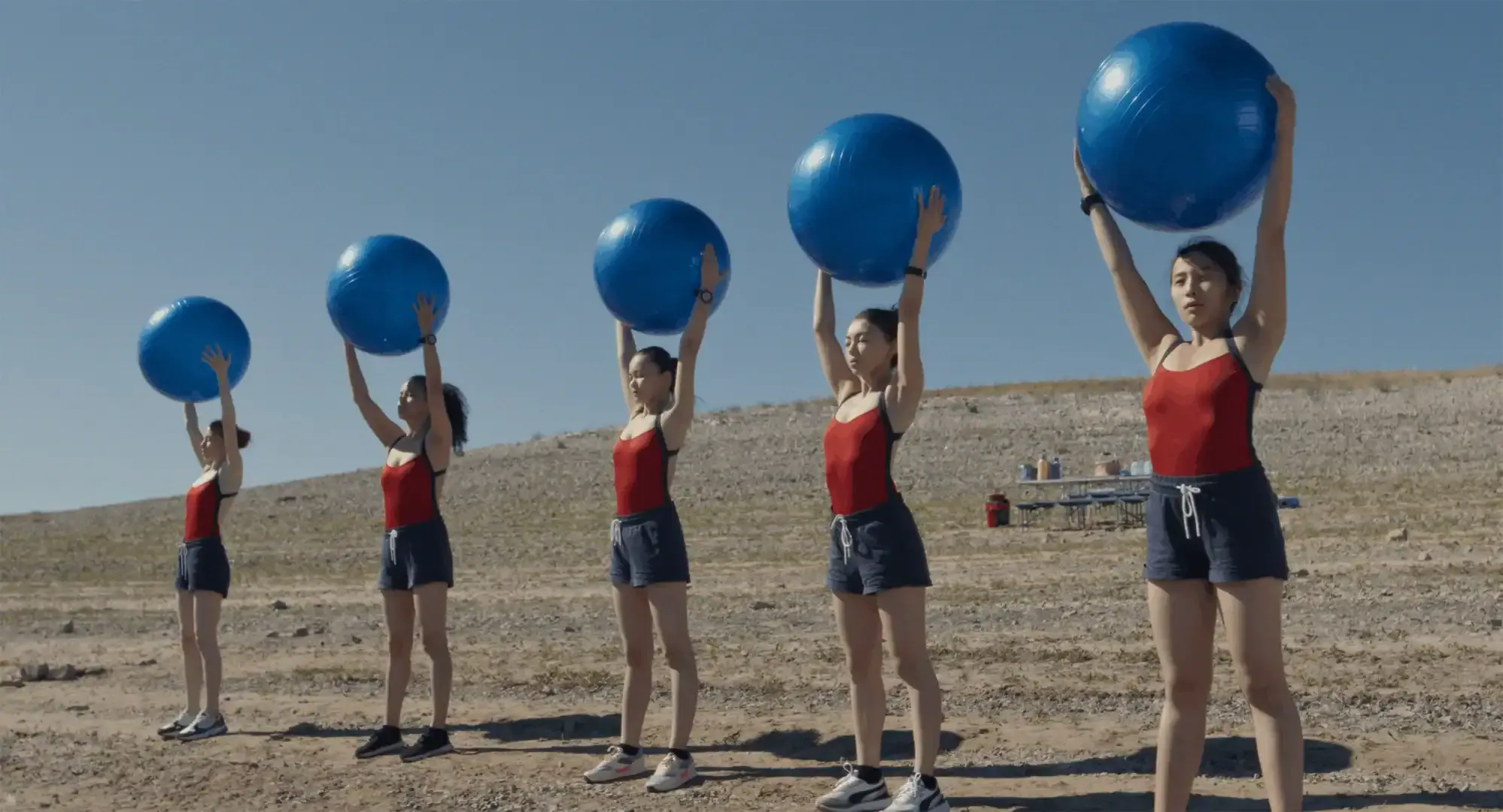
For a time, the team functions as a surrogate family, offering a form of acceptance based on performance and commitment. This conditional belonging, while flawed, is intoxicating for someone who has never felt part of a coherent unit. The structured world of training provides a rhythm and purpose that quiets the anxiety of her home life.
This fragile new world is shattered by a tragic accident at an illicit pool party. The event is a brutal intrusion of chaos into her newfound order. It has a dual effect: it forces a confrontation with Mila’s estranged grandfather, a formidable former official who represents an older, rigid, and patriarchal system, when her mother is characteristically unreachable. It also creates a coveted open slot on the swim team, poisoning the atmosphere of support and transforming it into a competitive battleground where survival is paramount.
Becoming a Reflection
The tragedy marks a significant shift in Mila’s character. Her longing for acceptance curdles into a fierce, calculating ambition to secure her position on the team. The group’s internal hierarchy becomes a theater for her anxieties, where she and the other girls vie for rank and for their coach’s approval.
This drive leads her to make compromising choices, including doping, a physical manifestation of her willingness to corrupt herself in the pursuit of stability. The film powerfully explores the tragic irony of her journey: in her desperate attempt to build an identity separate from her mother, Mila begins to adopt her mother’s most damaging trait—a core of self-interest that disregards the cost to others.
The theme of “becoming” is not a simple path to self-discovery but a complex negotiation with inherited flaws. Her ambition can be seen as both a personal failing and a response to the pressures of a modernizing society, where individual success is a primary value. Mila’s transformation forces a confrontation with the most difficult parts of her own nature, suggesting that we sometimes become the very thing we sought to escape.
Vision in the Current
Alshanova directs her debut with a quiet, perceptive confidence that recalls the character-focused traditions of European cinema. Her vision is realized through Caroline Champetier’s elegant cinematography, which uses water as a powerful visual motif. The photography is rich without being showy, capturing the cool tones of Mila’s emotional state.
The deep, murky lakes represent a space of freedom and immense danger, while the contained, harshly lit chlorine pools signify a world of rigid structure and intense competition. This visual duality mirrors Mila’s own internal conflicts. At the center of this vision is Tamiris Zhangazinova’s arresting performance.
She skillfully navigates the character’s complexities, conveying a hardened exterior that barely contains the fragile, yearning adolescent within through subtle glances and guarded posture. Supported by Lila Desiles’s measured editing, which gives the narrative a fluid rhythm, the film becomes a thoughtful and visually articulate portrait of a young woman’s difficult formation, told with impressive artistic control.
Becoming is a 2025 drama feature film set in Kazakhstan. Directed by Zhannat Alshanova, the film premiered in August 2025 at the Locarno Film Festival, in the Filmmakers of the Present Competition. There is no information available at this time about wider distribution or where it can be streamed or purchased for home viewing. The film is a co-production between France, Kazakhstan, Lithuania, Netherlands, and Sweden.
Full Credits
Director: Zhannat Alshanova
Writers: Zhannat Alshanova
Producers: Zhannat Alshanova, Jean-Laurent Csinidis, Fleur Knopperts, Marija Razgute, Denis Vaslin
Executive Producers: Evgeniya Moreva, Kamila Serkebaeva, Adilzhan Tuyakbay, Assel Yerzhanova
Cast: Tamiris Zhangazinova, Valentin Novopolskij, Asel Kaliyeva, Medina Sagindykova, Yuliya Dyussebayeva
The Review
Becoming
Becoming is a visually confident and emotionally perceptive debut from Zhannat Alshanova. Anchored by a powerful lead performance from Tamiris Zhangazinova and elegant cinematography, the film thoughtfully explores a young woman’s search for identity against a backdrop of emotional neglect. While some narrative elements feel slightly underdeveloped, its quiet intensity and nuanced psychological portraiture make it a compelling and artistically assured piece of filmmaking. It is a stirring look at the difficult, often messy, process of finding oneself.
PROS
- A strong and layered central performance by Tamiris Zhangazinova.
- Elegant and meaningful cinematography that uses water as an effective visual metaphor.
- Thoughtful, perceptive direction that creates a distinct mood.
- A nuanced exploration of adolescent psychology and the desire for belonging.
CONS
- Certain supporting character arcs, like the grandfather's, could have been more developed.
- The narrative can feel ambiguous at times, leaving some motivations unclear.
- The pacing is deliberate and may feel slow to some viewers.