























What is the calculus of creation in a world bent toward decay? Human Resource floats this question not in dialogue, but in the profound quiet of its protagonist. We meet Fren, a woman whose profession is the management of people as material, sorting through lives for a corporate machine. Her own life is now a site of secret biological creation.
She is pregnant, a fact held close and unshared with her husband, Thame. This silence is not a simple hesitation; it is a deep philosophical pause. The film immediately settles into a sober, meditative state, framing Fren’s condition as a vessel for an impossibly heavy question: In a world like this one, what is the justification for a new beginning?
The Architecture of Despair
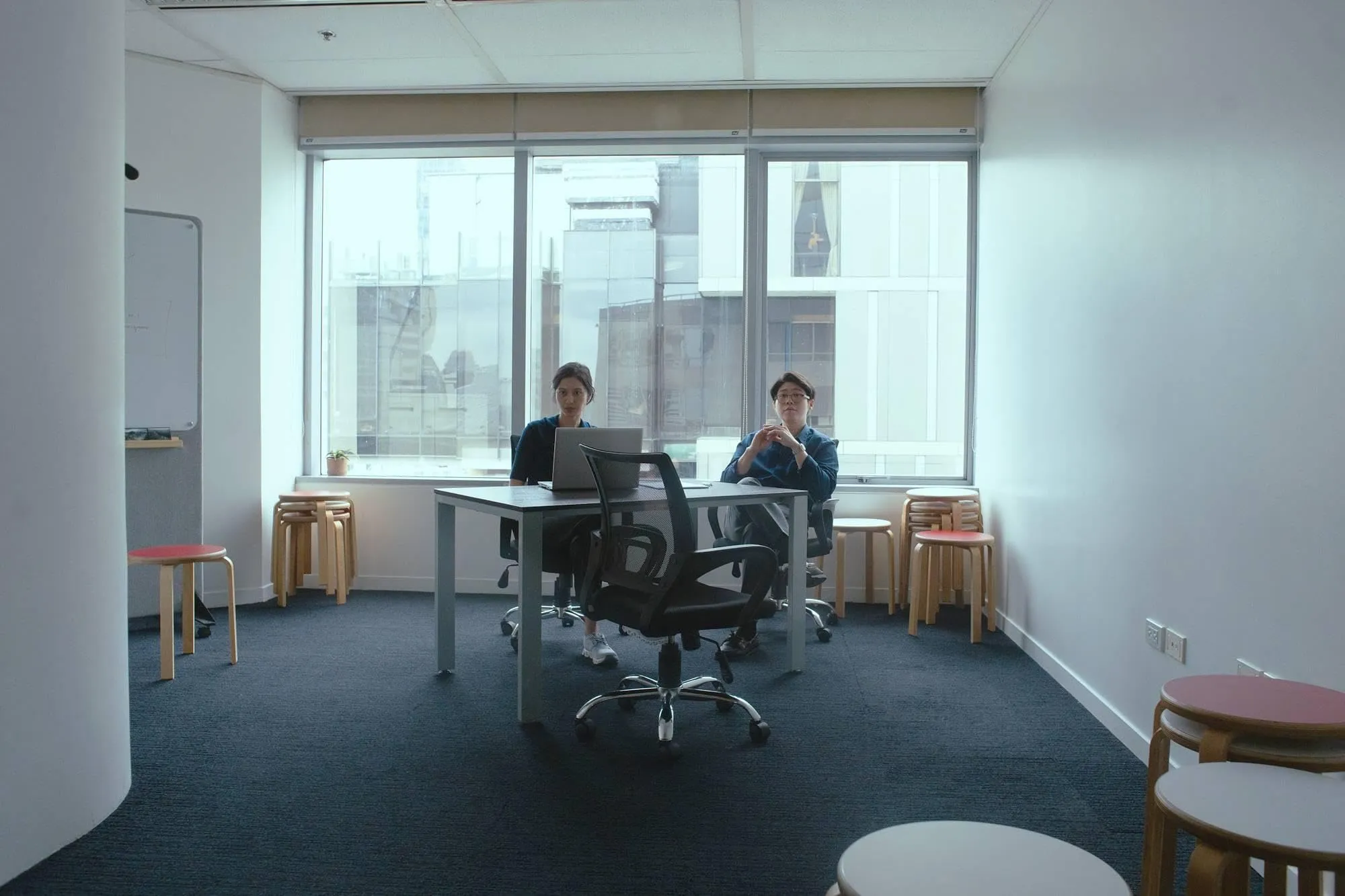
The film constructs its argument against hope with meticulous, soul-numbing detail. Fren’s workplace is a sterile purgatory, a landscape of beige partitions and cold, fluorescent light where human aspiration is ground into corporate efficiency.
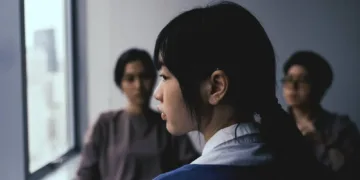
Her task is to find new bodies for a high-pressure, low-wage position with an abusive superior, a role recently and mysteriously vacated by another employee who simply vanished into the city’s indifferent hum. She sits across from a parade of anxious, over-qualified applicants, their faces reflecting a desperate desire to be chosen, unaware they are applying for a position in a machine designed to consume them.
Her coworker Tenn’s lament that HR is not a “human buffet” hangs in the air, a bitter understatement for the quiet cannibalism of their work. This specific office malaise expands to fill the entire frame of modern life. The narrative is saturated with the background static of a society in decline; radio broadcasts chant a litany of social ills—widening inequality, random violence, pervasive pollution—that becomes a constant, low-grade hum of dread.
Thame’s prized invention, a thin stab-proof vest for an “increasingly hostile world,” is a commodity born of this fear, a futile attempt to armor the individual against a systemic sickness. The film presents a totalizing system of anxiety, an environment that argues, with chilling persuasion, against its own continuation.
Geographies of Silence
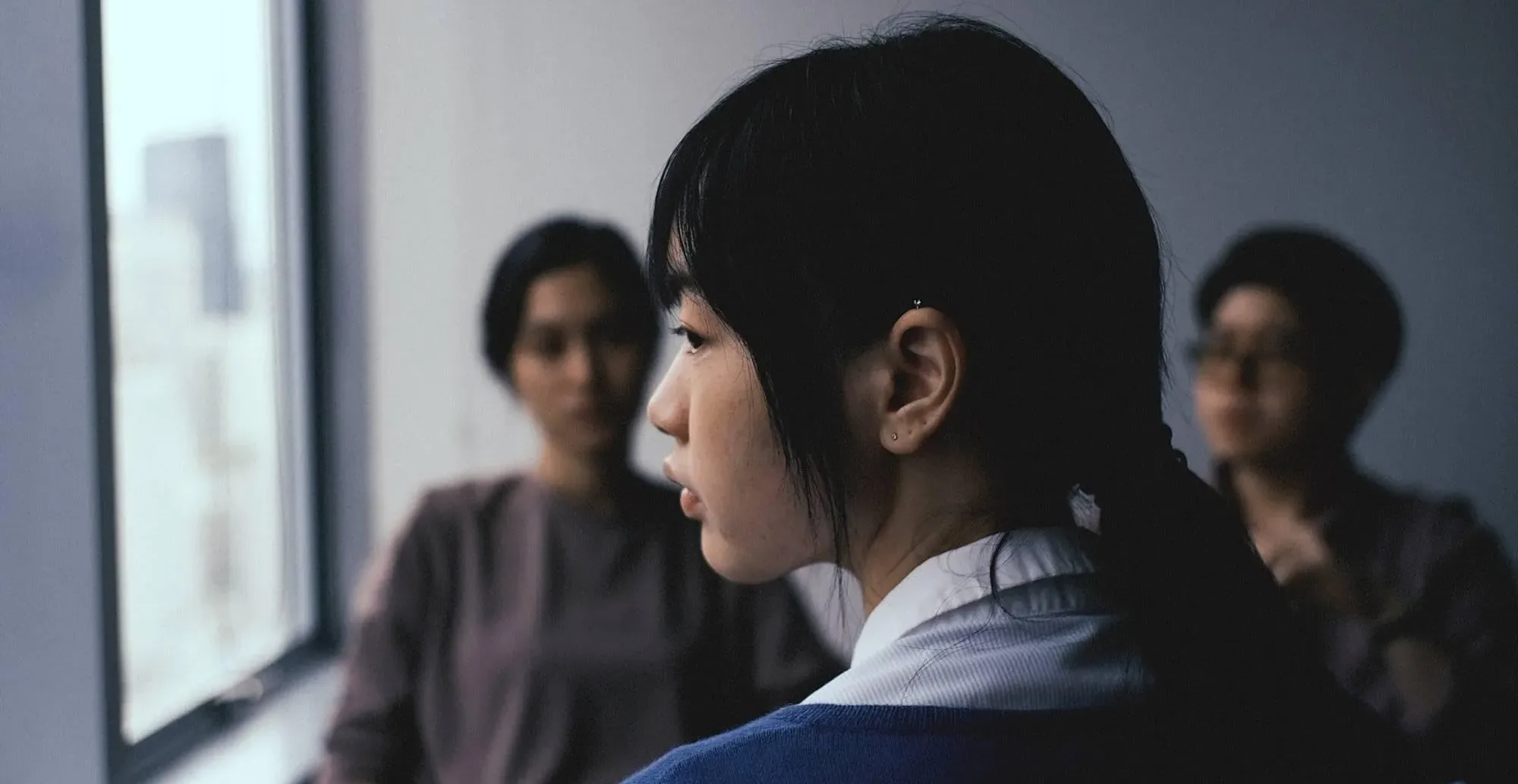
Fren exists as a study in opacity, a passive center around which the world’s noise revolves. Her emotions are locked behind a placid mask, her internal state a geography known only to her. Prapamonton Eiamchan’s performance is a masterpiece of restraint, a symphony of micro-expressions that convey a storm of internal conflict through the barest of gestures.
A slight hesitation before speaking contains a universe of doubt. A controlled swallow betrays a wave of nausea that is both physical and existential. Her face becomes a quiet landscape where immense battles are fought without a single visible casualty. She is a still point in contrast to her husband, Thame, a man of constant, self-absorbed motion.
Played with an authentic, insidious entitlement by Paopetch Charoensook, Thame talks without listening, his ambitions and anxieties filling the space Fren cedes. He is not a monster; he is something more unsettling, a common man whose obliviousness is a form of patriarchal gravity. Their dynamic is perfectly captured in a recurring traffic dispute on a one-way street.
His insistence on holding his ground out of abstract principle reveals a desperate need for control, while her readiness to yield shows a deep exhaustion with conflict itself. Only a visit to her mother cracks this stoic facade, when she is told to stop being a “people pleaser” for her child’s sake, a piece of advice that hints at a lifetime of learned reticence.
The Form of Oppression
Director Nawapol Thamrongrattanarit makes the film’s form an extension of its bleak philosophy. The aesthetic is one of detached minimalism, where the glacial pacing is not a flaw but a thesis about the nature of time under capitalism.

The narrative’s deliberate, repetitive structure mirrors the suffocating rhythm of labor and exhaustion, forcing the audience to experience duration as a weight, to feel the slow erosion of the self. The absence of traditional dramatic crescendos is the point; the condition of stasis is the story. This sense of confinement is reinforced by the visual language.
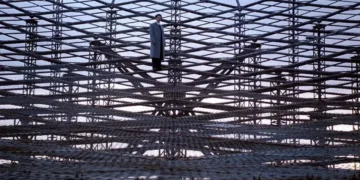
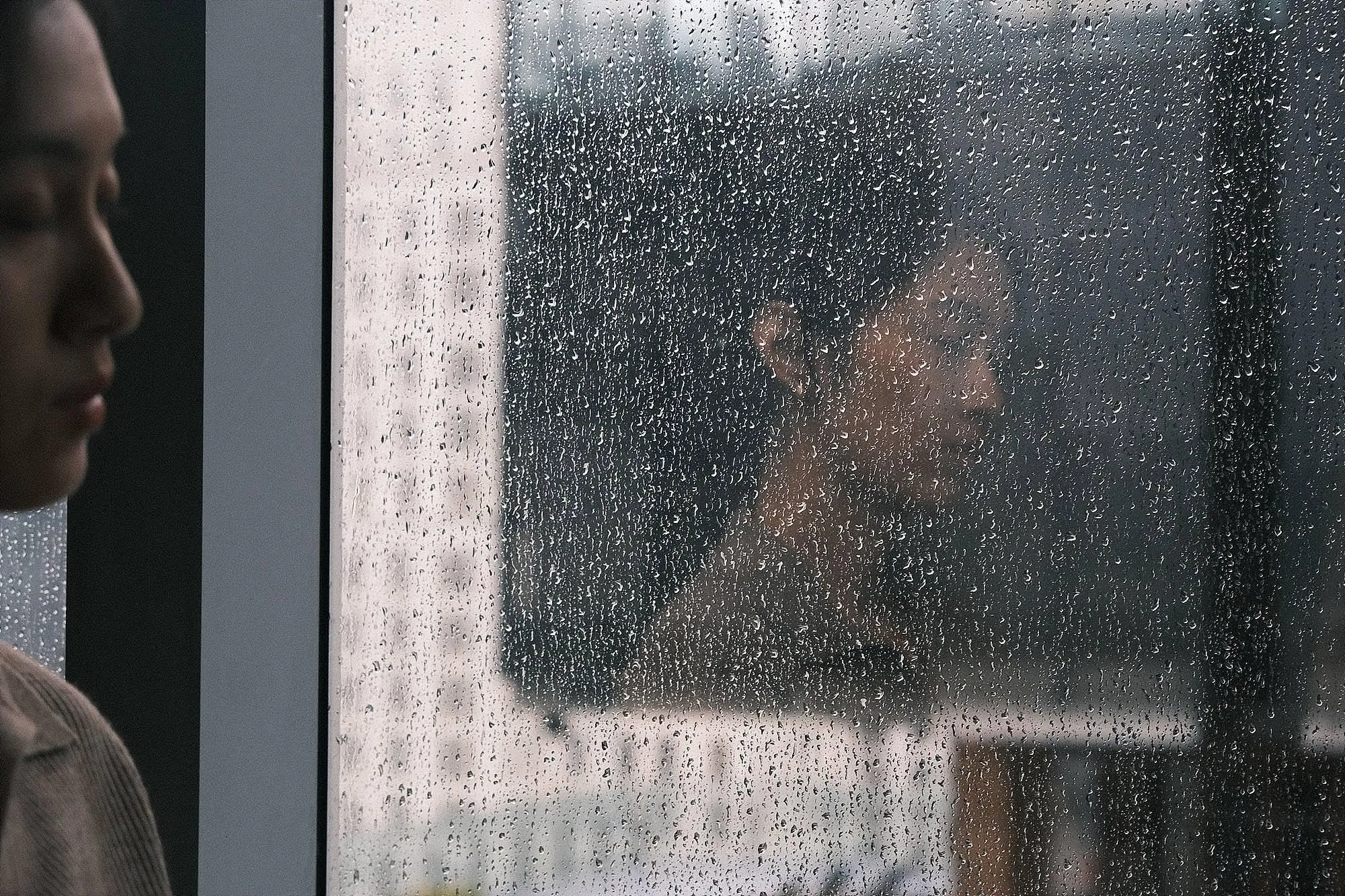
The cinematography presents a drab, antiseptic world of glass towers and impersonal interiors, rendered in a muted color palette that suggests a world slowly being bled of life. Overhead shots of Bangkok’s infrastructure turn roadways into rigid circuits and people into anonymous data points. The director’s use of the 4:3 aspect ratio is a deliberate act of imprisonment, boxing Fren into the frame and visually heightening her isolation.
The sound design completes the atmosphere of dread. The banal hums and clicks of the office, the hollow echo of a keyboard in an empty room, become an oppressive score. The silence is never peaceful, but pregnant with unsaid anxieties. Every technical choice is calibrated to articulate a potent, unsettling mood, making the experience of watching the film akin to the condition it portrays.
Human Resource is a Thai film production from companies GDH 559, Happy Ending Film, and One Cool Connect. It made its world premiere as part of the Orizzonti (Horizons) competition at the 82nd Venice International Film Festival, with its first screening held on September 3, 2025.
Full Credits
Director: Nawapol Thamrongrattanarit
Writer: Nawapol Thamrongrattanarit
Producers and Executive Producers: Nawapol Thamrongrattanarit, Pacharin Surawatanapongs, Vanridee Pongsittisak, Paiboon Damrongchaitham, Boosaba Daorueng, Jira Maligool
Cast: Prapamonton Eiamchan, Paopetch Charoensook, Pimmada Chaisakaoen, Darina Boonchu, Chanakan Rattana-Udom
Director of Photography (Cinematographer): Natdanai Naksuwarn
Editor: Manussa Vorasingha
Composer: Siwat Homkham
The Review
Human Resource
Human Resource is a formally brilliant and emotionally potent piece of cinema. It trades dramatic release for a sustained, suffocating atmosphere, turning the mundane rhythms of corporate life into a profound meditation on existence. Its quietness is its power, creating an unsettling and deeply honest portrait of a world where bringing a new life feels less like an act of hope and more like a quiet surrender. The film lingers, a haunting question without an easy answer.
PROS
- Meticulous and atmospheric direction that powerfully establishes its bleak tone.
- A masterful lead performance from Prapamonton Eiamchan, conveying immense depth with minimal expression.
- Intelligent and subtle exploration of complex themes like corporate alienation and existential dread.
- A cohesive and oppressive aesthetic achieved through cinematography, sound design, and pacing.
CONS
- The deliberate, glacial pacing will be alienating for some viewers.
- Its refusal to offer conventional dramatic payoffs may feel frustrating.
- The emotional distance and narrative opacity could leave some feeling disconnected.