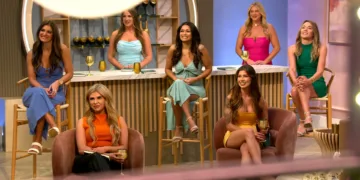













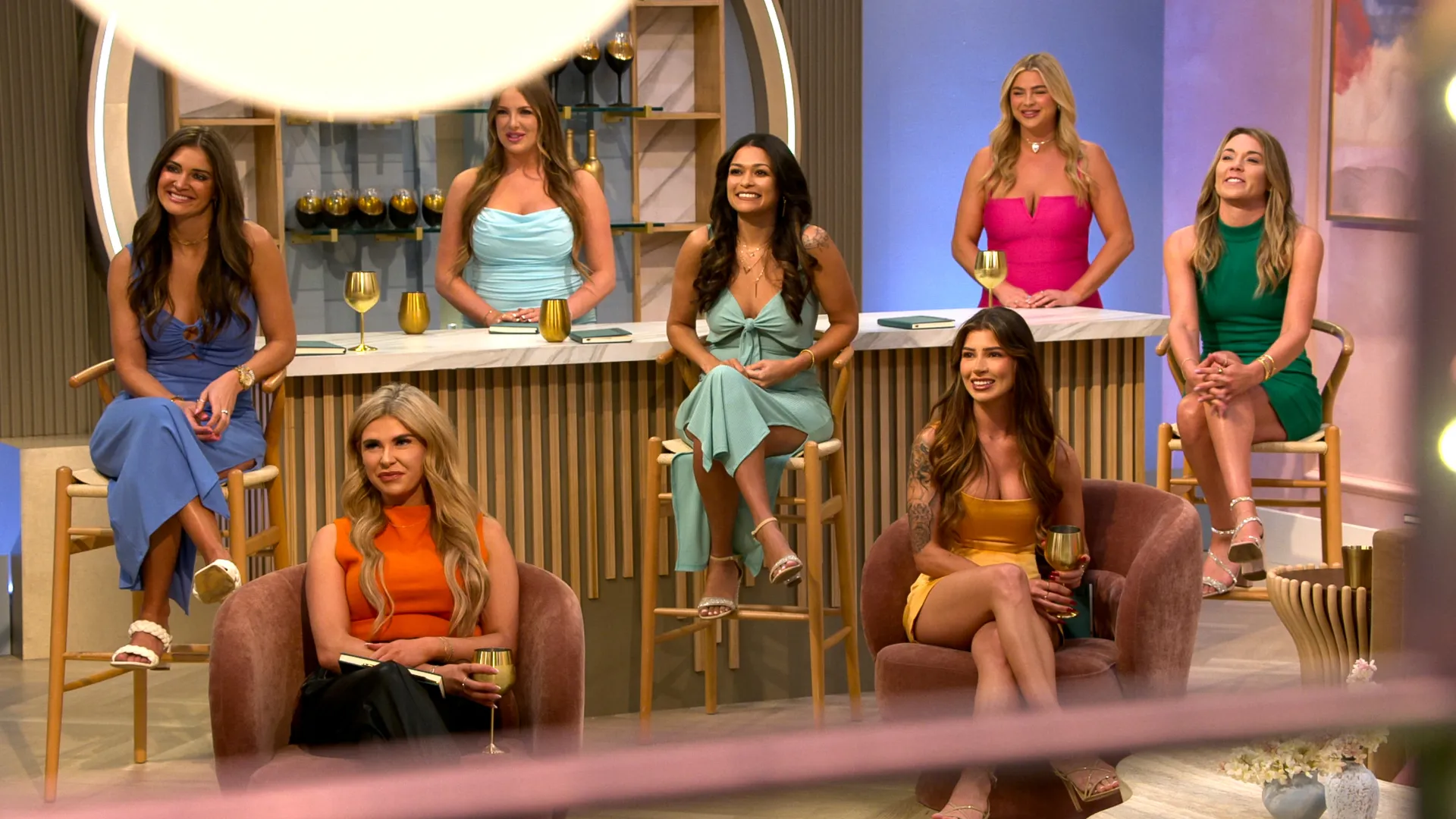

Two golden goblets gleam in the soft, manufactured light, catching the reflection of a blue, glowing wall that bisects the room. This is the altar of modern love, a space stripped of the physical, where disembodied voices are meant to forge connections of profound depth. The premise of Love Is Blind returns for its ninth season with this familiar, almost sacred, setup. A new group of singles from Denver will enter these pods, speaking for days to unseen partners in the hope of finding a soulmate, culminating in a proposal made to a silhouette.
The engaged couples then meet, a moment of shocking corporeal reality, before a whirlwind trip and a return to their lives to see if the bond can withstand the friction of the real world. The architecture of the experiment is unchanged, yet from the opening moments, a hollowness permeates the process.
This season presents itself less as a genuine inquiry into the nature of romance and more as a weary performance of it. The participants, a cast defined by a current of cynicism and jarring cruelty, seem to understand their roles all too well, their actions suggesting an awareness not of their potential partner, but of the vast, unseen audience on the other side of the screen.
Forging Bonds Amidst Bad Behavior
In the cloistered quiet of the pods, there are fleeting moments that honor the show’s design. A man named Anton and a woman named Ali discover a rare affinity, their conversation deepening as they trace the parallel paths of their families’ immigrant journeys. Their shared history creates a shorthand for understanding, a foundation of mutual experience that feels solid and real.
In another pod, Edmond, a former foster child, speaks of the teacher who altered the course of his life, his voice thick with a vulnerability that seems to cut through the artifice of the setting. On the other side of the wall, Kalybriah, a social worker, listens with a practiced empathy that appears to be the perfect balm for his old wounds. Their early interactions are gentle and supportive, a portrait of the kind of profound emotional connection the experiment promises to deliver.
These instances of sincerity, however, are quickly swallowed by a pervasive ugliness. The pods, intended as a space free from prejudice, instead become an echo chamber for it. A luxury watch dealer named Nick finds a kindred spirit in Annie, a hairstylist, as they cheerfully agree that LGBTQ+ identity is a mere “fad,” a product of “peer pressure.” Their bond is cemented not by shared dreams but by a shared disdain.
Nick’s capacity for coldness is further revealed when he dismisses another woman, Kait, after she confesses that her mother’s death from cancer led to a crisis of faith. Her painful honesty is met with his immediate, clinical rejection. He is not seeking a partner to face life’s complexities with; he is screening a candidate who must fit within his rigid, unyielding worldview. This transactional chilliness is mirrored in the actions of Megan Walerius, a woman who brands herself “Sparkle Megan.”
Her time in the pods is spent openly weighing her suitors’ financial portfolios. She debates between Mike, a wealthy investor, and Jordan, a single father whose most unforgivable sin is his ownership of a Kia. Her casual car-shaming is delivered without a hint of irony, a starkly classist calculation that she presents as a simple dating preference. The supposed emotional intimacy of the pods fails to temper these impulses; it only gives them a focused, unsettling platform.
Attraction and Red Flags
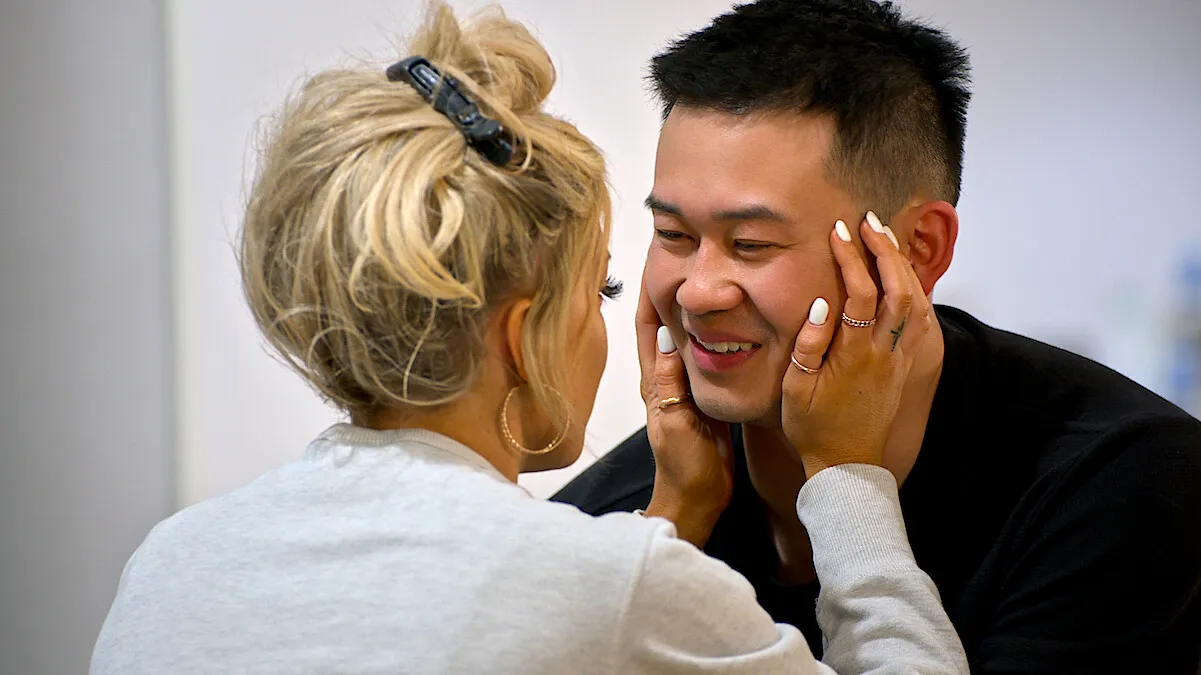
The transition from the abstract to the physical world proves immediately catastrophic for the experiment’s thesis. For Anna and Patrick, the long-awaited reveal is not a moment of joyful confirmation but a quiet, swift execution. After days of building what he believed was a deep connection, Patrick, who had voiced his insecurities about being found unattractive as an Asian man, watches his fears materialize. Anna’s face registers a polite disappointment, and she later confirms to the producers that the physical attraction is simply not there.
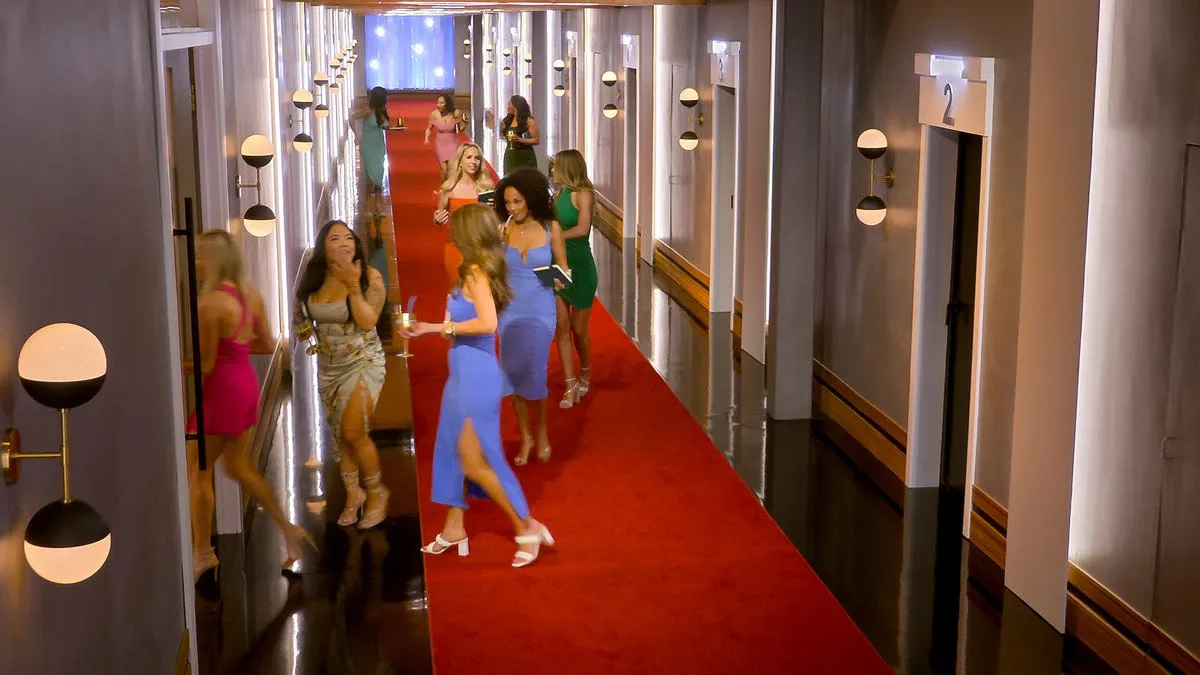
The engagement is dissolved almost before it has begun, a brutal testament to the fact that for some, love is anything but blind. A similar, though more corrosive, dissonance infects the pairing of Joe and Madison. Joe’s visible shock upon first seeing his fiancée is an awkward, telling prelude to his later confession.
He admits that he usually dates “thinner” women, a comment that lands with particular cruelty given the current cultural pressures on women’s bodies. For Madison, who is also in the process of losing her eyesight, the revelation is doubly painful. The one person who was supposed to have fallen for her essence is now confessing that her physical form is a deviation from his ideal.
Away from the sterile environment of the pods, the personalities of the participants begin to curdle under pressure. The sweet vulnerability Edmond displayed gives way to a startling emotional immaturity. When Kalybriah expresses a desire to wait until their wedding night to be intimate, Edmond’s disappointment morphs into a full-blown tantrum.
Through tears, he laments his fate as a “nice guy” who is being unfairly denied what he feels he is owed. The interaction is a chilling display of manipulative behavior, his earlier sensitivity revealed as a conditional trait, easily rescinded when his expectations are not met. The “red flag,” as it is often called in the lexicon of modern dating, is not merely raised; it is flown like a banner.
Meanwhile, the financial disparity that “Sparkle Megan” identified as a potential issue becomes a persistent, grinding source of conflict with Jordan. Her choice to step outside her comfort zone and date a man of lesser means does not lead to personal growth. It leads to a relationship shadowed by her thinly veiled resentment and his weary frustration, proving that the anxieties voiced through a wall do not simply vanish when the wall comes down.
A Crisis of Authenticity
Ultimately, this season of Love Is Blind documents its own decline. The show’s structure, once a fascinating container for human connection, now feels like a stage for aspiring influencers to audition for their next gig. The participants are no longer just participants; they are students of the genre, fluent in the rhythms and tropes of reality television.
Nick’s inexplicable reference to an “EpiPen,” a direct quote from a memorable moment in a past season, is the tell. It is a line delivered not to his pod-mate, who fails to understand it, but to the social media ecosystem that he knows will dissect the scene. It is a calculated bid for virality, a moment of performance that breaks the fourth wall. Megan’s entire “Sparkle Megan” identity feels similarly constructed, a ready-made brand complete with a catchy name, perfectly suited for a future of sponsored posts and podcast appearances.
This shift from earnestness to performance places the show in an impossible position. The original cast from the show’s debut season felt as though they had stumbled into the experiment, their reactions raw and their motivations seemingly genuine. The current cast arrives with a playbook. They understand that a villain edit can be as lucrative as a hero’s journey, and that outrageous statements generate more screen time than quiet, steady affection.
The producers now face a paradox: the very drama that fuels weekly viewership and online chatter is born from a cynicism that fundamentally undermines the show’s romantic premise. The result is a hollow spectacle. The audience is left watching a group of people who are not falling in love with each other, but with the idea of being seen. The central question is no longer whether love is blind, but whether there is anything real left to see.
Love Is Blind is an American reality dating series where singles attempt to find a match and get engaged, all before ever seeing each other face-to-face. The first season of the show premiered on Netflix on February 13, 2020. Love Is Blind Season 9, premiered its first set of episodes on October 1, 2025. The entire series, including all past seasons and international versions, is available to watch exclusively on the streaming platform Netflix.
Full Credits
Director: Brian Smith
Writers: Chris Coelen (Series Creator)
Producers and Executive Producers: Chris Coelen, Ally Simpson, Eric Detwiler, Brian Smith, Brent Gauches, Heather Crowe, Sam Dean, Jill M. Goslicky
Cast: Nick Lachey, Vanessa Lachey, Lauren Speed, Cameron Hamilton, Amber Pike, Matt Barnett
The Review
Love Is Blind Season 9
Love Is Blind Season 9 marks a low point for the series, showcasing the decay of its own formula. While the structure remains, the spirit is gone, replaced by a cast of deeply unlikable participants who seem more interested in performance and provocation than genuine connection. The season is a tedious parade of red flags, offensive rhetoric, and cynical behavior, making it a difficult and often unpleasant watch. It succeeds only as a bleak case study in how the promise of post-show fame can corrode the heart of a reality TV experiment.
PROS
- Offers a stark, unfiltered look at the modern dating landscape’s cynical side.
- Provides a compelling, if depressing, analysis of how reality television is warped by fame-seeking contestants.
- Contains a few fleeting moments of genuine human connection that stand out against the overwhelming negativity.
CONS
- The cast is almost universally unlikable, making it impossible to root for any of the couples.
- Features disturbing conversations filled with homophobic and classist sentiments.
- The show’s central romantic premise feels completely broken and secondary to the contestants' bad behavior.
- The drama is often more uncomfortable and mean-spirited than it is entertaining.