







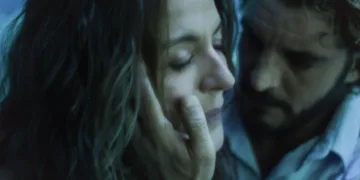





Netflix’s Romantics Anonymous arrives as a Japanese-South Korean co-production adapted from Jean-Pierre Améris’s 2010 French film Les Émotifs Anonymes. The eight-episode series follows two people whose psychological barriers have isolated them: Lee Hana (Han Hyo-joo), a gifted chocolatier unable to make eye contact, and Fujiwara Sosuke (Shun Oguri), an executive whose germaphobia prevents close touch. Their paths cross at Le Sauveur, a respected chocolate boutique, where each discovers an unusual ease in the other’s presence. Hana can hold Sosuke’s gaze without panic. Sosuke can accept her touch without recoil.
The series treats mental illness with seriousness. Both protagonists carry wounds from lost loved ones, and their phobias function as genuine psychological disorders that call for professional care. The narrative adopts a deliberate tempo that permits discomfort to settle into view and shows how trauma alters a person’s relation to the world. Chocolate-making provides a shared language through which questions of grief, therapy, and the slow work of relearning trust are examined.
Performances That Breathe Life Into Wounded Souls
Hana moves through life like a ghost, delivering her chocolates to Le Sauveur while remaining anonymous. Han Hyo-joo layers this character carefully: beneath the fear lives a person who longs for connection, whose skill with chocolate expresses an inward richness. As Hana gains small footholds among colleagues, Han allows light to enter the role. When anxiety overwhelms Hana and she regresses, those reversions carry force because the series shows how each advance has been earned.
Sosuke bears different burdens. As heir to Futago Confectionery, a company known for mass-produced, inferior products, he wants to raise the brand’s standing. Shun Oguri gives Sosuke a guarded quality that reads as self-protection, a man who has settled into limits until Hana prompts him to imagine alternatives. The actor is most effective in scenes where Sosuke falters and his frustration with his body’s betrayals surfaces.
The chemistry between Han and Oguri avoids spectacle. They form a quieter bond: two people learning stillness together and exchanging small acts of vulnerability. Their awkwardness feels authentic because it stems from years of solitude and repeated efforts at normalcy that failed. The loneliness both actors show in early episodes makes the gradual ease they find together feel like genuine relief.
The Architecture of Anxiety: Narrative Choices and Mental Health
Romantics Anonymous commits to portraying psychological disorders with care and accuracy. Sosuke takes part in EMDR therapy with Dr. Irene, and the series shows his sessions, the techniques used, and the homework he completes between appointments. Hana resists help at first, consistent with her broader pattern of withdrawal. Only after a devastating loss does she seek professional support.
The pacing aligns with the subject matter. Scenes linger so silence acquires weight. Characters move toward revelations in a circular way instead of rushing to them. This rhythm allows viewers to observe anxiety as it unfolds: shallow breathing, aborted speech, physical retreat.
Dr. Irene, played by Yuri Nakamura, stands out as a thoughtful presence. She appears as a professional doing her best while also coping with her own complications. The series shows her making mistakes and managing personal struggles as she works on her own healing. That portrayal underscores how recovery can involve imperfect people helping one another. Hiro (Jin Akanishi), a bartender who draws Hana’s interest and who is Sosuke’s close friend, adds texture without generating artificial conflict.
The series makes a clear claim about caregiving and love. Hana and Sosuke provide comfort to one another, and that comfort matters, but it does not erase their conditions. They continue to panic, to withdraw, to struggle. Their relationship supplies motivation and support and reduces the isolation of healing, while the primary responsibility for recovery remains with each of them. Viewers who have lived with anxiety or trauma will find familiar patterns in the characters’ uneven progress and in how gains can fade in moments of stress.
Visual Language and the Alchemy of Chocolate
Each episode opens with a sequence devoted to chocolate-making, and these moments underline chocolate as a central vocabulary. The camera lingers on glossy surfaces, captures the instant chocolate reaches the right temper, and follows ganache as it pools and smooths.

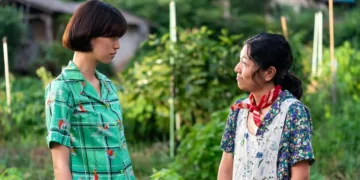
Hana’s bond with chocolate functions on several levels. When human exchange becomes fraught, she communicates through craft. Her creations articulate emotions she cannot speak, rendering inner states into tangible form. Sosuke finds a purpose in quality chocolate-making that sits outside his family’s commercial aims. Journeys to rural suppliers to source ingredients act as sequences where relationships with artisans mirror the care both protagonists try to learn to offer themselves and each other.
The cinematography privileges intimacy. Soft lighting bathes scenes and warm tones produce visual ease. Kitchen moments carry a particular presence: the quiet rhythm of knives on boards, the hum of refrigeration, the sound of footsteps on tile. These ambient elements help Le Sauveur read as a working place where real labor occurs.
Meaning accumulates through small gestures rather than through grand pronouncements. A look held a fraction longer. Laughter at a simple mistake. An apology performed by deed instead of delivered in speech. This method echoes the craft itself: making chocolate requires patience, precision, and attention to detail, and trust-building follows similar terms. Under the visual beauty there is a thread of melancholy. The series keeps returning to the fact that both leads carry grief and that their current struggles grow out of profound losses.
Romantics Anonymous places itself squarely in comfort viewing, but that comfort is earned through candid treatment of difficulty, respect for the reality of mental illness, and performances that avoid simplifying complex emotional states. For viewers who seek gentleness, the series supplies what its title suggests: a romance for people who need tenderness, time, and careful attention to begin to open.
The television series Romantics Anonymous is a 2025 Netflix original that merges Japanese and South Korean production talent. The romance drama is an adaptation of the 2010 French-Belgian film of the same name. The series tells the story of Sosuke Fujiwara, an heir to a confectionery magnate who suffers from mysophobia (a fear of germs) that prevents him from touching others, and Hana Lee, a gifted chocolatier who has scopophobia (a fear of eye contact). The two connect through their mutual passion for chocolate while navigating their respective anxieties. The series premiered on Netflix globally on October 16, 2025.
Full Credits
Director: Shō Tsukikawa
Writers: Kim Ji Huyn, Yoshikazu Okada
Producers and Executive Producers: Kim Yong Eun, Choi Gi Young, Kim-Keum Sil, Takuro Nagai, Mao Osaki, Syd Lim (Executive Producer)
Cast: Shun Oguri, Han Hyo-joo, Yuri Nakamura, Jin Akanishi, Ryo Narita, Ayumi Ito, Sayaka Yamaguchi, Mieko Harada, Meiko Kaji, Eiji Okuda, Koichi Sato, Shima Ise, Keiichiro Azuma, Kentaro Sakaguchi (Special appearance), Song Joong-ki (Special appearance)
Director of Photography (Cinematographer): Kosuke Yamada
Editors: Yang Jin-mo
Composer: Dalpalan
The Review
Romantics Anonymous
Romantics Anonymous succeeds through its patient, compassionate approach to mental health and romance. The series honors the reality that healing takes time and happens in fits and starts. Han Hyo-joo and Shun Oguri deliver performances grounded in authenticity, creating characters whose struggles feel lived-in rather than performed. The chocolate-making sequences provide sensory pleasure while serving as metaphor for care and craft. While the pacing may test some viewers, those willing to slow down will find a story that respects both its characters and its audience.
PROS
- Thoughtful, accurate portrayal of anxiety and mental health treatment
- Gorgeous cinematography and chocolate-making sequences
- Strong chemistry between leads built on subtlety and patience
- Respectful handling of grief and trauma
- Well-developed supporting characters, especially Dr. Irene
CONS
- Slow pacing may frustrate viewers seeking faster narrative momentum
- Some subplots (particularly Sosuke's family business dynamics) feel underdeveloped
- The "magical connection" between leads lacks clear explanation
- Familiar romantic tropes appear despite fresh execution