




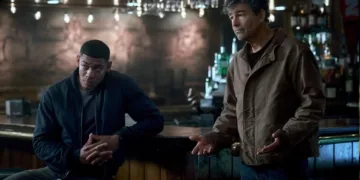












Two systems of belief govern Baldur’s village, and both become weapons once his love refuses to stay private. Christianity supplies scripture, judgment, and punishment. Older customs survive beside it in animal bones, water rituals, and the fear that the dead may return with unfinished claims. Kasper Kalle’s No Rest for the Wicked places queer desire between those systems, then asks which belief is truly barbaric.
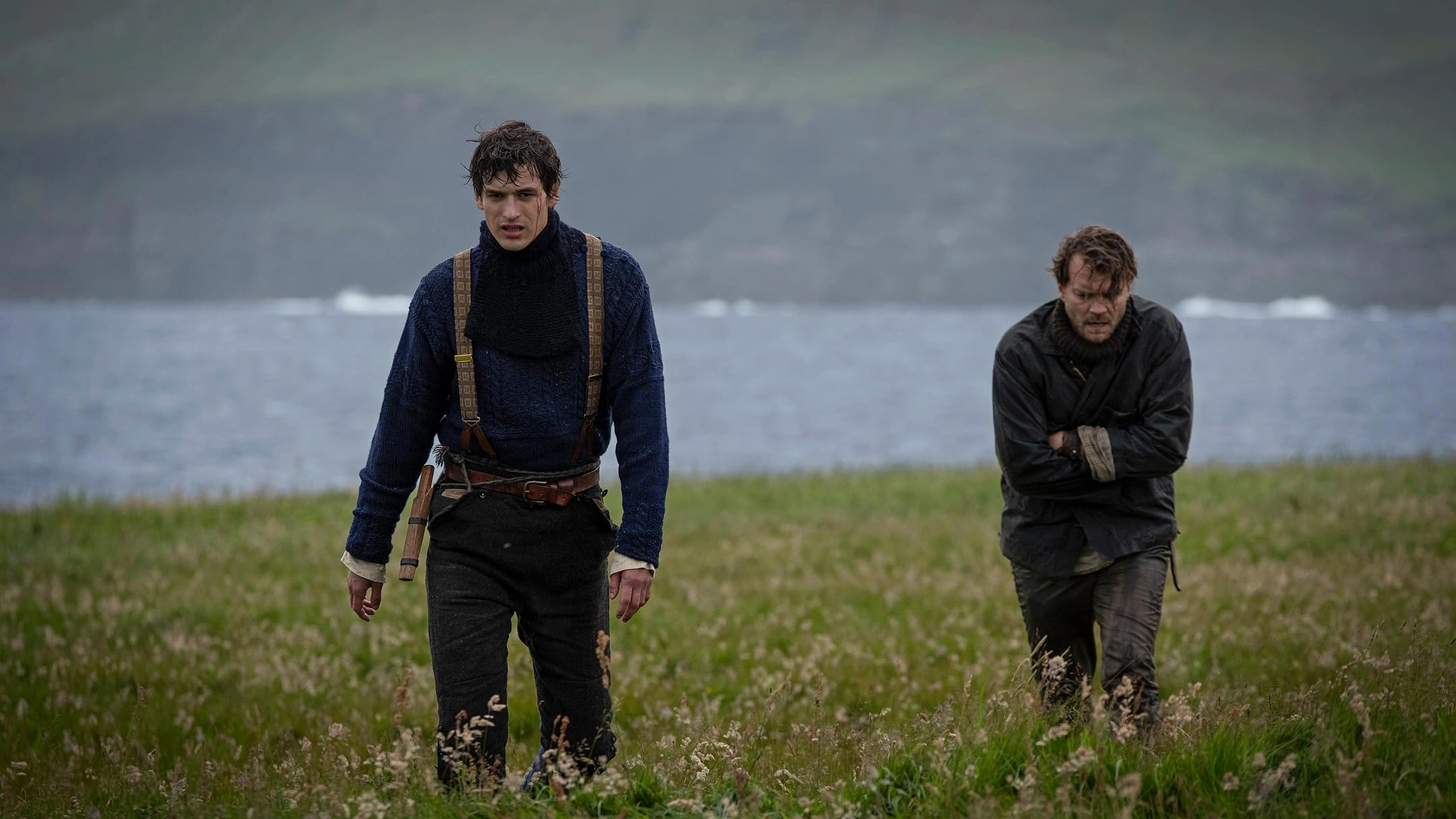
Set on the Faroe Islands in 1862 and adapted from Karl Heinrich Ulrichs’ 1884 story Manor, the film finds Baldur living with his widowed mother, Ásla, in a coastal community shaped by prayer and dependence. He fishes and attends church until the fog brings Helge, a Danish whaler left stranded nearby. His arrival alters the household before anyone admits why.
Jacob Møller photographs the island as shelter and enclosure. Basalt cliffs block the horizon. Grey water presses against every path. Inside the cottage, firelight warms straw beds and shared meals, yet the rooms grow restrictive as Baldur’s attachment deepens. The church works the same way: a place of communal belonging where stolen looks across the pews become dangerous evidence.
A Language of Glances
Baldur and Helge share too little language for polished declarations, which keeps their courtship rooted in gesture. Helge shows him rope tricks, talks about travel, and describes trees to a young man who has barely seen one. When he compares rough and smooth bark to a man’s face, the scene gives them a vocabulary for touch without forcing either character to speak a modern understanding of sexuality.
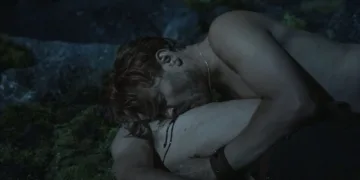
Their attraction sharpens during a wrestling match in the cold sea. Above the water, the encounter carries the rough play expected between men. Beneath it, the camera lets their bodies slow down and their eyes meet. The shift is small and politically charged: privacy exists only below the surface.
Egor Venned gives Baldur an openness that keeps innocence from becoming simplification. His irritation at Helge is betrayed by the smile arriving a second later. Pilou Asbæk plays Helge with physical confidence, then softens that bravado when Baldur’s attachment becomes unmistakable. The imbalance between a sheltered fisherman and a travelled sailor never disappears, yet the film refuses to turn it into betrayal.
Ásla prevents the romance from becoming a clean fable about cruel villagers and pure lovers. She welcomes Helge, feeds him, knits for him, and briefly directs her own desire toward him. Once Baldur plans to leave, her fear hardens. She depends on her son for survival, remembers a husband lost at sea, and knows poverty can be as merciless as doctrine. Her emotional pressure traps Baldur, but Sofia Nolsøe Mikkelsen plays it as panic rather than villainy.
The Dead Return
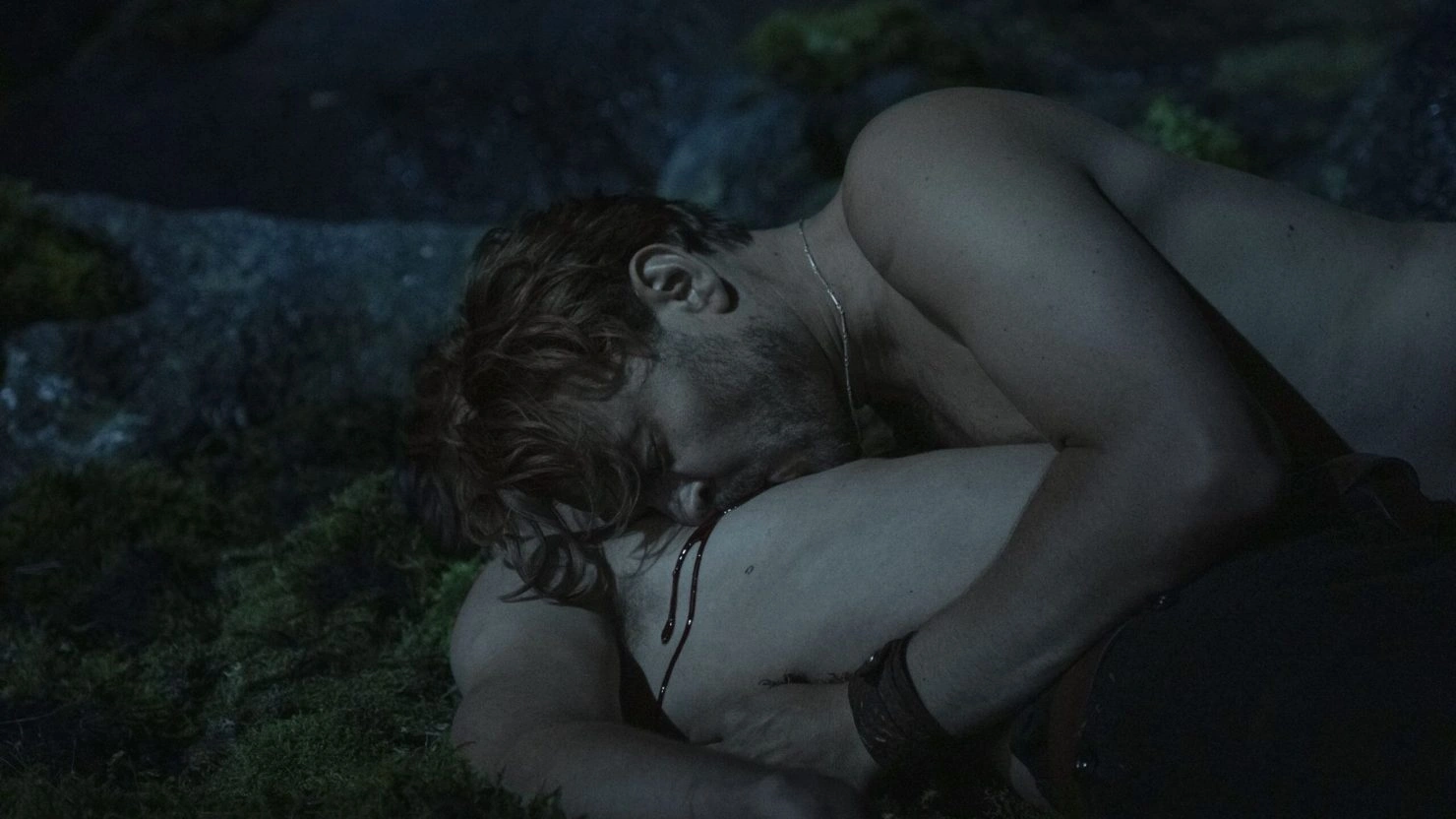
Helge’s departure converts Baldur’s first vision of freedom into sacrifice. A storm kills the whaler after Baldur chooses to remain with Ásla, and the romance enters the language of horror. Fog carries Helge back. Nightly visits comfort Baldur while leaving blood on his body, making private grief visible to a community eager to classify it.
The film borrows vampire imagery, yet Helge behaves closer to the northern draugr: a dead figure held to the living by desire, injury, or unfinished obligation. Blood enters water. The water moves against nature. Baldur’s longing appears to summon a moral order older than the church, one in which a broken bond may demand recognition.
This is where the title’s accusation changes direction. The villagers call Baldur’s desire wicked because their religion has no permitted name for it. Their scripture, burial rites, and violence do not remove the supernatural presence. Each attempt to suppress it gives it clearer shape. Repression becomes a form of authorship. The community creates the monster it insists was waiting outside.
Baldur’s nightmare of Helge’s hand forced into his mouth condenses the film’s social argument into one image. Desire, silence, shame, and hunger occupy the same body. The horror lies in the distortion produced when tenderness can survive only through secrecy or death.
What the Fog Conceals
The film’s craft is strongest when landscape and emotion behave as one system. Morten Groth Brandt’s sound design makes the sea audible as pressure, from muffled calls during the rescue to timber groaning inside the storm. Hettarher’s Faroese songs carry the story beyond individual tragedy, giving Baldur and Helge the cadence of figures preserved through oral memory.
Kalle’s patience serves the early relationship. Meals, chores, church visits, and pauses between words allow attraction to gather through repetition. The same restraint becomes less controlled after Helge’s death. The wider village enters the conflict without enough definition, and dim candlelit scenes make several fishermen difficult to distinguish. When the violence spreads beyond Baldur’s home, the victims register as a social mass rather than people whose fates have been prepared.
The romance also needs longer before the storm. Its best scenes are exact, especially the tree conversation and the underwater shift from play to intimacy, but Helge leaves soon after the bond becomes explicit. The grief remains persuasive through performance and atmosphere, while the lost future between the men feels sketched rather than lived. The islanders possess names for God, sin, evil, duty, and the restless dead. They have no language for Baldur’s love. The fog does.
No Rest for the Wicked premiered at the Fantasia International Film Festival on July 22, 2026, and is available through festival screenings and theatrical distribution by SF Studios. Set on the remote Faroe Islands in 1862, the story follows a young fisherman whose life changes after meeting a rugged whaler, leading to a forbidden passion that awakens dark mystical forces.
Where to Watch No Rest for the Wicked (2026) Online
Full Credits
Title: No Rest for the Wicked
Distributor: SF Studios, Charades Films
Release date: July 22, 2026
Running time: 103 minutes
Director: Kasper Kalle
Writers: Kasper Kalle, Rasmus Birch
Producers and Executive Producers: Lars Bredo Rahbek, Lars Bjørn Hansen
Cast: Egor Venned, Pilou Asbæk, Sofia Nolsøe, Jóhannes Haukur Jóhannesson, Kjartan Hansen, Brimheim, Búi Egason Dam, Noomi Kunoy Heradóttir
Director of Photography (Cinematographer): Jacob Møller
Editors: Mads Michael Olsen, Mark Bukdahl
Composer: Torleik Mortensen, Andreas Tyekjær Restorff
The Review
No Rest for the Wicked
No Rest for the Wicked turns queer desire into a force of folklore, placing Baldur and Helge’s love against a community whose moral order cannot recognize it without calling it evil. Kasper Kalle’s patient direction, Jacob Møller’s mist-shrouded images, and the leads’ quiet chemistry give the tragedy real weight. The pacing occasionally drifts, and the wider village remains too thinly drawn for the final escalation to carry equal force. Still, the film’s central argument is fierce: repression creates the monster it claims to fear.
PROS
- Tender central romance
- Striking Faroese landscapes
- Rich folkloric symbolism
- Strong elemental sound design
- Nuanced portrayal of Ásla
CONS
- Uneven pacing
- Underwritten villagers
- Romance develops too quickly
- Dim scenes obscure supporting characters