















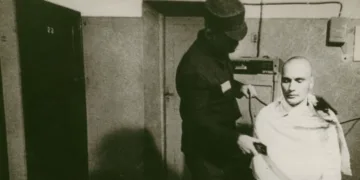











Grayson Fuller conducts a finance interview from a fraternity house while hiding his bare legs beneath the camera frame and using pledges as an unpaid production crew. The scene gives Bad Counselors its operating principle in miniature. Grayson can perform competence, sincerity, and maturity whenever an audience is watching. What he cannot do is live by any of them.
Director Chris Dowling and writers Taylor Grabowsky, Ryan Gunnarson, and Dexter Masland build a Christian comedy around that gap between performance and conduct. Grayson, played by Matt Cornett, and his best friend Tyler Newman, played by Ramon Reed, are hard-partying fraternity brothers whose latest drunken outing leads to public-intoxication charges, possible expulsion, and 120 hours of community service. When a flyer points them toward Camp Burning Bush, they decide that pretending to be Christian counselors will be easier than facing the consequences of their behavior.
The title and premise promise a raunchy camp farce. The film has milder ambitions. Its jokes stay within a family-friendly range, while its plot moves toward redemption, faith, and responsible adulthood. That tonal disguise is occasionally clever. It is also the source of the film’s central structural problem. Bad Counselors wants to smuggle a sermon inside a frat comedy, then grows nervous that the sermon might go unnoticed.
Two Frat Boys Enter a Church
The strongest early sequence sends Grayson and Tyler into a contemporary worship service they mistake for a nightclub. Flashing lights, loud music, and an enthusiastic crowd support the misunderstanding long enough for the joke to land. Once the pair realize where they are, their discomfort comes from ignorance rather than hostility. The film laughs at megachurch presentation without treating faith itself as fraudulent.
That distinction matters. Many religious comedies use outsiders as straw figures waiting to be corrected. Grayson and Tyler are selfish, reckless, and dishonest, yet the script allows them to remain socially capable and occasionally perceptive. Their problem is not that they have never heard the proper message. Their problem is that every part of their lives has been arranged around avoiding responsibility.
After they wake in a police station wearing souvenirs from a night they cannot remember, an officer shows them online footage of their behavior. The sequence quickly establishes the stakes: community service must be completed before the university’s disciplinary process can destroy Grayson’s job prospects and push both men toward expulsion. The Camp Burning Bush flyer then reappears with the efficiency of a screenwriter tapping the next plot point with a ruler.
Their preparation for the camp interview contains the film’s best sustained comic idea. Grayson and Tyler visit an extravagant church, observe the language and gestures around them, then reduce Christianity to a set of behaviors they can imitate. Prayer becomes an improvisation exercise. Religious vocabulary becomes cover. Their deception works because they understand institutions well enough to tell authority figures what they want to hear.
Pastor Tom, played by Chris Klein, accepts them after an interview that should disqualify both men within minutes. The screenplay barely addresses background checks, childcare qualifications, or the administrative miracle that converts a long sentence into a brief camp assignment. Credibility is sacrificed to speed, which is defensible in a broad comedy. The trouble is that the film later asks its audience to take every emotional consequence very seriously.
Cornett and Reed help carry the transition. Cornett gives Grayson an easy charm that explains how he has escaped accountability for so long. Reed plays Tyler with looser comic energy, reacting to each new ritual with a mixture of panic and curiosity. Their shared lies feel practiced. So does their habit of encouraging the worst in each other.
The Campers See Through the Act
Camp Burning Bush begins changing the pair once their deception creates responsibilities they cannot bluff away. Grayson is assigned to Patrick, an awkward boy desperate for approval from an older male figure. Tyler is paired with Shadow, a withdrawn camper whose guarded personality forces him to listen rather than fill every silence with another joke.

The counselor-buddy system gives the film a sturdier emotional structure than its romance or religious instruction. Grayson and Tyler arrive believing that the children are obstacles attached to their service hours. The campers respond to them with trust, creating an obligation neither man expected. Their growth becomes persuasive when it appears through small decisions instead of declarations.
The pottery sequence is the film’s clearest example. Patrick makes a mug and places Grayson on it because a few days of attention have already given the older counselor enormous importance in his life. When the mug falls and breaks, Patrick’s reaction reveals that he sees the accident as confirmation that anything meaningful will eventually be ruined.
Grayson responds with unusual patience. He recalls kintsugi, the Japanese repair technique that uses visible seams to restore broken pottery, from the same job interview he faked during the opening scene. A scrap of information once used to impress an employer becomes useful when applied to another person’s pain. He promises Patrick that they can repair the mug. No one important is watching.
That choice gives the scene its weight. Grayson is not trying to charm Jenna, satisfy Pastor Tom, or protect his community-service record. He recognizes what Patrick needs and acts accordingly. The script has already demonstrated his moral change before anyone starts discussing salvation.
Tyler’s relationship with Shadow receives less attention. Reed supplies warmth as Tyler grows comfortable in the sober camp environment, yet the screenplay gives him fewer defining actions. His development is largely inferred from his changing attitude and his bond with the boy. Grayson gets a broken mug. Tyler gets the edited version of an arc.
Romance, Rivalry, and Selective Boundaries
Brec Bassinger plays Jenna, Pastor Tom’s daughter and Grayson’s romantic interest. Their flirtation keeps some of the cheekier energy promised by the premise. Cornett and Bassinger share an easy rhythm, especially when Jenna challenges Grayson’s rehearsed confidence and he briefly runs out of material.
Jenna is grounded, observant, and rightly suspicious, yet the script too often treats her as a reward attached to Grayson’s improvement. Her strongest function is to notice the difference between the man performing goodness and the one quietly helping Patrick. The story would have gained from giving her a conflict separate from Grayson’s moral education.
Nathan Gamble finds sharper material as Dallas, the clean-cut youth pastor who resents Grayson’s presence and behaves possessively toward Jenna. Dallas uses religious language to disguise jealousy as concern. When Jenna asks for space, he continues pressing because he has decided that his intentions excuse his refusal to listen.
This is one of the screenplay’s better complications. Grayson is plainly dishonest, while Dallas says the correct things and occupies the correct role. Yet Dallas’s conduct is less respectful. The comparison prevents the film from dividing its cast into sinful outsiders and flawless believers.
The same standard is not applied to Becky, played by McKaley Miller. Her aggressive pursuit of Tyler continues after his discomfort becomes clear, and the film frames her behavior as a comic inconvenience. Dallas’s pressure on Jenna is identified as entitlement. Becky’s pressure on Tyler is treated as a running gag. The parallel is sitting there, fully assembled. The script walks past it.
Chris Klein gives Pastor Tom enough lived-in wariness to suggest that he recognizes Grayson because he once relied on similar charm. The casting carries a quiet joke, with a former American Pie star now supervising a Christian youth camp. Klein is most effective when Tom’s suspicion is balanced by patience. His later anger works less convincingly because the screenplay needs him to withdraw grace at the precise moment the final act requires punishment.
When the Message Takes the Microphone
The film’s structure remains stable until the camp catastrophe. An old torch, the Burning Bush name, and repeated fire-related setup all point toward the same inevitable accident. When the flames arrive, so do emergency hoses, exposed lies, wounded friendships, and a temporary collapse of every relationship the story has spent building. Conflict is necessary. This conflict feels scheduled.
Grayson and Tyler fall out. Pastor Tom reacts harshly. The pair are pushed away from the camp so the screenplay can arrange their return under improved moral conditions. The mechanics are familiar, and the characters begin serving the act break rather than their established behavior. Tom’s response is especially convenient. His patience disappears because the story needs a gatekeeper, not because the film has earned a genuine change in his judgment.
The earlier scenes expressed faith through service, forgiveness, sobriety, and attention. Grayson helps Patrick because the boy is hurting. Tyler learns to remain present with Shadow. These actions make the film’s spiritual argument without requiring anyone to announce it. Then the film announces it.
Grayson identifies the habits and ambitions that have displaced God in his life. An interpretive-dance sequence set to brooding Christian rock reinforces the point. Dialogue begins explaining emotional changes that Cornett and Reed have already played. The comedy recedes, and the film starts supervising the audience’s interpretation with the intensity of a nervous camp counselor checking every bunk after lights-out.
The issue is not Grayson’s conversion. His movement toward faith follows naturally from the relationships he forms and the emptiness of the life he was leading. The issue is presentation. The screenplay trusts a broken mug, a frightened child, and a quiet promise for several minutes. Then it decides trust was risky.
Bad Counselors remains unusually humane within faith-based comedy. Its unbelieving leads are allowed to possess good instincts before embracing religion. Its Christian characters can be jealous, controlling, mistaken, or selfish. Camp rituals are gently mocked, while belief itself is treated sincerely. The film finds a workable balance whenever it lets people reveal their values through behavior. Patrick’s mug never needed an interpretive dance.
Bad Counselors is a comedy film released on July 23, 2026, distributed by Fathom Entertainment. You can watch the film in select theaters. The story follows two fraternity brothers who pretend to be Christian camp counselors to fulfill court-ordered community service.
Where to Watch Bad Counselors (2026) Online








Full Credits
Title: Bad Counselors
Distributor: Fathom Entertainment
Release date: July 23, 2026
Rating: PG-13
Running time: 1 hour 45 minutes
Director: Chris Dowling
Writers: Taylor Grabowsky, Ryan Gunnarson, Dexter Masland
Producers and Executive Producers: Chris Dowling, Chris Fenton, Houston Bradley, Kristopher Galuska, Robert Crotty, William Lowery
Cast: Matt Cornett, Missi Pyle, Richard T. Jones, Chris Klein, Brec Bassinger, Pierson Fodé, McKaley Miller, Ramon Reed, Nathan Gamble, Jackson Pace, Pearce Joza, Kevin Lawson
Director of Photography (Cinematographer): Alexander Rivera
Editors: Chris Witt
Composer: Grant Fonda
The Review
Bad Counselors
Bad Counselors finds its best material when Grayson and Tyler stop performing goodness and begin practicing it, particularly through their bonds with Patrick and Shadow. Matt Cornett and Ramon Reed give the predictable redemption structure enough warmth and comic momentum to survive its convenient setup. The script also deserves credit for allowing Christian characters to be jealous, pushy, and wrong. Its final act loses that confidence, manufacturing a camp disaster before explaining lessons the quieter scenes had already conveyed. The message works. The microphone was unnecessary.
PROS
- Warm chemistry between Cornett and Reed
- Patrick’s broken-mug sequence
- Good-natured religious self-parody
- Nathan Gamble’s dimensional performance
- Faith expressed through practical kindness
CONS
- Predictable third-act catastrophe
- Tyler’s arc lacks detail
- Jenna functions mainly as moral guidance
- Becky’s harassment played for laughs
- Heavy-handed interpretive-dance sequence