





























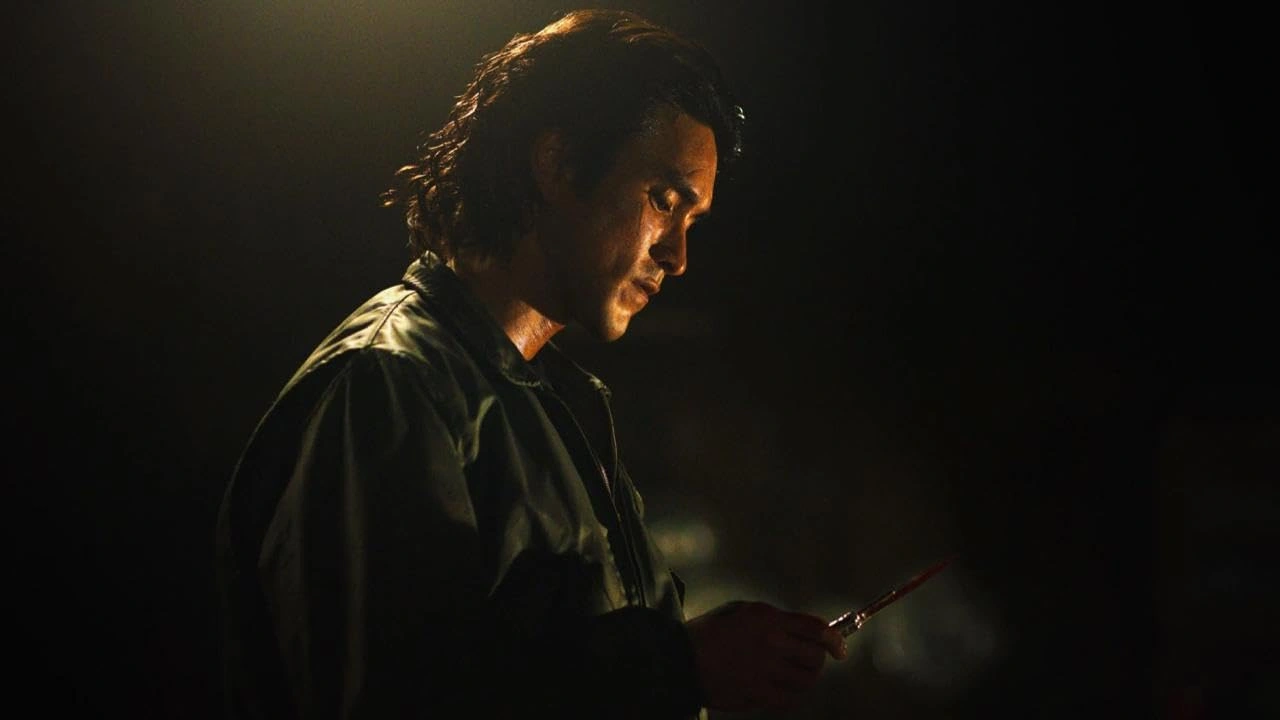

The boxing-gym massacre gives Surapong Ploensang’s film its cleanest argument: violence is a profession until the body begins charging interest. Num arrives to collect money, cuts through the owner’s guards with a knife and gun, scars the debtor, then kills him when the confrontation turns fatal. Ten years in prison follow. Near his release, a doctor tells him that an incurable brain tumour will end his life within a month unless he accepts treatment he cannot afford.
That setup places The Debt Collector inside a global action tradition audiences know well. A former enforcer leaves prison, tries to disappear, and is pulled back into the underworld after innocent people are harmed. John Wick is the obvious commercial reference. Ploensang’s variation lies in the moral language surrounding Num. He does not return to violence because he believes he deserves another life. He expects death and regards it as a sentence already passed.
Nadech Kugimiya plays that distinction through restraint. Num’s shoulders sag while working as a delivery driver, his pauses stretch around ordinary conversation, and his face rarely asks for sympathy. When he marks another day from his calendar, the gesture carries resignation. His remaining time has become a debt he cannot repay.
Poverty as Underworld Currency
Grandma Lek and her granddaughter Nid Noi sell food under the pressure of men who treat poverty as an invitation to ownership. Their stall is public and exposed. The collectors can humiliate them in full view because fear has already become part of the neighborhood’s routine. Num’s intervention breaks that pattern, then draws Po’s attention toward them.
This setting gives the film a regional identity stronger than its revenge mechanics. Madam Pin’s syndicate supplies money where legitimate institutions have failed, then converts need into obedience through threats and beatings. Police protection and criminal profit sit close enough to share the same air. The film sketches that arrangement broadly, yet its bluntness still carries force. The violence grows from an economy built around people who cannot afford lawful options.
Ploensang also draws on Buddhist ideas of karma without turning Num into a saint. The deaths of Lek and Nid Noi redirect his final days, yet their suffering is used too conveniently as fuel for his purpose. Two lives shaped by debt are reduced to the emotional trigger for a man with better fighting skills.
Global action cinema often turns grief into permission for spectacle. This Thai variation tries to make grief feel like moral accounting. It succeeds whenever Num’s violence resembles punishment and falters when the victims become entries in someone else’s ledger.
A Second Hero Arrives Late
The first act gives Num a clear line toward Po and Madam Pin. Then Kong enters, carrying a police investigation, an infant who needs surgery, and a shared childhood with Num at an orphanage. Monochrome flashbacks explain that young Num answered cruelty with rage while Kong chose discipline and the law.

Kong offers a useful counterpoint. Chaiwat Thongsaeng gives him an open, weary decency beside Kugimiya’s closed posture. Their eventual alliance sharpens the film’s view of justice: one man works inside a compromised institution, while the other has abandoned institutions entirely.
The problem is placement. Kong arrives after Num’s pursuit has gathered speed, so the film pauses to build a second emotional spine while the first is already carrying the weight. Flashbacks and police procedure stretch the running time past two hours, and Po recedes when he should be tightening his grip.
The orphanage material explains Num’s anger, but Kugimiya has already shown its residue in the delivery truck, the food stall, and the silence around his diagnosis. A leaner version would introduce Kong earlier or keep him closer to Num’s path. Here, the structure stalls at the exact moment its hero has stopped caring about survival.
Bodies That Keep the Score
Ploensang’s action direction restores the film whenever the plotting loses focus. The opening gym fight is framed clearly enough to show Num’s decisions, not merely their aftermath. His early clashes with Po’s men establish distance, timing, and weapon choice. He wins because he reads bodies faster than they read him.
The fight against Jod is the standout. Num and Kong face a man built like a wall, and the choreography refuses an easy solution. They attack in combinations, fail, absorb punishment, and gradually exhaust him. Each exchange changes the physical balance. By the time Jod falls, victory looks like shared survival.
The corridor assault near the end recalls Oldboy, though its movement is cleaner and less chaotic than the Korean film’s side-scrolling brawl. A carnival motordrome sequence moves the other way, trading grounded brutality for absurd motorcycle spectacle. The shift is ridiculous and welcome. Thai action cinema has long understood that pain and theatricality can occupy the same scene.
Kugimiya carries both registers. His star presence gives Num the silhouette of an action hero, while fatigue keeps puncturing the fantasy. Daou Pittaya Saechua plays Po with petulant entitlement, especially when the heir treats warnings about Num as insults to his status. Nuanprang Trichit gives Madam Pin the stillness of someone accustomed to ordering harm from safety.
The stunt performers make every bruise legible, and the neutral palette keeps the locations worn rather than glamorous. Num never seems purified by what he does. He simply spends the last of himself, one body at a time.
The Debt Collector premiered globally on Netflix on July 23, 2026. You can watch the action thriller exclusively on the platform. The story follows a former underground debt collector battling a terminal illness who returns to his old world to protect illegal loan victims and seek personal redemption.
Where to Watch The Debt Collector (2026) Online


Full Credits
Title: The Debt Collector
Distributor: Netflix
Release date: July 23, 2026
Rating: TV-MA
Running time: 132 minutes
Director: Surapong Ploensang
Writers: Surapong Ploensang, Ornusa Donsawai, Pun Homchuen
Producers and Executive Producers: Nalina Chayasombat
Cast: Nadech Kugimiya, Daou Pittaya Saechua, Chaiwat Thongsaeng, Nuanprang Trichit, Kunkanit Khumkrong, Ploypaphas Fonkaewsiwaporn
The Review
The Debt Collector
The Debt Collector filters the global revenge-thriller formula through Thailand’s informal lending system and a Buddhist sense of moral debt. Nadech Kugimiya gives Num’s final campaign real weight, while the bruising fights treat violence as punishment rather than wish fulfilment. The film loses force when Kong’s late arrival, orphanage flashbacks, and police subplot interrupt a clean pursuit of Po and Madam Pin. Still, its regional texture and exhausted lead performance leave a stronger mark than its familiar plot suggests.
PROS
- Kugimiya’s restrained lead performance
- Heavy, clearly staged fight scenes
- Thai socioeconomic texture
- Strong karma and atonement themes
- Memorable Jod confrontation
CONS
- Overextended middle act
- Kong enters too late
- Underdeveloped social commentary
- Victims reduced to motivation
- Familiar revenge structure