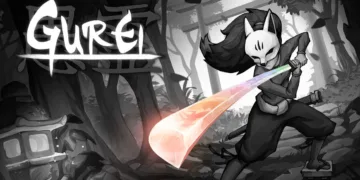


























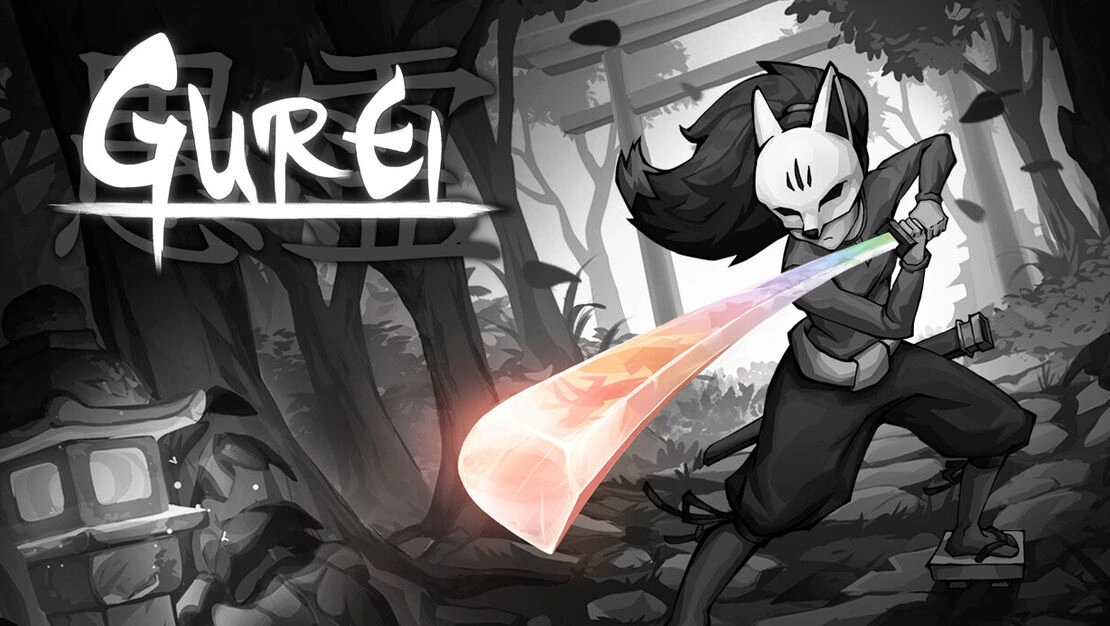

Saving the Snake for later does not preserve an easy fight for the end. It teaches the creature new attacks, thickens its defenses, and turns a simple encounter into a closing obstacle. That single rule explains the design intelligence behind Gurei, the debut game from Brazilian developer Lobo Sagaz Studio.
Rei, a sword-wielding human spirit, awakens in a ruined castle connected to ten short paths. Each route leads to a possessed mystical entity known as a Kami. The story stays quiet, offering fragments through defeated spirits and scattered interactions, while the combat structure carries the game.
Boss rush games usually test execution through a fixed sequence. Mega Man lets players choose the order, then rewards that choice through acquired weapons. Gurei takes the same foundation and makes sequence itself unstable. Every boss changes according to when Rei challenges it. The player is selecting an opponent, an ability, and a future difficulty spike with each decision.
Ten Bosses, Ten Possible Forms
Each Kami effectively contains ten versions of the same encounter. Challenge the red Snake first and it relies on a small set of readable attacks. Leave it until several bosses have fallen and it gains extra patterns that demand tighter positioning.
The yellow Peafowl initially allows Rei some influence over which weapon enters the fight. A later version arrives carrying its full arsenal. The orange Catfish can be a manageable early target, then develops enough protection and offensive variety to punish players who postpone it.
This scaling system prevents the usual problem found in open-order boss games. Rei grows stronger through new powers, but the remaining enemies grow with her. The difficulty curve does not collapse once several useful tools have been collected.
Those tools make route planning feel like character building. Defeating the Catfish grants a temporary shield that can absorb rapid strikes from the beetle swordsman. The shield eventually cracks, so it cannot erase the encounter, but it changes which attacks can be contested safely. Another power revives Rei for a brief final push while her restored health drains away. Arrows expand her reach, while a summoned doppelganger creates additional pressure.
There is no conventional skill tree asking players to choose between small damage bonuses. A build is the history of the current run. Taking the shield first means accepting a stronger version of another Kami later. Acquiring the rebirth power early can protect a promising route, yet the boss guarding it may be easier to handle after another upgrade. Every reward changes the value of the remaining choices.
Progress Lives in the Player
Rei begins each run with a sword, a jump, wall movement, and a dash. Death restarts the current boss at full health. Once every available life has been spent, collected abilities disappear and the run resets.
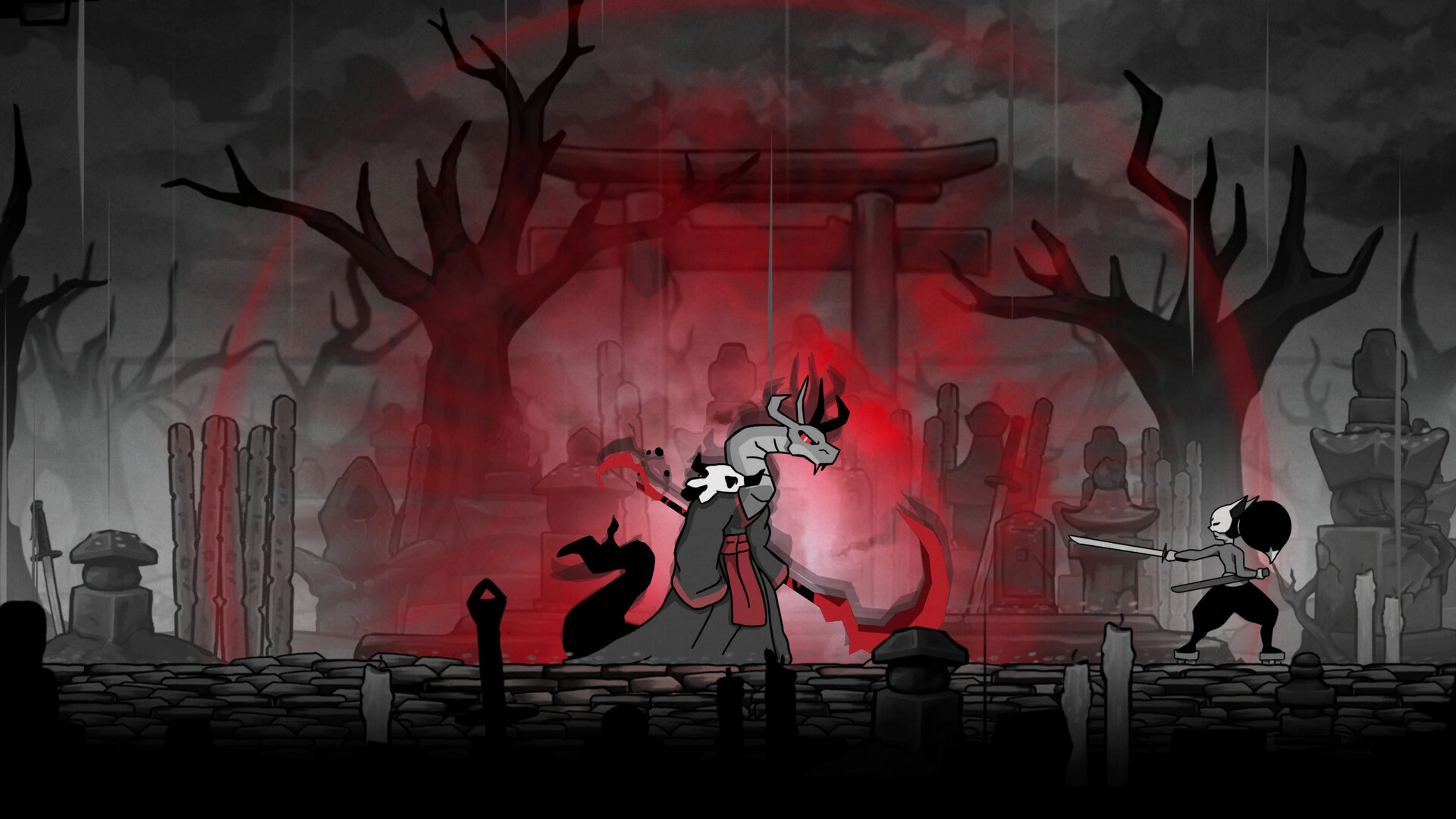
Defeating a Kami restores or adds another chance, tying survival directly to successful play. The ominous “last chance” warning can force a useful tactical decision. Continuing against a difficult boss may waste the run, while changing routes could secure a power suited to that encounter. The life system gives failure weight without reducing every mistake to immediate total loss.
No permanent stat upgrades soften the next attempt. The player carries knowledge instead: the Snake’s next animation, the Peafowl’s weapon timing, the safest moment to deploy the Catfish shield. This makes repetition productive when the game is functioning at its best. Boss attacks are clearly signaled, and most deaths can be traced to a rushed strike, a missed cue, or poor spacing.
The combat controls do not always support that clarity. Rei’s basic sword attacks are functional but stiff, lacking the smooth connections found in Hollow Knight or Nine Sols. Her dodge has a noticeable delay that becomes irritating against faster patterns. A demanding action game can ask for precision, but the input response must convince the player that failure came from the decision rather than the controller. Gurei occasionally weakens that trust.
The absence of difficulty options further narrows its audience. Its systems are built around mastery, and lowering enemy aggression could disrupt the carefully tuned route structure. Still, players who cannot meet its reaction demands have no alternate way to study all ten bosses. The game treats accessibility and mechanical identity as opposing forces, then chooses identity without hesitation.
Friction Outside the Arena
The castle’s paths initially serve a useful function. Their distinct landmarks help players remember where each Kami resides, while the quiet platforming spaces provide room to learn jumps, wall movement, and dashes. The black-and-white environment, cut by the individual color assigned to each boss, gives every route a clear visual signature.
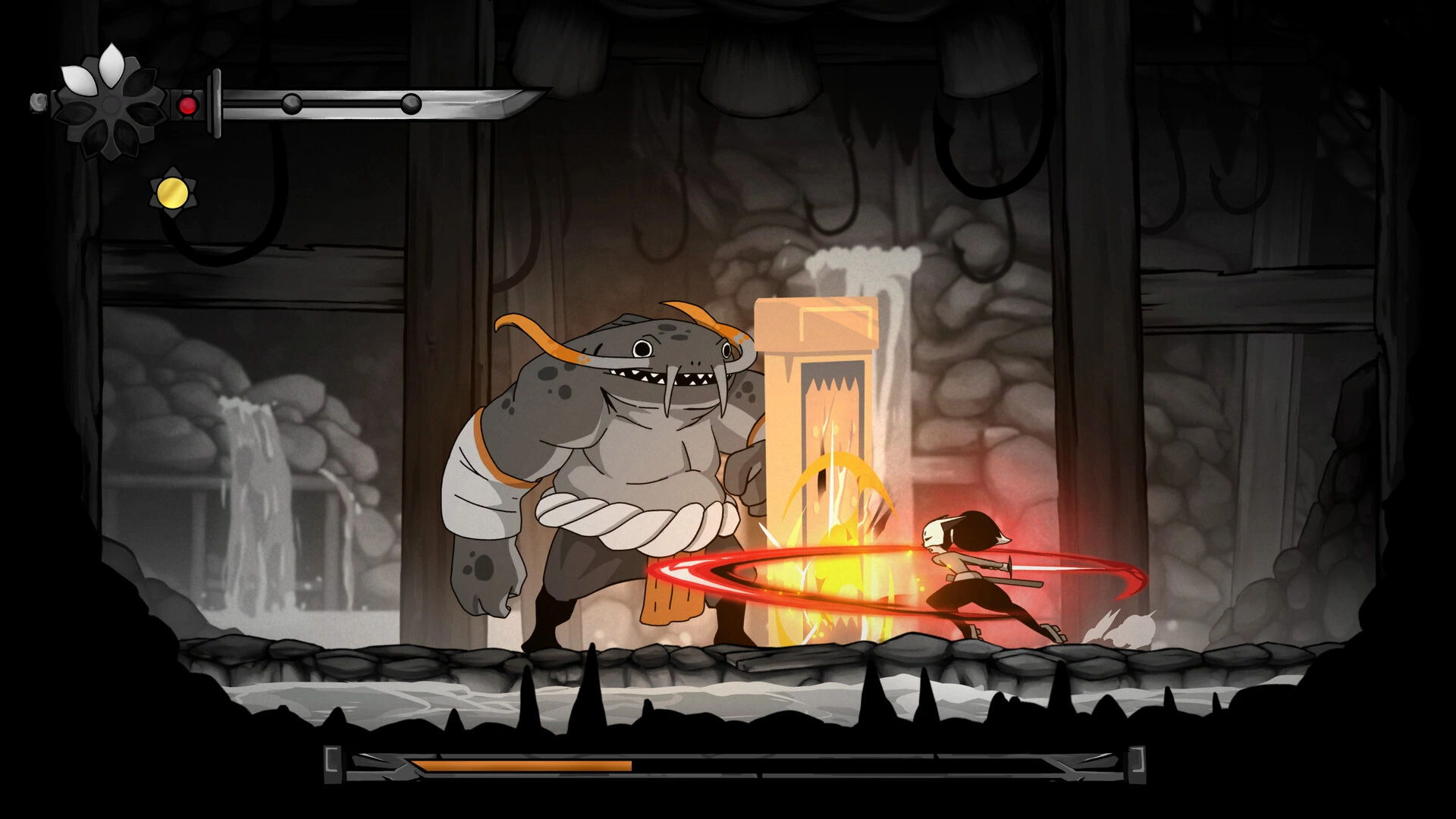
The Kamis benefit most from this presentation. The Peafowl’s weapons, the Catfish’s defensive bulk, the frog’s control of spiders, and the beetle swordsman’s rapid offense communicate personality through combat behavior. The atmospheric score supports the East Asian-inspired imagery without crowding the sound cues needed during fights.
Repeated runs expose the weakness of using an explorable hub as a permanent selection menu. Once every path has been memorized, traveling back to a boss becomes dead time between attempts. A direct selection option unlocked after discovering all ten routes would preserve the castle’s early purpose while respecting later repetition.
Reported Switch crashes compound that issue. Autosaving appears to prevent serious progress loss, but returning from the home menu and retracing a familiar corridor damages the short-burst rhythm. The boss system is designed to make players eager for one immediate retry. Anything standing between failure and that next attempt becomes painfully visible.
The Review
Gurei
Gurei turns boss order into its real progression system. Fighting the Catfish early secures a temporary shield, while delaying the Snake or Peafowl gives them expanded attack sets that can reshape an entire run. That structure makes route planning as important as reaction speed. The limited-life system reinforces mastery, yet the delayed dodge, stiff swordplay, repetitive traversal, and reported Switch crashes place avoidable friction around the excellent encounters. Its ten scaling bosses provide a demanding, replayable test for players willing to learn through failure.
PROS
- Bosses scale with encounter order
- Abilities shape route planning
- Clear, learnable attack patterns
- Striking monochrome presentation
- Strong replay value
CONS
- Stiff basic combat
- Noticeable dodge delay
- Repetitive castle traversal
- No difficulty options
- Reported Switch crashes