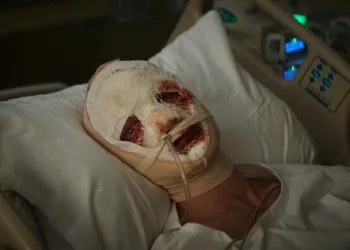


























Jada spends years trying to have a child, then discovers that saving him depends on time she may no longer have. The early passages of Nothing to Lose establish the difficulty of conception, the arrival of her son Noa, and the gradual failure of her relationship with Paul. When Noa develops leukemia and needs a bone marrow transplant, waiting acquires a different meaning. Nawell Madani and Ludovic Colbeau-Justin’s film has a sound dramatic connection here: the mother who endured a long process to bring her child into the world now faces a process that might outlast him.
That history earns some of the considerable space it occupies. Donation-assisted conception becomes relevant to the search for a compatible donor, while Paul’s limited presence explains why Jada has grown accustomed to carrying responsibility herself. Yet the first half keeps establishing the depth of her attachment after that attachment is clear.
The progression from conception difficulties through separation and diagnosis accumulates distress without developing an equally detailed account of how she responds to obstacles. This becomes a problem around the midpoint, when she takes a security guard’s gun and holds the pediatric oncology ward hostage. The film has carefully prepared her reason for wanting help. Her choice of method receives much less preparation.
Madani’s performance supplies continuity across that break. As Jada, she is most persuasive in the exhausted, frightened passages surrounding Noa’s illness, where determination exists alongside the knowledge that determination may accomplish nothing. Her urgency survives the change of genre because the fear remains recognizable.
The screenplay gives her a boxing background, which helps explain her physical confidence during the confrontation. It offers little equivalent groundwork for threatening the people sharing her son’s ward. Knowing how to overpower someone and deciding to hold sick children at gunpoint are separate pieces of characterization. The film completes the first and expects the second to follow.
Once the siege begins, the confined hospital setting gives the story a useful concentration. Police involvement, a weapon, and Noa’s worsening condition bring several pressures into the same space. Scenes now have an immediate objective, and Jada’s demands give the action a direction that the earlier family chronology sometimes lacks.
There is suspense in the possibility that her intervention will make an already desperate situation worse. The film becomes less convincing as it starts protecting her from that possibility. Staff and children rally around her, and the people whose safety she has compromised increasingly function as witnesses for her defense.
Their support could have been a difficult development. Caregivers might understand Jada’s desperation while fearing what she has introduced into the ward; other patients might support her demand while resenting the danger. Instead, the growing agreement reduces the conflict that the hostage premise has created. Jada gets the gun, and the screenplay begins assembling her references. The issue is not that everyone must condemn her. It is that their approval arrives with too little attention to their competing needs. Each new supporter makes her position easier to accept while leaving the scene with fewer independent pressures to sustain it.
The children’s earlier behavior briefly suggests a less accommodating film. They argue, bully one another, and form attachments, including Noa’s crush. Those details give the ward a social life beyond its medical purpose. Some exchanges linger without changing the relationships very much, but their abrasiveness is useful: these children have temperaments, and illness has not made them uniformly gracious.
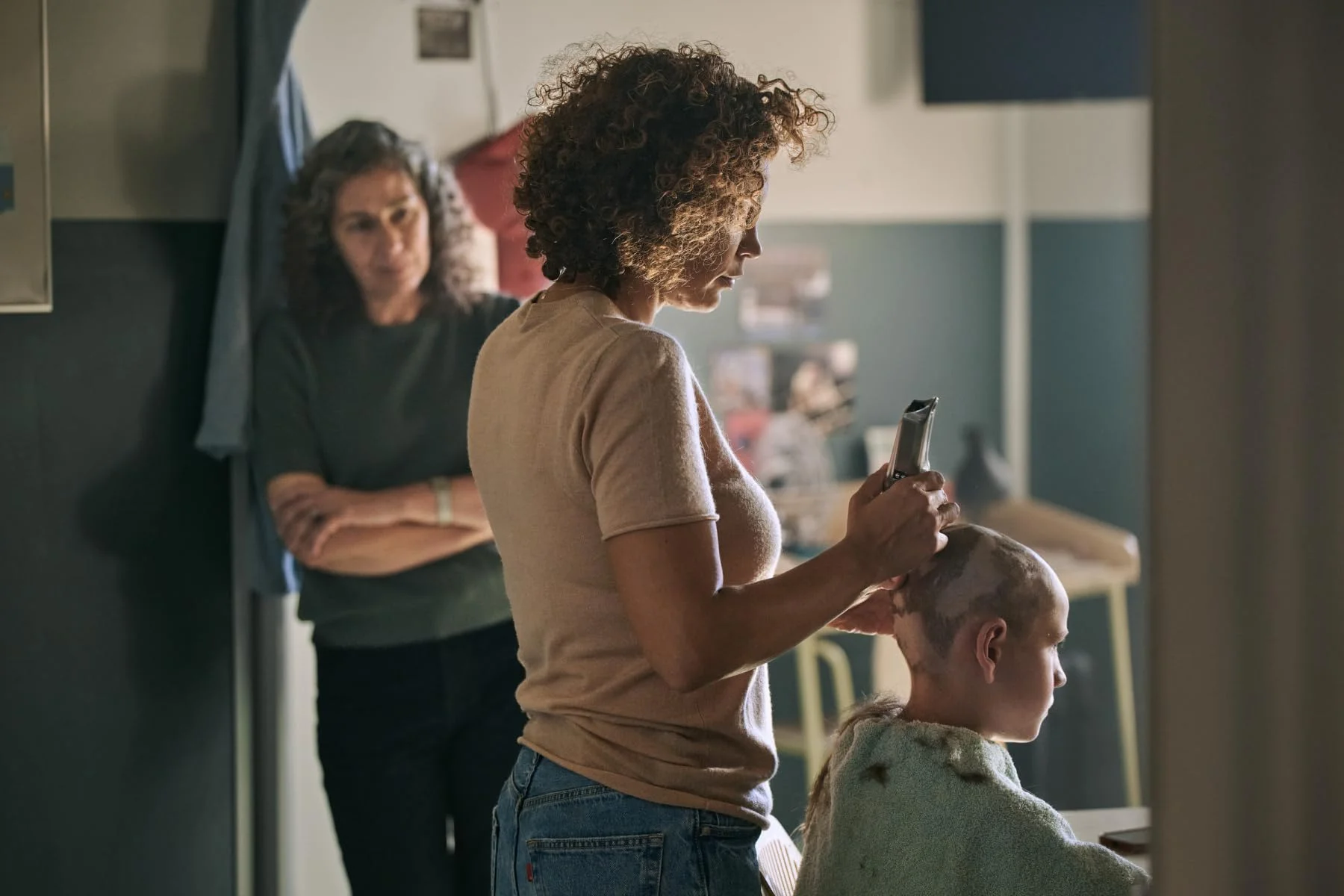
Paul Fouré’s angry outburst gives Noa a particularly necessary release from being the object of adult concern. His distress belongs to him. Once the siege gathers supporters, the film risks losing that independence by drawing the children into Jada’s campaign.
The potential donor’s family presents an even sharper opportunity. Jada’s search runs into anonymity and reluctance, bringing her urgent need into conflict with another family’s control over its own involvement. The film gives us ample reason to feel the cruelty of delay from Jada’s position.
It spends less effort making the other position dramatically substantial. A refusal becomes another obstruction to break through, when the situation contains difficult questions about consent and coercion that cannot be settled by the intensity of one parent’s fear. Nicolas Briançon’s calmer exchanges with Madani offer some relief from the escalation. They allow conversation to regain a place in a story increasingly organized around demands, though the siege leaves much of its possible argument undeveloped.
The closing appeal concerning pediatric cancer and research funding makes the film’s advocacy explicit. Its concern has already registered through the donor search and the sight of Noa deteriorating while adults struggle to secure help.
The appeal is understandable; the drama becomes strained when agreement with that cause seems to require accepting the conveniences of the hostage plot. Apparat’s “Goodbye,” accompanying late scenes with Noa and his parents, has a more immediate function. Its melancholy supports the family’s shared fear without needing to turn that fear into a position everyone else must endorse.
The suggestion of renewed intimacy between Jada and Paul asks the emergency to accomplish another kind of repair. Guillaume Gouix makes Paul’s inadequacy recognizable without reducing him to a figure fit only for punishment, and his presence beside Jada can carry real feeling.
But the late knowing glance points toward a reconciliation that their earlier relationship has not sufficiently prepared. They have always shared an interest in Noa’s survival. Their separation grew from the daily distribution of care, with Jada carrying responsibilities Paul repeatedly failed to share. A crisis can bring them into the same room. Any renewed partnership would still have to be built in the ordinary days that follow.
Nothing to Lose premiered globally on Netflix on July 8, 2026. Directed by Ludovic Colbeau-Justin and Nawell Madani, the French thriller follows a desperate mother who takes a hospital ward hostage to find a bone marrow donor for her critically ill son.
Full Credits
Title: Nothing to Lose (French: Jusqu’au bout)
Distributor: Netflix
Release date: July 8, 2026
Rating: TV-MA
Running time: 1 hour 33 minutes (93 minutes)
Director: Ludovic Colbeau-Justin, Nawell Madani
Writers: Walid Afkir, Mohamed Benyekhlef
Producers and Executive Producers: Marc Missonnier
Cast: Nawell Madani, Djebril Zonga, François Vincentelli, Paul Deby, Mhamed Arezki, Radouane Behja, Amine Mohamed Bouabdellah
The Review
Nothing to Lose
Nawell Madani makes Jada’s fear credible, and the confined hospital siege generates immediate tension. The screenplay is less convincing about how she reaches for a gun or why the people she endangers become her supporters. An extended setup establishes parental devotion, then leaves the decisive turn underdeveloped. The suggested romantic repair compounds the problem: this emergency is asked to resolve conflicts the film has barely examined.
PROS
- Madani’s convincing portrayal of parental fear.
- Fouré gives Noa an independent emotional presence.
- Confined hospital setting creates suspense.
CONS
- Overextended family setup.
- Insufficient preparation for Jada’s armed intervention.
- Growing agreement weakens the siege’s conflict.
- Underdeveloped romantic reconciliation.