

























Soso Meladze plants his family’s future on land he does not fully own. A former engineer, he joins Georgia’s Plant the Future programme, takes on debt, and begins a blueberry farm near Abkhazia with his wife, Nino, and sons, Giorgi and Lazare. The scheme arrives with billboards, easy-credit promises, and the usual governmental confidence that risk becomes opportunity once someone else is carrying it.
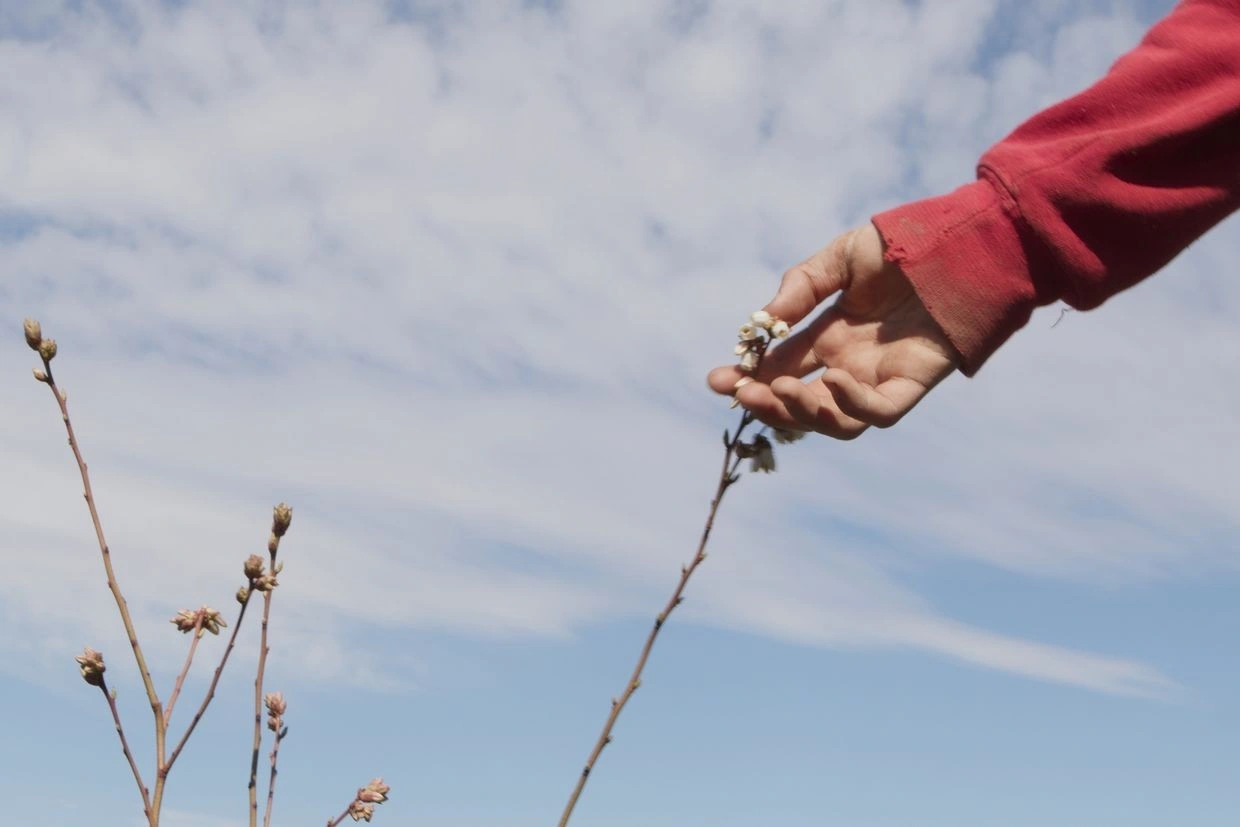
Elene Mikaberidze follows the family for roughly eighteen months, beginning in April 2021, and structures the documentary around the slow conversion of optimism into arithmetic. Fields are cleared. Bushes are planted. The first berries appear. Then buyers fail to materialise at the price Soso needs.
The farm’s story is simple enough to fit on a loan application, yet the film keeps exposing everything that application leaves out: bad weather, weak export access, inexperience, interest, regional instability, and an oversupplied market. Mikaberidze does not need a late catastrophe. The mortgage is already doing the work.
Family at the Border
The film’s strongest material comes from the Meladzes behaving like a family rather than representatives of a political argument. Giorgi and Lazare tease their father’s patriarchal habits without turning him into a fool. The brothers wrestle until Nino joins in. Dogs interrupt the frame. A kitchen dance to an old song briefly reorganises the household around pleasure instead of debt.
Those scenes give the later financial pressure a human scale. Soso sees the plantation as a foundation for his sons, imagining houses beside the orchard and a future tied to the land. Nino looks outward. She wants access to European buyers and hopes the boys can study abroad. Giorgi’s growing attachment to farming sits uneasily between choice and obligation, especially after someone calls him a “slave of the plantation.” The phrase is blunt, but the structure has earned it.
War occupies the family’s conversations without taking over the film. Lazare’s school drawings contain soldiers and explosions. After a Christmas meal, the children discuss Putin and regional history with the frightening casualness of people who learned geopolitics before algebra. Nino recalls Giorgi’s birth during the 2008 war, when bombing made travel to the hospital unsafe. Later, television reports on Russia’s invasion of Ukraine reactivate that fear.
One scene, with Soso pointing toward Abkhazia and explaining the conflict to his sons, feels arranged for an outside audience. The exposition is useful. It is also exposition wearing work boots.
The Farm Tightens
The documentary’s second half narrows its dramatic options with impressive control. Soso’s early labour carries the physical rhythm of a beginning: preparing soil, tending rows, teaching the boys what must be done. Once the harvest arrives, action gives way to waiting. He sits in the shade with a phone, searching for buyers, redirected toward people he has already contacted. The visual change matters. A man who built his plan through movement is trapped in a sequence of calls.
The family’s dependence on Russian buyers gives the economic problem a sharper edge. Nino objects, yet refusing that market could mean accepting a loss the family cannot afford. Mikaberidze keeps the conflict grounded in crates of fruit and failed sales rather than speeches. Every political position eventually meets an invoice.
Recurring shots of bank advertisements supply the film’s clearest structural device. Their bright promises appear beside a farm whose risks remain private and whose supposed support system ends after approval. Soso receives limited preparation, then faces pests, weather, market saturation, export barriers, and the threat of renewed conflict near the border. The programme has created farmers faster than it has created routes for their produce.
The unfinished house deepens the trap. “Everything you see is mortgaged,” Soso tells Nino. By that point, the plantation has stopped functioning as a symbol of self-reliance. It is an obligation with roots.
Patience as Structure
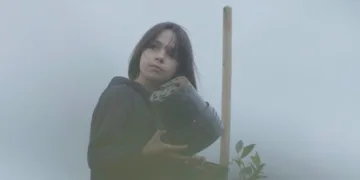
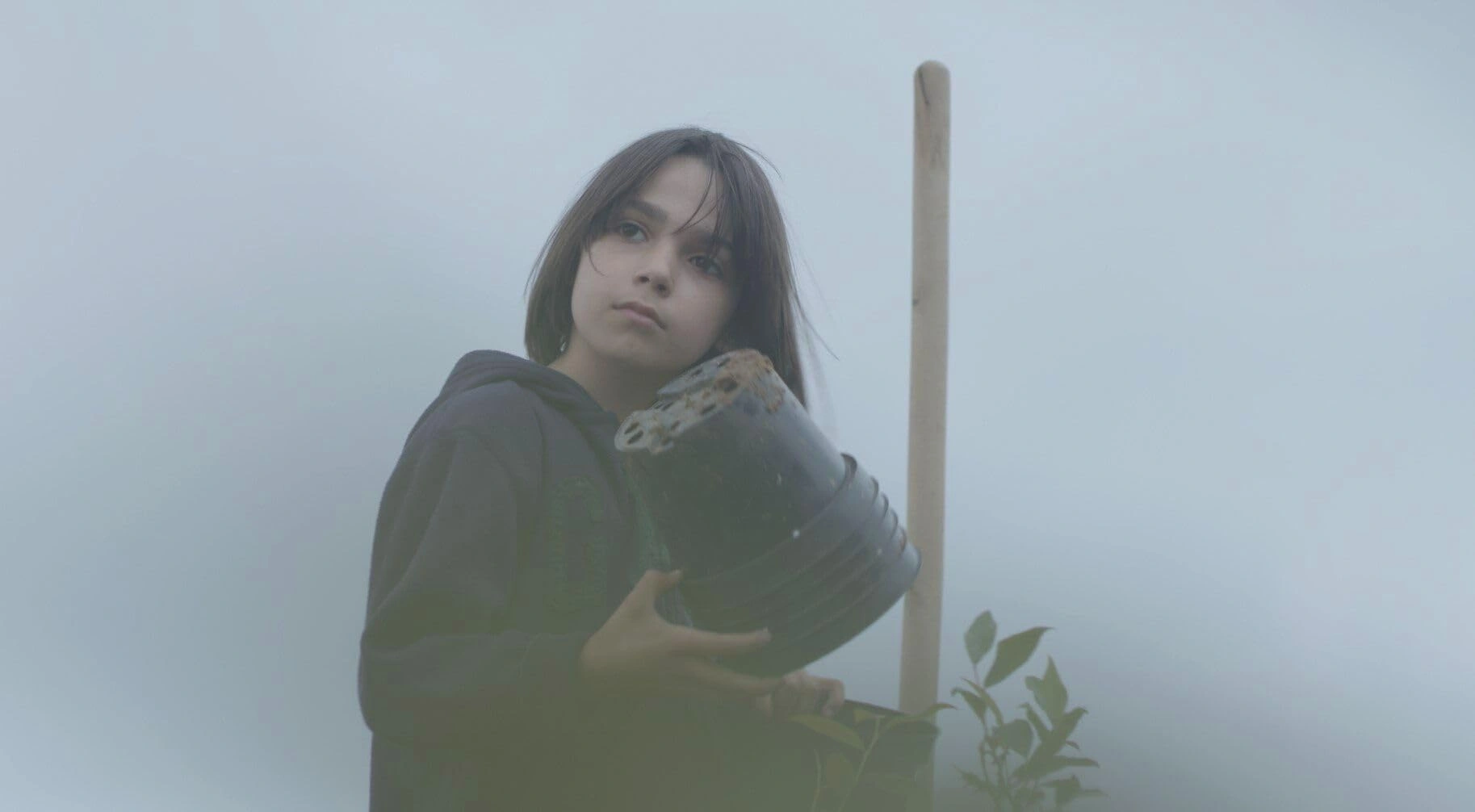
Mikaberidze and cinematographer Patrick Wendt favour long, attentive observation: mist over fields, fires at night, cramped interiors, children roaming between work and play. The pacing is slow, but the film rarely stalls because each domestic detail adjusts the pressure. A joke softens an argument. A television bulletin darkens a meal. A playful scene with the boys makes Soso’s later isolation feel heavier.
The camera’s presence can occasionally be felt, especially in conversations that appear designed to explain Georgian history or the plantation’s future. Those passages flatten people who are much livelier when the film lets them interrupt, tease, or disagree. Mikaberidze gradually trusts that looseness, and the documentary improves with it.
Its restraint is most effective in the refusal to turn the Meladzes into either victims or mascots for resilience. Soso can be hopeful and stubborn. Nino can support the farm while questioning the choices that built it. Giorgi can help his father while sensing that the inheritance may arrive as confinement. Lazare can dream of art while drawing war. The final stretch leaves Soso still working and still calling, with no tidy reversal waiting beyond the next row of bushes. The farm may mature. The debt already has.
Blueberry Dreams is a documentary feature film that premiered in late 2024. Set near the border zone of Georgia, the film follows a family trying to build a future through a blueberry farming venture while navigating the lingering shadows of past conflict. Viewers can watch the film through selected international film festivals and specialized documentary streaming platforms.
Where to Watch Blueberry Dreams (2024) Online

Full Credits
Title: Blueberry Dreams
Distributor: Parachute Films, Y.N. Productions, Iota Production
Release date: October 26, 2024
Running time: 75 minutes
Director: Elene Mikaberidze
Writers: Elene Mikaberidze
Producers and Executive Producers: Elene Margvelashvili, Baptiste Brunner, Isabelle Truc
Cast: Lazare Meladze, Giorgi Meladze, Nino Torchinava, Soso Meladze
Director of Photography (Cinematographer): Patrick Wendt
Editors: Yannick Leroy, Philippe Boucq
The Review
Blueberry Dreams
Blueberry Dreams finds its strongest story in the gap between the government’s sales pitch and the Meladze family’s balance sheet. Mikaberidze’s patient structure lets that gap widen through specific details: mortgaged land, unsold fruit, Russian buyers, and sons whose futures begin to resemble inherited debt. A few explanatory scenes feel arranged for foreign viewers, especially Soso’s border lesson, yet the domestic material remains natural and sharply observed. The film never needs a manufactured disaster. The loan paperwork has already supplied one.
PROS
- Patient observational structure
- Warm family interactions
- Precise economic detail
- Strong rural cinematography
- Restrained political critique
CONS
- Several staged-feeling exchanges
- Geopolitical context occasionally overexplained
- Some family tensions remain underdeveloped