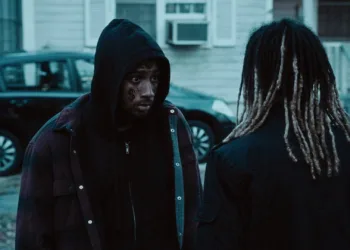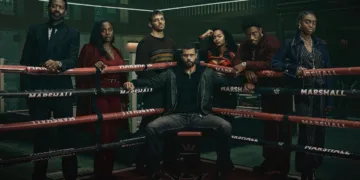












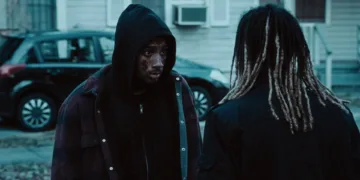



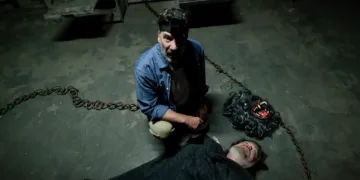








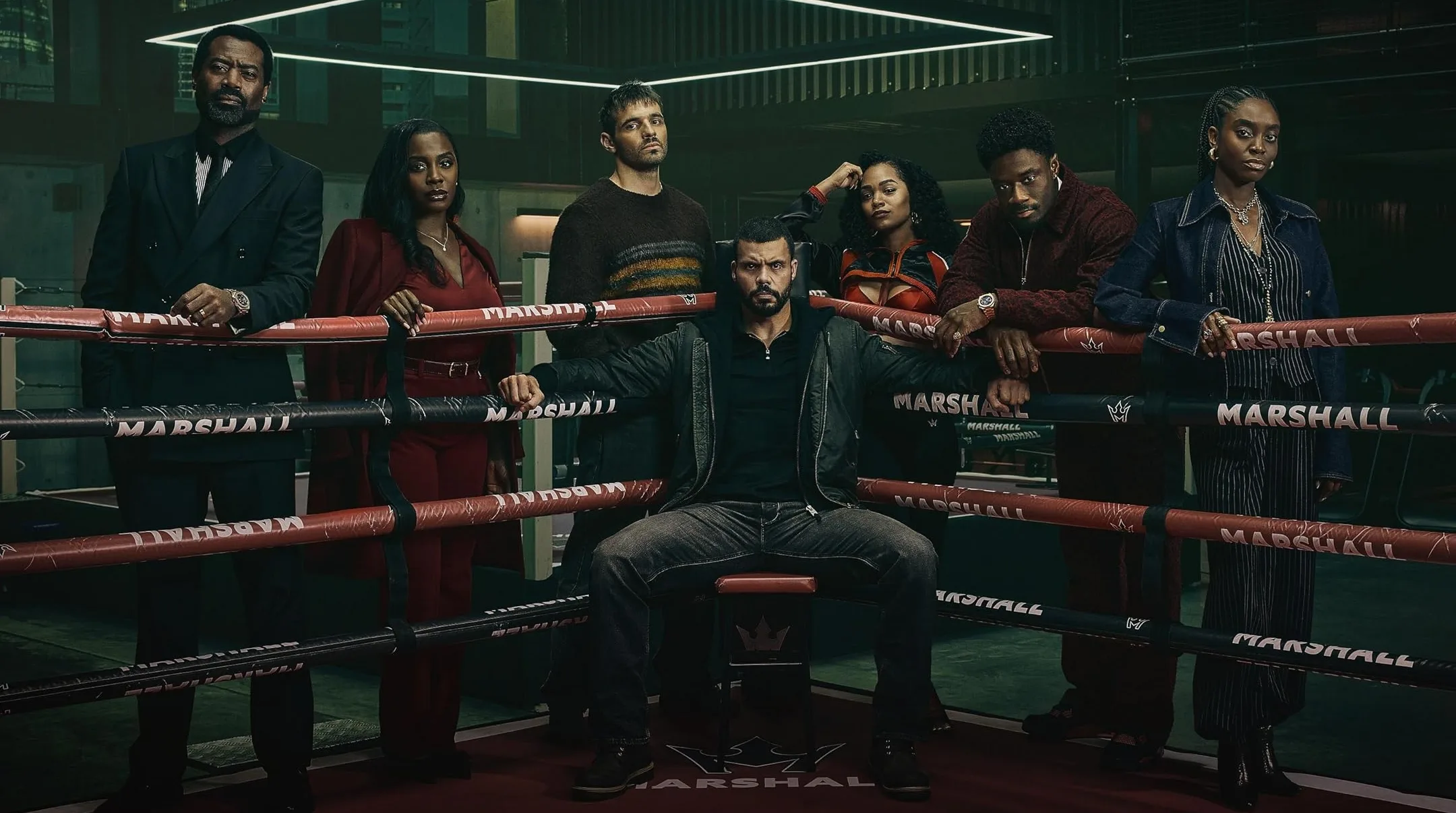

Fifteen minutes is enough time for Fightland to stage a heavyweight title bout, threaten a journalist, introduce a criminal dynasty, ruin a victory speech, kill a brother, and send its champion into a murderous rage. Some shows warm up. This one appears to regard warming up as cowardice.
Created by Daniel Fajemisin-Duncan and Marlon Smith, the Starz drama places Maduka “Duke” Kilroy at the intersection of professional boxing and organised crime. Howard Charles plays Duke as an English heavyweight who claims the world title in Las Vegas, then loses everything before the celebrations have cooled. A parking-garage attack leaves his older brother and trainer, Calvin, dead. Duke retaliates, receives an eight-year prison sentence, and emerges convinced that promoter Kingsley Marshall ordered the assault.
Duke returns to London with a cartel arrangement and a plan. He will enter the Marshall operation, gain the confidence of Kingsley’s children, and dismantle the family business from inside. The premise carries echoes of the Power franchise, another Curtis “50 Cent” Jackson-backed collection of criminal empires, damaged heirs, and people who treat betrayal like a networking skill. Fightland has boxing in its title, gloves in its imagery, and drug trafficking in its bloodstream. The ring is where the trouble begins. It is rarely where the real fight happens.
Built for Revenge
The premiere initially performs the moves of a sports drama. Duke competes beneath the Las Vegas lights, absorbs instructions in his corner, and wins the championship that should define the next stage of his career. The celebration lasts roughly as long as the show’s patience with conventional boxing stories.
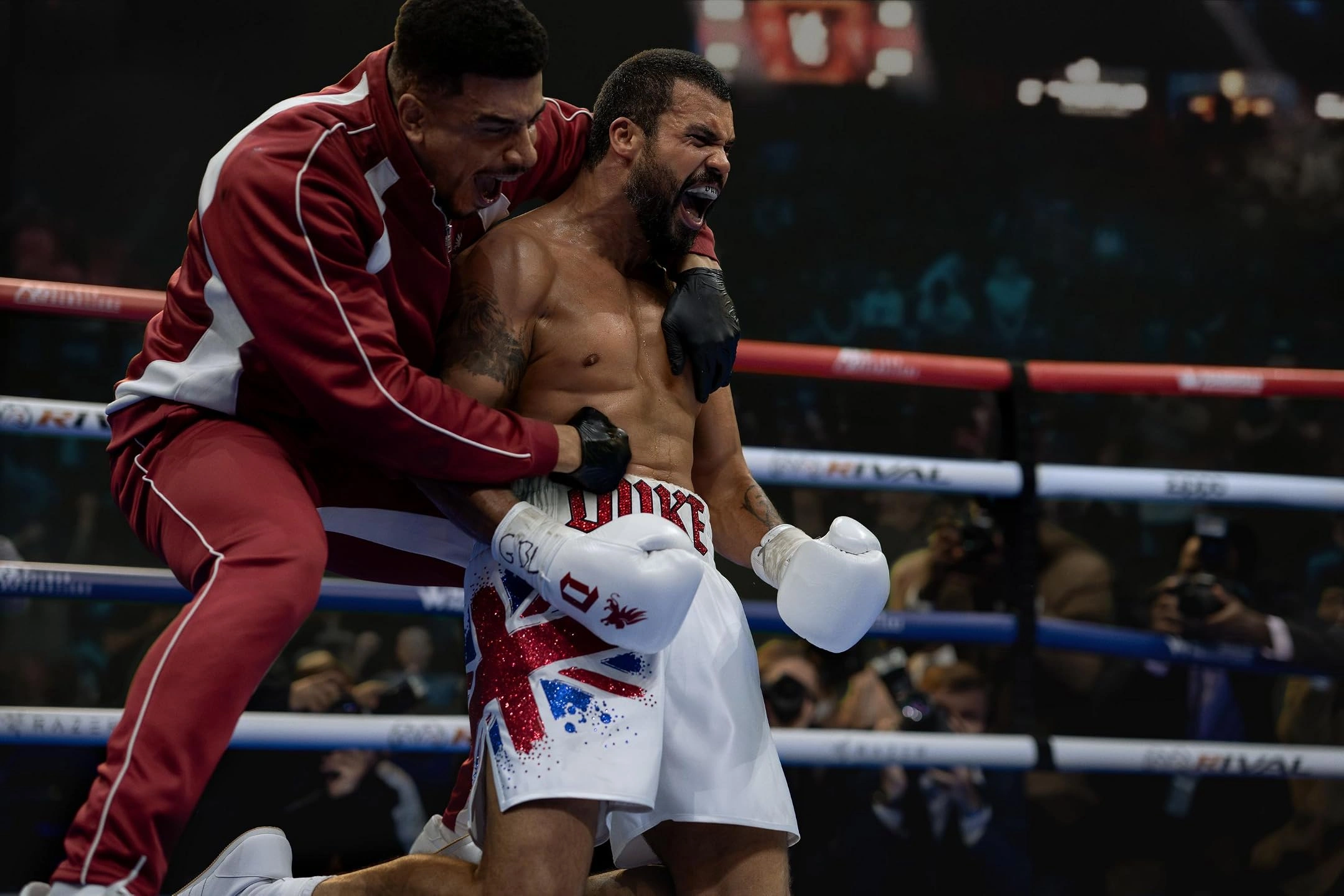
Before Duke’s victory, a reporter confronts Kingsley about suspicions that his promotion company serves as a criminal front. Kingsley responds by having the man tortured in a hotel suite, turning an interview request into a fairly decisive rejection letter. Nicholas Pinnock delivers the threat with polished composure. Kingsley does not need to shout because everybody else already understands the volume of his power.
He later interrupts Duke’s victory speech, reclaiming the fighter’s achievement as evidence of his own influence. The sequence establishes the promoter’s relationship with his athletes before the script states it openly. Duke may wear the belt, yet Kingsley expects to own the room, the cameras, and the story.
The parking-garage assault converts that possessiveness into tragedy. Calvin is killed, Duke responds with fatal violence, and the series cuts forward to prison. Little time is spent establishing the brothers’ history, which leaves Charles carrying much of the emotional burden through posture and restraint. Duke’s grief appears less often in speeches than in the way his body tightens whenever Calvin’s name or Kingsley’s operation enters a conversation.
After his release, Duke returns to his old London gym and finds Gazzer waiting with a mixture of concern, resentment, and reluctant duty. Richard Pepple makes their reunion feel bruised before the script explains why. Gazzer gives Duke a room, yet his caution suggests that the returning champion caused damage long before prison closed around him.
The cartel deal turns Duke from an athlete into an infiltrator. Only his local contact knows that he intends to sabotage the Marshalls, leaving every handshake with Zeke or Cebella charged by information they do not possess. That dramatic irony becomes the season’s steadiest engine. Duke stands beside the people he hates, earns their trust, and waits for the correct place to insert the knife.
Revenge stories usually ask how far their hero will go. Fightland has already supplied the answer: far enough to stop recognising the route home.
The Missing King
Kingsley disappears soon after establishing himself as the series’ most dangerous personality. It initially feels like a strange decision, similar to inviting the loudest guest to dinner and removing his chair during the starter. His absence soon proves productive.
Without Kingsley, his children inherit a criminal empire at the exact moment Duke begins weakening it. Zeke, played by Charles Babalola, approaches leadership as a performance he hopes will become convincing through repetition. He enters negotiations with swagger, asserts authority through violence, and reacts badly whenever somebody detects the insecurity beneath either tactic.
Babalola makes that insecurity visible in the pauses after Zeke issues a threat. He watches for the response, checking whether the room has accepted him as his father’s heir. Kingsley never seems to require such confirmation. Zeke craves it, which explains much of his volatility.
Anita-Joy Uwajeh’s Cebella is calmer, sharper, and hardly gentler. She reads shifting alliances faster than her brother and understands that criminal power depends on administration alongside intimidation. Her decisions show a capacity for brutality that prevents the familiar “reasonable sibling” label from settling comfortably.
Her romantic entanglement creates danger for the family, though the writing sometimes reduces her strategic intelligence by making that relationship her main vulnerability. Crime dramas remain strangely convinced that a capable woman can manage a trafficking operation but will forget basic security procedures the moment an attractive adversary enters the building.
Duke’s scenes with the siblings carry the series’ finest low-level tension. Charles often lets the hatred sit behind Duke’s eyes while his voice remains cooperative. He cannot expose his contempt, so minor gestures acquire weight. A delay before answering Zeke, a hard look after Cebella mentions Kingsley, or a silence held slightly too long can suggest the revenge plan straining against its disguise.
Kingsley’s wife, Joy, further complicates the family structure. Deborah Ayorinde gives her an alert, controlled presence, especially when Zeke and Cebella attempt to exclude her from the criminal operation. Joy wants access to her husband’s affairs and shares a history with Duke that neither can treat as harmless nostalgia.
These relationships work because everybody enters them with separate information. Duke knows why he returned. The cartel knows what it wants from him. Zeke wants a dependable enforcer. Cebella wants stability. Joy wants the truth about her missing husband. Gazzer wants Duke to survive without becoming the same man who went to prison.
Nobody is having the same conversation, which is usually where television gets interesting.
London With Its Gloves Off
Otto Bathurst directs the first two episodes with a kinetic force familiar from his work on Peaky Blinders. The camera moves quickly through hotel corridors, boxing venues, gyms, and back rooms, giving the premiere the sensation of events escaping containment. Characters finish one confrontation and are thrown into the next before either they or the audience can settle.
The pace moderates after the first episode’s opening barrage, yet the series keeps cutting toward threat. Doors open onto waiting enemies. Business meetings acquire extra bodies. Conversations continue while the camera searches the edges of the room for the person who should not be there.
Sebastian Thiel’s fourth episode provides the season’s clearest action showcase when Duke and Zeke raid a Russian bathhouse. The location gives the fight a physical personality: tight rooms, hard surfaces, exposed bodies, poor footing, and very few dignified ways to lose consciousness.
The sequence also develops the Duke-Zeke relationship through movement. They enter as allies, cover each other during the assault, and leave having shared an experience that Zeke reads as proof of loyalty. Duke experiences the same violence as another step toward destroying him. The choreography carries both readings without stopping for a speech.
Colm McCarthy’s Episodes 5 and 6 tighten the series by drawing its schemes closer together. Performances gain room to breathe between bursts of violence, and apparent alliances begin revealing their expiration dates. By the sixth episode, Duke’s cartel arrangement, Joy’s curiosity, the siblings’ rivalry, and Kingsley’s disappearance have stopped feeling like separate plot lines.
London gives the familiar Starz formula a distinct texture. The series favours gyms, clubs, bathhouses, offices, residential streets, and concealed rooms over postcard landmarks. Its criminal economy operates beside legitimate wealth, with boxing promotions offering an ideal bridge between spectacle and laundering.
The city remains heightened, polished, and conveniently full of criminals prepared to explain themselves in expensive interiors. Realism has entered the ring, but television has the reach advantage.
Familiar Punches
The six episodes available for review move through a well-stocked warehouse of crime-drama conventions. There are missing patriarchs, rival syndicates, secret affairs, cartel negotiations, siblings competing for approval, hidden motives, compromised loyalties, and enough betrayal to make written contracts seem adorable.
Daniel Fajemisin-Duncan and Marlon Smith arrange these familiar elements with speed and confidence. The infiltration plot gives each episode a dependable source of suspense because Duke must damage the Marshalls while appearing indispensable to them. Every success carries the risk of drawing him deeper into the family’s trust.
The dialogue is less reliable. Characters sometimes explain alliances, motives, or operational details that the staging has already made clear. A threat lands, then receives a verbal receipt. Nobody can accuse the series of leaving its paperwork incomplete.
Secondary characters also spend too much time discussing shipments, territory, and retaliation. The criminal operation is detailed, yet the people running it receive fewer opportunities to exist away from it. Zeke and Cebella gain definition through their relationship with Kingsley, while Duke’s friendships with Jay, Gazzer, and Joy hint at a fuller emotional life the season visits in brief intervals.
Charles keeps Duke engaging through this uneven development. He resists playing the character as a magnetic rogue. Duke can be cold, severe, and exhausting, which suits a man who has converted grief into a daily occupation. Flashes of vulnerability appear around Gazzer and Joy, where he is forced to meet people who remember the life he abandoned.
Pinnock brings a larger theatrical charge to Kingsley. His limited screen time strengthens the mystery surrounding his disappearance, yet it also deprives the middle episodes of their most electric antagonist. The series compensates with Zeke’s insecurity and Cebella’s manipulations, though neither can reproduce Kingsley’s ability to make a polite sentence sound like a burial arrangement.
The romantic complications, sudden reversals, and heightened family conflicts give Fightland a soap-operatic streak. That quality can flatten psychological detail, yet it keeps the episodes lively. The series knows the value of ending an hour with a revelation, a gun, or somebody entering a room at the least convenient possible moment.
By Episode 6, the slower stretches have paid into a promising convergence. Duke has earned enough trust to cause serious damage, but his renewed attachments make the original plan harder to execute cleanly. Zeke sees a brother-in-arms. Cebella sees a useful ally. Joy sees a man connected to her past. Duke sees targets, or keeps telling himself he does. The bell has not rung on his revenge yet. He may already be fighting from the wrong corner.
Fightland is an upcoming crime drama television series that is scheduled to premiere on Starz on July 31, 2026, followed by its UK release on Sky Atlantic. The series follows a disgraced, formerly incarcerated boxing champion who returns to London to exact vengeance on the crime syndicate that betrayed him. Viewers can stream the series on Starz in the United States and via Sky and NOW in the United Kingdom.
Where to Watch Fightland Online






Full Credits
Title: Fightland
Distributor: Sky Atlantic, Starz
Release date: July 31, 2026
Rating: TV-MA
Running time: 60 minutes
Director: Tessa Hoffe, Colm McCarthy, Sebastian Thiel, Otto Bathurst
Writers: Daniel Fajemisin-Duncan, Marlon Smith, Damione Macedon, Raphael Jackson Jr., Charlene James, Jessica Sinyard, Elliot Warren
Producers and Executive Producers: Curtis 50 Cent Jackson, Cameron Angeli, Charlotte Surtees, Daniel Fajemisin-Duncan, Marlon Smith
Cast: Howard Charles, Nicholas Pinnock, Deborah Ayorinde, Charles Babalola, Anita-Joy Uwajeh, Tahirah Sharif, Tyler Conti, Richard Pepple, Max Brown, Alix Bailey
Director of Photography (Cinematographer): Aske Foss, Milos Moore, Job Reineke
Composer: Paul Saunderson, Swindle
The Review
Fightland
Fightland throws boxing, cartel politics, family resentment, and eight years of bottled rage into the same ring, then lets them fight dirty. Howard Charles gives Duke’s revenge campaign weight, while Nicholas Pinnock creates a villain whose absence can dominate entire episodes. The plotting leans heavily on familiar betrayals, dangerous romances, and heirs with paternal issues, yet the bathhouse raid and mounting infiltration tension keep the season moving. It may swing wildly, but it rarely forgets to swing.
PROS
- Howard Charles’ controlled lead performance
- Brutal, well-staged action
- Strong Duke-Marshall tension
- London’s textured boxing underworld
- Nicholas Pinnock’s menacing presence
CONS
- Familiar crime-drama twists
- Thin supporting character development
- Functional, expositional dialogue
- Melodrama overwhelms nuance