




















At seven, Neil speaks with the confidence of a child for whom the future still has plenty of room. The archive takes him through homelessness, depression and a spell as a local councillor before he appears at 70, living alone in France. He says he is sometimes lonely and probably as happy as his life allows. Kapadia can put decades between two cuts, but the speed does not make any of those years feel simple. Each return to a younger Neil changes how the present-day man sounds.
The film depends on that effect, sometimes too heavily. Its long stretches of earlier footage bring a new viewer up to speed and allow those who have followed the series to see familiar answers change meaning. The 70-year-olds sometimes have to compete with their seven-year-old selves for airtime. When a present-day interview has barely settled before the film turns back to childhood, the archive begins to feel like an answer to a question the participant might still be considering.
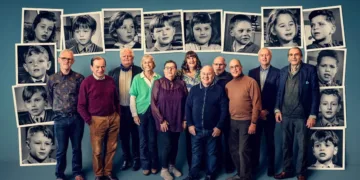
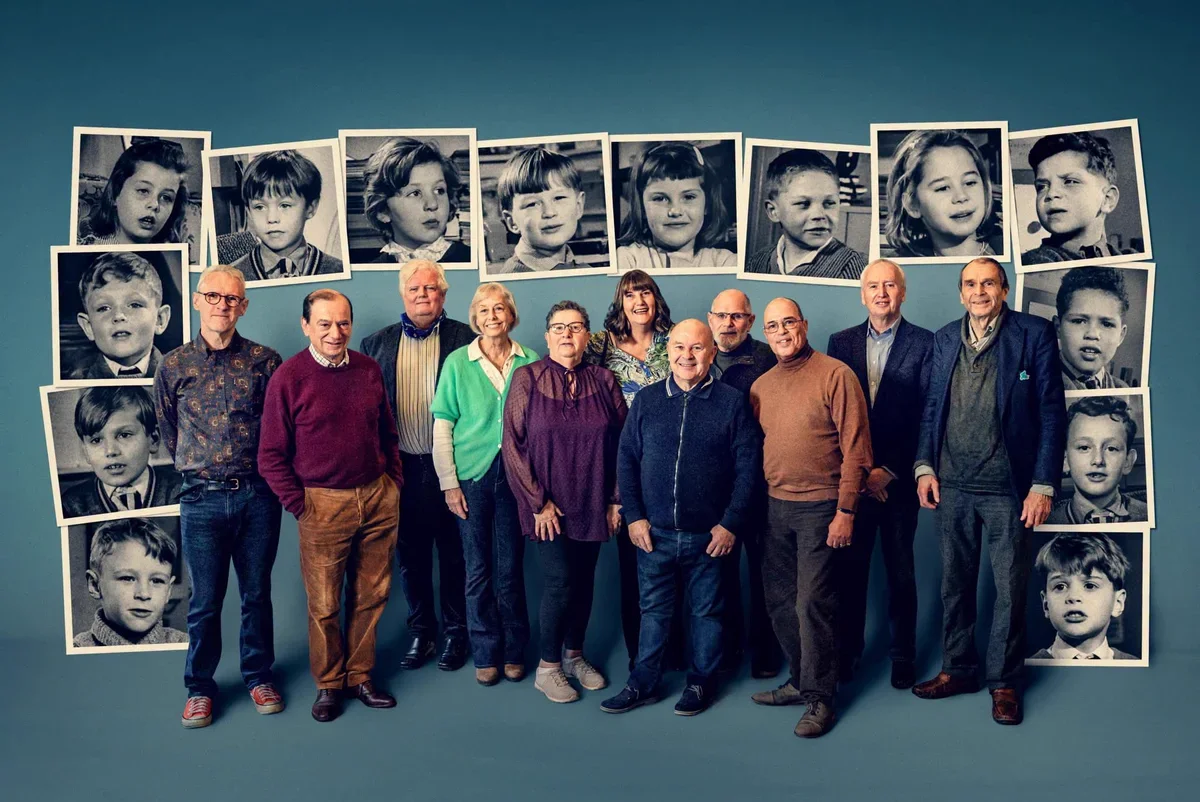
The programme has been making those returns since Granada filmed 14 seven-year-olds in 1964. It borrowed the proposition that a child’s first seven years could tell you the adult they would become, then checked in every seven years.
Michael Apted, who helped find the children, directed every instalment after the first through 63 Up. He died in 2021, and Asif Kapadia takes over for this final visit. A change of director after nearly six decades would be conspicuous in any series. Here the people on screen have spent much of their lives responding to the same man.
Kapadia lets them talk about what that relationship cost. Jackie still objects to Apted asking her, at 21, about marrying young and meeting other men, questions she says he did not put to the boys. John, whom the series repeatedly presented as a face of privilege, says plainly that he never liked Apted.
Tony remembers him with affection. None of these accounts cancels the others, and the film gains energy by allowing them to sit together. Apted was an interviewer whose questions helped make unforgettable television; he was also someone the participants had to face again seven years after disagreeing with him.
Charles offers the clearest demonstration that appearing in the series was a choice, even when its recurring schedule made it seem inevitable. He stopped appearing on camera after 21 Up and contributes here through photographs and narration. Kapadia accepts that arrangement. He is not heard questioning the subjects in the new interviews, either, so their assessments of Apted arrive without an audible challenge from his successor.
The quiet has a cost. Apted’s voice, with all its prodding and familiarity, gave the older encounters a particular charge, and some new conversations feel more formal beside them. Charles’s photographs, though, make a stronger case for this approach than any declaration of good intentions could: after a lifetime in the frame, he gets to decide how he enters it.
The original proposition fares less well than the footage it produced. Fourteen children, ten of them boys and almost all white, could hardly settle how class shapes a life. John says Britain is now classless, even as the film revisits the assured futures anticipated by the three boys filmed at prep school. Andrew achieved the kind of career his childhood surroundings led viewers to expect. At 70, he wishes he had attended more school plays and sports days. The early prediction can account for his opportunities. It has nothing useful to say about that regret.
Elsewhere, the mismatch is even sharper. Symon, who grew up in a children’s home, has fostered more than 100 children with his wife. Paul, his childhood companion there, has built a family in Australia and says family matters most to him.
Neil’s path has included periods of homelessness and depression as well as work in politics and the church. These lives cannot serve as tidy exceptions that prove another tidy rule. Kapadia’s edits let us hear what people once expected, then stay long enough in the present for them to describe what matters to them now. The film is strongest when it trusts that gap instead of trying to close it.
Nick Hitchon’s interview makes the seven-year rhythm suddenly painful. The Yorkshire farmer’s son who became a nuclear scientist asked to be filmed after learning he had terminal cancer. He speaks about his approaching death with a clarity that needs no help from a montage. Lynn, the children’s librarian who died in 2013, can appear only in earlier footage and in other participants’ memories. Kapadia still has many decades to draw on, but neither the schedule nor the archive can grant another conversation with them.
That gives the film’s occasional excess of old footage a harder edge. The repeated glimpses of childhood can crowd out the present, yet this final instalment also shows why the series kept returning: no earlier visit could have known which ordinary answer would acquire weight years later. 70 Up leaves space for its participants to dispute the people who filmed them, including those whose voices are now heard only on old recordings. It is an unusually candid farewell for a programme built on the promise that someone would always come back to ask.
70 Up premiered on ITV and ITVX on September 15, 2026. This landmark concluding installment of the groundbreaking documentary series reunites with the British participants as they reach the age of seventy, bringing a historic six-decade longitudinal project to a close.
Full Credits
Title: 70 Up
Distributor: ITV
Release date: September 15, 2026
Running time: 90 minutes
Director: Asif Kapadia
Producers and Executive Producers: Claire Lewis, Mike Blair, Helen Houston, George Chignell
Cast: Bruce Balden, Jackie Bassett, Symon Basterfield, Andrew Brackfield, John Brisby, Peter Davies, Susan Davis, Charles Furneaux, Neil Hughes, Paul Kligerman, Suzanne Lusk, Tony Walker
Director of Photography (Cinematographer): Jake Polonsky
Editors: Andrew Hulme, Patrick Saxer
The Review
70 Up
70 Up gives its participants room to challenge the story told about them for six decades. Kapadia’s archival cuts make that passage of time vivid, while Nick’s final interview needs no editing trick to hold our attention. The old footage sometimes crowds out the people at 70, and Apted’s absence changes the feel of the conversations. Still, this is a candid, moving farewell to one of television’s most remarkable commitments.
PROS
- Archival editing gives earlier answers new meaning
- Participants speak frankly about Apted
- Nick’s interview is handled with restraint
CONS
- Old footage limits time with participants now
- Some new interviews lack the earlier rapport
- The original class proposition remains too narrow to prove