



















![Kingdom Hearts Collection [I-III] Review](https://gazettely.com/wp-content/uploads/2026/10/Kingdom-Hearts-Collection-I-III-1-360x180.webp "Kingdom Hearts Collection [I-III] Review: KHII Holds Steady as Newer Entries Fluctuate 33")









Rachel Taparjan’s adoption was framed publicly before she had any chance to frame it herself. Archival television footage shows the British couple who brought her from a Romanian orphanage speaking of their new daughter after the death of their biological child. The words are affectionate, yet the idea of replacement hangs over them. A home has opened, but it has opened around an absence.
Something Familiar places that private wound inside a larger history. Taparjan was born after Nicolae Ceaușescu’s rule had turned reproduction into state policy and filled Romanian institutions with abandoned children. Her later life in Teesside belongs to Britain, while her earliest records, blood relatives, and unanswered questions remain in Romania.
The film’s geography is emotional before it is physical. Every trip east carries the hope that origin might explain identity. That hope proves unstable. Documents can name siblings. Photographs can restore faces. Neither can reconstruct the years that separation erased.
Mihaela and the Problem of Departure
Taparjan first turns the camera toward Mihaela, another woman adopted from the same orphanage. Together they visit the former children’s home, where a piano now occupies space once filled with cots. The transformation is visually simple and historically brutal. The building has moved on. The women have not been granted the same luxury.
Mihaela’s search leads to a man believed to be her father. Their faces appear to support the connection, yet he denies it. The scene refuses the comforting logic of resemblance. Biology may leave marks that social reality still rejects. For adoptees raised abroad, the promise of return can carry a distinctly European contradiction: borders are easy to cross on paper, while family belonging remains guarded by memory, shame, and denial.
The film then leaves Mihaela behind for long stretches. Her story gives Taparjan’s project a collective frame, but the structure treats it like a preface once Rachel’s relatives appear. Mihaela’s return during the credits exposes the imbalance. Her rejection should reverberate through the film. Instead, it fades beneath a stronger story.
The Face of a Brother
Rachel’s reunion with Alexandru changes the film’s temperature. Their ease with one another arrives through shared looks, quick smiles, and the pleasure of recognizing familiar features on another person. Rachel speaks of the comfort of seeing her own face reflected back at her. It is a modest statement, yet it gives physical form to a longing created by transnational adoption.
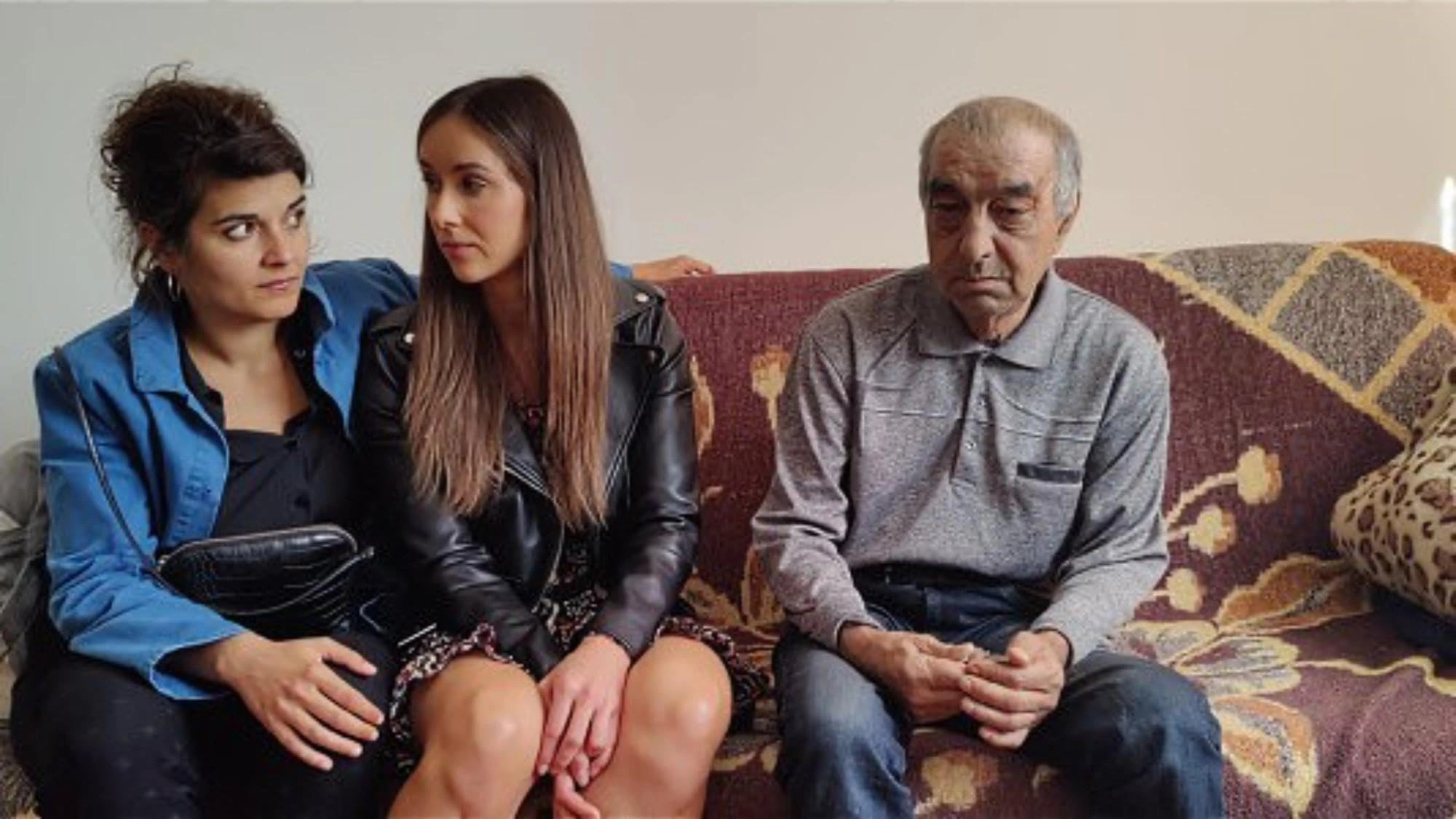
Their time together includes welcome lightness. They cycle through the streets and take a key from an uncle to reach family photographs, turning archival recovery into a small act of sibling mischief. These scenes matter because they resist the expectation that Romanian family history must appear only through deprivation. Kinship also arrives through jokes, movement, and the sudden ease of being beside someone newly known.
The search for Ana-Maria carries heavier consequences. Rachel learns that her birth mother has died, closing the path to direct confrontation. Ana-Maria then reveals abuse and exploitation running through the lives of their mother and daughters. Rachel grew up in another country and another household, yet parts of her adult pain seem to echo the family history she never knew.
The film approaches inherited trauma carefully at first, then sometimes presses too hard on the idea. Shared suffering does not automatically prove destiny. What gives the sister scenes their force is uncertainty: pauses, unfinished thoughts, and the visible effort required to stay present while hearing what cannot be repaired.
Many Mothers, Uneven Truths
With her birth mother gone, Taparjan creates a set of encounters using actresses. Each woman occupies the empty chair opposite her and improvises a version of the absent parent. Rachel asks why she was left. One performer replies that leaving requires a prior togetherness, and they were never together. The line shifts abandonment from a single act into a relationship that never had the chance to begin.
The exercise belongs partly to therapy, partly to performance, and partly to a European tradition of hybrid documentary that distrusts the idea that observation alone can uncover truth. The staged family photographs extend the experiment. Some “mothers” touch Rachel. Others sit at a distance. Each arrangement proposes a family image that history denied her.
Artifice produces unexpected honesty here. The actresses react with emotions that feel less controlled than Taparjan’s solemn narration, which frequently names trauma, survival, and healing before the images have finished speaking. Direct-to-camera declarations can feel prepared for the film’s argument. Awkward silences between Rachel and Ana-Maria carry greater weight because neither woman appears able to control what the moment means.
Taparjan’s method works best when Romania and Britain stop functioning as opposing answers. One country contains her origins, the other her upbringing, and neither can claim the whole person. The empty chair remains empty, filled temporarily by performance, memory, and the difficult mercy of imagined responses.
Something Familiar had its world premiere at the CPH:DOX film festival in March 2026 and has since been featured on the international festival circuit. The documentary follows a British-Romanian filmmaker who, while helping another woman search for her birth mother, investigates her own family history and uncovers a hidden legacy of abuse and trauma.
Full Credits
Title: Something Familiar
Distributor: Manifest Film, My Accomplice, Stranger Films Sales
Release date: March 2026
Running time: 90 minutes
Director: Rachel Taparjan
Writers: Rachel Taparjan
Producers and Executive Producers: Monica Lăzurean-Gorgan, Elena Martin, Aleksandra Bilic
Cast: Rachel Taparjan, Mihaela
Director of Photography (Cinematographer): Andrei Oană
Editors: Alice Powell
The Review
Something Familiar
Something Familiar turns a Romanian adoption story into a study of what happens when family history crosses borders while trauma remains stubbornly intact. Rachel Taparjan’s reunions with Alexandru and Ana-Maria carry the film’s deepest emotional force, while the staged “many mothers” conversations form an unusual bridge between documentary testimony and performance. Mihaela’s opening thread fades too abruptly, and the voiceover sometimes labels feelings that silence has already made clear. The strongest passages resist neat healing and let kinship arrive as recognition rather than repair.
PROS
- Vulnerable sibling reunions
- Inventive “many mothers” device
- Rich Romanian-British perspective
- Revealing archival material
- Honest emotional uncertainty
CONS
- Mihaela’s story is abandoned
- Overly explanatory narration
- Some conversations feel staged
- Uneven structural balance