



























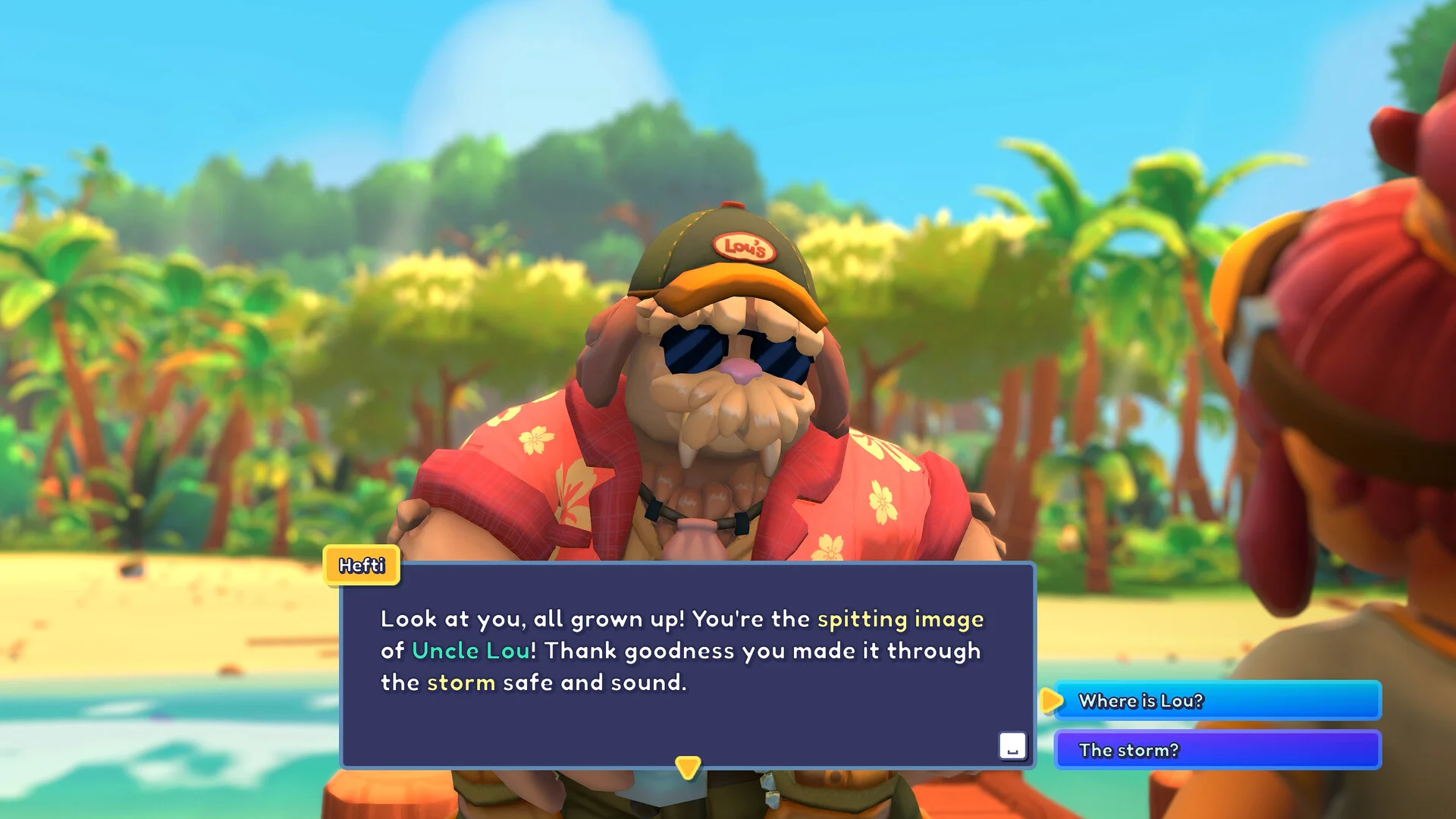
Lou’s Lagoon gives its cosy formula an unusually dramatic excuse for putting you to work. A violent storm has unsettled the Limbo archipelago, Uncle Lou has disappeared after flying out to investigate it, and the region has suddenly lost the pilot responsible for keeping its communities connected. Your arrival turns a family visit into a courier job, a rebuilding project, and eventually a search for whatever happened to Lou.
The setup carries echoes of Animal Crossing-style community restoration and the resource loops common to survival crafting games, yet Tiny Roar builds the experience around one defining tool: a seaplane. Lou’s Lagoon serves as your base, while four island communities provide quests, materials, relics, and increasingly specific problems. The bedtime-story framing, complete with myths about light, darkness, wind, and waves, gives those errands a larger mystery without making the game feel heavy.
The story itself stays fairly simple. Lou’s disappearance gradually connects to family tensions and the strange weather affecting the islands, with reconciliation providing much of the emotional direction. Many residents exist mainly to issue requests, so their problems rarely develop into substantial character arcs. The archipelago matters more as a place to repair than as a collection of people to know.
Everything Goes Through the Swirler
Players familiar with crafting adventures will recognize Lou’s Lagoon’s progression immediately: gather resources, improve equipment, discover new materials, then use those materials to construct increasingly useful machinery. The difference lies in how smoothly the Swirler binds those steps together.
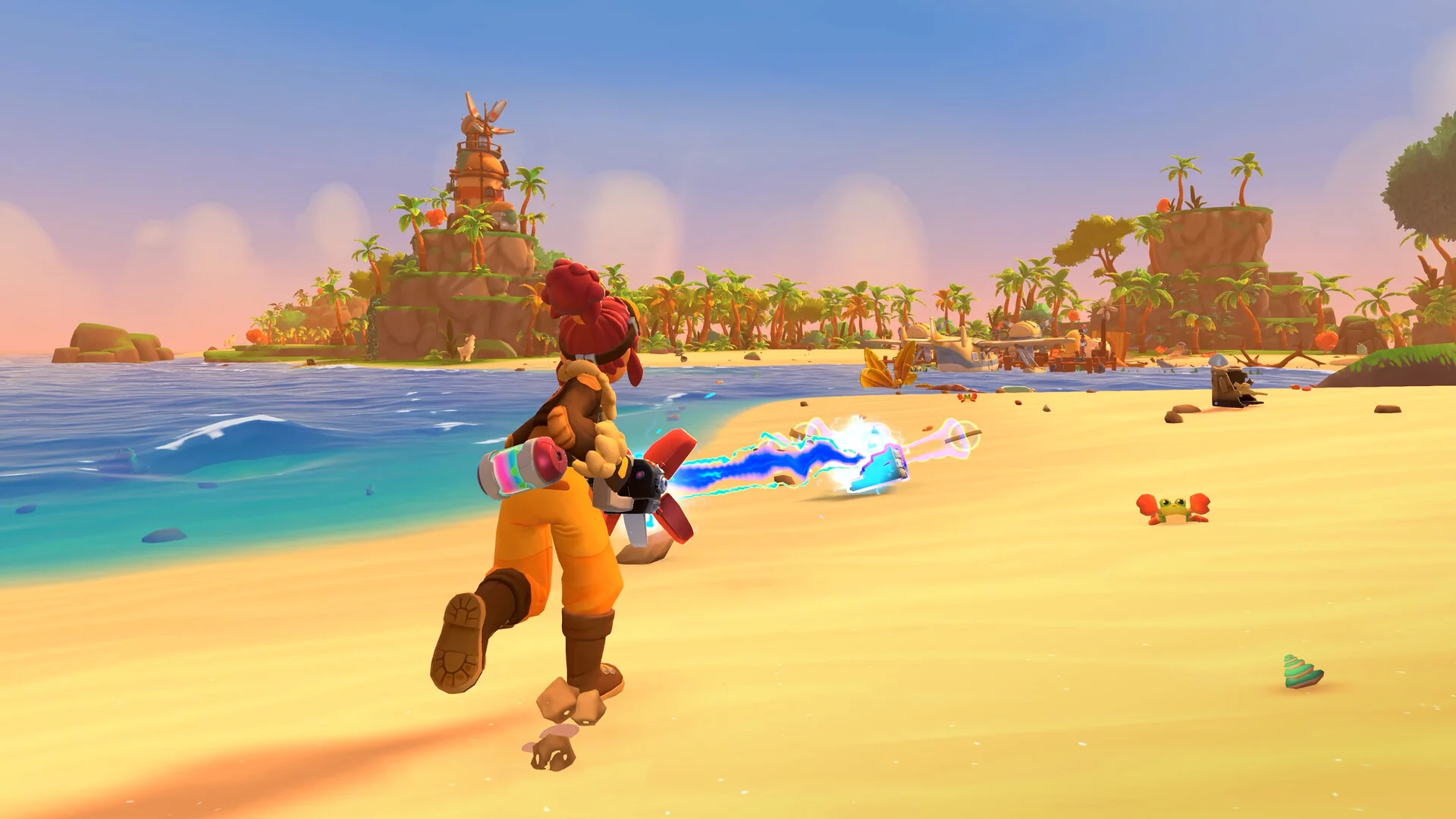
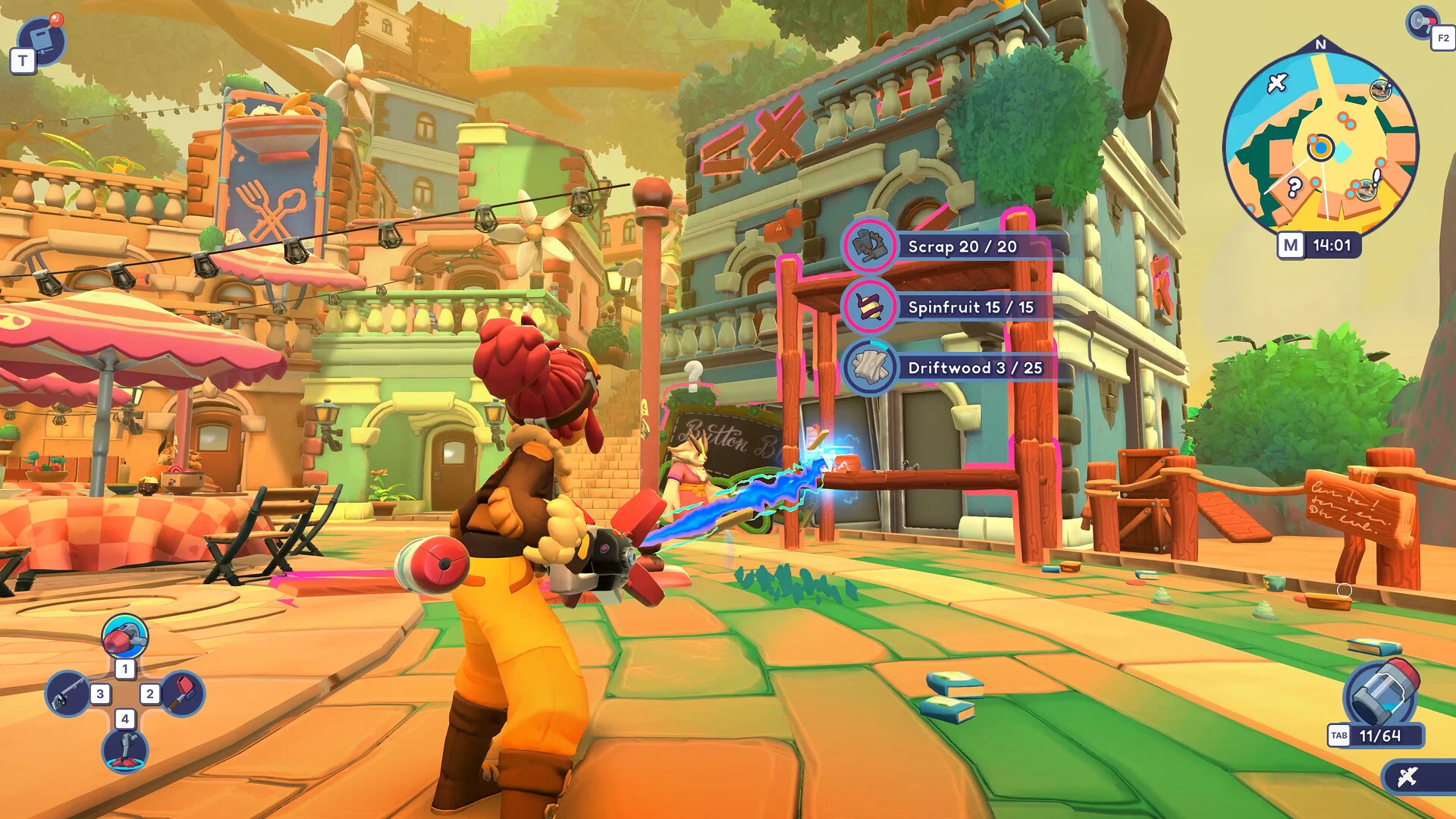
Its basic function lets you vacuum loose resources directly from the environment. Fruit, scrap, plant materials, and items taken from local wildlife shoot into your Zipper inventory with little friction. Red outlines identify objects that require a stronger Swirler, so the world constantly displays small promises of what your next upgrade will unlock.
That single device eventually branches into several functions. It becomes a fishing rod for collecting materials such as fish scales, a digging tool for buried objects, a builder for structures and machinery, and a glider for reaching isolated platforms. The progression feels readable because each upgrade changes what you can physically do rather than merely improving a number on a menu.
Also Read





Machines extend that chain. Refineries, processors, loomers, and other stations turn raw materials into components required by later requests. The drone station is especially useful because it can collect resources you have already discovered, reducing some of the repeated gathering that creeps into later hours.
That repetition is the weak point. Certain recipes send you back to specific islands for another batch of the same material, and the limited Zipper capacity can make those trips feel unnecessarily fragmented. Plane storage and Jackie’s travelling shop relieve some pressure, but the game occasionally asks for enough ingredients that a pleasant collection loop starts resembling inventory housekeeping.
The Seaplane Is the Real Upgrade
Crafting games regularly give players mounts, boats, or fast-travel points. Lou’s Lagoon makes transportation part of its identity. Your seaplane carries resources, accepts cosmetic customization, and takes you between the islands scattered across the map. Flying is uncomplicated, yet that simplicity works. From the air, the regions are visually distinct enough to function as landmarks, and detours can produce floating resources from the sky or sea.
The archipelago occasionally pushes back. The storm can pull the plane toward danger if you linger too close, kraken tentacles rise from the water, and one later mission introduces pirate airships. That pirate encounter suggests an airborne action layer the game could have developed further. Most flights remain peaceful transit rather than mechanical challenges.
That restraint suits the cosy structure. Flying from one job to another can become as satisfying as sailing between objectives in Assassin’s Creed IV: Black Flag, where movement itself supplies part of the pleasure. Fast travel exists, but manually crossing the water gives Lou’s Lagoon a sense of geography that menus cannot provide.
Frequent loading screens hurt that rhythm. Getting into or out of the aircraft repeatedly interrupts what should feel like a continuous loop between gathering on land and moving through the sky. The plane is still the feature that gives this game a recognizable silhouette among its genre peers.
Rough Ground Beneath the Bright Colors
Once you land, each island mixes towns, open exploration, platforming routes, treasure chests, quests, and materials. Early requests cleverly introduce new tools by giving you an immediate reason to build them. Boulderia shifts some assignments toward platforming and comedy, which helps break up long stretches of resource collection.
Movement on foot is less dependable than flying. Characters can become caught on scenery, and the game includes an “I AM STUCK” menu option that returns you to the plane or a nearby checkpoint. It is a useful recovery feature, though its prominence also reveals how frequently the environment can trap the player.
More serious problems have appeared around quest progression. One reported main mission failed to advance until an earlier save was loaded, costing progress. Another issue appeared after the story, when Fidge stopped opening the equipment upgrade menu. Since later requests can require upgraded tools to harvest particular resources, losing access to Fidge can effectively close off unfinished content.
Those problems matter because Lou’s Lagoon depends on steady progression. The Swirler works because every inaccessible resource points toward a future upgrade, and the seaplane works because every island promises another useful stop. When either chain breaks, the game loses the easy momentum that makes its familiar crafting systems feel so pleasant in the first place.
The Review
Lou’s Lagoon
Lou’s Lagoon takes familiar cosy-game machinery and gives it a memorable center through its seaplane. The Swirler creates a satisfying chain from gathering to upgrades, while flights between distinct islands make routine requests feel pleasantly purposeful. Repeated resource runs, frequent loading screens, awkward platforming, and potentially serious progression bugs weaken that rhythm. Its family story rarely surprises, yet the systems fit together cleanly enough that flying toward the next small job remains appealing.