






















The strangest thing about Amnon Rechter’s commission is that designing the memorial seems safer than reaching it. Every trip from Israel into southern Lebanon requires armed escorts, defensive equipment and a drive along the aptly named Death Road, where an ordinary commute can turn lethal within seconds. Monument understands that physical danger very well.
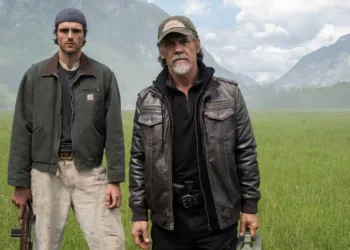
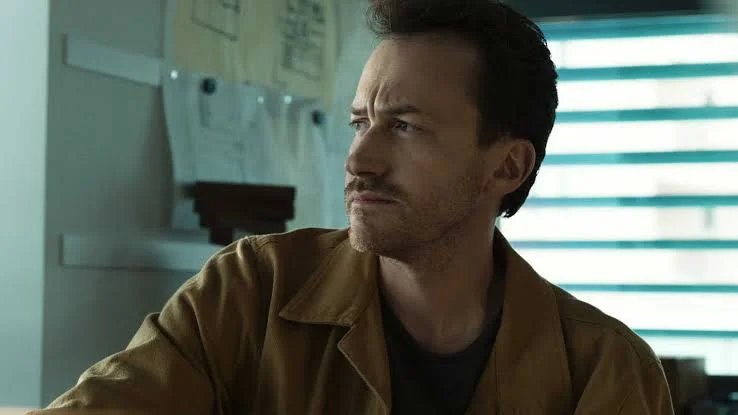
Bryan Singer’s historical drama, written by Alena Alova, is set in 1999 during the final phase of Israel’s occupation of southern Lebanon. Joseph Mazzello plays Amnon, the son of renowned architect Yakov Rechter, played by Jon Voight. The Israeli Ministry of Defense approaches the pair about designing a memorial for Lebanese soldiers killed during the conflict.
Amnon initially wants nothing to do with the assignment. He openly compares Lebanon to Israel’s Vietnam, while Yakov approaches the commission with the weary pragmatism of a man who knows some requests are difficult to refuse. Amnon changes course after securing permission to create an interfaith memorial honoring both Christian and Muslim dead. That choice gives the project its dramatic purpose. A structure commissioned within a military occupation becomes Amnon’s attempt to create something that might outlast the politics surrounding it.
The Death Road
Singer is at his sharpest once the Rechters begin crossing the border. An early convoy travels through the Fatima Gate with vehicles covered in equipment designed to interfere with missile targeting. The camera alternates between wide aerial views of exposed roads and tight shots inside the cars, making the geography easy to understand before turning it into a source of anxiety.
One later confrontation leaves Amnon outside his vehicle facing armed bandits. Another sequence uses the sudden arrival of a military jet to make the open landscape feel brutally small. These scenes work because Singer establishes the danger before anything happens. We know how little protection separates the passengers from whatever might come over the next hill.
The repetition eventually works against the film. Each return down the Death Road carries roughly the same dramatic question, and by the third or fourth crossing, the structure has become visible. Suspense starts behaving like a commute.
Also Read






The memorial itself is far richer. As the structure takes shape, production design turns Amnon’s political idealism into something viewers can actually inspect. The monument has weight, scale and permanence, which matters in a story where governments, alliances and borders are shifting around it.
The film even gives characters lines about memory changing alongside politics and the possibility that public memory can become propaganda. Those ideas deserve greater space than the screenplay gives them.
Family Pressure
Mazzello carries much of the film by refusing to make Amnon purely heroic. His architect can be principled, obsessive, warm and dangerously careless within the same stretch of story. When he insists upon honoring Muslim and Christian soldiers together, the conviction feels genuine. When that conviction leads him into reckless situations on the road, idealism begins looking uncomfortably close to self-absorption.
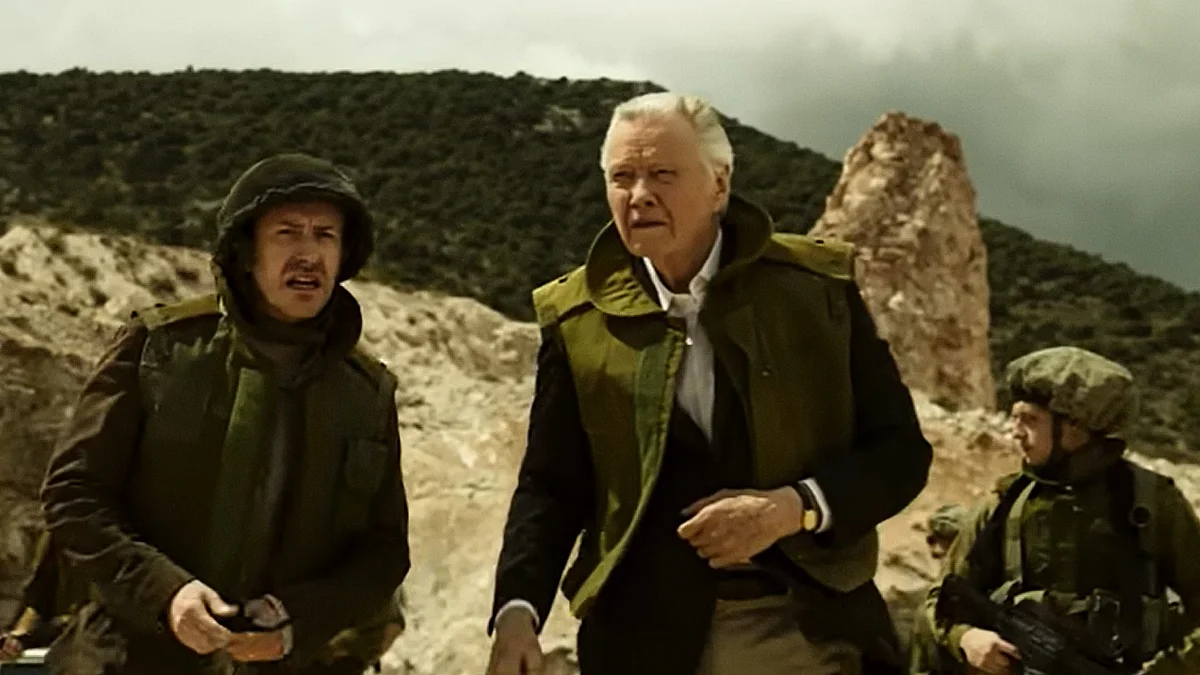
His relationship with Yakov gives the movie its gentlest material. Yakov is physically declining from cancer, and Voight plays his pain through small winces and slowed movements rather than constant speeches about mortality. Watching father and son work together gives the project a second meaning. Amnon is building a public memorial while quietly approaching a private loss.
The domestic plot is less convincing. Amnon hides the commission from his wife Osnat for much of the first half, creating an argument the film hardly needs. Armed crossings into Lebanon already provide ample pressure.
Aviv Pinkas salvages much of this material. When Osnat discovers what Amnon has been doing and tells him she almost wishes he were having an affair, the line lands because Pinkas plays the anger as fear rather than melodrama. Later, a broken window and threatening message bring the political danger directly into their home. Suddenly her objections have a physical consequence sitting among the shattered glass.
Whose Memorial?
The film becomes harder to defend when it looks beyond the Rechter family. Amnon develops a connection with Lebanese brothers helping construct the memorial, men whose lives are shaped by the same conflict the Israeli architect can repeatedly leave behind. Their desire to escape southern Lebanon points toward a potentially richer story about people living beside the monument rather than designing it. The screenplay rarely gives them that space.
This imbalance matters because Monument is explicitly interested in reconciliation. Amnon wants a structure that recognizes Muslim and Christian deaths together, yet the film spends far greater time examining his professional ideals and family problems than the Lebanese lives represented by the memorial itself.
The political frame is similarly narrow. The story carefully establishes the Israeli presence in southern Lebanon and the transition from Benjamin Netanyahu to Ehud Barak, yet the collapsing Oslo peace process and the Israeli-Palestinian conflict remain largely outside the frame. For a drama so interested in how architecture records history, those absences become noticeable.
Kenneth Lampl’s score handles the emotional gaps with restraint. During the road sequences, the music intensifies danger without smothering the silence inside the vehicles. Around Yakov’s illness, it becomes quieter, allowing Voight and Mazzello’s pauses to carry the scene.
One musical choice is harder to ignore: the historical montage uses Radiohead’s “Everything in Its Right Place,” released in 2000, during a story taking place in 1999. It creates the desired unease, but historical dramas invite viewers to notice the details they get wrong.
Monument is strongest when construction itself becomes the argument. Watching stone and concrete rise while soldiers, governments and loyalties shift around them gives the film an image with real force. The trouble is that the people standing closest to that structure do not all receive the same chance to speak.
Monument premiered in theaters on March 20, 2026, via Abramorama. Set in 1999 during the final days of the Israeli occupation of southern Lebanon, the film follows an architect and his idealistic son as they clash over designing a memorial for all victims of the war.
Where to Watch Monument (2026) Online
Full Credits
Title: Monument
Distributor: Abramorama
Release date: March 20, 2026
Rating: R
Running time: 1 hour 53 minutes
Director: Bryan Singer
Writers: Alyona Alova
Producers and Executive Producers: Bryan Singer, Jason Taylor, Guy Shalem, Yariv Horowitz
Cast: Jon Voight, Joseph Mazzello, Ori Pfeffer, Aviv Pinkas, Igal Naor, Riyad Sliman
Director of Photography (Cinematographer): Ziv Berkovich
The Review
Monument
Monument finds its strongest material whenever architecture becomes physical risk: Amnon’s tense crossings along the Death Road, the threatening jet flyover, and the memorial slowly rising amid political instability. Joseph Mazzello gives that construction emotional urgency, while Kenneth Lampl’s score and Singer’s controlled suspense filmmaking keep the 113-minute drama moving. The screenplay weakens when Amnon’s secrecy with Osnat manufactures tension the setting already provides, and its narrow perspective leaves the Lebanese workers frustratingly underdeveloped. The monument carries an inclusive idea. The film surrounding it does not examine everyone affected with equal care.
PROS
- Mazzello’s committed performance
- Effective Death Road suspense
- Strong production design
- Lampl’s restrained score
CONS
- Underwritten Lebanese characters
- Manufactured marital conflict
- Repetitive border crossings
- Politically narrow perspective