























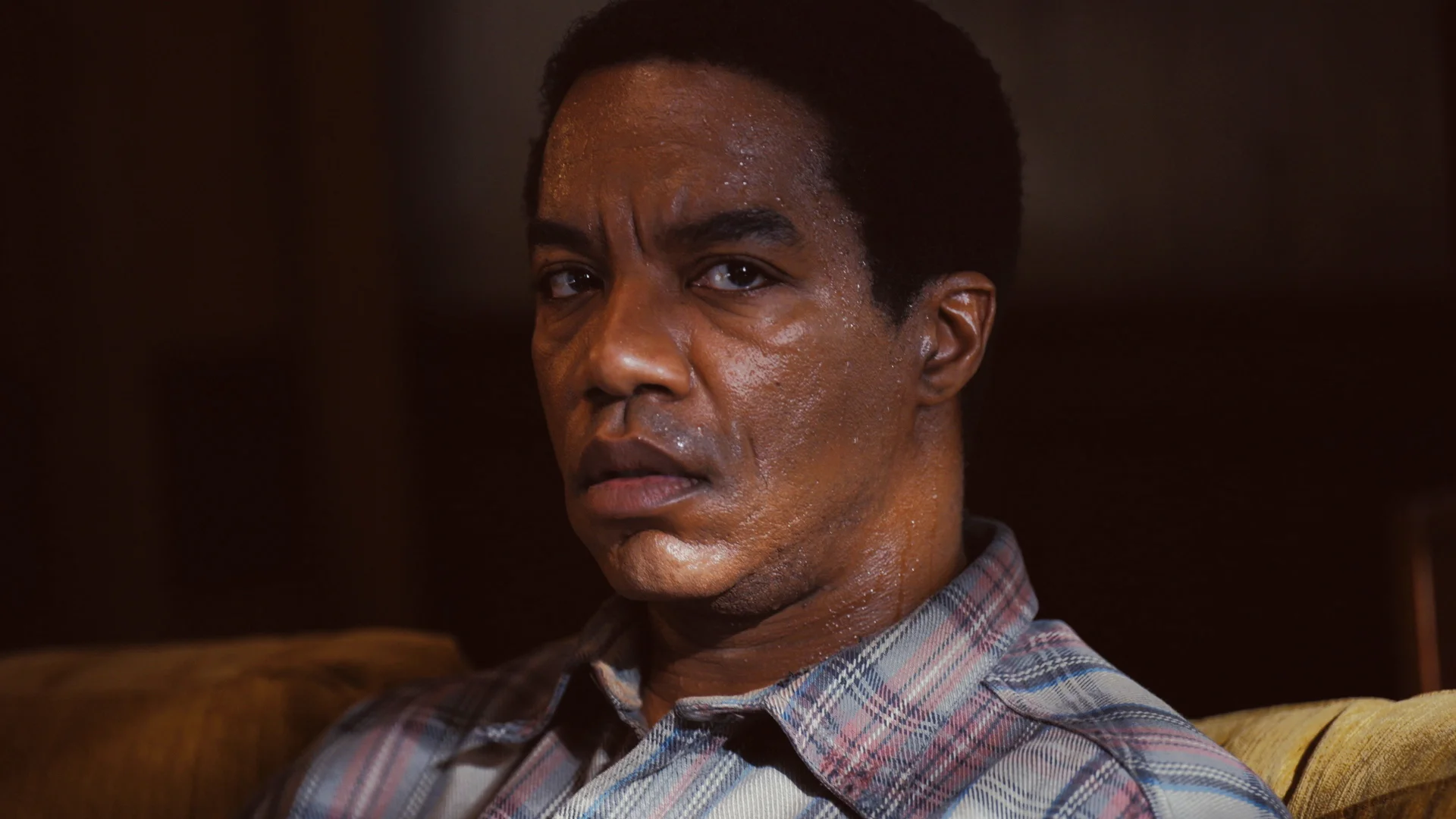

Shinya Tsukamoto treats the Vietnam War as an American story viewed from outside its national mythology. That distance gives Mr. Nelson, Did You Kill People? some of its harshest power. It also explains why the film can depict Allen Nelson’s wartime crimes with such clarity while struggling to understand the cultural forces that shaped the man committing them.
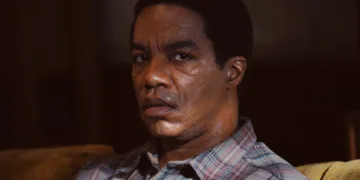
Adapted from Nelson’s autobiographical account, the film follows him across decades. Mark Merphy plays the young Marine who enlists at 18 after growing up with poverty and violence, while Rodney Hicks takes over as the older Nelson living with the psychological consequences of Vietnam. Geoffrey Rush appears as Dr. Daniels, the psychiatrist who keeps returning to one deceptively simple question: Why did you kill people?
Nelson’s first answer is the institutional one. He followed orders. He would have died if he hesitated. Tsukamoto refuses to let that explanation end the conversation, placing personal responsibility beside military conditioning and forcing the two into an uncomfortable proximity that the film never entirely resolves.
Learning to Kill
The Vietnam sequences are where Tsukamoto’s outsider perspective becomes most valuable. American war cinema has spent decades wrestling with Vietnam, yet even its bleakest examples can preserve traces of the soldier as tragic victim. Tsukamoto approaches the battlefield without that cultural reflex.
Bullets rip through bodies. Villagers are treated as possible enemy combatants regardless of age. Corpses are gathered and counted as evidence of progress. Children are left beside dead parents. One Marine cuts ears from bodies and keeps them as trophies. Tsukamoto stages these acts without patriotic cushioning, turning the military operation into organized horror.
Merphy makes Nelson’s transformation readable through small changes rather than speeches. After his first kill, fear gradually gives way to numb efficiency. His eyes flatten. His reactions slow. Killing becomes another task.
One episode interrupts that deterioration. Nelson encounters a Vietnamese woman giving birth and admits that under ordinary battlefield logic he might have shot her. Instead, he helps deliver her child. The scene matters because it reveals that dehumanization has not erased choice completely. The machinery of war may train men to kill, but the film quietly preserves the possibility of refusal.
Tsukamoto sometimes weakens his own argument by repeating its imagery. Another shooting, another mutilated body, another burst of screaming eventually risks producing the same numbness the film attributes to its soldiers. His quieter passages prove sharper. When Nelson later speaks publicly and the camera studies individual listeners absorbing his testimony, reaction becomes its own form of accusation.
Who Gets Forgiven?
Returning to America does not return Nelson to ordinary life. Sudden noises terrify him. Darkness becomes threatening. Nightmares replay Vietnam with physical intensity. His relationships deteriorate, homelessness follows, and the violence he carried overseas begins entering domestic spaces.
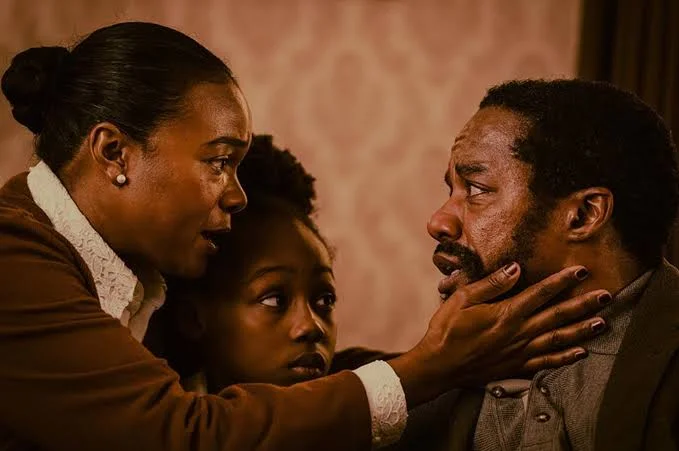
Hicks plays these years differently from Merphy. His strongest moments arrive when Nelson stops exploding and starts thinking. During therapy with Daniels, pauses and restrained expressions reveal a man searching for language that can hold actions he has spent years explaining through military necessity.
The sessions themselves become mechanical. Daniels asks why Nelson killed. Nelson offers some version of obedience or survival. Daniels refuses it. Nelson erupts. Another memory follows. The repetition may reflect the circular nature of trauma, yet dramatically it soon feels programmed, with each confrontation delivering less than the previous one.
Tatyana Ali’s Linda is given too little space outside Nelson’s condition. She comforts him, fears his outbursts, and watches his struggle consume family life. A subplot involving his stepson considering military service gives that strain a concrete target, but Linda rarely receives a life independent of Allen’s recovery.
The film grows ethically shakier when forgiveness enters the picture. A later scene in which children embrace Nelson after hearing him speak aims for tenderness. Tsukamoto has already shown Vietnamese children surrounded by the bodies of their parents. Placing these images within the same moral frame creates a discomfort the film seems less willing to examine. Understanding Nelson’s trauma is one question. Deciding what emotional absolution should look like is another.
A Story Larger Than Trauma
Nelson’s identity as a Black American Marine should complicate every stage of this narrative. He fought for a country that still denied Black citizens basic equality, a contradiction briefly addressed when Black soldiers question why they risk their lives for a nation that does not grant them freedom. Then the film largely moves away from it.
This is where Tsukamoto’s international perspective becomes both productive and limiting. As a Japanese filmmaker examining an American war, he can strip away familiar US narratives of noble intervention with unusual freedom. Yet the racial specificity of Nelson’s life remains curiously thin. His relationship to other Black veterans, his transition out of homelessness, his efforts to rebuild a working life, and the social environment surrounding his return receive little sustained attention.
The timeline compounds the problem. Nelson moves from homelessness toward marriage, therapy, activism, international speaking engagements, and eventually a return to Vietnam, but several of those transitions arrive as leaps rather than developed chapters. His public identity becomes clearer while his private evolution remains fragmentary.
Tsukamoto understands what war did to Allen Nelson’s mind with frightening precision. He is less certain about the America Nelson returned to, or the historical contradiction of a Black man being asked to kill abroad for freedoms denied to him at home. That gap leaves the film caught between a severe international critique of American violence and a deeply personal story whose cultural specificity keeps slipping beyond its grasp.
Mr. Nelson, Did You Kill People? premiered at the 83rd Venice International Film Festival on September 4, 2026, ahead of a theatrical release in Japan by Kino Films. The war drama follows a traumatized Vietnam veteran confronting his past and severe post-traumatic stress disorder after returning home.
Where to Watch Mr. Nelson, Did You Kill People? (2026) Online
Full Credits
Title: Mr. Nelson, Did You Kill People?
Distributor: Kino Films
Release date: September 4, 2026
Running time: 116 minutes
Director: Shinya Tsukamoto
Writers: Shinya Tsukamoto
Producers and Executive Producers: Ken Ochiai, Yumiko Takebe, Christopher Frey, Naoya Kinoshita
Cast: Rodney Hicks, Geoffrey Rush, Tatyana Ali, Mark Merphy, Lily Franky, Ian MacGillivray, Natalie Jacobs, Joshua Léger
Director of Photography (Cinematographer): Shinya Tsukamoto
Editors: Shinya Tsukamoto
Composer: ermhoi
The Review
Mr. Nelson, Did You Kill People?
Mr. Nelson, Did You Kill People? gains much of its force from Shinya Tsukamoto’s refusal to soften American violence in Vietnam. The battlefield sequences expose atrocity with a severity rarely granted this history, while Mark Merphy and Rodney Hicks give Allen Nelson’s trauma convincing physical weight. Yet the film understands war more clearly than it understands Nelson. His Black identity, postwar life, and path toward activism remain frustratingly thin, while repetitive therapy scenes strain for catharsis before the moral questions have settled.
PROS
- Unflinching Vietnam sequences
- Strong dual lead performances
- Powerful anti-war perspective
- Effective quieter crowd scenes
CONS
- Repetitive therapy structure
- Thin cultural specificity
- Uneven melodrama
- Major life transitions skipped