



















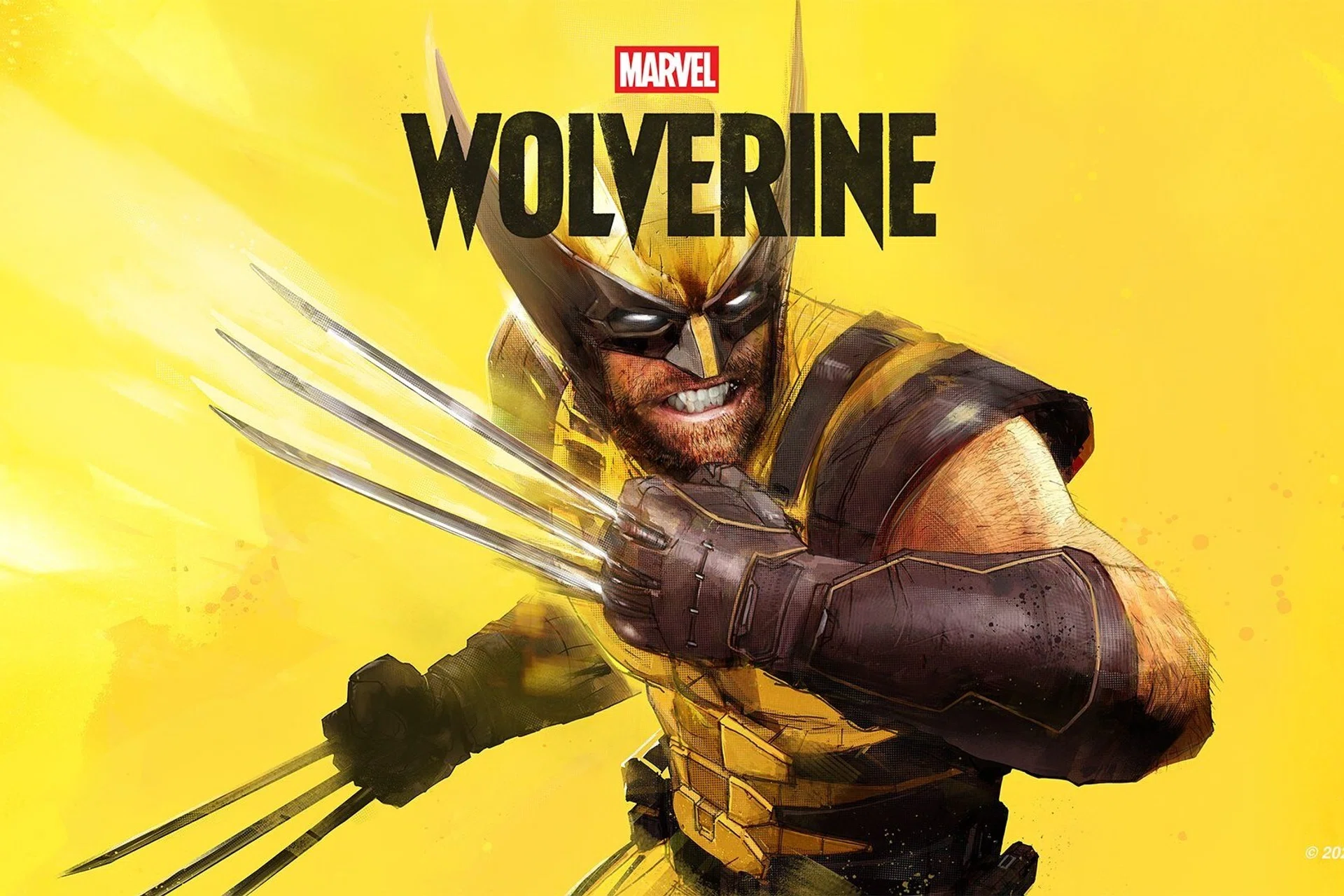

Insomniac spent three Spider-Man games teaching players to expect movement, freedom, and improvisation from its superheroes. Logan demands almost the opposite. He cannot swing across Manhattan or turn a street corner into an aerial playground, and trying to force him into that mould would have misunderstood the character from the beginning. The decision to make Marvel’s Wolverine a focused, linear action game is therefore one of Insomniac’s smartest choices. The disappointment is that the studio rarely takes full advantage of what that focus could offer. What it gets right immediately is Wolverine himself.
Liam McIntyre’s Logan feels distinct from both Insomniac’s Peter Parker and many familiar screen versions of Wolverine. He has the expected physical bulk and capacity for violence, yet McIntyre plays him with an unexpected softness. Logan can be apologetic, protective, affectionate, even awkward. His posture changes in quieter spaces, shoulders folding inward as if this nearly indestructible body would prefer to occupy less room. The contrast suits a character whose greatest strength has rarely done much to protect him from everything happening inside his head.
That humanity becomes especially clear around the people who knew him before the game began. Nathaniel Essex’s Team X places Logan alongside Mystique and Victor Creed, while the campaign gradually reconnects him with Jean Grey. Insomniac deliberately avoids starting from the traditional X-Men setup, leaving Professor Xavier and Magneto outside the immediate story and allowing these relationships to establish their own history.
Some of the best scenes are correspondingly small ones. Logan sharing a quiet space with Mystique, Jean meeting him away from the battlefield, or Sabretooth letting his hostility reveal something closer to wounded loyalty can say far more about these characters than another explosion. Logan’s gentleness around the young mutant Leech is particularly effective because the game never treats compassion as contradictory to Wolverine’s ferocity. Both belong to him.
The wider mutant story gives those relationships weight. Bolivar Trask’s campaign against mutants includes disappearances, forced detentions, and children being treated as threats. It is familiar X-Men territory, but familiarity does not make the imagery ineffective. Insomniac understands that the franchise’s persecution metaphor works best when institutional rhetoric becomes something physical: a frightened child, a mutant dragged into a vehicle, a community built around people who have nowhere else to go. The central plot is less assured.
Logan’s missing memories should make his search for identity the force pulling the campaign forward. Instead, he spends considerable stretches reacting to whatever crisis has appeared next. Important pieces of his past are even placed behind optional Nightmare Doors, where memories are earned through obstacle courses or combat challenges. Those activities can be enjoyable, particularly the wave-based trials that ask you to choose modifiers between rounds, but attaching pieces of Logan’s psychological history to optional challenge rooms makes his past feel strangely detachable from his present.
Jean Grey carries some of the emotional burden created by that structure. Krizia Bajos gives her warmth and authority, and her chemistry with McIntyre helps several scenes land. Their relationship is intentionally messy, shaped by history neither character can entirely escape. Yet Jean is occasionally pushed into the familiar position of the person expected to understand, restrain, or heal Logan while her own concerns receive less space. The performances keep that imbalance from sinking the relationship, though the writing never fully resolves it.
Combat has the opposite problem. It establishes its identity immediately, then struggles to deepen it. Logan feels terrific to control. Basic claw attacks connect cleanly, dodges and parries have generous responsiveness, and his leap lets him cross an arena with the predatory speed the character needs. His healing factor regenerates health naturally, while sustained aggression builds rage and encourages you to keep attacking instead of retreating. The system makes mechanical sense for Wolverine. Playing cautiously feels almost wrong.
The violence is spectacularly excessive. Limbs disappear, claws enter bodies from deeply unpleasant angles, and finishers frequently look as if Insomniac spent years creating family-friendly Spider-Man combat before somebody finally unlocked the cupboard containing all the blood. Team attacks with Jean or Sabretooth add bursts of choreography, and the animation consistently communicates Logan’s combination of weight and speed. For the opening hours, that is enough.
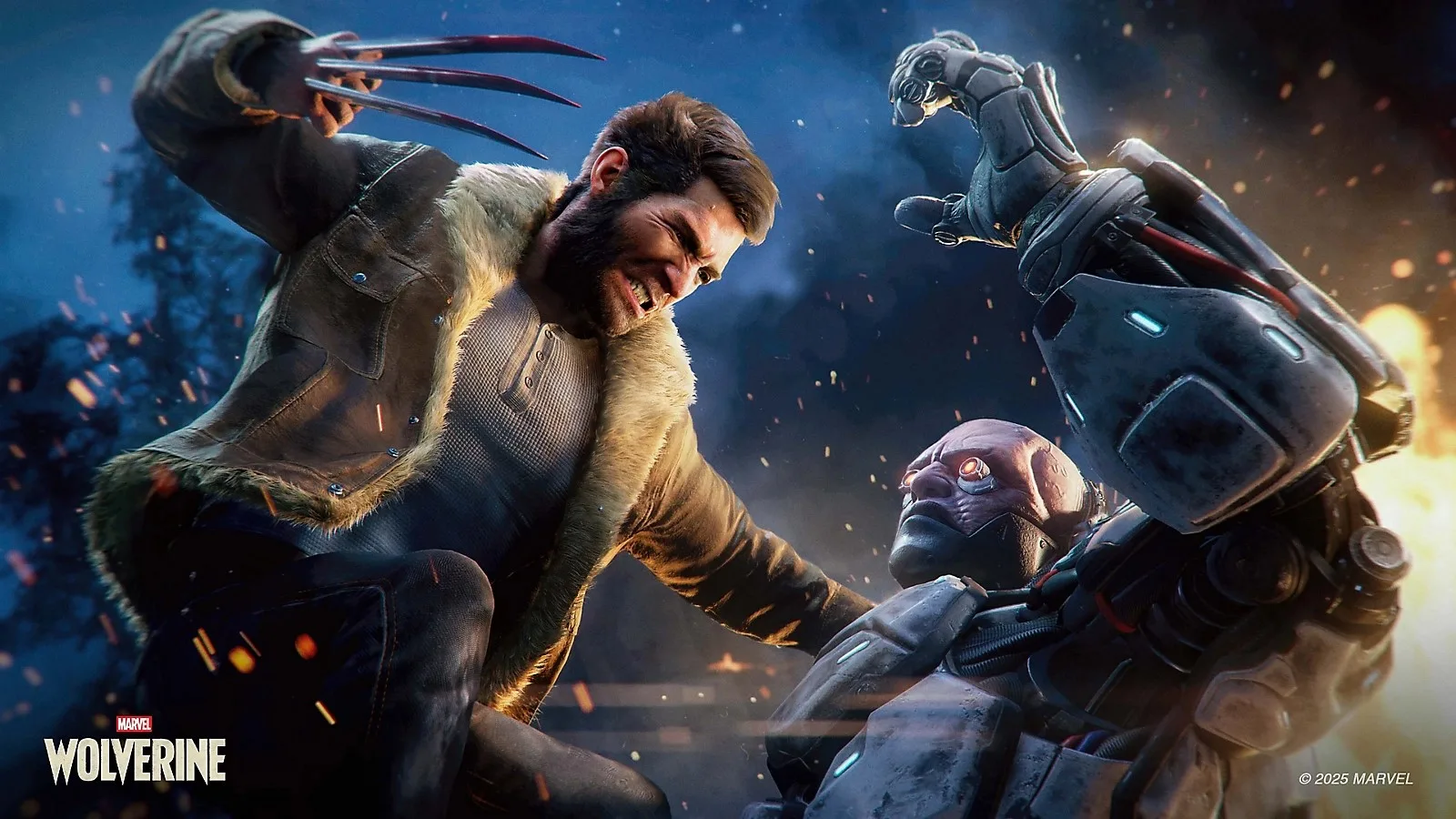
The problem arrives when the campaign has shown nearly all of its fundamental ideas and still has many enemies left to feed into them. New skills and special attacks increase Logan’s options, but relatively few change the way a fight is approached. Rage makes aggression even stronger. Upgrades improve efficiency. Different enemies demand slightly different priorities, with ranged attackers encouraging quick lunges across the battlefield and tougher units requiring additional parries, yet the underlying answer remains remarkably stable: close the distance and start cutting.
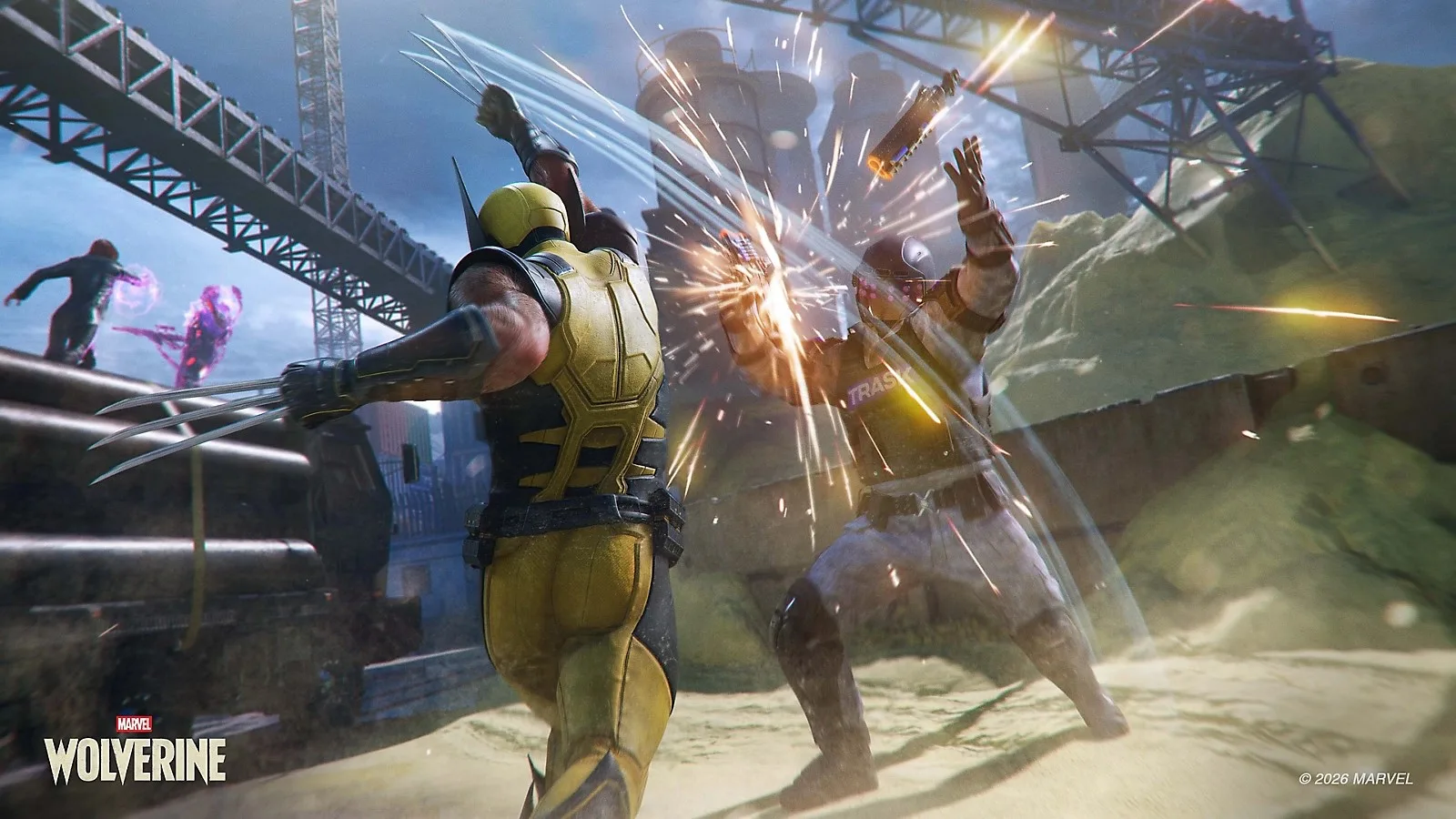
That becomes particularly noticeable in encounter design. Many missions funnel Logan through corridors that expand into broad combat spaces, usually with melee enemies below and ranged threats positioned around the perimeter. Mixed groups can create good moments when target priority matters, but too many fights settle into the same rhythm of leap, slash, parry, dodge, repeat.
The comparison with Insomniac’s Spider-Man games is revealing here. Spider-Man’s gadgets, aerial movement, webs, environmental attacks, and three-dimensional mobility constantly gave the player different ways to express the character. Wolverine is intentionally simpler, and that fits Logan, but simplicity still needs variation. A focused combat system can become deeper through enemy behavior, arena construction, or progression. Marvel’s Wolverine rarely pushes hard enough in any of those directions.
The linear structure faces a similar problem. Abandoning the open world was sensible. Logan is a drifter, and a campaign of roughly fifteen hours suits both him and the limits of the combat system. Yet smaller spaces should allow denser interaction, and too many of these environments behave like expensive hallways.
Tokyo and Madripoor can look magnificent while remaining largely untouchable. Wolverine’s heightened senses often become a glowing trail pointing toward the next destination. Whisky bottles and resource caches are mostly objects to notice and collect. One early sequence sends Logan around Essex’s manor looking for drawings that contain a password needed to coax Leech from hiding. The game could let the player interpret the drawings. Logan simply works it out himself.
That small example captures a wider issue. Insomniac has written a Wolverine with several emotional dimensions but designed surprisingly few ways for the player to express them.
The rare deviations show how much room existed. An undercover sequence with Jean briefly introduces a different texture, letting the pair move through a social space while disguised. A chase across Tokyo rooftops and neon streets gives the campaign the scale expected from a superhero production. Some boss encounters also break the routine effectively, including an Omega Red fight built around stagger pressure and carefully timed parries. Elsewhere, a lengthy Sentinel battle reduces a towering threat to repeatedly attacking the same exposed target, a design that feels several generations older than the presentation surrounding it.
That inconsistency keeps Marvel’s Wolverine from joining Insomniac’s Spider-Man games among the studio’s best superhero work. It is polished, beautifully performed, and often extremely satisfying in short stretches. Its interpretation of Logan may actually be the stronger character achievement. McIntyre, the animators, and the writing team find tenderness inside a hero usually defined by what his claws can do.
The game itself keeps returning to those claws anyway. Logan develops through relationships, recovered memories, guilt, and reluctant affection, while the player develops mostly into a slightly better machine for cutting through the next room. For a character who spends so much of his life trying to understand what exists beyond the weapon, that gap is difficult to ignore.
Marvel’s Wolverine is a standalone, single-player action-adventure game developed by Insomniac Games and published by Sony Interactive Entertainment. Set in the same universe as Insomniac’s Marvel’s Spider-Man series, the game features an original narrative that follows Logan across key locations like Madripoor, Canada, and Japan. Designed with a darker, more mature tone than previous titles from the developer, the gameplay focuses heavily on close-range combat, precise claw mechanics, dynamic damage, and Wolverine’s signature healing factor. The game releases on September 15, 2026, exclusively for PlayStation 5 and PlayStation 5 Pro.
Full Credits
Director (Creative/Game Director): Marcus Smith, Mike Daly
Writers (Lead Writer/Narrative Designer): Walt Williams, Ross Beeley, Paul Mastroianni, Jamie Mayer, Taylor Cyr, Doug Lieblich, Nick Folkman, Mary Kenney, Joe Halstead, Brittney Morris
Producers/Studio Leadership (Producers, Executive Producers, and Key Studio Heads): Chad Dezern, Ryan Schneider, Jen Huang
Lead Voice Cast: Liam McIntyre, Troy Baker, Kelly Hu
Key Engineering/Technical Leads: Mike Fitzgerald
Composer/Sound Director: David Fleming
Developer, Publisher: Insomniac Games, Sony Interactive Entertainment
Release Date: September 15, 2026
The Review
Marvel’s Wolverine
Marvel’s Wolverine understands Logan far better as a character than it does as a playable action hero. Liam McIntyre’s performance gives him warmth, vulnerability, and personality, while Insomniac’s brutal combat captures the force of his claws with impressive immediacy. The trouble is repetition: limited encounter variety, shallow progression, and rigidly linear spaces rarely develop those strong fundamentals. Compared with Insomniac’s Spider-Man games, it offers a richer central character but fewer ways to express him through play.
PROS
- Excellent interpretation of Logan
- Liam McIntyre’s strong performance
- Responsive, satisfyingly brutal combat
- Effective mutant persecution storyline
- Impressive animation and spectacle
CONS
- Combat grows repetitive
- Limited mechanical progression
- Restrictive level design
- Logan often reacts rather than drives the story
- Uneven boss encounters