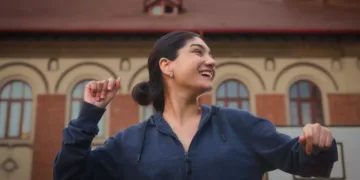




























Turning eighteen is treated as liberation so often that its darker possibilities are easy to ignore. For Rebeca, adulthood arrives as an administrative threat. She has spent seven years in a Bucharest children’s home, and the state regards her eighteenth birthday less as a milestone than as an expiration date. Residents who age out must leave unless education provides an exception. University acceptance, then, carries the weight of shelter. A dream of becoming an actress becomes entangled with the basic question of where she will sleep.
Alina Șerban builds I Matter around that cruelty without allowing Rebeca to become a diagram of institutional failure. She sings, dances, argues with friends, falls for people, fantasizes about the future, and waits for her imprisoned father to return. Denisa Farcaș gives those contradictions a restless life.
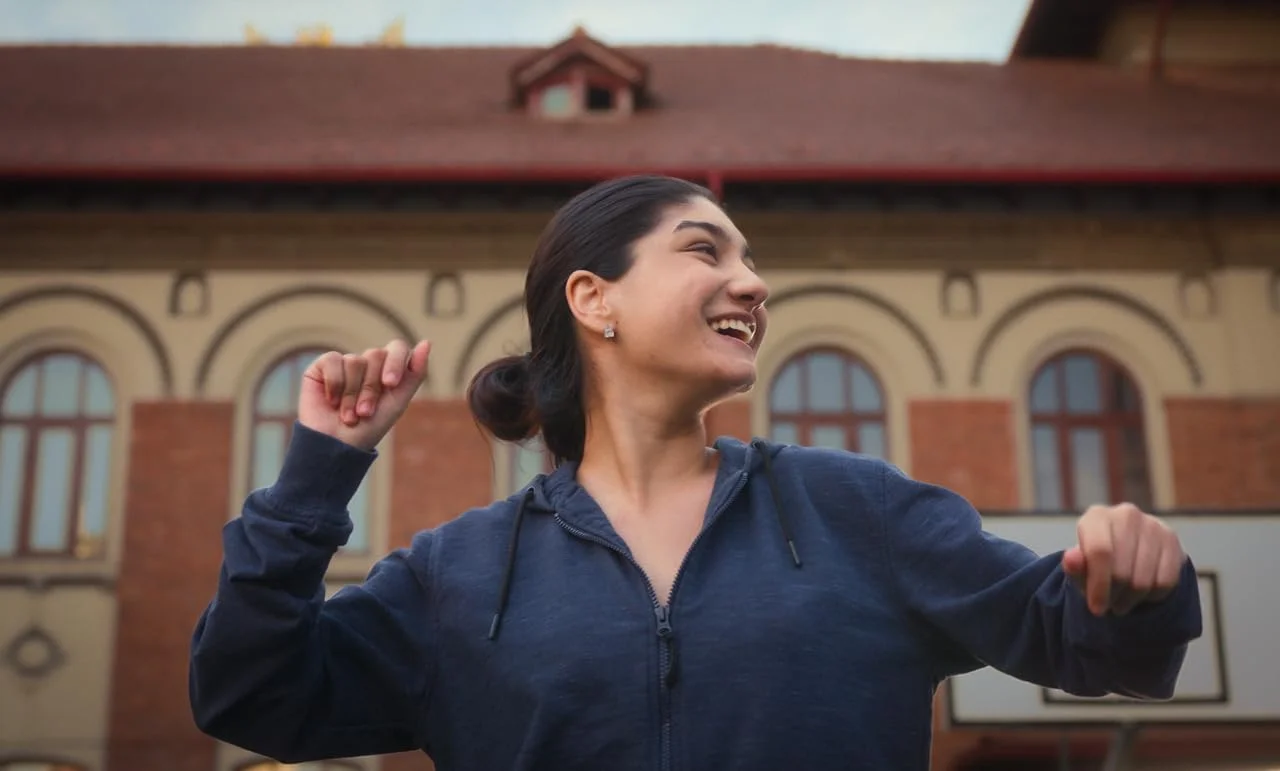
Confidence seems to flood into Rebeca whenever she performs, then drain away when the practical conditions of adulthood close around her again. Farcaș rarely needs the script to announce what Rebeca fears. Her alertness around other people already tells us how carefully this young woman has learned to read a room.
The film is easy to describe as a story of resilience. That description also risks letting everyone around Rebeca off far too gently. Her situation keeps demanding exceptional maturity from someone who has been given remarkably little security. Government inspectors can arrive at the children’s home and remove residents who have crossed an age threshold.
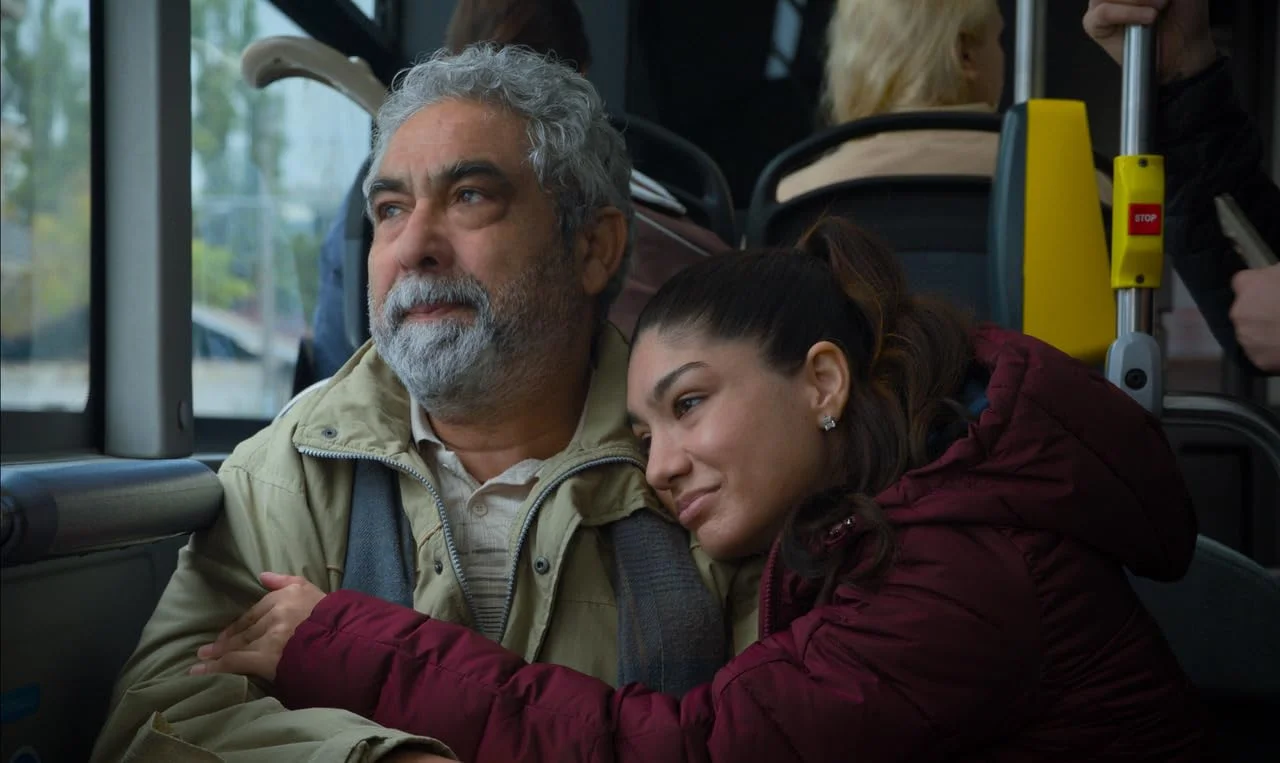
Her father’s release offers the promise of a conventional family, though the promise gradually proves less reliable than Rebeca needs it to be. Education functions simultaneously as aspiration and housing policy. The pattern is clear: stability is presented to her as something she must qualify for.
Șerban is especially sharp when she contrasts official definitions of family with the relationships already sustaining Rebeca. The children’s home is precarious, yet it is never portrayed simply as a place waiting to be escaped. Older residents help care for younger children. Rebeca and her friend Simona tease each other, argue, dance, and share the small responsibilities that accumulate into intimacy. The women working there offer patience that the visiting bureaucracy rarely displays. The home may belong to an institution, but the bonds inside it belong to the people living there.
That distinction gives Rebeca’s attachment to her father a painful edge. She imagines his release as the restoration of something that has been missing, only to discover that biological family does not automatically provide the constancy she has invested in it. Șerban avoids concentrating this disappointment into one explosive reckoning. It gathers through smaller disappointments, allowing Rebeca’s fantasy to weaken before she is prepared to surrender it. The irony is quietly devastating: the makeshift family she has been encouraged to see as temporary often behaves with greater permanence than the family structure she has been taught to desire.
Roma identity introduces another form of conditional belonging. Some of the film’s strongest scenes are almost casual. On a bus, a woman standing near Rebeca and her father shifts her hip pack so she can keep an eye on it. At acting school, Rebeca reacts furiously when she believes she has been suspected of stealing, startling classmates who appear unprepared for the history contained inside that anger. The scenes speak to each other. One shows prejudice operating through a tiny bodily gesture; the other shows what happens when years of such gestures have already taught someone to anticipate accusation.
Rebeca and Simona sometimes call themselves “smart gypsies,” reclaiming a slur as a form of mutual encouragement. The phrase never becomes comfortably triumphant. Its sting remains audible because their affirmation still has to pass through language shaped by contempt. Șerban understands that internalized prejudice rarely disappears because a character delivers the right speech. It survives in jokes, reflexes, suspicion, and the exhausting calculation of how strangers might already have categorized you.
Acting offers Rebeca another way of imagining herself. Onstage, identity can become something chosen rather than something assigned from outside. Yet the acting school cannot function as a clean sanctuary. Rebeca carries her history into that space, along with the expectation that she may be stereotyped there too. That complication saves the artistic subplot from becoming a simple salvation narrative. Performance may provide direction, confidence, and practical access to education, but it cannot erase the social conditions that made those opportunities feel so precarious in the first place.
The film’s weaknesses emerge when its form becomes less perceptive than its perspective. Șerban occasionally relies on familiar coming-of-age machinery, including a late setback that feels engineered because the emotional stakes were already sufficiently clear. The romantic thread involving a Roma graffiti artist occupies space without generating the same pressure as Rebeca’s relationships with her father, Simona, or the children’s home. There are moments when the script insists on feelings Farcaș has already made legible through expression and behavior.
Those conventional choices matter because I Matter is strongest when it refuses the tidy logic that coming-of-age stories often impose. Rebeca does not need to reject her origins, escape an embarrassing past, or discover that hardship secretly prepared her for success. The children’s home contains love alongside insecurity. Her father can matter to her without becoming dependable. Roma identity can be a source of solidarity while remaining exposed to prejudice. Acting can offer possibility without magically repairing the world surrounding it.
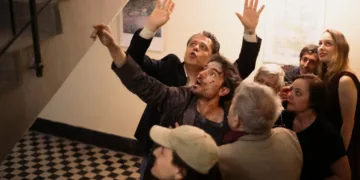
The closing credits reveal footage from the film’s actual wrap celebration inside the Romanian children’s home where the production was shot and where many of the young performers lived. The cast dances, embraces, and celebrates with an ease that some of the scripted emotional beats work harder to achieve. The images expose a small paradox in Șerban’s debut. Its dramatic construction sometimes reaches for familiar signals, yet the human reality underneath them keeps resisting simplification. Rebeca matters long before any institution decides that she has earned the right to stay.
I Matter had its world premiere in the Spotlight section at the 83rd Venice International Film Festival on September 8, 2026, where it won the Armani Beauty Audience Award. The drama follows a young Roma girl facing expulsion from her orphanage who pins her hopes on her estranged father’s upcoming prison release.
Full Credits
Title: I Matter
Distributor: microFilm, Untold Stories
Release date: September 8, 2026 (Venice International Film Festival)
Running time: 1 hour 56 minutes (116 minutes)
Director: Alina Șerban
Writers: Alina Șerban
Producers and Executive Producers: Ada Solomon, Carla Fotea
Cast: Denisa Farcaș, Sorin Mihai, Angelina Pavel, Vanessa Dancea, Raisa Mihai, Alexandru Stancu, Alina Berzunțeanu, Natalia Călin
Director of Photography (Cinematographer): Nona Cătușanu
Editors: Letiția Ștefănescu
Composer: Vlaicu Golcea
The Review
I Matter
I Matter finds its sharpest truth in the gap between the adulthood Rebeca is promised and the security she is denied. Alina Șerban occasionally leans on familiar coming-of-age machinery, yet the film’s cultural perspective remains unusually precise. Denisa Farcaș gives Rebeca warmth, volatility, and dignity without turning her into an emblem of suffering. The closing footage leaves the strongest impression because it reveals the human reality that the screenplay sometimes strains to shape.
PROS
- Denisa Farcaș gives a vivid, layered performance
- Sharp treatment of institutional precarity
- Nuanced portrayal of Roma identity and prejudice
- Children’s home depicted as community rather than simple confinement
- Cultural critique remains grounded in Rebeca’s daily life
CONS
- Familiar coming-of-age beats occasionally soften the material
- Romantic subplot adds little dramatic pressure
- Some emotions are emphasized after the performance has already conveyed them