





























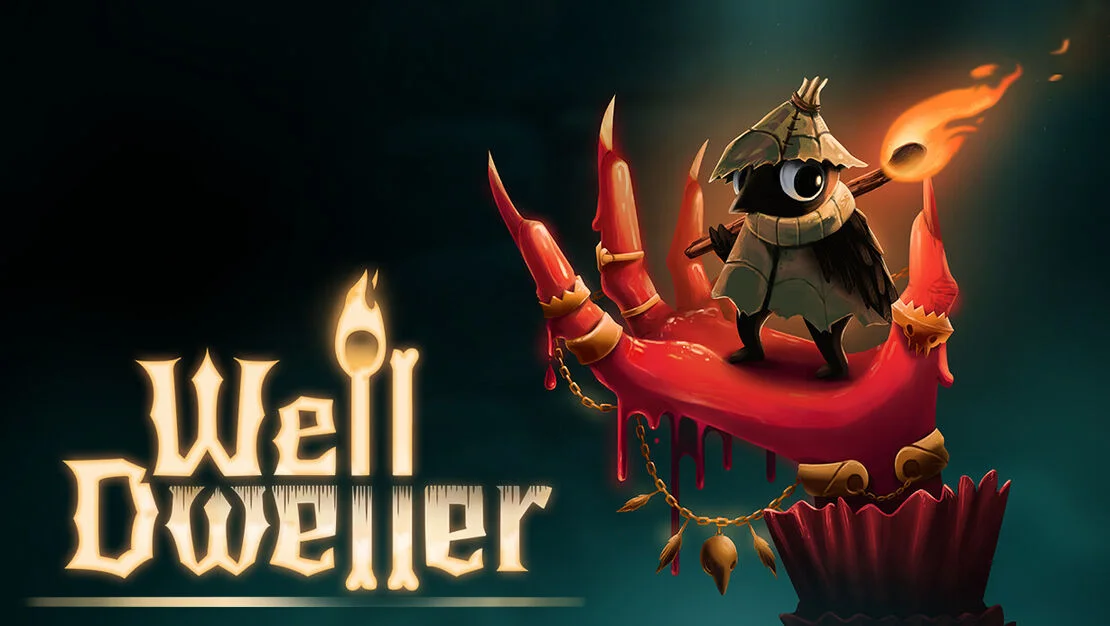

Well Dweller understands that a Metroidvania does not need to rebuild the genre from the ground up to offer a memorable adventure. The strongest games in this space usually succeed by refining the familiar pieces: movement that feels rewarding, exploration that encourages curiosity, and progression systems that make every return trip meaningful. Kyle Thompson’s latest project follows that philosophy closely, delivering a game that feels immediately recognizable while making several thoughtful decisions that remove some of the genre’s common frustrations.
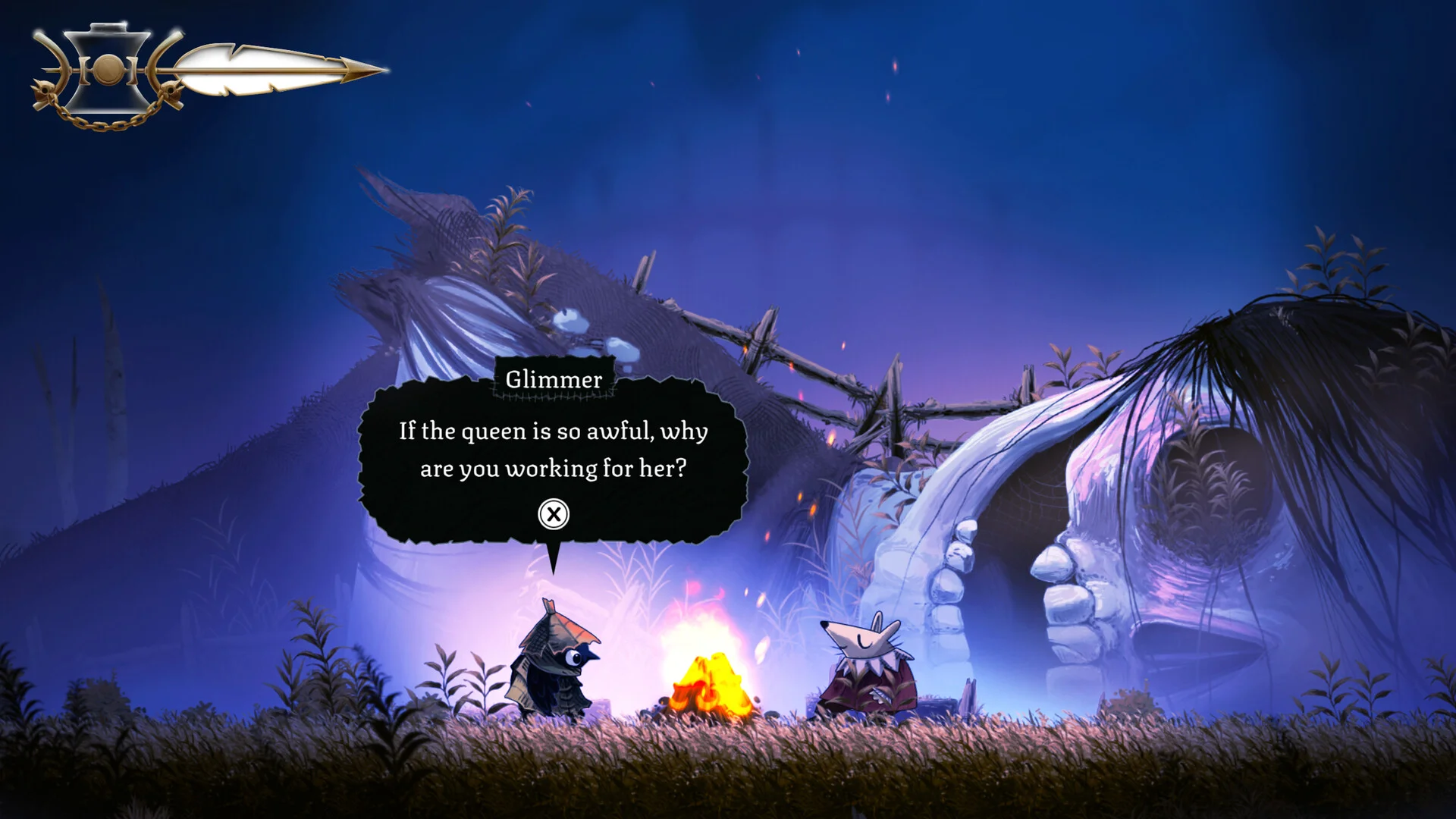
The premise itself fits the kind of dark fairytale world that has become a signature of Thompson’s work. Glimmer, a small bird living with his family inside a skull at the bottom of a well, sees his peaceful life collapse when an evil queen begins hunting birds for their feathers. After a hunter captures his family, Glimmer sets out with a matchstick as his only weapon to rescue them.
The story follows a straightforward rescue structure, but the world around it gives the adventure its personality. The contrast between adorable characters and unsettling creatures creates a tone that feels closer to a strange children’s story than a traditional fantasy quest.
That balance extends to the characters Glimmer meets throughout the game. His siblings provide moments of humor, while other inhabitants of the kingdom add small pieces of personality between major events. The Story Page collectibles also help expand the setting by adding short illustrated tales connected to the world. Compared with Metroidvanias that often hide almost everything behind environmental storytelling, Well Dweller is more direct with its narrative, giving players enough context to understand why they are exploring this kingdom.
The familiar structure of the genre quickly becomes clear. Players explore a large interconnected map, discover new abilities, and return to earlier locations to access previously unreachable areas. However, the game’s greatest strength comes from how carefully it handles this formula. Many Metroidvanias create tension through uncertainty, leaving players wondering if they missed something important. Well Dweller takes a different approach by offering tools that make exploration more manageable without removing the satisfaction of discovery.
The map system is a major example of this design philosophy. Players can place their own markers, identify locations they want to revisit, and eventually purchase hints for collectibles in areas they have already explored. These systems never force assistance on the player, but they are valuable for anyone aiming for completion.
The ability to warp between tents also keeps backtracking from becoming a chore. Compared with older games in the genre that often expect players to memorize large areas, Well Dweller respects the player’s time while still encouraging exploration.
Movement is where the game feels most distinct. Glimmer’s matchstick is not simply a weapon; it becomes the foundation of his entire progression. Early on, using the matchstick to launch through the environment creates new possibilities, and later abilities expand his movement further through climbing, gliding, and other traversal options. These upgrades feel connected to Glimmer himself rather than being random tools collected along the way.
This approach creates the familiar Metroidvania satisfaction of seeing a previously impossible path become accessible. A collectible sitting behind an obstacle is no longer just a reward waiting in the world. It becomes a reminder of future possibilities. The game encourages players to remember these locations and return when their abilities have grown.
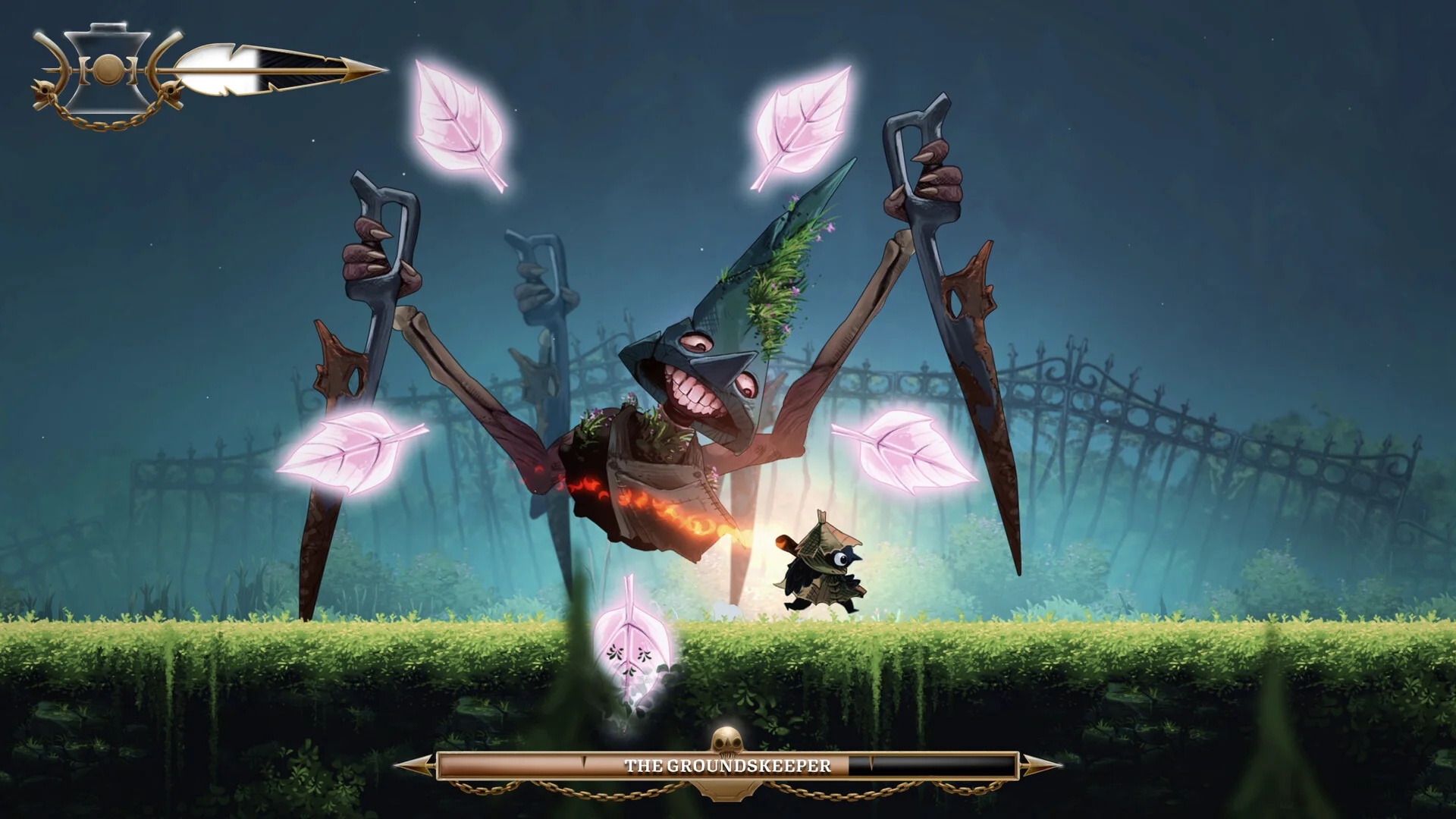
Combat takes a simpler approach. Glimmer’s main options are his matchstick attacks, throwable fire bottles, and his slide ability, which becomes essential for avoiding damage. Compared with action-heavy Metroidvanias that provide large move sets, Well Dweller keeps things focused. The combat is less about creating complicated combinations and more about understanding enemy patterns and positioning.
This works especially well during boss encounters. Most bosses require players to learn attack patterns and recognize openings instead of overwhelming them with complexity. Enemy attacks are clearly communicated, and mistakes usually feel like the player’s responsibility rather than the result of unclear design. However, the limited combat options also mean some boss encounters begin to feel familiar after several hours, especially when their structures overlap.
The trinket system adds the customization that the combat itself lacks. Players can discover equipment that changes different aspects of Glimmer’s abilities, from improving attacks to revealing hidden areas. Because trinkets require limited slots, players must decide which bonuses are worth using. The ability to upgrade some trinkets gives these choices additional value, allowing players to adjust their approach depending on the challenges ahead.
Exploration is constantly supported by these systems. Spirits, tokens, hidden rooms, and time trials give players reasons to search beyond the main path. The optional challenges also provide moments where the game pushes players to master its movement. The short time trials are especially effective because they test precision without becoming exhausting.
The presentation completes the experience. Well Dweller creates a world where charming character designs exist alongside disturbing enemies and abandoned environments. Each area has its own identity, helping the adventure feel like a progression through different chapters of the same fairytale. The soundtrack strengthens that atmosphere with quiet, melancholic pieces that fit the game’s mixture of sadness and wonder.
After games like Islets, Kyle Thompson has developed a clear understanding of what makes this genre work. Well Dweller does not attempt to replace the foundations of Metroidvania design. Instead, it examines those foundations and improves the areas where players often encounter unnecessary friction. Its movement, exploration tools, and progression systems show a developer who understands why these games remain appealing.
The result is a polished adventure that feels comfortable for genre veterans while remaining welcoming to newcomers. Well Dweller may not redefine the Metroidvania, but it represents a thoughtful continuation of what the genre does best. Its strongest ideas come from knowing exactly which traditions to preserve and which ones were ready for refinement.
The Review
Well Dweller
Well Dweller understands the strengths of the Metroidvania formula and refines them through satisfying movement, thoughtful exploration tools, and a charming dark fairytale world. Its combat could offer greater variety, but the progression systems and careful map design make the adventure consistently rewarding. Fans of the genre will find a familiar experience shaped with impressive attention to detail.
PROS
- Excellent movement progression
- Smart exploration assistance tools
- Charming fairytale world
- Rewarding collectible systems
CONS
- Combat lacks variety
- Some boss designs feel similar
- Minor map interface issues