















Television has spent decades teaching audiences how to watch power. Political dramas turn governments into theatres of ambition, documentaries expose institutions from the outside, and reality formats transform ordinary people into performers. The Wargame collapses those categories into one uneasy experiment: what happens when the people who once occupied positions of influence are asked to simulate a crisis for the camera?
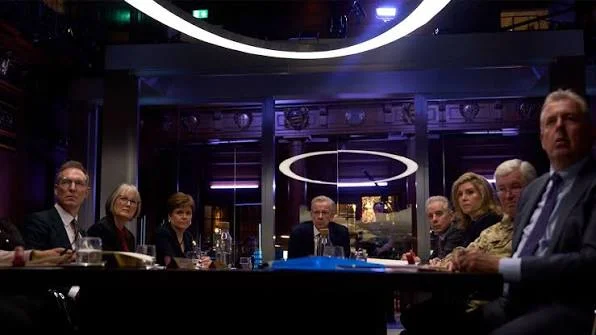
The result is a series that says as much about the current state of television as it does about its fictional emergency. This is a political simulation built around real public figures, including Michael Gove as prime minister, Nicola Sturgeon as deputy prime minister, Jim Murphy as foreign secretary and Penny Mordaunt as defence secretary.
The decision to cast recognizable politicians changes the viewing experience immediately. Audiences are not watching actors create an imagined government. They are watching familiar faces attempt to perform leadership, authority and crisis management while carrying years of public perception with them.
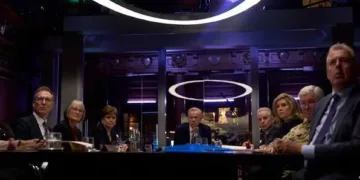
That choice places The Wargame inside a growing television trend where reality itself becomes raw material. The series sits somewhere between documentary, reality television and political thriller, using the language of official briefings, breaking news and government simulations to create its tension. Its fictional crisis begins with the assassination of two RAF pilots and a malware attack on ambulance services before escalating through fears of Russian involvement, threats to infrastructure and the possibility of military conflict.
The interesting question is less whether this scenario feels believable and more why this type of storytelling has become attractive now. Modern audiences are already surrounded by constant streams of information, speculation and crisis coverage. A programme like The Wargame does not need to invent an entirely new fear. It reorganizes existing anxieties into a controlled television experience. The broadcaster becomes a kind of simulation designer, asking viewers to imagine how institutions respond when certainty disappears.
That approach creates one of the show’s biggest strengths and weaknesses. The format is fascinating because it removes the usual distance between performer and subject. Yet it also means every reaction becomes part of the entertainment. A politician choosing a response is simultaneously making a fictional decision and revealing something about their own public identity.
The performances become the series’ most revealing element. Some participants appear unable to escape the versions of themselves audiences already know. Gove’s attempt to project authority, Sturgeon’s careful balancing of caution and leadership, and Harman’s formal approach all become part of the experiment. The programme is effectively asking whether political instincts developed in public life translate into a high-pressure television environment.
Others appear more naturally suited to the format. General Richard Barrons, Jim Murphy and Mordaunt bring a different energy to the fictional cabinet, appearing more comfortable with the practical demands of the situation. The contrast creates an accidental study of media performance. Some people know how to inhabit a camera-facing role; others reveal the strain of trying to control how they are perceived.
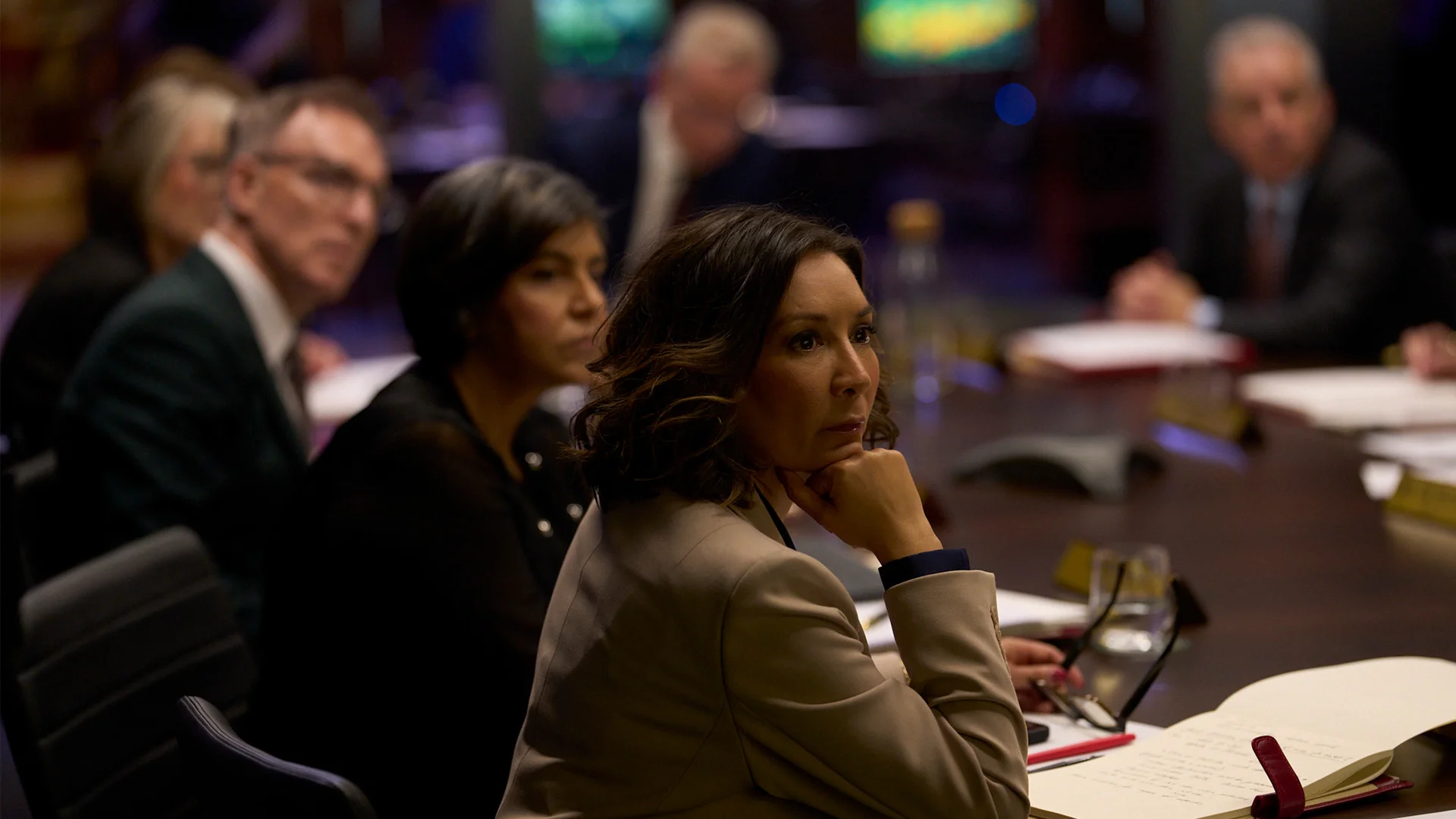
This is where The Wargame becomes especially relevant to the future of factual television. The programme is built around authenticity, yet authenticity itself becomes something performed. Reality television has always relied on editing and constructed situations, but this series applies those techniques to people whose real careers were built around public trust. The result raises uncomfortable questions about where documentary ends and entertainment begins.
The series also understands that modern crises are shaped by communication as much as events themselves. The fictional government must consider public messaging, social media reactions and the challenge of informing citizens without creating further instability. The presence of fake news footage and online responses reflects how contemporary television increasingly treats the digital information environment as part of the story rather than a separate space.
There are moments where the production cannot fully escape the artificiality of its own premise. Real politicians are not trained performers, and the scripted structure occasionally exposes the machinery behind the experiment. Some conversations feel like exercises rather than organic drama. Yet that limitation becomes part of the fascination. The awkwardness is evidence of the format testing its own boundaries.
The Wargame arrives at a moment when television is increasingly interested in blending information, participation and spectacle. Streaming platforms and broadcasters continue searching for formats that feel immediate, and this series suggests one possible direction: using real figures, real concerns and fictional scenarios to create experiences that feel uncomfortably close to current events.
Its greatest achievement is that it makes the act of watching power into the subject itself. The crisis matters, but the deeper story is about how television packages authority, uncertainty and public trust for an audience that has become accustomed to seeing reality transformed into entertainment.
The Wargame premiered on Sky on September 21, 2026. The four-part structured documentary series places prominent political figures and military leaders inside a sealed crisis room to navigate a simulated Russian attack on British soil.
Full Credits
Title: The Wargame
Distributor: Sky
Release date: September 21, 2026
Running time: 60 minutes per episode
- Producers and Executive Producers: Nicola Brown, Tom Fulford, Ella Taylor, Zehra Yas
Cast: Michael Gove, Nicola Sturgeon, Penny Mordaunt, Harriet Harman, Jim Murphy, Sayeeda Warsi, Ayesha Hazarika, Richard Barrons, Kim Darroch, Christopher Steele, George Robertson, Anthony Scaramucci
The Review
The Wargame
The Wargame turns political crisis into a revealing television experiment, using real public figures to examine how authority, performance, and public trust are shaped on screen. Its hybrid format occasionally exposes its own construction, but that awkwardness becomes part of the fascination. This is a thoughtful look at where factual television may be heading.
PROS
- Real politicians create a fascinating performance study
- Strong hybrid of documentary and political thriller formats
- Explores modern media anxiety effectively
- Escalating crisis structure builds tension
CONS
- The artificial setup sometimes weakens the drama
- Some participants struggle with the performance demands
- Fake digital elements feel less convincing