






























The first few hours with Dylan Faden are built around a simple promise: the way you fight should tell you something about who he is. Jesse Faden controlled the battlefield through supernatural abilities and a transforming Service Weapon.
Dylan approaches the same impossible world through movement, aggression, and a weapon that constantly changes shape in his hands. The Aberrant is the foundation of Control Resonant’s design, and it captures the sequel’s biggest ambition. Remedy wants to turn Control into a character-action RPG while keeping the strange identity that made the original memorable.
That ambition works best when the systems connect. Dylan’s history as an FBC experiment gives his combat style a clear purpose. He has spent years being treated as a dangerous object, yet the player gradually turns him into someone who controls his own abilities. The problem is that Control Resonant often creates the impression of a deeper combat system than it actually delivers.
The Aberrant is a smart idea because it removes the usual equipment menu friction. Instead of switching between separate weapons, Dylan’s melee weapon changes form depending on the attack sequence. A light combo can become one shape, a heavy attack another, and a finisher can transform it again. The system gives combat a natural rhythm, and customizing those forms through upgrades creates a sense of personal ownership. My preferred setup eventually felt like a reflection of how I wanted Dylan to approach fights.
That feeling carries into the skill tree and ability system. Control Resonant understands that progression should alter player behavior. Unlocking Ignite changes encounters because setting weapons ablaze creates openings and quickly builds toward executions. The ability to summon a creature and throw it as an explosive tool gives another option for managing groups. These moments work because the upgrade is not simply a percentage increase. The ability changes what I consider possible during a fight.
The issue arrives after the player discovers a reliable build. The RPG systems offer many choices, but they rarely force meaningful experimentation later on. Status effects, equipment bonuses, and upgrades expand Dylan’s numbers and improve efficiency, yet the fundamental combat language stays mostly the same. Once I found the approach that matched my playstyle, progression became refinement instead of transformation.

That becomes clearer in the encounters themselves. Control Resonant wants players to stay aggressive. Enemies drop health when defeated, and melee attacks charge the meter used for special abilities. The system encourages attacking through danger rather than waiting for safe openings. It is a good idea because it matches Dylan’s physicality, but the enemy design does not always support it.
Many encounters revolve around eliminating larger threats while smaller enemies continue appearing around the arena. This creates moments where the correct strategy is obvious: ignore distractions, reach the main target, and keep moving. The problem is that some battles become tests of endurance rather than mastery. Several bosses have large health pools that stretch fights after the interesting mechanics have already been understood. Once the attack patterns are familiar, the challenge becomes repeating the same successful sequence without making a mistake.
The game’s movement systems show a stronger understanding of how mechanics can create discovery. Manhattan is not simply a larger version of the Oldest House. The city has been reshaped by Control’s paranormal logic, with streets folding into impossible spaces and gravity behaving like another rule waiting to be learned. When Dylan unlocks abilities that let him shift his relationship with these spaces, exploration becomes a mechanical puzzle.
These areas work because the environment itself communicates. I often found my way by reading the architecture rather than relying on a map. A strange pathway, an impossible angle, or a distorted building usually suggested that something was waiting to be discovered. Control Resonant understands that exploration is strongest when the player learns the world instead of following instructions.
The same philosophy appears in the side content. Optional activities are at their best when they reveal another consequence of the paranormal outbreak. Taxi encounters that send Dylan into alternate spaces, areas connected to survivors, and small moments like cleaning up locations from the past make the world feel inhabited. The rewards are sometimes ordinary, but the reason to investigate comes from curiosity.
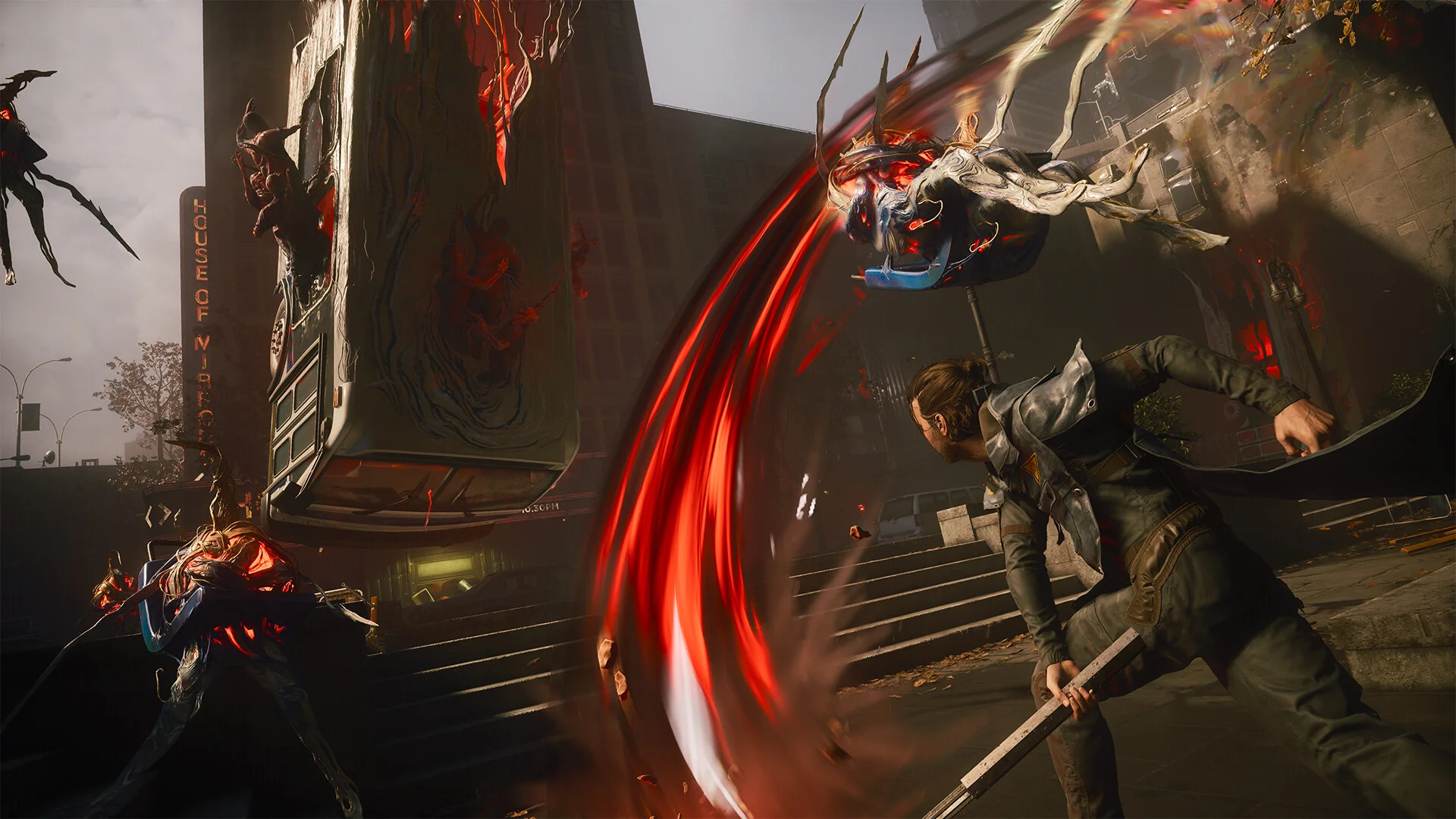
That connection between mechanics and narrative is also where Dylan’s story has its strongest moments. His combat abilities represent the thing that once made him a prisoner. The FBC saw his powers as a threat, while Dylan has to decide how he wants to use them. The game understands this conflict, especially when characters struggle to trust him because of his past.
However, the story does not always push that idea far enough. Dylan’s redemption arc has a strong foundation, but some of the most interesting questions around responsibility and forgiveness remain in the background. The game gives him a compelling mechanical identity, yet the narrative sometimes moves past the consequences of what he has done too quickly.
Control Resonant is most effective when its systems answer the same questions as its story. The Aberrant works because it reflects Dylan’s unstable relationship with power. The altered environments work because they turn Control’s strange ideas into physical challenges. The progression works when a new ability changes the player’s approach.
When those connections weaken, the game feels closer to a collection of excellent ideas than a fully integrated design. Combat has the speed and style of a character-action game, but it does not always provide the depth that genre demands. Exploration can be brilliant, yet the world occasionally creates confusion instead of curiosity.
The sequel’s strongest ideas come from trusting mechanics to carry meaning. Control Resonant understands that a power system is most interesting when it changes how players think, not how much damage they deal. The foundation is impressive, even when some of the systems built on top of it never reach their full potential.
The Review
Control Resonant
Control Resonant builds an ambitious action RPG around Dylan Faden’s powers, creating a combat system with strong ideas and a world that rewards curiosity. Its progression and exploration often connect mechanics with narrative, though enemy design and limited combat depth prevent the experience from reaching its full potential. Remedy’s sequel remains a fascinating experiment in transforming the Control formula.
PROS
- Creative Aberrant weapon system
- Reality-bending exploration design
- Strong connection between Dylan’s story and abilities
- Interesting optional discoveries
CONS
- Combat depth fades over time
- Repetitive enemy encounters
- Some progression choices feel limited
- Boss fights can become endurance tests