






















A camera can record almost anything. It cannot decide what an image means. That tension hangs over Ahmed Hassouna’s “Citizen Osama,” a documentary built around a journalist who spends his days trying to preserve the reality around him while becoming inseparable from that reality himself.
Osama Al-Ashi is both witness and subject, the person holding the camera and the person everyone fears may disappear from its frame. The film’s most powerful idea is hidden inside that contradiction: documenting destruction is itself an act of survival, but every act of looking carries a cost.
Hassouna approaches Osama’s story with remarkable restraint. There is no attempt to transform the journalist’s year in northern Gaza into a conventional war narrative of escalating danger and release. Instead, the film observes the slow distortion of everyday life. A new father searches for supplies for his child. A journalist walks toward airstrikes because someone needs to record what happened. A family prepares food from spoiled flour because hunger has changed the meaning of an ordinary meal.
The camera stays close, but it rarely tries to force a reaction. That choice gives the film its unsettling power because the viewer is left with the uncomfortable process of watching life continue under conditions that should make continuation impossible.
The opening establishes the documentary’s visual philosophy immediately. Osama moves toward the aftermath of an air raid with his equipment, capturing the wreckage and human cost around him. The image is chaotic, unstable, and physically uncomfortable. It does not place the viewer safely outside the event. We experience the uncertainty of the person filming, the fear that comes with not knowing what waits ahead.
A conventional war documentary might use such footage as a dramatic entry point. Hassouna uses it as a question. What does it mean to record suffering when the person recording is also vulnerable to the same forces destroying everything around him? The film’s answer is never delivered through speeches. It exists in the relationship between images.
Osama was once an aspiring artist, and “Citizen Osama” repeatedly returns to the collision between that identity and his role as a journalist. His camera once represented creativity. Now it represents responsibility. The difference between those two uses becomes almost impossible to separate. When he films damaged buildings, grieving families, and the aftermath of attacks, he is preserving history, yet he is also surrendering pieces of his own life to that duty.
Hassouna understands that the camera itself has become a character. It follows Osama through streets where journalists are threatened, through moments when colleagues are killed, and through quiet scenes inside his home where his family worries about whether he will return. The equipment that gives Osama a voice also marks him as a target.
The film’s strongest visual choices come when it moves away from public destruction and enters domestic spaces. Osama searching for milk and Cerelac for his baby carries the same weight as his work among collapsed buildings. The composition does not treat fatherhood as a sentimental break from the conflict. It shows that the private and public disasters are occupying the same space.
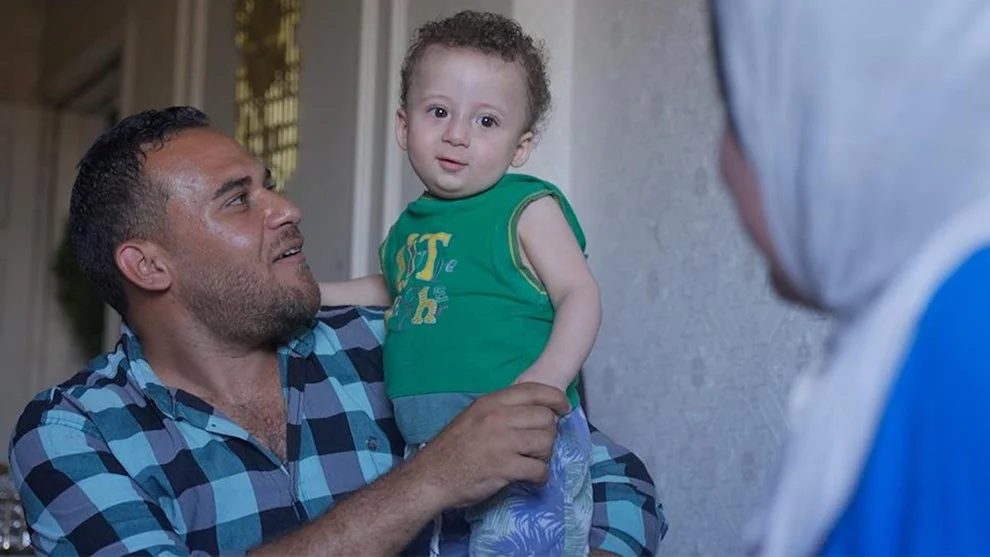
His family understands the danger before he does. His parents question why he continues leaving home. His mother watches him walk into uncertainty every time he goes out with his camera. The film never turns this into a simple debate between duty and survival. Both sides are painfully reasonable. That moral ambiguity is where Hassouna’s direction becomes most effective.
There are moments where “Citizen Osama” becomes a study of a man trapped between identities. He is a father, an artist, a journalist, and a citizen trying to exist in circumstances that constantly force those roles into conflict. The film does not present him as a heroic symbol floating above ordinary fears. He laughs, worries, searches for basic necessities, and tries to create moments of normal life for his son. The humanity comes from that limitation.
The documentary’s observational style creates a complicated relationship between intimacy and distance. Hassouna, who remains mostly unseen, is filming someone close to him. That friendship allows the film access to moments that might otherwise remain private, yet it also raises questions about authorship. We are always watching Osama through another person’s choices. Every frame reflects a relationship between two people, two cameras, and two acts of witnessing. This is where the film becomes more interesting than a simple record of events. It examines the process of recording itself.
The sparse editing reinforces that approach. Rather than shaping the material into a neat argument, Hassouna allows moments to accumulate. The repeated evacuations, shortages, damaged neighborhoods, and losses among journalists create a rhythm of exhaustion. The film does not need constant escalation because the absence of relief becomes its own form of tension.
That restraint comes with limitations. Some viewers may want more context about Osama’s work, the wider network of journalists around him, or the circumstances surrounding certain events. The film occasionally leaves questions hanging. Yet that incompleteness also reflects its purpose. “Citizen Osama” is less interested in explaining a conflict from above than in examining what it feels like to exist inside one.
The final images return to the beginning: Osama’s son, now reaching his first birthday. The structure creates a quiet but devastating contrast. A year has passed, but time has not produced the kind of transformation audiences usually expect from a documentary narrative. There is no clean movement from danger to safety. Instead, there is continuation.
That may be the film’s most haunting observation. Survival is not a dramatic victory scene. Sometimes it is a parent finding food for a child. Sometimes it is a journalist lifting a camera again. Sometimes it is simply returning home. “Citizen Osama” understands that images do not solve suffering. They do something smaller and perhaps more difficult. They insist that someone was there.
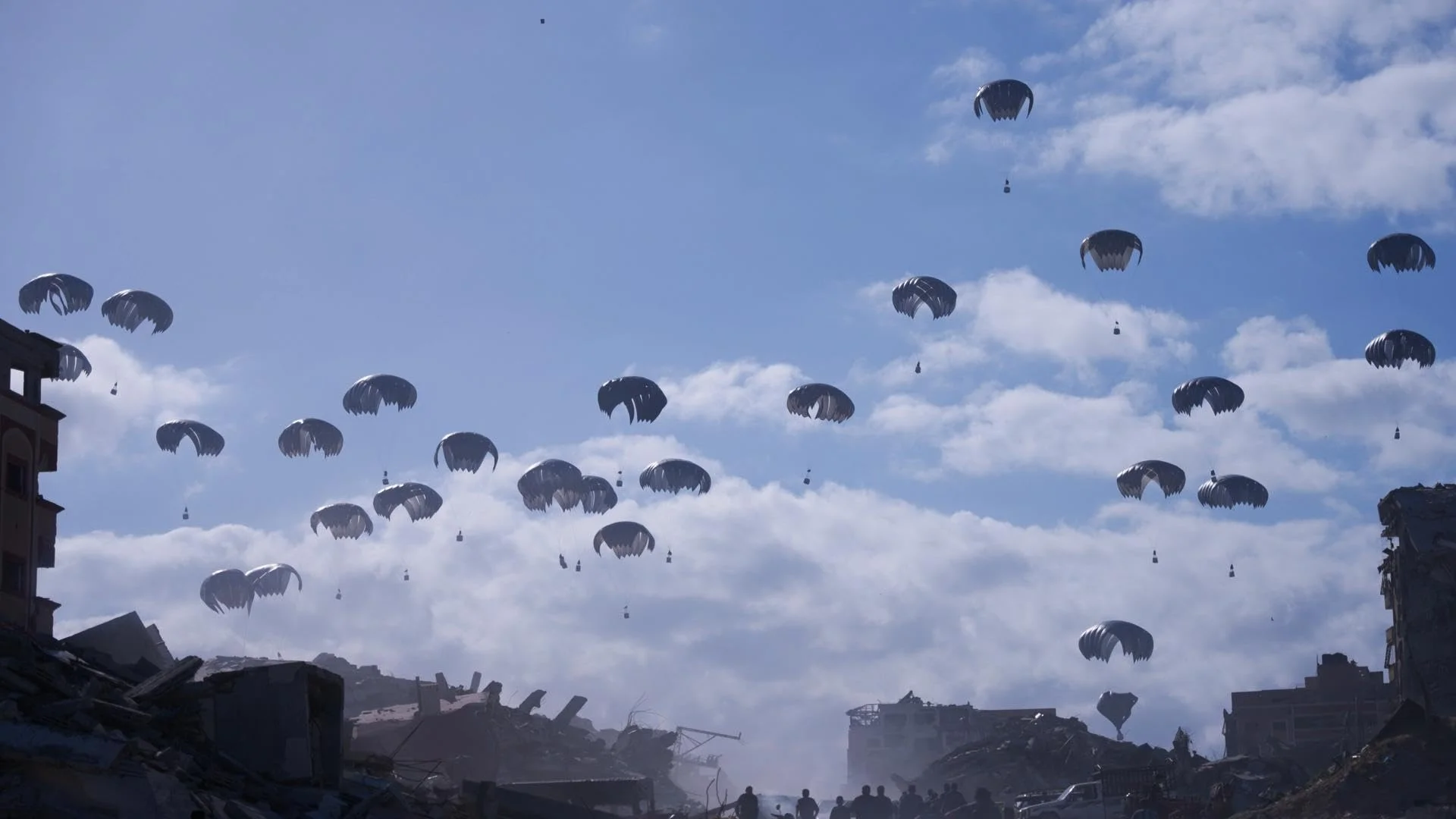
Citizen Osama had its world premiere at the 83rd Venice International Film Festival on September 5, 2026. The documentary follows a former artistic photographer turned war documentarian in the besieged Gaza Strip as he balances the perils of reporting on conflict with the realities of protecting his newborn child.
Full Credits
Title: Citizen Osama
Distributor: The Party Film Sales
Release date: September 5, 2026 (Venice International Film Festival)
Running time: 1 hour 9 minutes (69 minutes)
Director: Ahmed Hassouna
Writers: Ahmed Hassouna
Producers and Executive Producers: Rashid Masharawi, Laura Nikolov
Cast: Osama Al-Ashi
Director of Photography (Cinematographer): Ahmed Hassouna
Editors: Denis Le Paven
Composer: Rasmus Steen
The Review
Citizen Osama
“Citizen Osama” finds its power in restraint. Hassouna’s documentary avoids turning catastrophe into spectacle, instead focusing on the fragile space between witnessing and surviving. Through Osama Al-Ashi’s camera, family life, and daily risks, the film examines what it means to record history while living inside it. Its limited context may frustrate some viewers, but its intimate visual approach creates a lasting portrait of responsibility, fear, and persistence.
PROS
- Powerful examination of witnessing through the camera
- Intimate portrait of Osama’s family life
- Restrained editing that avoids spectacle
- Strong visual connection between identity and responsibility
CONS
- Leaves some wider context unexplored
- Limited insight into Osama’s journalism work
- Some events remain intentionally unexplained