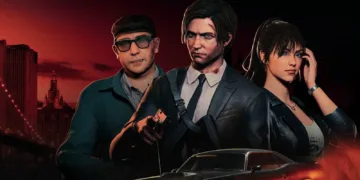




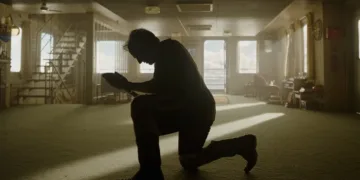















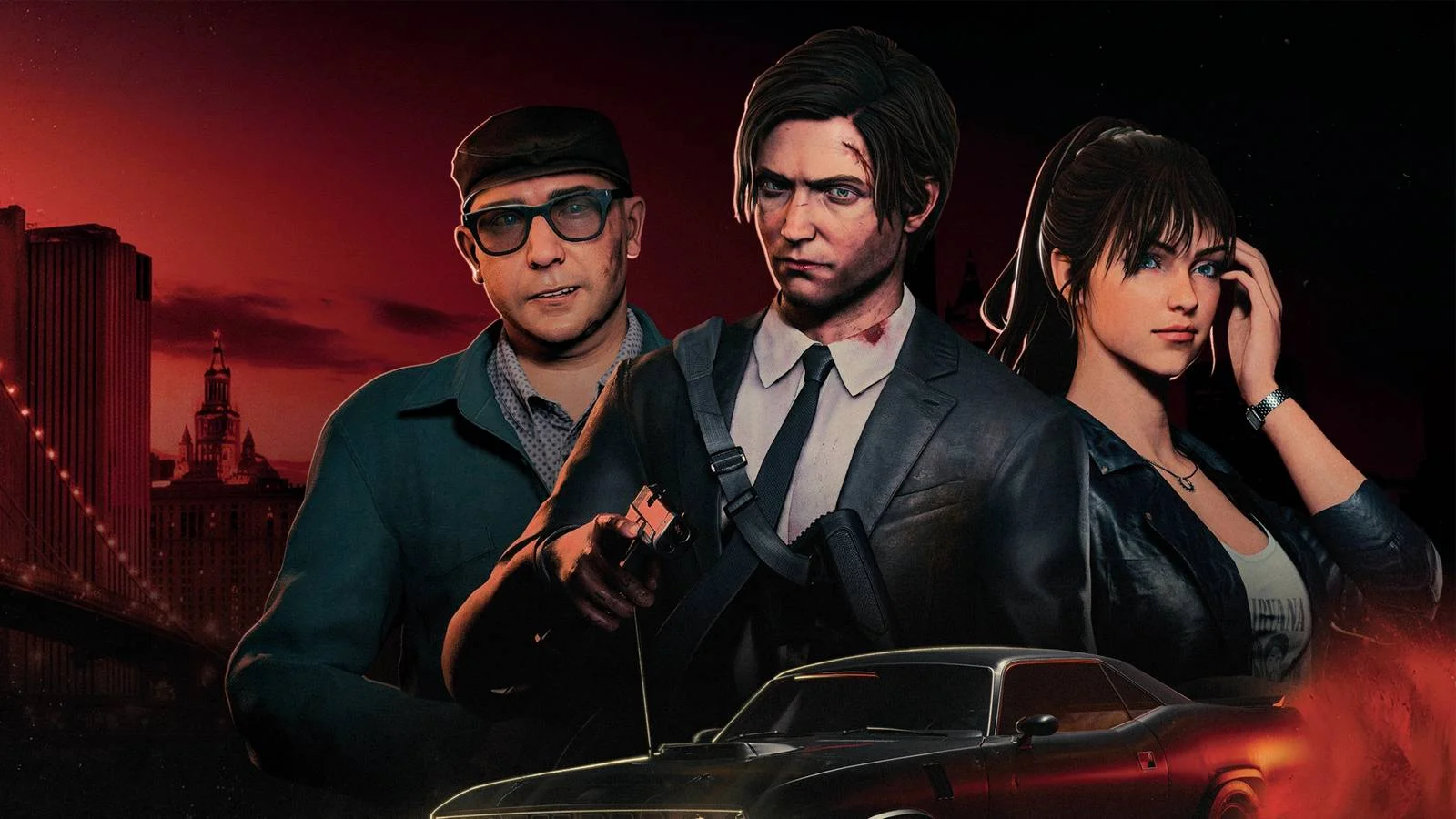

The walk from Anton Blackwood’s apartment to his basement says almost everything this game wants to accomplish. Upstairs, he has bills, clothes, a cat, and a day job selling DVDs. Downstairs, gun racks line the walls, ammunition waits to be packed, weapons can be modified at a workbench, and a computer offers contract killings. The distance between those spaces is tiny. Emotionally, BLACKWOOD wants it to feel enormous.
That is the attraction. Plenty of games can make shooting people stylish. BLACKWOOD wants the shooting to matter because Anton has a mundane life waiting for him afterward. Set in New York in 2012, it gives him Reeltime DVD as a civilian identity, complete with customers, shelves to stock, films to recommend, floors to clean, and an employee helping behind the counter. After dark, he leaves that routine for violent jobs built around firearms, close combat, and elaborate executions. It is such an odd combination that even when the individual pieces wobble, the idea keeps pulling you forward.
The distinction between clean and dirty money is one of the smartest expressions of that premise. Legitimate income supports Anton’s ordinary existence, while criminal work funds weapons and equipment. The game understands that his two identities should feed each other.
Buying ammunition downstairs feels different after spending part of the day worrying about stock upstairs. Even small actions such as feeding the cat, changing clothes, or browsing Anton’s old computer help sell the fantasy that this assassin actually returns somewhere after the bodies stop falling. The problem is that Reeltime DVD rarely develops into a place you become attached to.
Running the shop initially has a pleasant rhythm. You order DVDs, unpack stock, place titles on shelves, work the register, clean up, and occasionally recommend something based on what customers want. The 2012 setting gives these routines some texture, especially when Anton is surrounded by physical media and dated technology instead of a deliberately generic modern storefront.
There simply are not enough meaningful decisions underneath them. Customer traffic is limited, many tasks become routine quickly, and Anton’s employee can handle much of the business without him. The shop can continue generating income even when you head downstairs and ignore most of its chores. That convenience exposes a strange weakness in the design. BLACKWOOD has built half its identity around Anton maintaining a normal life, then made that life surprisingly capable of maintaining itself.
That changes how returning to the store feels. Quiet time between contracts could have created relief, attachment, even anxiety about protecting Anton’s cover. Instead, cleaning another patch of floor or placing another stack of DVDs can begin to feel like something standing between you and the part of the game with guns. The frustrating thing is that those guns occasionally reveal the game BLACKWOOD could become.
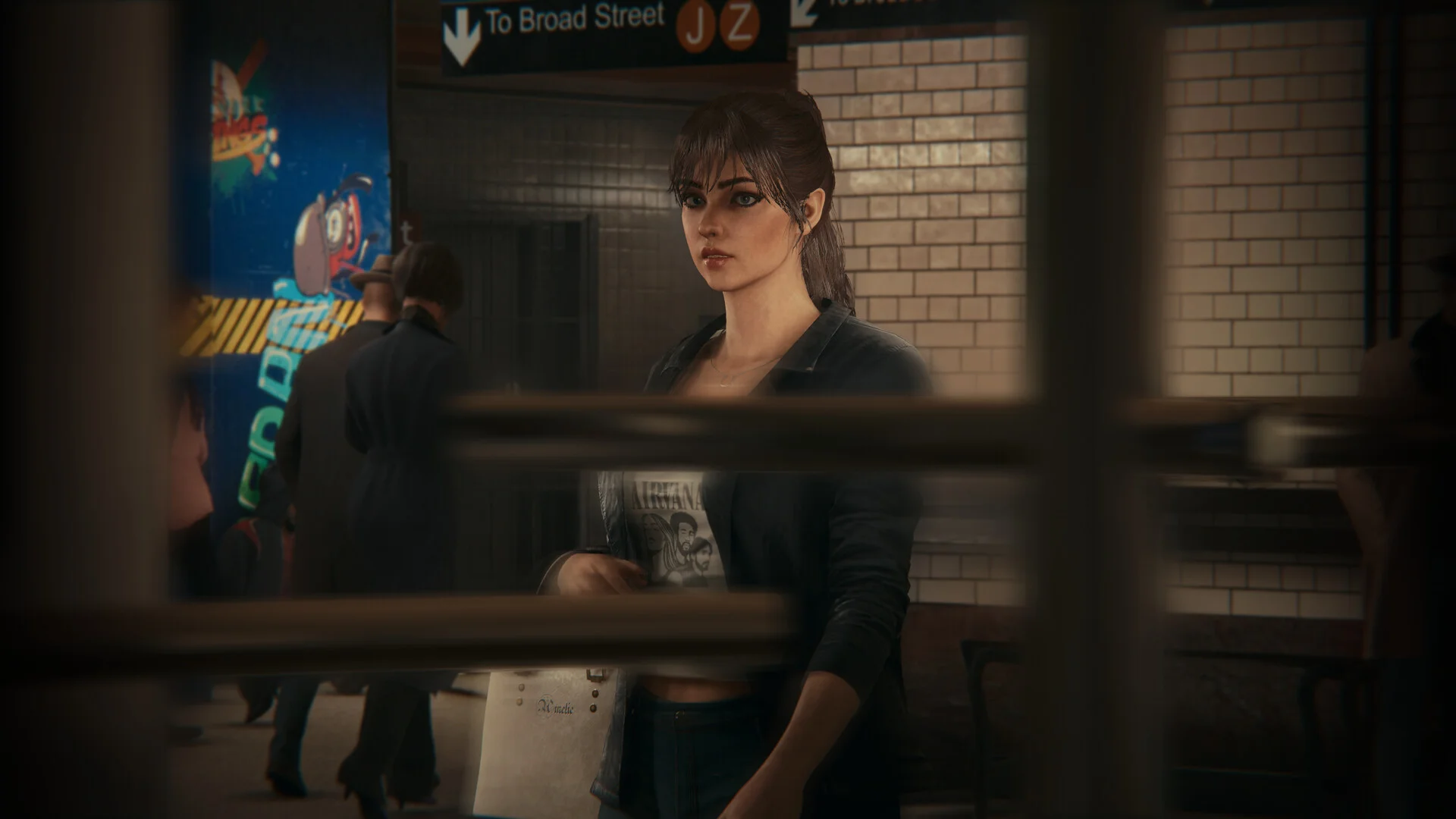
Its contextual takedowns are easily the star. Anton can slam enemies into nearby objects, combine firearms with brutal close-range executions, throw attackers around a room, and use environmental opportunities to turn encounters into small pieces of action choreography. With dozens of takedowns available across different situations, the animations give fights an energy the basic shooting alone cannot provide.
Ammunition scarcity helps. Running low pushes you toward enemies rather than letting you hide forever, and successful takedowns can restore health. That creates moments where aggression feels like survival rather than spectacle for its own sake. Diving through gunfire and briefly entering slow motion adds another flash of cinematic confidence.
When enemies are pushing your position, concrete is breaking apart under incoming rounds, and Anton closes the distance for an execution, BLACKWOOD can briefly make you feel like the frighteningly capable professional it keeps telling you he is. Then the camera gets stuck somewhere behind his shoulder.
Indoor firefights expose how fragile that sensation is. Tight spaces can send the third-person camera into awkward angles, cover does not always respond cleanly, and aggressive auto-aim can fight against precise manual shooting.
Hit detection is inconsistent enough that shots around glass and other environmental surfaces can feel unreliable. Once several enemies enter close combat, parrying and basic melee can become difficult to read rather than satisfyingly demanding. That difference matters because a good action game can make losing feel like your mistake. BLACKWOOD too often makes failure feel like a disagreement between the player and the controls.
The same problem appears in the driving sequences. Vehicle handling can turn what should be a cinematic change of pace into a battle against steering, especially when a crash means repeating the section. One particularly awkward drive eventually gives way to a multi-level parking-garage shootout, and the contrast is almost cruel. The second Anton gets out of the car and returns to the kind of combat BLACKWOOD understands best, the game immediately becomes easier to believe in again.
Its save behavior can damage that belief even further. Mission checkpoints exist, yet leaving during part of an in-game day can send progress backward far enough to require repeating shop tasks, preparation, travel, or entire stretches of a mission. For a game so invested in routine, this is especially painful. Restocking a shelf once can be atmosphere. Restocking it again because the game did not preserve the progress you expected turns atmosphere into punishment.
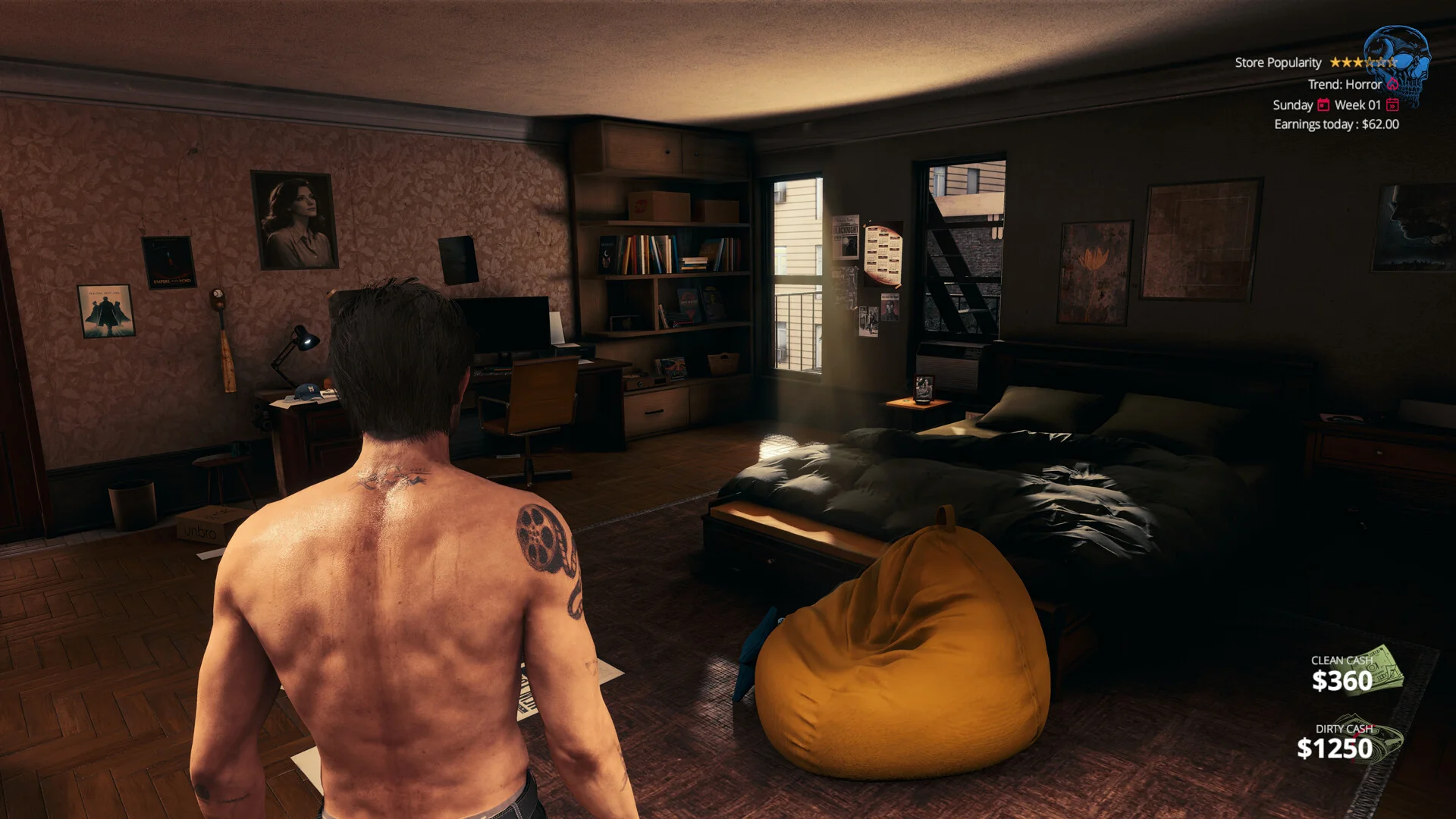
It also hurts the dual economy. Clean money, dirty money, purchases, equipment, and preparation carry emotional weight only when you trust the game to remember them. The possibility of losing meaningful progress makes every part of Anton’s carefully divided life feel less secure for the wrong reason.
Other rough edges accumulate around that central instability. Character models can appear stiff, environmental reactions are limited, invisible walls occasionally make apparently open spaces feel strangely confined, and some NPC behavior drains life from scenes that are trying to feel cinematic. The nightclub mission is a good example. The setting clearly wants to evoke the cool violence of a crowded action-movie club, yet nearby civilians can react so little to what is happening that the illusion starts dissolving around Anton.
Act 1 stops before BLACKWOOD has enough time to resolve many of these tensions. The current release offers four main missions alongside shorter side activities, while Acts 2 and 3 are planned for 2027. Its story plants questions around Anton, a mysterious USB drive, his past, and his family, then leaves most of them hanging.
That unfinished structure would sting less if the existing systems already felt complete. Instead, the first act often feels like the moment before everything is supposed to click. The DVD store has not developed into a convincing second life. Combat has flashes of terrific choreography without dependable control. Anton himself remains caught between an appealing idea and a character the game has barely had time to define.
Still, there are moments when the two halves finally touch. You come home from a contract, step back into the apartment, change clothes, pass the ordinary objects of Anton’s civilian life, then head downstairs again toward the weapons. For a few minutes, the strange sadness of the premise appears: this quiet routine and all that violence belong to the same person. BLACKWOOD keeps finding that feeling, then losing it just as quickly.
The Review
BLACKWOOD
BLACKWOOD keeps brushing against the game it wants to be. Its double-life setup gives Anton’s violence unusual emotional texture, while contextual takedowns and basement preparation occasionally make the assassin fantasy sing. Yet shallow store management, unreliable combat, awkward driving, and damaging save behavior repeatedly break that connection. Act 1 leaves plenty of promise for what comes next, but right now the strongest feeling is frustration at how often BLACKWOOD finds its identity and then lets it slip away.
PROS
- Strong double-life premise
- Excellent contextual takedowns
- Memorable basement preparation loop
- Distinctive 2012 DVD-store setting
CONS
- Shallow store management
- Unreliable camera and melee
- Frustrating vehicle handling
- Progress can be lost too easily
- Act 1 feels underdeveloped