










![Kingdom Hearts Collection [I-III] Review](https://gazettely.com/wp-content/uploads/2026/10/Kingdom-Hearts-Collection-I-III-1-360x180.webp "Kingdom Hearts Collection [I-III] Review: KHII Holds Steady as Newer Entries Fluctuate 40")
Werner Herzog takes the story of Freda and Greta Chaplin, identical English twins who became tabloid curiosities in the 1980s, and relocates its basic strangeness to an Ireland that never feels entirely contemporary, historical, or even real. That displacement is one of the keys to Bucking Fastard.
Jeanie and Joanie Holbrooke live among smartphones and train-ticket machines, yet they dress in matching clothes that seem borrowed from another decade, communicate by post, and move through Dublin as if modernity has happened somewhere beyond their field of vision. Herzog has not built an authentic portrait of Irish life. He has built a European nowhere with Irish scenery, a place where two women already detached from ordinary social behavior can plausibly drift toward myth.
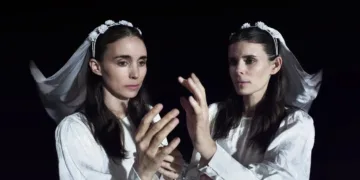
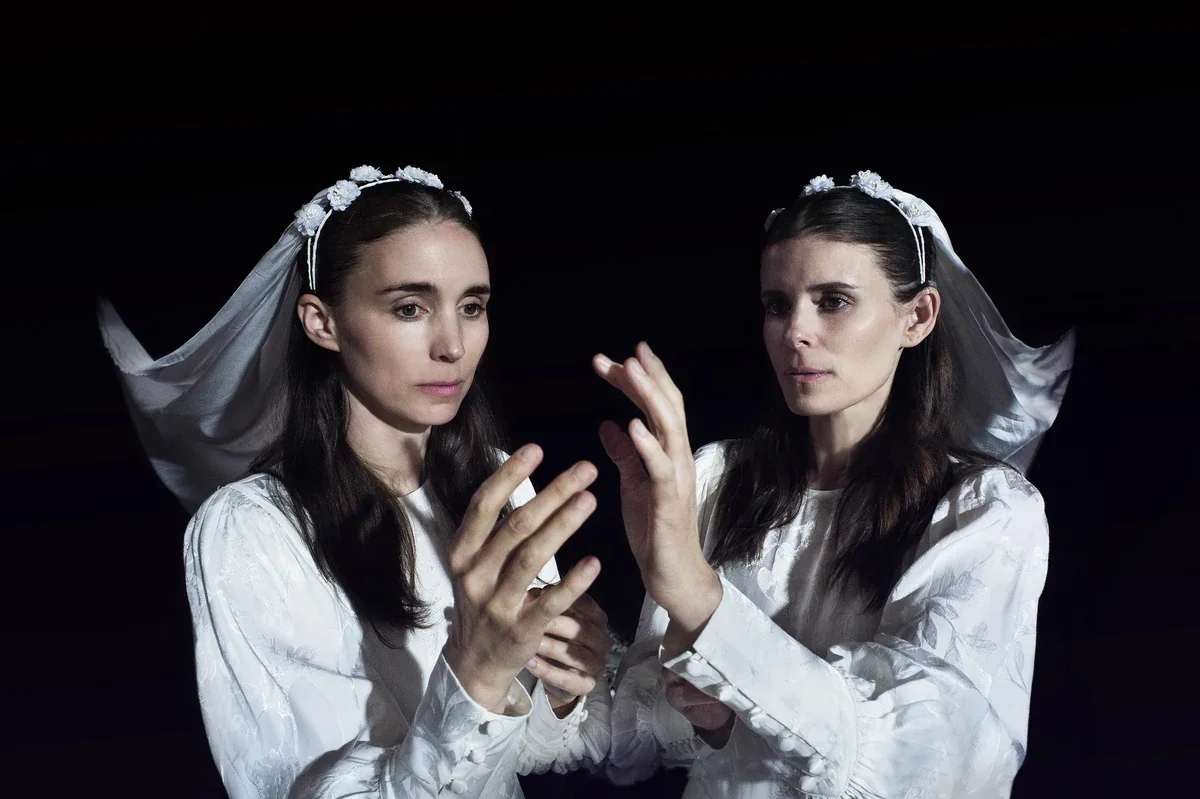
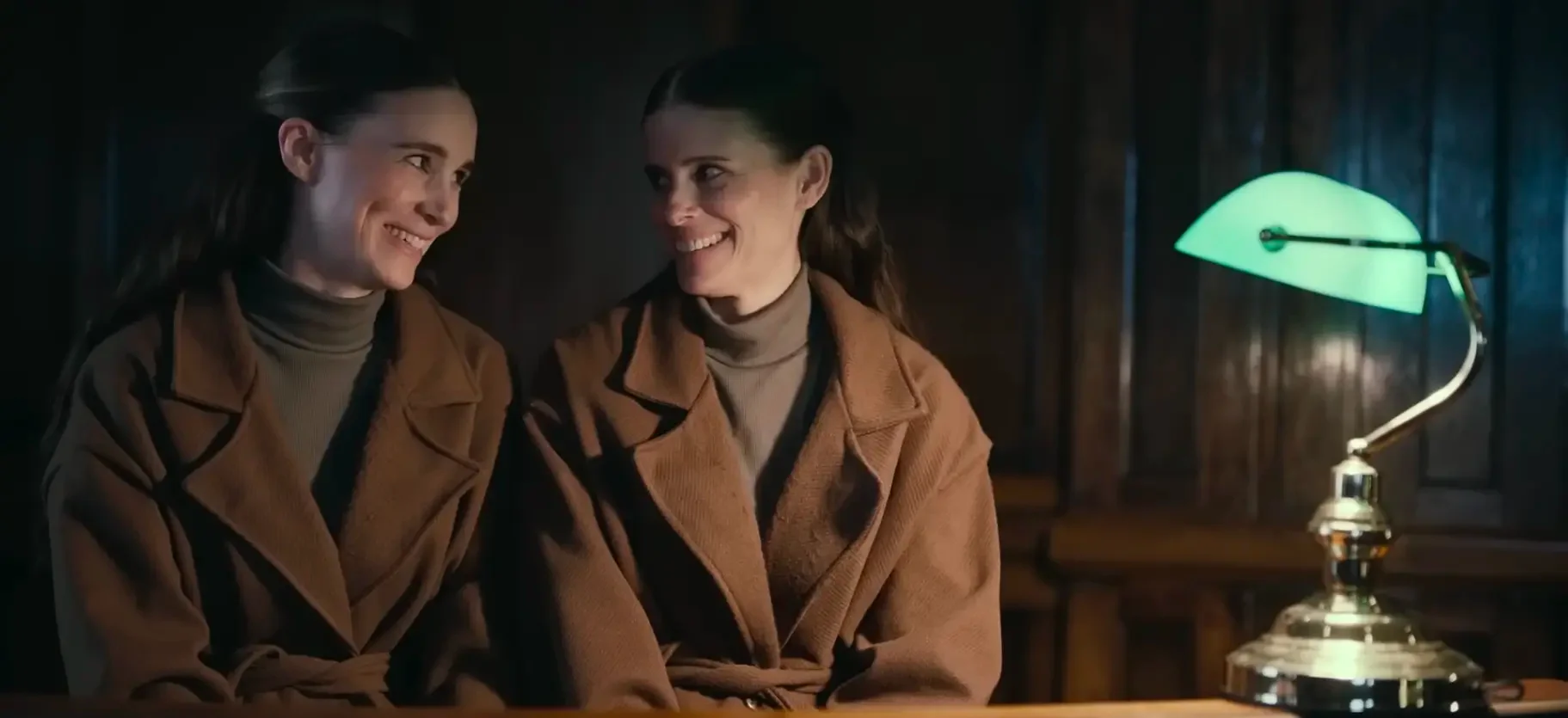
Kate Mara plays Jeanie and Rooney Mara plays Joanie, sisters who insist they are not twins while behaving as though individuality were an administrative error. They speak together, correct themselves together, walk in lockstep, share reactions, and turn ordinary tasks into feats of cumbersome cooperation.
They pour tea with four hands around one pot. They write a letter together while producing different handwriting. They knot their matching headscarves by looking at each other instead of a mirror. Even using a vacuum cleaner becomes difficult because neither woman knows how to stop functioning as half of a pair.
The conceit might have become a prolonged acting trick. Instead, the Maras make the synchronization feel like a complete social system. Small differences matter precisely because Herzog and the actors spend so much time establishing sameness. Kate Mara carries a trace of warmth that occasionally separates Jeanie from Rooney Mara’s cooler presence, and the distinction is faint enough to feel discovered rather than announced.
Their shared rhythm creates comedy when domestic life requires two independent bodies and receives one collective decision instead. It also creates sadness. The closer they appear, the easier it becomes to notice how thoroughly they have withdrawn from everyone else.
Herzog’s decision to turn English twins into Irish sisters changes the material in useful ways. The Chaplin inspiration begins in a recognizable social history, but Jeanie and Joanie seem to have slipped free of one. Their clothes, habits, speech and domestic rituals do not belong cleanly to the people around them.
When a passerby asks for a selfie, the encounter is almost jarring because it confirms that the sisters exist in the same present as everyone else. Their difference does not come from another country. They seem to come from a private culture populated by two people.
That makes the courtroom material especially effective. Gareth Mulroney, played by Orlando Bloom, has been sleeping with both women before deciding to marry someone else. The sisters interpret the affair as enduring love, respond to his rejection with harassment and retaliation, and end up facing a restraining order.
The judge permits them to testify together, effectively accepting their demand to speak as one person. Herzog gets humor from the absurdity without reducing them to a joke. Their behavior can be possessive, reckless and deeply inconvenient to anyone caught inside it, yet the camera rarely treats their difference as spectacle.
The film becomes sharper when it watches other people decide what these women are allowed to be. Men stare at them, desire them, photograph them or feel protective toward them. An older neighbor offers refuge. Timothy, their social worker, gently tries to teach them how to live with some degree of separation. Their efforts to reconnect with their parents end in pain. Jeanie and Joanie have achieved a form of intimacy so complete that it has left them socially stranded.
Their simple admission, “We are alone,” gives the film its clearest emotional statement. It sounds impossible coming from two people who seem unable to spend a minute apart, yet that impossibility is exactly why it works. Herzog approaches their isolation with unusual softness. The sisters are never required to explain themselves in language that outsiders would find satisfactory.
The difficulty arrives when Herzog begins expanding that isolation into mythology. After the city comes the countryside, where a widowed aunt receives them and rural life appears to offer another possible refuge. Peter Zeitlinger’s photography turns hills, fields and caves into increasingly detached spaces, less Ireland than a landscape awaiting legend. Jeanie and Joanie imagine a better world somewhere beyond ordinary geography, invoking Arcadia, Atlantis and the Orkney Islands. By the time the film reaches a Slovenian cave filled with stalactites and chandeliers, Europe itself has become interchangeable terrain for their fantasy of escape.
There is an appealing logic to that progression. Two women who cannot find a place within ordinary society begin looking for one that ordinary maps cannot provide. Ernst Reijseger’s score assists the movement, shifting through folk fiddle, cello and wandering piano as the film leaves recognizable social life behind.
The dedication to David Lynch works as a declaration of permission rather than imitation. Herzog shares Lynch’s confidence that dream logic does not need translation into conventional causality, while his own preoccupations remain unmistakable: animals, caves, outsiders, landscapes and the stubborn search for ecstatic truth behind mundane reality.
The film becomes less revealing as it becomes freer. Earlier scenes discover character through behavior. Four hands around a teapot tell us something. So do the failed attempts to vacuum, the shared testimony and the letter written in tandem.
Later passages involving strange animals, hunters, cave salamanders and imagined destinations accumulate atmosphere without always deepening Jeanie and Joanie. Herzog’s affection survives the shift, but his curiosity becomes less precise. The women begin as two specific people who have constructed an extraordinary method of living. They gradually become figures wandering through somebody else’s myth.
A door closes on Jeanie and Joanie before their search for belonging produces anything resembling an answer. Herzog has carried their story from an English historical inspiration into an invented Ireland, then outward through a fantasy of Europe where geography itself starts dissolving. Yet every attempted destination leaves the same possibility behind: the only country these sisters fully recognize may be the tiny one they have built between them.
Bucking Fastard had its world premiere in competition at the 83rd Venice International Film Festival on September 3, 2026. Loosely based on a true story, the drama follows inseparable identical twin sisters whose synchronized lives spiral after they find themselves embroiled in eccentric legal trouble.
Where to Watch Bucking Fastard (2026) Online
Full Credits
Title: Bucking Fastard
Distributor: Providence Road Entertainment / Festival Release
Release date: September 3, 2026 (Venice International Film Festival)
Running time: 1 hour 49 minutes (109 minutes)
Director: Werner Herzog
Writers: Werner Herzog
Producers and Executive Producers: Clara Wu Tsai, Ariel Leon Isacovitch, Agnes Chu, Kieran Corrigan, Emanuele Moretti, Andrea Bucko, Nick N Raslan
Cast: Kate Mara, Rooney Mara, Orlando Bloom, Domhnall Gleeson, Hugh O’Conor
Director of Photography (Cinematographer): Peter Zeitlinger
Editors: Marco Capalbo
Composer: Ernst Reijseger
The Review
Bucking Fastard
Bucking Fastard finds its strongest material where cultural displacement, performance, and social isolation overlap. Kate and Rooney Mara give Herzog’s strange European fable a precise human center, making Jeanie and Joanie funny, unsettling, and deeply sad without reducing them to curiosities. The film grows less incisive as Ireland gives way to mythology and symbolic wandering, but its affection never disappears. Herzog may lose sight of the sisters while chasing Arcadia, Atlantis, and caves, yet the Maras keep bringing him back to the tiny country these women have built between themselves.
PROS
- Remarkable synchronized performances from Kate and Rooney Mara
- Strong tension between contemporary Ireland and folktale unreality
- Compassionate treatment of social outsiders
- Concrete behavioral details give the sisters depth
- Peter Zeitlinger’s landscapes strengthen the mythic drift
CONS
- Later mythology weakens the character study
- Several eccentric digressions add atmosphere without insight
- Herzog’s affection sometimes replaces deeper scrutiny
- Geographic abstraction loosens the film’s early specificity