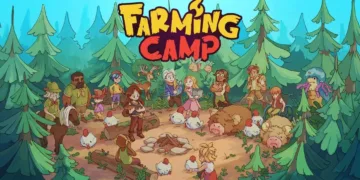


























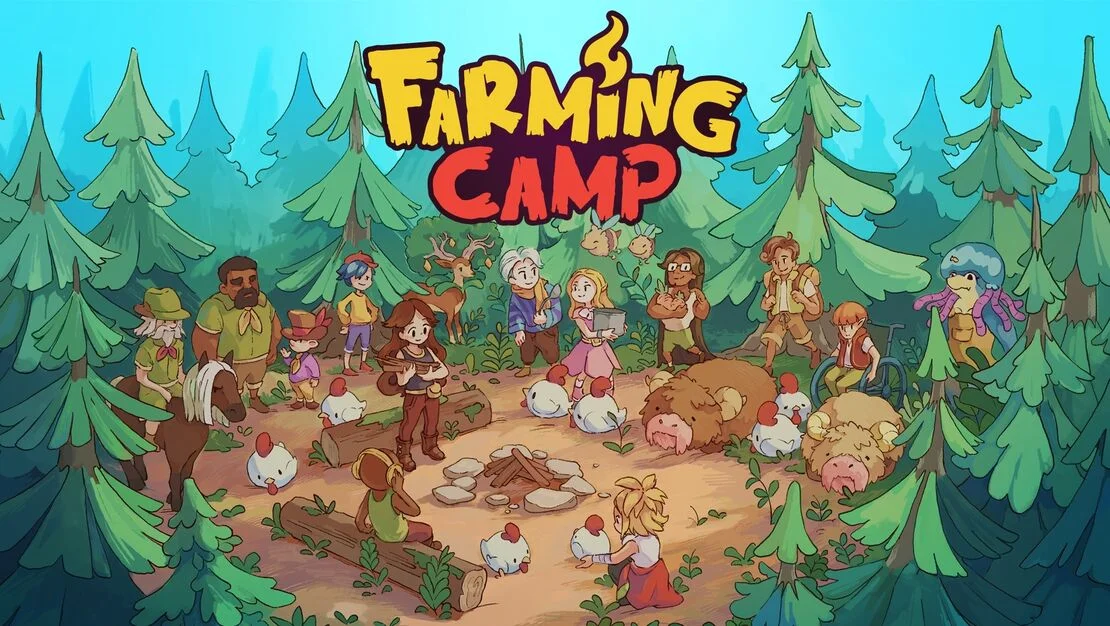

Once Alessandra has planted her crops, keeping them alive requires no inventory planning or trips to refill a watering can. She waters them, clears pests in a brief minigame, and moves on. Farming Camp takes the sowing and harvesting familiar to farming sims and turns them into short jobs that fit around a summer camp schedule. That makes the work easy to settle into, though players who enjoy managing a farm’s supplies will find little of that here.
Alessandra has room for two main activities each day. She might tend the plots in the morning and care for the animals in the afternoon, leaving conversations, foraging, and smaller maintenance chores to fit around those choices.
Time moves forward when she completes a main activity, so there is no clock chasing her across the grounds. The limit still matters: Alessandra leads Team Blueberry Jam in Evertree Farming Camp’s four-week competition, and her team earns points through the work it gets done. The game asks her to plan a day without making every minute feel scarce.
The individual jobs suit that rhythm. Planting, watering, and harvesting offer quick, clear progress. Feeding and brushing animals give the same immediate satisfaction. Fishing changes the pace by putting Alessandra in a boat that moves up and down a river, collecting fish while avoiding rocks.
Saturday’s cooking challenge uses timed steps such as mixing, chopping, baking, and plating. None of these activities has the depth of running a farm across seasons, but several are pleasant enough to return to after a conversation or a difficult chore. Their brevity becomes less helpful once the familiar tasks begin to repeat. New activities delay that point; they do not give the daily work much room to grow.
Leading a team gives Alessandra a second kind of planning to do. She can assign jobs to her two teammates, sharing the burden of gathering what the camp needs while choosing her own activity. A teammate may refuse the same assignment on consecutive days, which encourages some rotation instead of letting the player settle on one arrangement.
The points board near the main hall offers a visible record of how the teams are doing. Compared with a farming sim built around expanding a property, this is a smaller, more social measure of progress. Alessandra is managing people and a limited schedule as much as crops.
The competition is less persuasive when the story and the scoring pull apart. A day spent completing tasks can feel strangely disconnected from what happens in the ensuing narrative, while falling short on an activity does not always seem to carry much weight. That weakens the reason to perfect each job, even when the board has given the player a reason to pay attention to points. Conversations present a related squeeze.
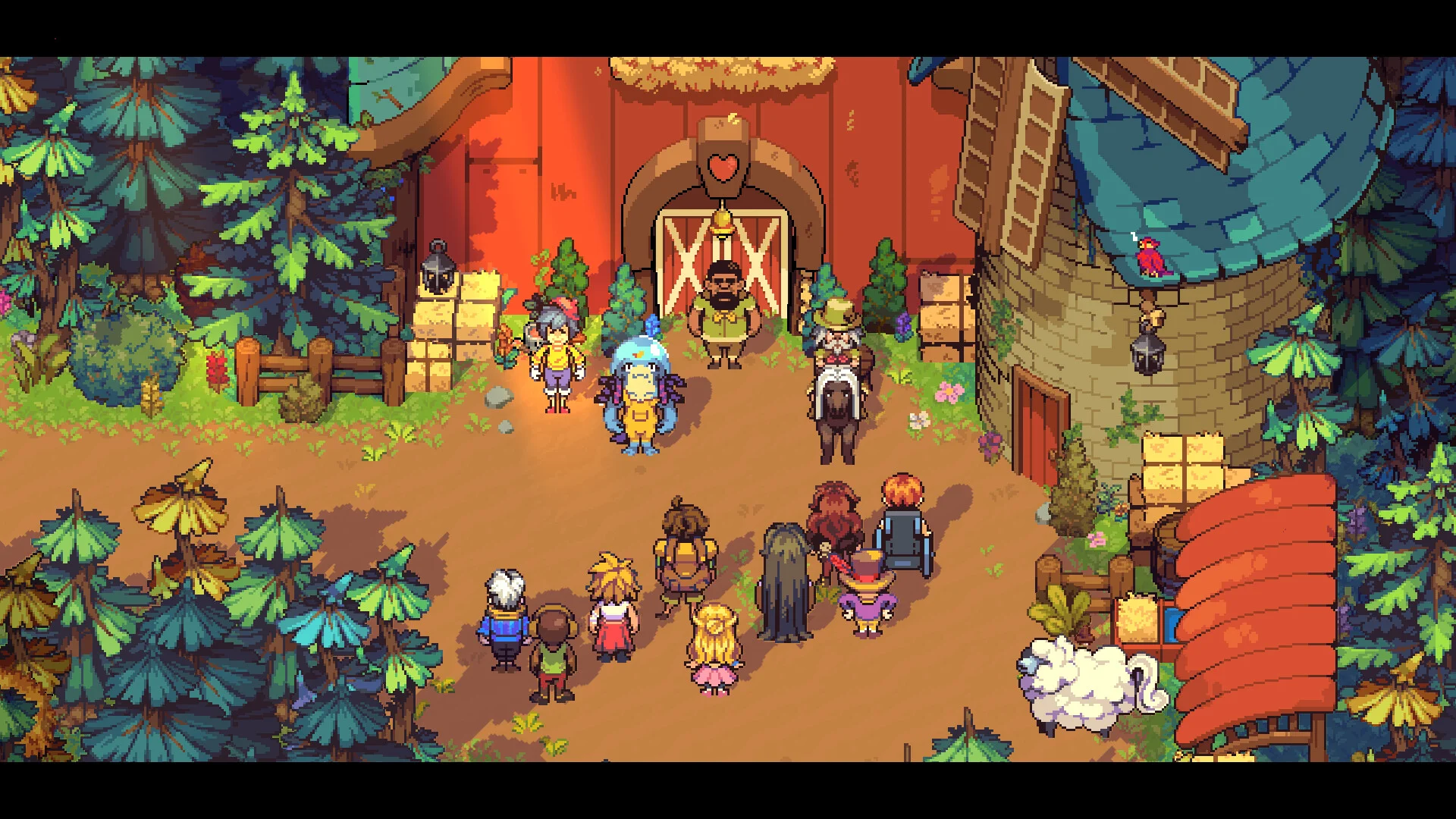
Talking to other campers can reveal more about them, offer tasks, and help Alessandra improve, yet the daily structure gives the player limited space to pursue those relationships alongside farm work. The restriction creates decisions, but the story does not consistently make the effort behind them feel consequential.
Those conversations are also where Farming Camp develops a personality beyond its collection of minigames. The campers have distinct temperaments, and their changing friendships give Alessandra’s weeks at Evertree something to follow besides the team standings. Her position as leader makes the group dynamics relevant to the part she plays there.
The writing can be funny, but its frequent bickering and name-calling give some exchanges a harsher edge than the leisurely farm work suggests. Teenage friction belongs at a summer camp; here, the shifts between that friction and the calmer activities can feel abrupt. Alessandra’s reflections on her family add another thread, though they do not always clarify what is driving her through the present day.
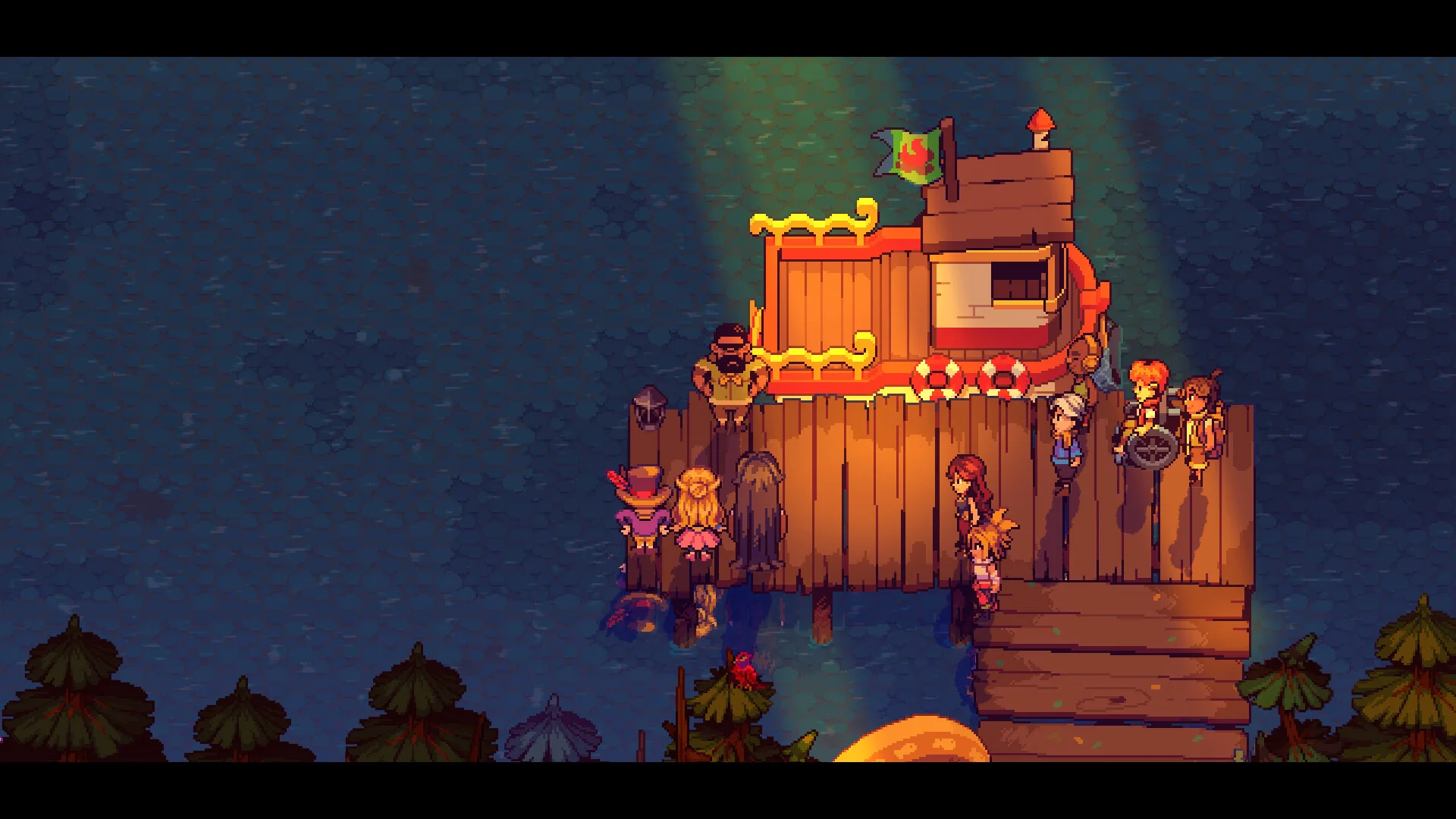
The game’s rough interactions are harder to accommodate because its activities depend on simple, reliable inputs. Picking up hay in the barn can require awkward positioning even when an interaction appears available. In the kitchen, Alessandra can select the wrong ingredient despite standing by the one she wants. Dishwashing can become unresponsive. These problems interrupt jobs that usually take only a short part of the day, making a small task feel much longer than its design calls for.
Fishing exposes the cost of that roughness most clearly. Steering past rocks and collecting fish is a change from watering crops, but a catch may fail to count toward the daily task total. The team competition gives that number a purpose, and Alessandra has only so many activities she can complete before the day advances. When a fish she has caught does not register, the player is left unsure if the problem was their performance or the game’s response.
The Review
Farming Camp
Farming Camp is most enjoyable as a story-led summer camp game with quick, satisfying chores, rather than a deep farming sim. Its daily schedule and team assignments give Alessandra useful choices, and the campers make time between activities worthwhile. Repetition, uneven dialogue, and unreliable interactions gradually wear down that appeal. Most frustratingly, a competition built on points sometimes fails to make the player’s effort feel consequential.
PROS
- Satisfying farming and animal-care activities
- Team assignments add daily planning
- Distinct campers and developing friendships
CONS
- Familiar chores grow repetitive
- Story events can undercut the competition
- Bickering disrupts the relaxed tone
- Unresponsive interactions and missed task counts