

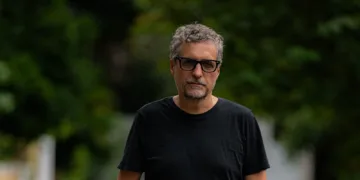















Chrissie Hynde spoke to director Joss Crowley over three years before agreeing to appear on camera for the final interview. Even then, she is filmed at a distance, partly obscured by a microphone. When Crowley asks if she has enjoyed their conversations, her answer is immediate: she would not say she has. The framing gives a practical problem a visible form. Crowley has spent years with his principal subject, yet she still decides how close this film can get.
Hynde can be wonderfully direct when a question interests her. She can also end an inquiry with a few words and leave Crowley to try another route. Asked about past relationships, she would rather return to the music. The refusals are revealing, but they do not give the director another account of the events she declines to discuss. Pretenders draws some energy from that negotiation. It also has to build its story around the spaces Hynde leaves.
Crowley’s strongest material comes when he lets the recordings and performances establish what the original group did together. A 1976 demo of “Precious” shows that Hynde had found her voice before she found the right band: the speed and bite are already there. The finished Pretenders sound, though, depends on the players around her.
James Honeyman-Scott’s guitar gives the songs a ringing clarity that can sit beside her harsher attack without softening it. Heard near “Precious,” a song such as “Kid” makes the band’s range plain. Crowley can show that development through music instead of asking Hynde to explain her own importance.
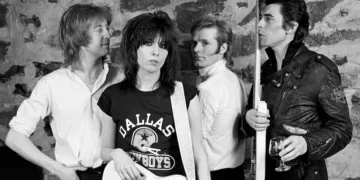
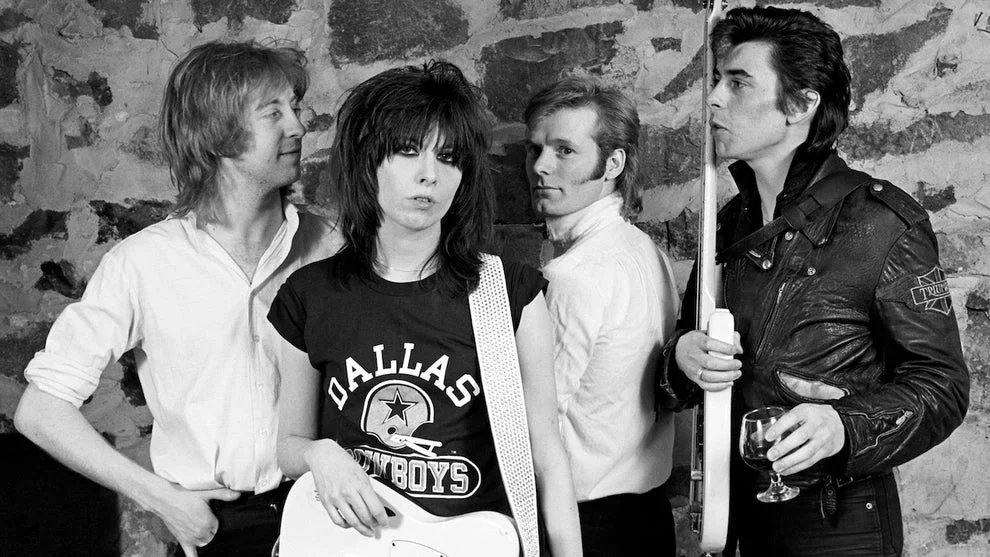
The account of the group’s formation gives those sounds a history. Hynde leaves Akron for London, tries to find a place in its music scene, and eventually forms the Pretenders with bassist Pete Farndon, guitarist Honeyman-Scott and drummer Martin Chambers. The film spends time on the early years, where the archive can show four musicians becoming a working unit as the records begin to reach an audience.
That attention is well placed. Hynde’s reluctance to release “Brass in Pocket” as a single, despite its eventual success, gives Crowley an example of her judgment under pressure from the business around her. It is a sharper detail than another declaration that she disliked the spotlight.
Crowley has other ways to keep the early story from resting entirely on Hynde’s memory. Tour manager Stan Tippins kept detailed diaries, and his records give dates and texture to years that could otherwise become a rush of gigs and hits. The film draws on other voices as well, though its audio interviews do not always make each speaker easy to identify. For the most part, Crowley tells the story in a familiar rise-and-loss sequence. The unusually frank, occasionally obstructive guide gives that sequence its character; the filmmaking itself seldom has the same unruly quality as the band.
The sequence earns its force when Farndon’s heroin addiction makes his position in the group untenable. He is dismissed, and two days later Honeyman-Scott dies after heavy drug use. Farndon dies months afterward. Crowley does not need to dress up those events. Chambers recalls the change with devastating economy: within days, a four-piece band had become two people. The early footage has allowed the viewer to understand what each member brought, so the loss registers as a break in the music as well as in the story.
What happens next is the film’s harder test. Its treatment of the re-formed Pretenders, particularly “Back on the Chain Gang,” finds a persuasive way to connect continuation with grief. The song was written before the deaths, and Crowley does not need to make it a literal response to them. Heard after the account of the original lineup’s collapse, it carries a changed weight. Hynde’s decision to keep working is clear; the music makes it possible to feel what carrying on cost.
The later years receive less of that care. Changing lineups and decades of activity pass quickly, while Chambers, who remained part of the band’s long history, has little room to explain his shifting place in it. Crowley is entitled to concentrate on the years that produced his richest footage.
Still, the film gives its central rupture such careful attention that the compressed account of survival feels consequential. Whenever the original four are heard together, the music answers the question of why Crowley needed to tell a band’s story in the first place. A montage can establish that the Pretenders continued. It cannot show how the people in that continuing band worked together.
Pretenders world-premiered at the Toronto International Film Festival in September 2026. The documentary feature charts the enduring legacy and musical evolution of frontwoman Chrissie Hynde and her influential rock band.
Full Credits
Title: Pretenders
Distributor: Toronto International Film Festival / Independent
Release date: September 2026 (Toronto International Film Festival)
Running time: 1 hour 30 minutes (90 minutes)
Director: Joss Crowley
Writers: Joss Crowley
Cast: Chrissie Hynde
Composer: Chrissie Hynde
The Review
Pretenders
Joss Crowley makes excellent use of early recordings, performance footage and Stan Tippins’s diaries to show how the original Pretenders became a band. Chrissie Hynde’s guarded interviews give the film tension, though Crowley cannot always get past her refusals. The account of the original lineup’s collapse is affecting; the hurried treatment of the musicians who carried on leaves its story of survival incomplete.
PROS
- Rich early performance footage
- Hynde’s candid, prickly interviews
- A sharply told account of the original lineup’s collapse
CONS
- Later lineups receive little attention
- Chambers’s changing role goes underexplored
- The storytelling often follows a familiar path