


























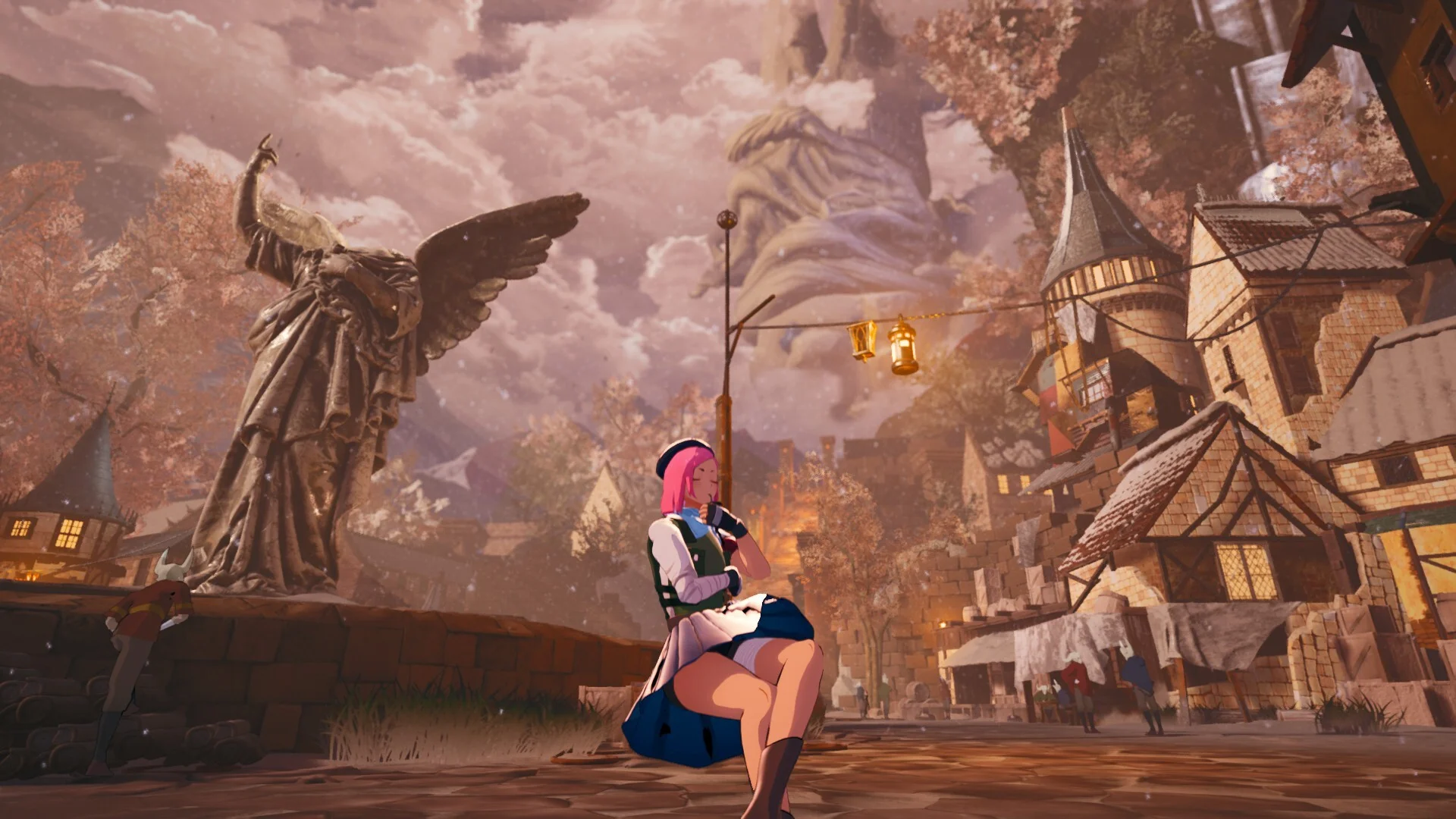

Spend the blue souls on a Coffin, fight the enemies it summons, and claim an ability for the rest of the run. It sounds like an easy decision until the danger meter is nearly full and the exit is still across the map. Leave now and you carry less power into the boss fight. Stay and you may lose the whole attempt. Kernel Hearts gives you enough time to make plans, then makes you feel every minute spent changing them.
That pressure makes its large maps unusually absorbing. A Relic Comet lands somewhere worth investigating; pink souls could become a level if you reach the right point; a chest might hold something useful to take back to Babel. You cannot comfortably collect everything before the area becomes deadly.
The best stretches of a run leave you thinking about the thing you passed up while you fight with the things you chose. The choice loses some of its appeal when a fast enemy follows you across the map, consuming time you had decided to spend elsewhere. Being told to choose your battles means less when a battle refuses to let you leave.
The ascent has a purpose beyond gathering rewards. In a world ruined by humanity’s wars, Fernet and the other members of the M.A.H.O.U. squad climb the Tower of Babel to stop the ash falling across it. The tower’s angelic inhabitants stand between them and God. It is a grand, strange premise for a game whose most immediate concerns are practical: how far can you explore, what can you afford, and will you be ready for the next boss? Kernel Hearts is at its best when those concerns make the climb feel perilous rather than simply busy.
Its bosses give the preparation meaning. Regular fights teach you to combine light and heavy attacks, spells, jumps, and dodges, but the larger encounters demand closer attention to their bullet patterns. A strong collection of upgrades helps; it seldom lets you ignore what the boss is doing. You have to learn when to move and when to commit to an attack. That is a satisfying relationship between roguelike progression and action combat: each climb changes your options, while practice changes what you can do with them.
The playable characters make returning to those fights appealing, too. Fernet’s curved sword gives her a relatively straightforward mix of speed and damage. Spika moves and strikes faster, Laika trades speed for force and can fight with her fists after throwing her sword, while Dolce’s whip rewards attention to distance.

These differences change the feel of a familiar encounter without asking the game to provide an entirely new boss each time. The difficulty rises sharply after the early maps, however, and some bosses arrive before the player’s growing confidence has quite caught up with the game’s demands.
There is a harder question underneath that difficulty: how much power should a long run let you enjoy? Pink souls raise stats and periodically offer spells. Blue souls can be spent on Coffin encounters for ability rewards, but collecting them and clearing the fight both take time.
One can appreciate the restraint. When a build cannot simply overwhelm a boss, recognizing its patterns remains exciting. It can also feel as though the game keeps its most interesting possibilities at arm’s length. If the available spells do little for your build, there may be few chances to develop the ones you want before the climb ends.
That frustration carries weight because a complete ascent can take over two hours. Early attempts may also feel weak until coins earned across runs have bought enough chips for stronger passive setups. On Sinner difficulty, a Coffin reportedly costs 100 blue souls rather than Normal’s 40, slowing access to upgrades while the fights grow harsher.
Normal offers a better balance between having to earn a victory and getting enough choices to make an attempt your own. There is a real difference between feeling vulnerable before a boss and spending a long stretch feeling that your attacks are falling just short of the damage they need.
Playing together may change that calculation. Up to four players can divide the work of searching a map or stay close for tougher fights, and the distinct characters give each person a different way to contribute. The available accounts offer a limit here: one describes good experiences in private and public lobbies, while the other could not test co-op and found the solo climb restrictive. It would be too easy to treat teamwork as a cure for every slow build. What it clearly adds is another decision under the timer, as a group weighs covering ground against facing danger together.
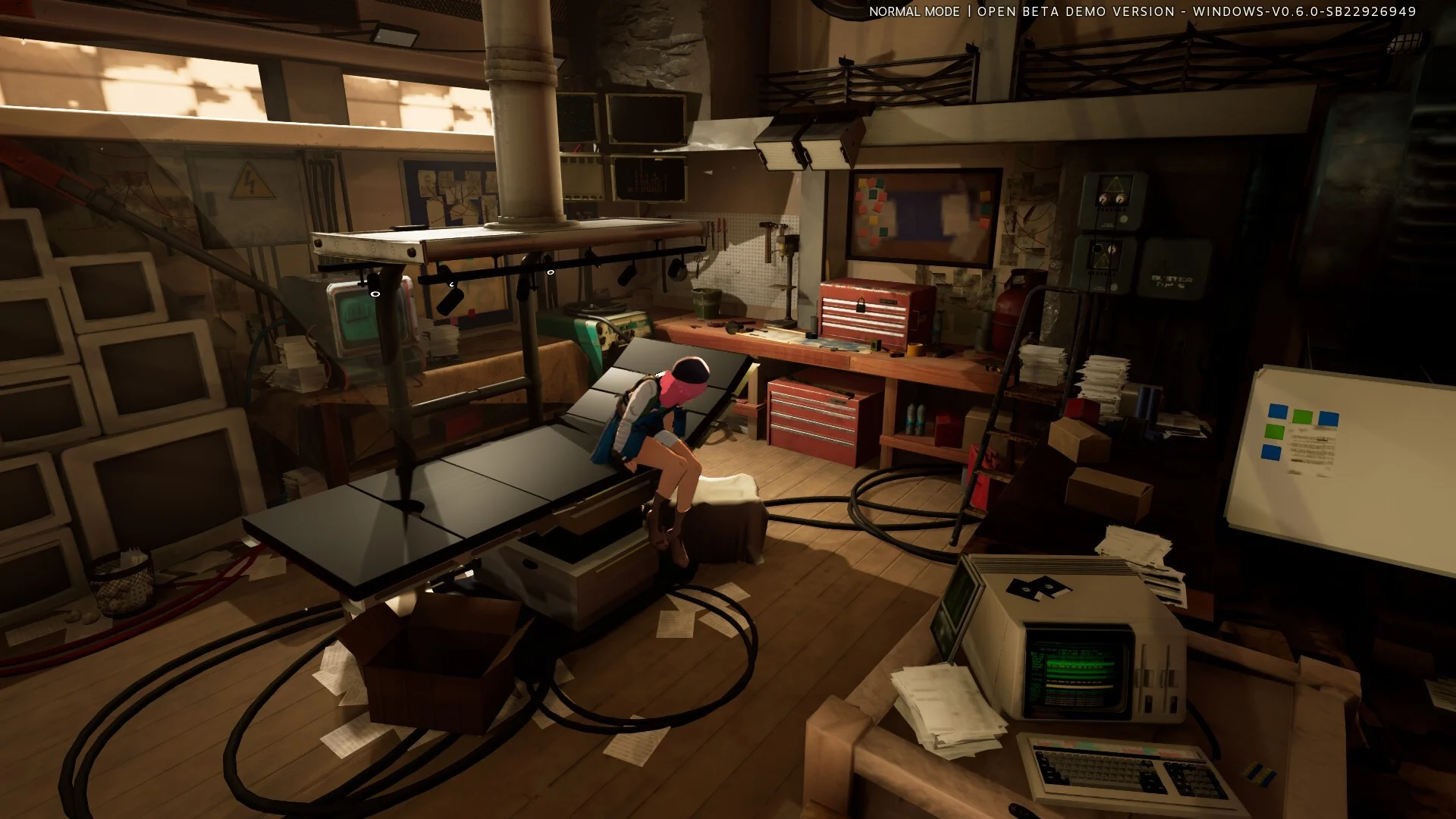
Between attempts, Babel gives the tower a less frantic rhythm. Gifts gathered during expeditions unlock conversations and improvements, so a find on the map can become a reason to check in with someone after a failed climb. An early conversation with the Creator, the squad’s maintenance man, shares some history of earlier expeditions and opens up further passive upgrades.
Those exchanges make the people waiting outside the action easier to care about than the distant mission to defeat God. The wider story arrives in fragments and holds much of its force for the late stages; without a way to revisit conversations, details can be hard to keep in mind across lengthy runs. Its ending is striking, though the smaller meetings often do the steadier emotional work.
The presentation helps those meetings and departures linger. Expressive portraits give the cast personality that the gameplay models do not always match. Meadows, ruined deserts, and surreal biblical spaces make successive areas feel like parts of a journey, while the soundtrack changes with their atmosphere.
Ordinary enemies have less visual variety than the places they occupy, yet the shift from exploring those places to confronting a boss still has a strong pull. Even after a run that gives you too little room to grow, Kernel Hearts can make the next ascent tempting: there is a character you want to return to, a route you would choose differently, and a fight whose pattern you almost know.
The Review
Kernel Hearts
Kernel Hearts makes every climb feel like a gamble you chose to take. Its timed exploration and demanding bosses turn preparation into anticipation, while the cast gives you a reason to return to Babel after a difficult run. Long attempts, scarce upgrades, and sharp difficulty jumps can make that same pressure exhausting. Still, learning a fight and deciding what to risk on the way there remain hard to resist.
PROS
- Boss patterns reward practice
- Timed exploration creates meaningful choices
- Distinct playable characters
- Expressive art and memorable music
CONS
- Long runs magnify weak builds
- Upgrades can feel too scarce
- Uneven difficulty escalation
- Story fragments are difficult to revisit