







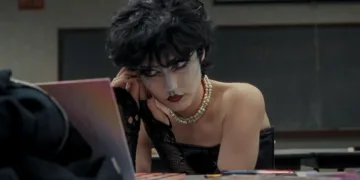


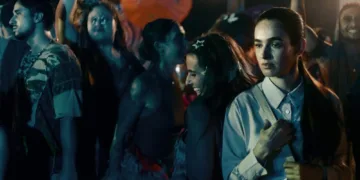

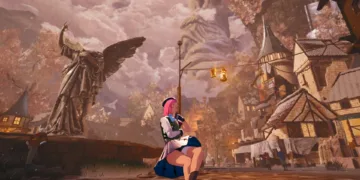




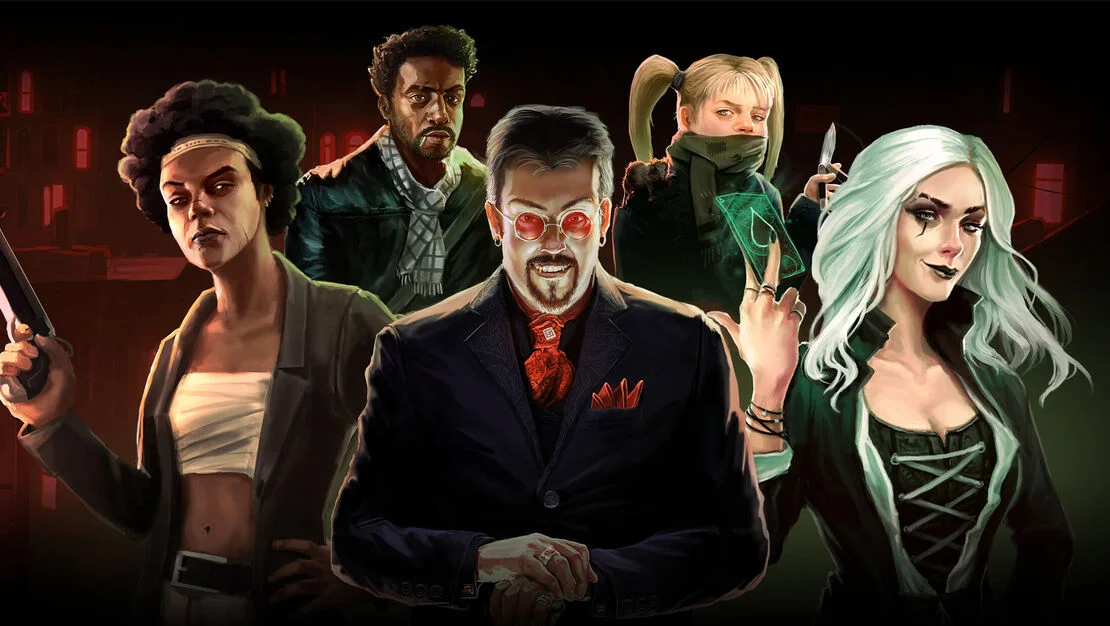

The vampires of Vampire: The Masquerade spend a great deal of energy keeping humanity ignorant. Cradlebridge has passed that point. Its undead carry identification, have political representation, and can obtain diluted blood from a clinic. They still enforce their own territorial rules: hunt in another faction’s district and an enforcer may come looking for you. Nighthawks keeps the familiar vampire power struggles, then asks how they function when the rest of the city knows who is involved.
That question grows with the player’s place in Cradlebridge. The first act casts your newly turned vampire in a search for a traitor. Later chapters give you a stake in the city’s factions and the Nighthawks nightclub, which becomes a gathering place for companions. The shift from investigation to influence gives the story a satisfying sense of advancement. You begin by looking for a place in an established order; eventually, people have reasons to seek you out.
The route between those points resembles the location-based play of Fallen London or Citizen Sleeper more closely than an action RPG. You pick a destination on the map, read through encounters, choose responses, and test traits when a conversation or obstacle calls for them.
Background, sire, and signature power help determine the vampire you bring to those encounters. Traits can develop through use, and companions can improve your chances or offer another approach. Much of the pleasure lies in discovering how a choice made at character creation changes a situation hours later.
The powers are especially good at making a familiar kind of vampire feel personally chosen. Talking to corpses suits an investigator, while abilities such as animal control and hypnosis suggest other ways past a guarded location or reluctant witness. Their usefulness can be difficult to judge in advance, though.
A corpse-talking character may reach an opportunity to use the power without enough blood to activate it, and some opportunities arrive so selectively that the choice feels uncertain until well into the story. Nighthawks offers distinct routes through its city, but it does not always help you understand the practical limits of the route you picked.
Companions make those choices richer because their help has a character attached. Veronica Castiglione can use her invisibility to retrieve a file that would otherwise be difficult to reach. Taking someone along can also build their respect, and conversations at the club give them lives beyond the skill bonuses they provide.
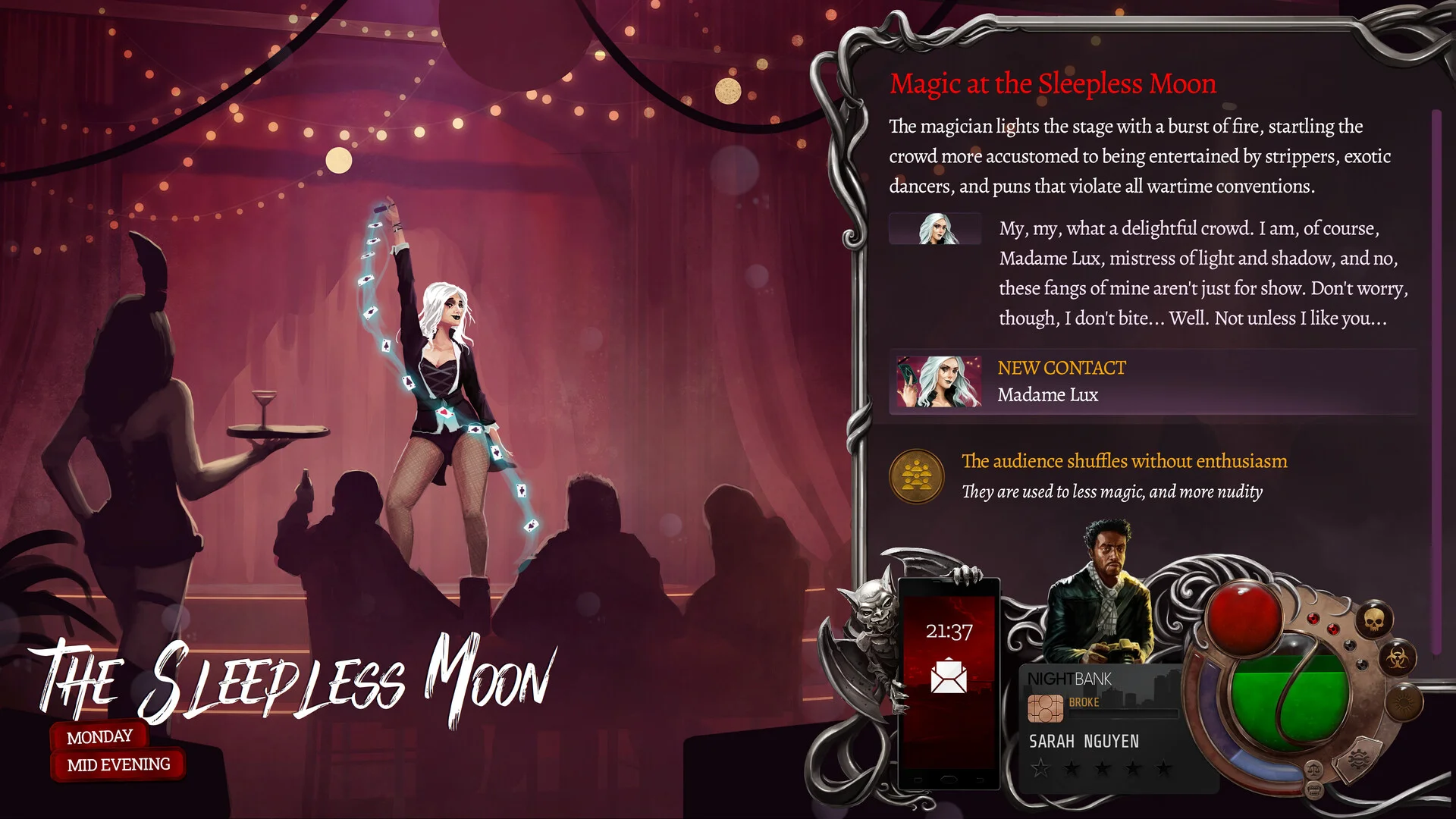
This is where the game’s text-heavy form earns its pace. A detour might lead to a dispute among rats in an abandoned theme park, an elder vampire’s funeral, or the disturbing dollhouse story. The changes in tone give Cradlebridge room for comedy, grief, and horror without asking every side quest to serve the main faction struggle.
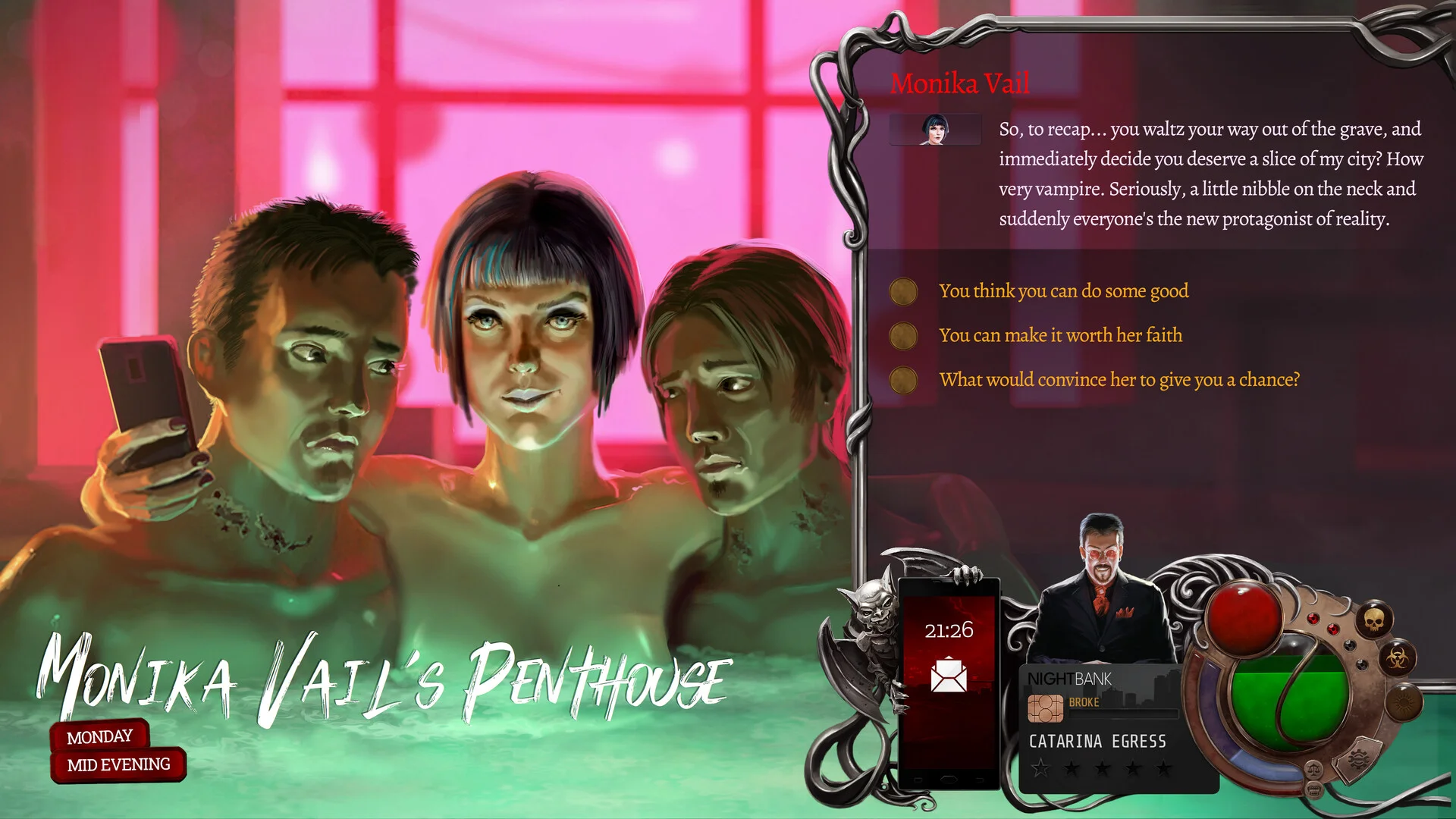
Those stories also keep the vampire fantasy from becoming too comfortable. Blood is a recurring need, but feeding is subject to choices about sources, territory, and the people affected. Bottled blood can sustain you without fully satisfying the predator within; neglect that urge and your character can lose control.
The city’s clinic and political committee suggest a workable public life for vampires, while hunting and the ability to make human thralls expose what such an arrangement has to contain. Nighthawks lets you try to behave responsibly without pretending that good intentions settle the matter.
Its clock makes that tension tangible on individual nights. Conversation and travel consume time before sunrise, so a trip across districts carries a cost that a brief question does not. Staying out too late can leave you injured the next day. At first, planning one last stop before heading home gives even a routine errand some pressure. Longer chapter deadlines can work against that effect. Once the available tasks are finished, waiting for the next event may mean sleeping through several days and finding blood in between. The game can make an hour feel precious, then ask you to dispose of a week.
Unclear directions make the lost time harder to accept. An obscure next interaction can send you back through familiar locations with little indication of what you missed. The sewer routes offer a useful way across town once learned, yet finding an exit can become its own ordeal.
Character growth has similar gaps. Saoirse Kan can introduce you to brawling through a sparring session, but further training may remain inaccessible until a later fighting-ring quest brings her back into that role. When a skill check blocks progress, the trouble is sometimes finding a way to improve the skill in the first place.
Combat offers limited relief from that friction. Many fights resolve largely through stats and equipment, accompanied by flashes and impact sounds; more involved encounters add choices such as fighting dirty or pulling back to recover. They have a place in a game about dangerous streets, though dialogue, companions, and feeding provide the stronger ways to define your vampire. The illustrated portraits and backgrounds help make long stretches of reading inviting, while voiced scenes give key conversations added presence.
A build that lets you talk to corpses or bring Veronica along can open another route through an investigation. Neither helps if the next step is hidden behind a conversation the journal has not pointed you toward. On those nights, the clock measures time spent looking for the game’s instructions rather than time spent deciding what kind of vampire to be.
The Review
Nighthawks
Nighthawks gives vampire RPG veterans a city that recognizes and regulates them, then makes its politics personal through companions, feeding, and character powers. Its shift from detective story to civic influence works, and its side quests move confidently between comedy and horror. Opaque quest triggers, uneven access to skill training, and chapter deadlines that sometimes outlast the available work interrupt that momentum. Its best nights leave you deciding which meaningful task can wait until tomorrow.
PROS
- Distinct public vampire society
- Strong shift from investigation to influence
- Varied, memorable side stories
- Companions and powers create useful choices
CONS
- Obscure quest triggers
- Skill training can be hard to find
- Uneven pressure across chapter deadlines