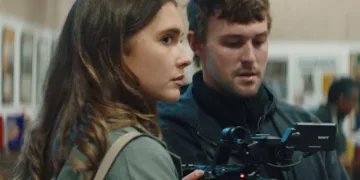

























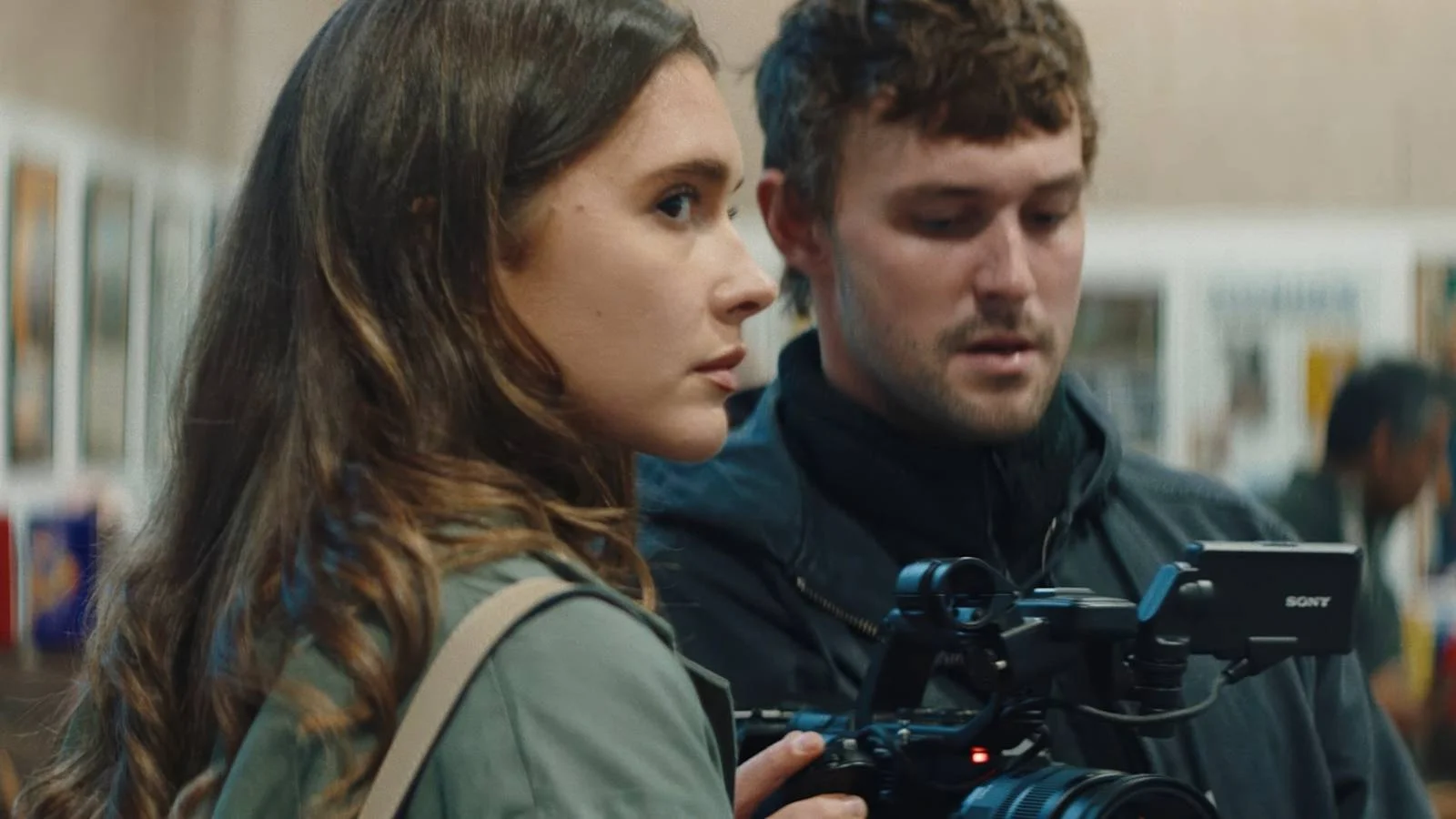

Chiara King has learned that looking frightened is good for business. During visits to supposedly haunted houses, she exaggerates her reactions because fear attracts viewers. Playing a fictionalized version of herself in Mike Nybroe’s The Influencer Project, the real-life influencer understands how to turn an experience into something people will watch. Her sponsored trip to Copenhagen gives her plenty to record, with a documentary crew following along. When a stalker begins threatening her, the audience keeps growing. The professional habit of making everything watchable becomes difficult to switch off.
Nybroe builds this situation through several kinds of images: upright phone videos, documentary footage, and wider views that include the recording process itself. Found footage means presenting images as recordings made within the story, so the camera needs a believable reason to be there.
Here, that reason comes built into Chiara’s occupation. The shifts between formats also give her different relationships with the lens. She can address her followers directly, become the documentary’s subject, or discover that someone else has been filming her without permission. Each camera offers a different degree of control.
I like how naturally the film’s premise accommodates this visual construction. Chiara’s advice about trimming clips so that speech fills every available moment makes the work of maintaining attention tangible. The recurring follower totals and disclosed sponsorship payments supply a commercial measure alongside the images.
Her target of ten million followers is easy to understand, and the numbers make withdrawing from the trip feel costly. These promotional passages establish a credible pressure, though their repetition eventually slows the film. Once the connection between visibility and income is clear, another brand appearance needs to change the situation to earn its space.
King helps these scenes considerably. Her comfort addressing an audience gives the promotional material a fluency that casting alone cannot guarantee. She understands the public performance the role requires, and that familiarity provides a useful baseline for the fear that follows. The change from managing her image to reacting to an image sent by her stalker is especially effective. A photograph showing that he can see her turns the camera from something she uses into something used against her. Her alarm gives the film a human immediacy that its counters and comment feeds cannot supply.
The screenplay offers less access to the person beneath that professional ease. Chiara’s ambition is repeatedly established, but the desire behind it remains thinly developed. Ten million followers gives her a destination without explaining what reaching it might settle for her.
Manager Alice, played by Jazmine Summer, contributes encouragement and reassurance, keeping much of their interaction within the same professional frame. Chiara’s growing suspicion of her colleagues introduces a potentially richer problem: she has people around her, yet their presence does not automatically make her feel secure. That uncertainty is more interesting than another reminder of her numerical goal.
King Slayer’s threats work best when they establish proximity. An abusive message can be dismissed as the work of a distant stranger; a photograph taken nearby changes the available information. The chain-link mask gives the stalker a recognizable horror identity, but the proof that he occupies Chiara’s surroundings does the heavier dramatic work.
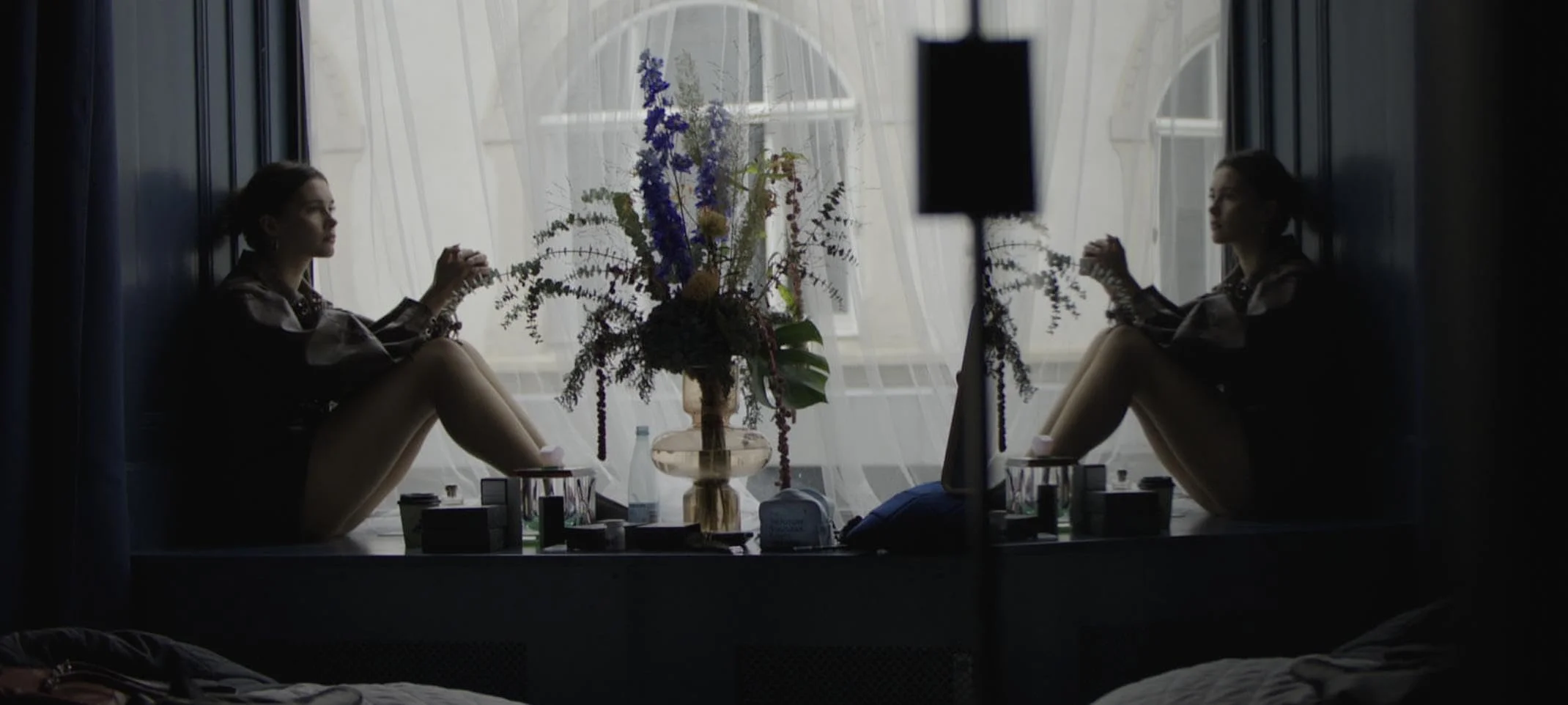
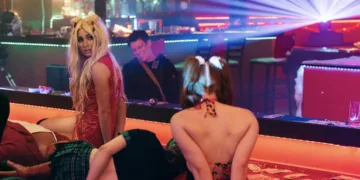
His intrusion into a nightclub visit brings that danger into a space associated with her public life. Bringing in trained security during the middle stretch also gives the threat practical weight. People must make decisions about protecting her, rather than simply react to another alarming notification.
That practical response sets a standard the later thriller struggles to maintain. Repeated attempts by Chiara and the crew to catch someone recording them nearby create movement, but limited dramatic progress. A pursuit should alter the balance: reveal something, remove an option, or make the next encounter harder to predict. Here, the recurring failure to locate the stalker begins to feel like a device for postponing confrontation. The film has established a situation serious enough to require security, then increasingly depends on the characters remaining available for familiar chase mechanics.
The threatening videos offer sudden shocks, yet suspense needs room for anticipation. The proximity photographs encourage us to think about what the stalker knows and where he might be; the more conventional scares interrupt that uncertainty with a ready-made jolt. Later, livestream comments identifying horror clichés add another distraction.
The joke is understandable, since an online audience would bring its own viewing habits to the event. But those remarks also invite us to watch Chiara’s behavior as genre business just when the film needs her predicament to feel immediate. The move toward a louder confrontation weakens the grounded fear that made the setup promising.
The final stretch also becomes less reliable about the origin of its footage. Camera logic matters here because the earlier mixture of recordings has taught us to notice who controls an image. When that becomes difficult to account for, the film loses a useful source of tension. Chiara’s attempt to mobilize followers against King Slayer is a stronger extension of the premise. She responds with the resource she possesses: an audience. Reporting and targeting the account let her act, while exposing the uncertain relationship between online retaliation and physical safety.
The opening livestream suicide of teenager Alma gives that uncertainty a much heavier reach. It introduces a vulnerable viewer before the film settles into Chiara’s ordeal, raising questions about what these mediated relationships can offer the people investing in them. The later supportive hashtags show a community expressing concern, but the follower totals measure participation without telling us much about its substance.
By the violent climax, excited comments treat the danger as entertainment. The transition is disturbing because the interface accommodates reassurance and spectatorship equally easily. Nybroe makes that change visible, yet leaves the audience largely as a stream of reactions. The people watching remain difficult to distinguish, even as their attention becomes one of the forces shaping Chiara’s choices.
The Influencer Project arrived in US theaters on October 2, 2026, distributed by Hades Films. The found-footage horror film follows a prominent social media creator traveling to Copenhagen for a documentary, only to be targeted by an obsessive stalker.
Where to Watch The Influencer Project (2026) Online
Full Credits
Title: The Influencer Project
Distributor: Hades Films
Release date: October 2, 2026 (United States)
Rating: R
Running time: 1 hour 35 minutes (95 minutes)
Director: Mike Nybroe
Writers: Mike Nybroe
Producers and Executive Producers: Eduardo Sánchez, Gregg Hale
Cast: Chiara King, Luca Storm, Mike Nybroe, Jazmine Summer, Alexandre Willaume
The Review
The Influencer Project
The Influencer Project gives its cameras a convincing reason to keep rolling, and Chiara King’s ease with them makes her growing fear believable. The proximity photographs and security response build a threat worth taking seriously. Repetitive pursuits and conventional escalation then weaken that tension, while Chiara’s private motivations and her audience’s involvement remain underdeveloped. The film understands how danger becomes content better than it sustains the danger itself.
PROS
- King’s credible shift from promotional confidence to fear.
- Multiple recording formats make control over images meaningful.
- Proximity photographs give the stalking threat practical weight.
CONS
- Repetitive sponsorship passages and unsuccessful pursuits.
- Limited development of Chiara’s private motivations.
- Later escalation weakens suspense and camera credibility.
- Audience responsibility receives thin dramatic exploration.