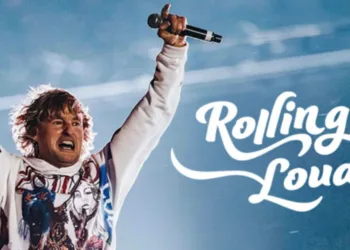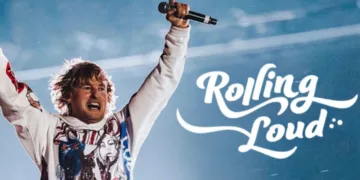

















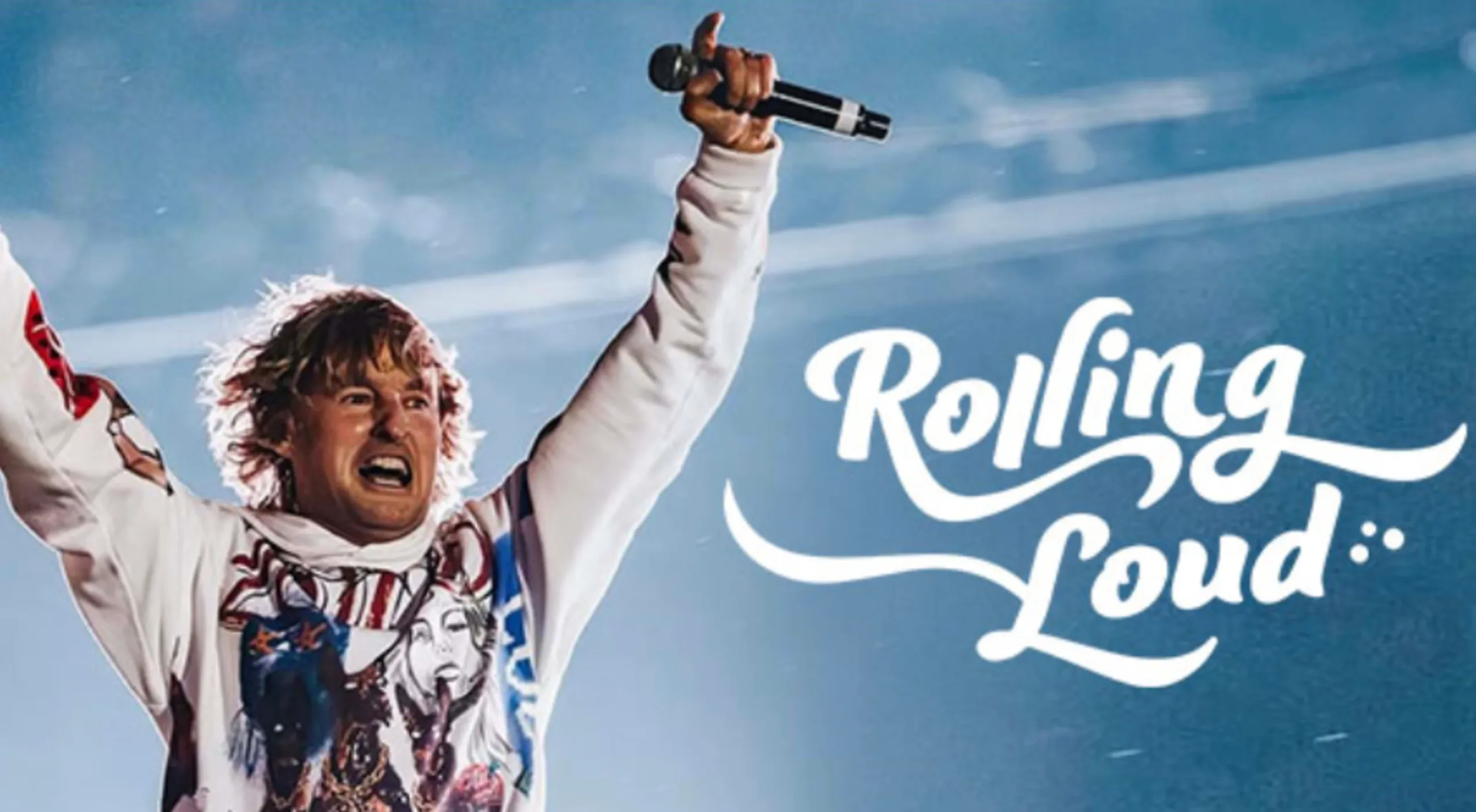

Hank Goldstone teaches his son to lie twice on their outing to Rolling Loud. First, the boy must help maintain the fiction that they are going fishing. Then, at the festival entrance, he must become three years older for the benefit of security. Owen Wilson’s anxious father regards these inventions as practical arrangements. His 13-year-old son Zion recognizes a habit and asks about his father’s dishonesty. The child has begun paying attention to something the adult would prefer to leave unexplored.
That exchange gives their supposed bonding trip an awkward potential. Hank wants to enter his son’s world, yet the first lesson he offers concerns his own. Rules can be negotiated, mothers can be deceived, and intimacy can mean knowing which account of the afternoon to give which person. Christian Convery briefly makes Zion an observer of his father, rather than simply the recipient of an expensive treat.
Jeremy Garelick’s Rolling Loud: The Movie soon removes that observer. Zion goes to the restroom, Hank gets distracted by his coworker Terry, and the boy disappears for much of the film. The search takes over. A furniture-store employee trying to connect with his hip-hop-loving son becomes a bewildered tourist accompanied by a younger man and, eventually, a festival volunteer. We get little sense of Zion’s experience while they are separated. His absence enables his father’s adventure, which is an odd allocation of attention for a comedy asking us to care about their closeness.
I may be demanding too much parental wisdom from a film whose attractions include accidental intoxication and a pubic-hair sight gag. Reckless fathers are perfectly serviceable comic protagonists. Wilson and Convery also give their shared scenes enough affection to resist the reading that Hank merely wants an excuse to misbehave. He wants the boy’s company. His awkward efforts to provide something Zion genuinely desires have a recognizable tenderness. The difficulty is what happens to that tenderness once it has supplied the premise.
Wilson’s apologetic chatter can be funny because Hank treats every conversation as a negotiation he is already losing. His attempts to explain himself to security, or improvise another excuse for Melanie on the phone, reveal a man who believes sufficient talking will eventually produce innocence. But the film keeps returning to the same transaction. Hank explains; someone objects; he explains again. Overlapping voices and edits that crowd the responses leave little room for embarrassment to develop. Agitation fills the space where a comic change of direction might have occurred.
The publicly broadcast conversation with Melanie offers a sharper possibility. His private deception becomes entertainment for strangers, briefly putting the audience inside the festival in our position: watching a father talk himself into trouble. Yet the exposure has little subsequent force. It is another ordeal to survive. The drug episode operates similarly, substituting altered perception for invention while the search waits for Hank to finish being overwhelmed.
Matt Rife’s Terry sometimes loosens this machinery. As the boss’s son, whom Hank has been told to fire, he brings an existing imbalance into their partnership: Hank worries about professional consequences; Terry has grown accustomed to protection from them. Rife allows some neediness beneath the swagger, giving their exchanges an emotional foothold that the louder interruptions lack. Christine Ko’s Linda brings a welcome readiness to act. Her exchanges with Terry can make the detours feel briefly like encounters between people, rather than obstacles placed in Wilson’s path.
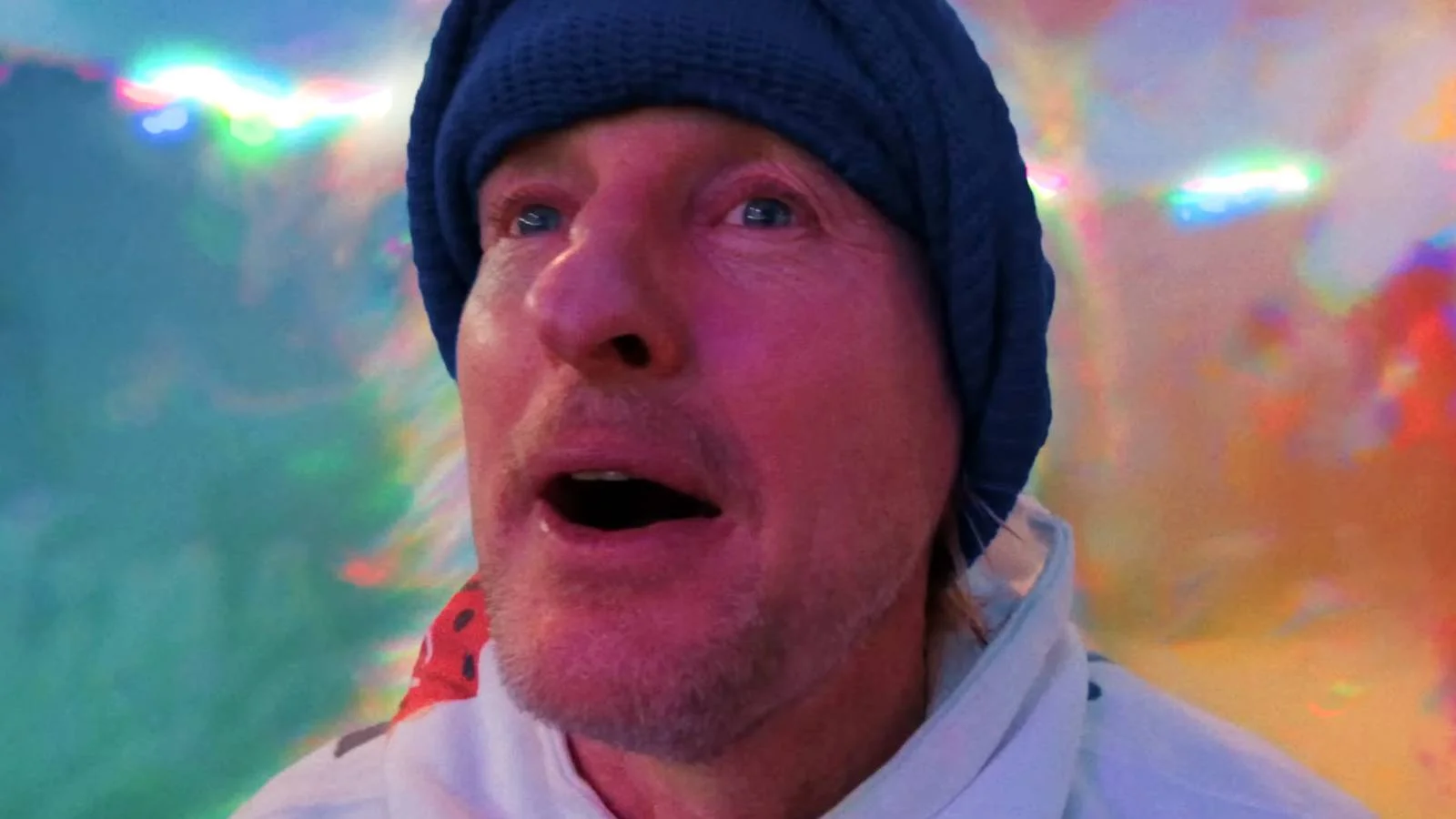
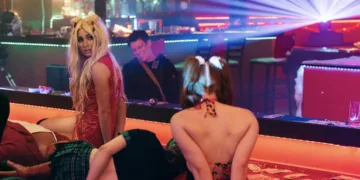
Linda’s willingness is also where the film’s generosity becomes selective. She helps the men search, gets accidentally thrown from a Ferris wheel by Hank, and later strips to distract security. Her exposed body supplies a recurring joke about pubic hair. Ko commits to Linda’s recklessness, but the screenplay repeatedly collects its comic payment from her flesh. Hank’s fear receives patient attention. Linda’s injury receives a gag.
This is a peculiar economy of liberation. The father gets to discover that he can escape his ordinary inhibitions while a helpful woman supplies both access and spectacle. Melanie, meanwhile, remains on the telephone receiving evasions.
Her exclusion helps make father and son temporary allies, but gives the marriage little room to become anything beyond the arrangement Hank must evade. The camera’s attention to scantily dressed festivalgoers extends the same invitation: women furnish the scenery of male release. Linda’s initiative makes her enjoyable company without resolving the narrow uses to which that initiative is put.
The real festival provides genuine scale. Crowds, stages, and performances make Hank’s discomfort feel physically situated; his bewilderment has an environment to push against. There is an obvious pleasure in watching a suburban father discover that Ski Mask the Slump God does not actually wear a ski mask. Cultural ignorance can be funny. Its repetition, however, tells us steadily less about Zion’s enthusiasm and steadily more about Hank’s distance from it.
That distance becomes useful to the promotional design. Hank must be taken through the attractions, toward backstage access, and into encounters with performers. Travis Scott, Sexyy Red, Ski Mask the Slump God, and Ty Dolla $ign largely become points on his route. The conspicuous late attention to Gopuff further interrupts the search with a different obligation. The film seems exceptionally attentive to keeping its commercial appointments while a child is missing.
Hank eventually gets onstage with Scott and leaps into the crowd. The scene grants him the thrilling access his son wanted, then converts it into another physical disaster. For a moment, the search has delivered its own reward to the person conducting it. Hank can now participate in the spectacle rather than stand awkwardly beside it. Zion’s taste has brought his father all the way to the stage, while Zion’s perspective remains somewhere the film has scarcely thought to look.
Rolling Loud: The Movie landed in theaters nationwide on October 2, 2026, distributed by Ketchup Entertainment. The comedy follows an overprotective father who attempts to bond with his teenage son by sneaking him into Miami’s massive Rolling Loud hip-hop festival, triggering chaotic misadventures.
Where to Watch Rolling Loud: The Movie (2026) Online
Full Credits
Title: Rolling Loud: The Movie
Distributor: Ketchup Entertainment
Release date: October 2, 2026
Rating: R
Running time: 1 hour 35 minutes (95 minutes)
Director: Jeremy Garelick
Writers: Jeremy Garelick
Producers and Executive Producers: Jeremy Garelick, Will Phelps, Stella Bulochnikov, Jolene Blalock
Cast: Owen Wilson, Matt Rife, Christine Ko, Christian Convery, Henry Winkler, Jolene Blalock, Travis Scott
Director of Photography (Cinematographer): Bradford Lipson
Composer: Chanda Dancy
The Review
Rolling Loud The Movie
Rolling Loud: The Movie has affection to spare in Wilson and Convery’s scenes, but remarkably little curiosity about the son once his disappearance gets the comedy moving. Occasional cast chemistry and genuine festival energy survive the repetitive mishaps. The father’s pursuit of closeness gradually becomes a pursuit of access, with women supplying humiliation and brands demanding attention. Getting Dad onstage proves easier than giving father and son something meaningful to share.
PROS
- Warmth between Wilson and Convery.
- Rife and Ko enliven some comic exchanges.
- Real festival crowds and performances provide scale.
CONS
- Repetitive explanations and cramped comic timing.
- Zion’s perspective largely disappears with him.
- Female characters serve narrow, humiliating functions.
- Promotional detours weaken the central search.