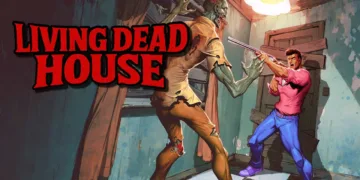


























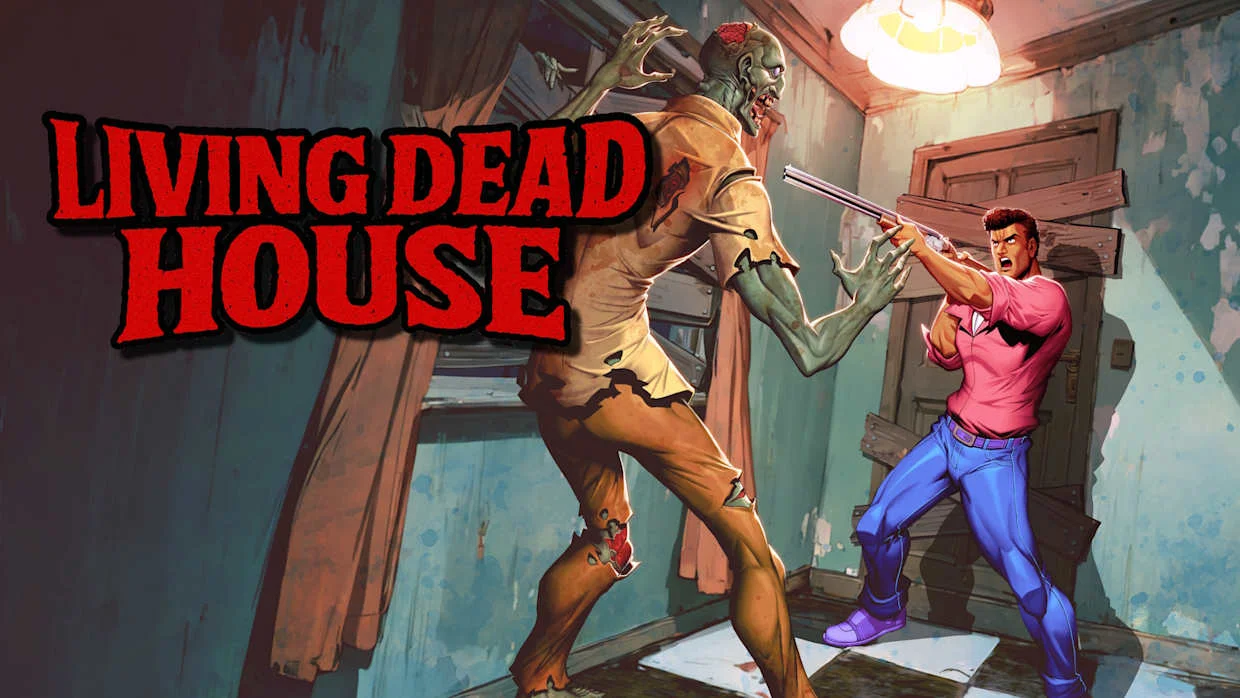

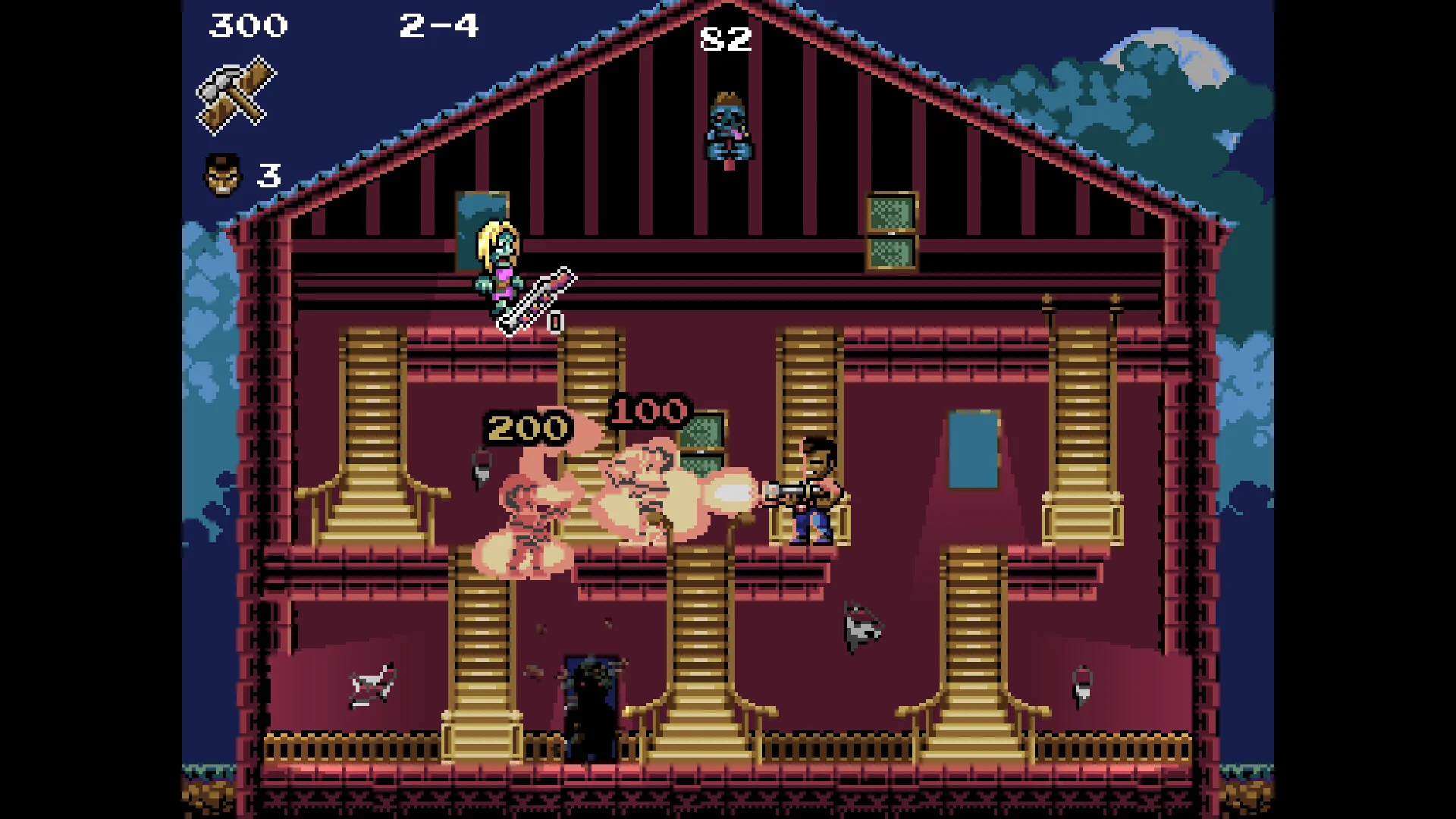
You can have a shotgun in Living Dead House and still feel reluctant to pull the trigger. It holds a single shot, and the zombie approaching you may be less dangerous than whatever blocks the next ladder. Killing it brings immediate relief, followed by the uncomfortable knowledge that you have spent your escape insurance. In this single-screen arcade game from Deprecated Games, surviving until dawn matters far more to your progress than clearing the house. Sometimes the reassuring decision is to leave something alive.
That reluctance gives its small arsenal an unusually anxious character. The axe and flamethrower are single-use tools too, though a well-positioned attack can catch several enemies together. With room for only two power-ups, being equipped never quite means being comfortable. A bear trap offers a different kind of reassurance: placed beneath an entry window, its two kills buy some breathing space before those zombies can occupy the floor. Boarding up an entrance temporarily reduces the pressure from that direction. These are little acts of household control, performed inside a building that keeps slipping out of your hands.
The deliberate movement helps that feeling take hold. Neither you nor the zombies move quickly, so trouble gives you time to recognize it without necessarily giving you time to recover. Contact costs a life, and your jump cannot carry you over a zombie’s head. There is no dependable last-second dodge to rescue a bad decision. Ladders, elevators, passages, and selected floors with screen-edge wraparound become sources of comfort because they offer somewhere else to go. An escape route matters most while it remains available; discovering that you have boxed yourself in makes the house feel suddenly smaller.
Learning those routes gradually changes the emotional temperature. Early uncertainty gives way to the pleasure of recognizing how a room can be used. A floor that once seemed hopelessly exposed becomes manageable once its exits and enemy entrances make sense.
A defensible spot feels inviting until zombies approach from enough directions to turn it into a dead end. The game rewards this growing familiarity without requiring especially fast hands. For players who enjoy arcade games but find their speed exhausting, there is something welcoming about a challenge that lets anticipation do much of the work.
Its introduction is less welcoming. There is no tutorial explaining the controls or objective, leaving the player to discover basic information alongside the useful discoveries about positioning. Those are different kinds of uncertainty. Working out where to place a trap belongs to the pleasure of playing; working out what the game expects you to do delays that pleasure. The rules are simple enough to learn, but simplicity makes the omission harder to excuse. A brief explanation would preserve the tension while letting the first few attempts begin on firmer ground.
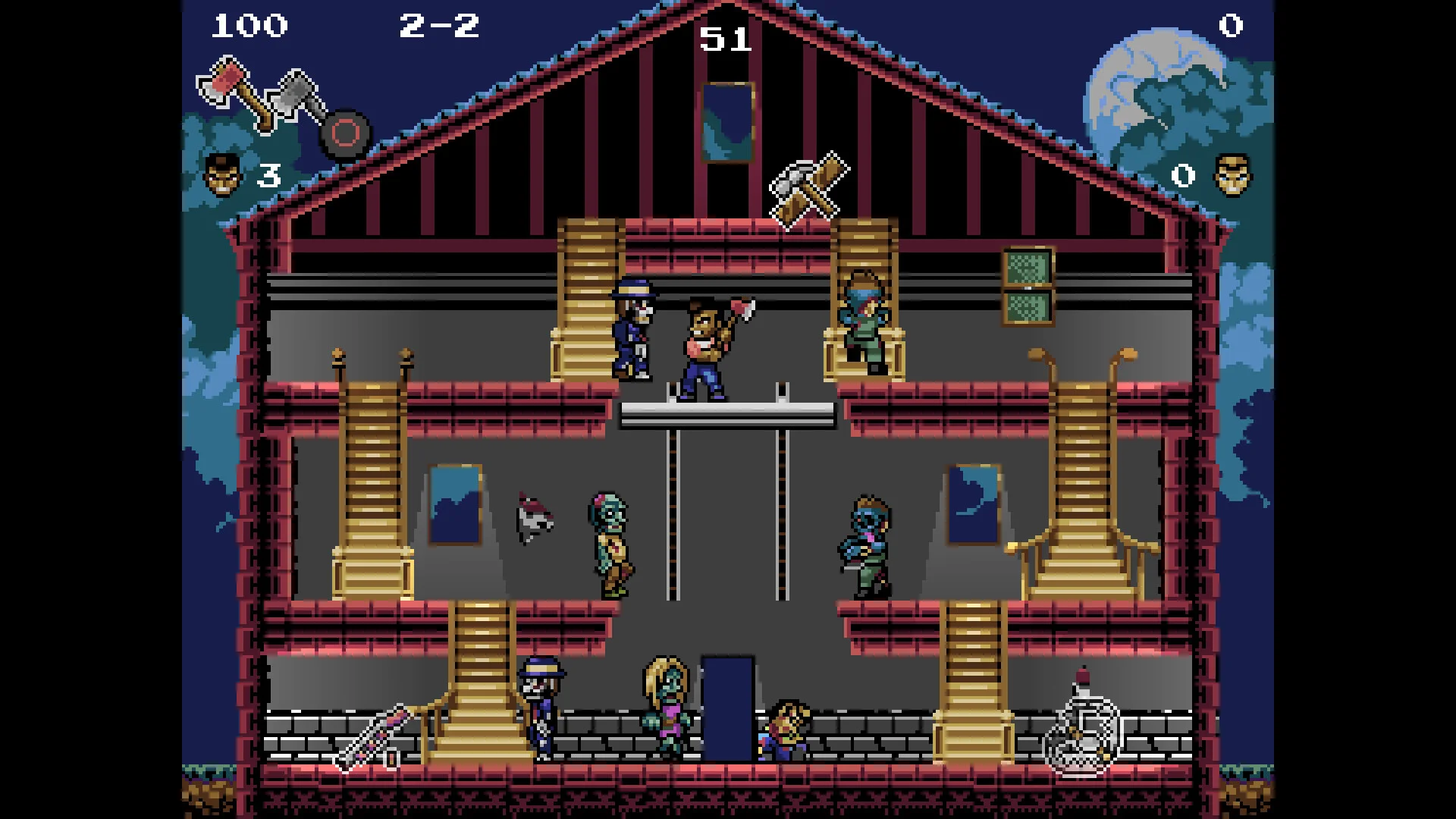
Across 20 arcade stages, five main house layouts provide the spaces in which that confidence develops. Their particular features matter: a central lift changes the available escape routes, while an electrical switch lets you kill zombies elsewhere in the house.
Later threats also disturb familiar habits, including zombies that throw dynamite and others that leave their heads behind. These additions give the player fresh reasons to pay attention. Increasing enemy numbers and extending the wait for dawn create pressure too, though they tend to intensify an established problem rather than change its character.
That distinction becomes noticeable during longer sessions. The satisfaction of understanding a house can keep an attempt alive, but it cannot indefinitely replace the excitement of encountering something new. The layout pool is small, and the fundamental business of evading zombies and rationing weapons persists throughout.
Survival mode removes dawn entirely, turning the same actions into an endurance challenge. It offers a harsher relationship with the clock, yet does little to refresh the actions themselves. The game’s tension remains effective after its capacity to surprise begins to fade.
I like it best as a small invitation to concentrate. The high-score table gives a failed attempt somewhere to lead: another chance to use the house a little better, waste fewer resources, or survive a situation that previously felt impossible. Chasing that improvement suits short visits. Trying to make Living Dead House carry an entire evening exposes how often it returns to the same pressures. Its modest scale earns attention through the pleasure of those attempts, without needing to promise an inexhaustible challenge.
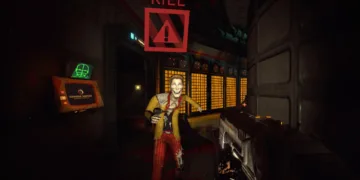
The presentation makes returning pleasant too. Pixel gore keeps the violence theatrical, and the optional black-and-white mode gives the houses an older horror-film flavor. The CRT filter supplies the arcade texture without being essential to enjoying the sprites.
Each main setting has its own musical theme, with horror-inflected chiptunes maintaining the playful menace. There is very little conventional storytelling here, but the combination of shambling intruders, temporary barricades, and an approaching dawn gives the action a recognizable horror situation. The blood is amusing; the dwindling options are what make you tense.
Local co-op introduces another source of uncertainty into those familiar rooms. Both players need the power-ups, and one can collect the weapon the other was trying to reach. Scarcity acquires a human face. A pickup that brings relief on one side of the screen can create irritation on the other, making cooperation less comfortable than the label suggests. It does not enlarge the houses or multiply their possibilities, but it changes what a bad moment means. When the other player reaches the shotgun first, your next escape depends partly on a decision someone else has already made.
The Review
Living Dead House
Living Dead House makes a spare shotgun shell feel precious and a familiar escape route feel reassuring. Its slow movement and disposable weapons create satisfying tension, while local co-op gives scarcity a mischievous social edge. The small layout pool wears thin during longer sessions, and missing instructions make the first attempts unnecessarily uncertain. Still, its pulpy horror charm and learnable challenges deserve a few short visits.
PROS
- Scarce weapons make survival decisions tense.
- Learning escape routes produces satisfying improvement.
- Local co-op adds friction over shared supplies.
- Pixel gore and horror chiptunes establish playful menace.
CONS
- Limited layouts and recurring objectives weaken longer sessions.
- Missing instructions create avoidable initial confusion.