




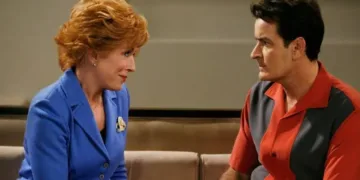










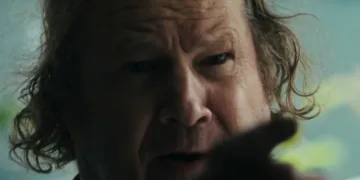










God has apparently taken an interest in shoplifting, which leaves Pierre Jeffreys to handle the legal consequences. An early client’s claim of divine instruction gives Channel 4’s Pierre an amusingly awkward piece of business: its duty solicitor must work with the explanation he has been given, however little use it will be in a custody suite. Creators John Donnelly and Roy Williams find comedy in the distance between a client’s version of events and the professional task of making it usable. Heavenly authorization still requires earthly paperwork.
The encounter with Michael, a young Black man accused of stealing a car, changes the demands on that same professional composure. Michael alleges harassment by PC Tanner and challenges Pierre’s own compromises, accusing him of losing touch with the purpose that brought him into law.
Suddenly, managing the conversation becomes part of the problem. The solicitor’s reassuring manner might help a frightened client; it might also sound like someone smoothing over an institution the client has good reason to distrust. Placing these encounters near the start gives the show a useful tonal test. Can the man who handles the absurdity also answer the anger?
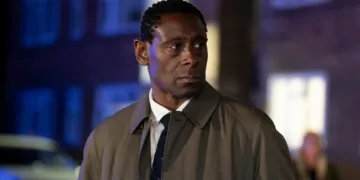
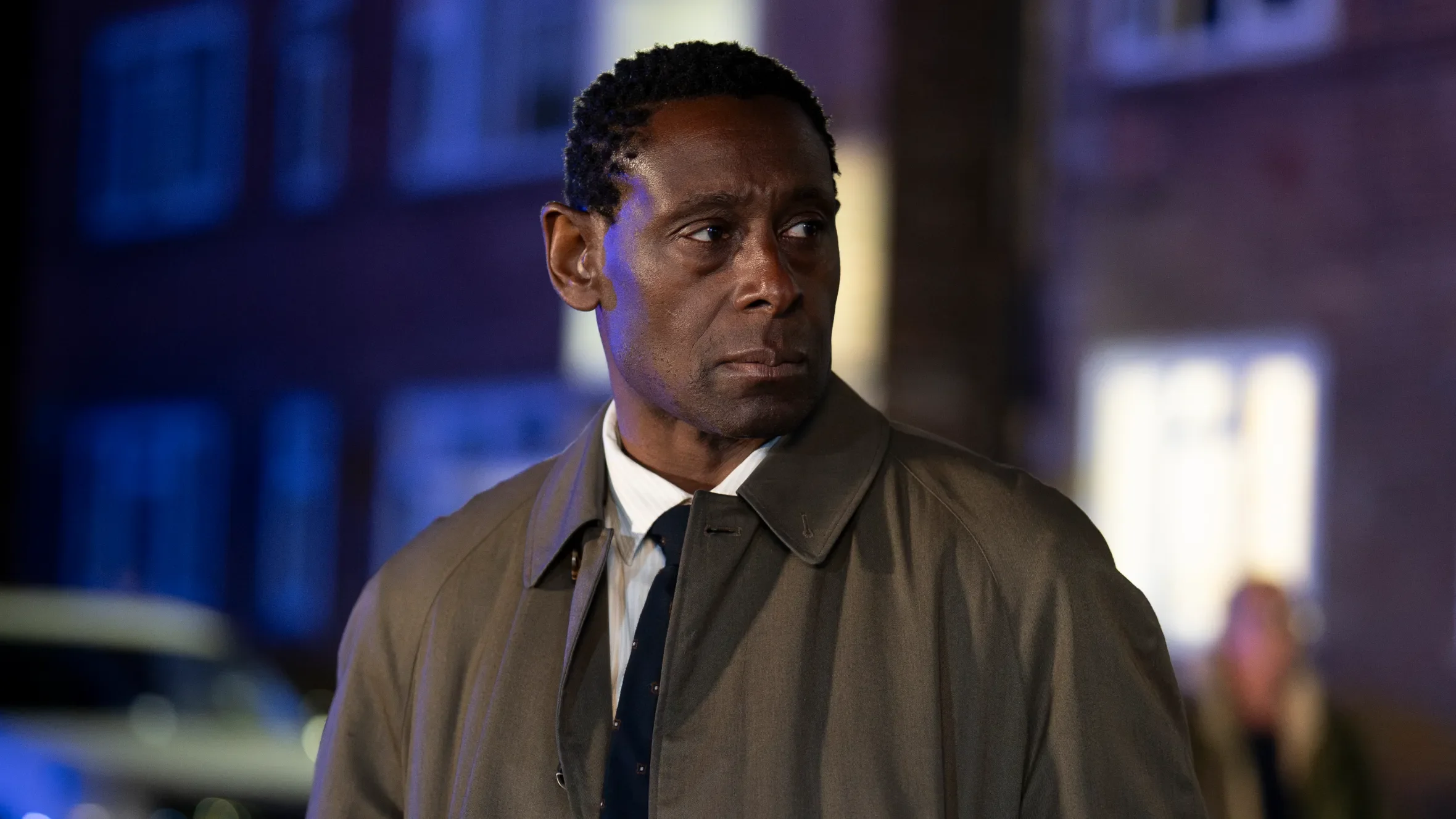
David Harewood makes that question worth pursuing. His performance gives Pierre an authority that feels practised rather than ceremonious: entering a room, opening his jacket, making himself ready to reassure someone or apply pressure. The ease matters because this is a professional whose work begins with establishing a relationship quickly. His football-based sales pitch promises dependable, unshowy service, and Harewood lets the rehearsal remain audible without making the pitch hollow. Pierre has said this sort of thing before. He probably knows which parts work. Michael’s refusal to be comfortably persuaded puts a welcome dent in the routine.
Away from custody, the writing keeps giving Pierre tasks that his competence cannot conveniently resolve. His firm’s office sits above a shop, and he turns up with mousetraps while offering explanations for undercharging clients. That pairing does a great deal of economical character work.
Generosity sounds admirable until Charlotte, played by Michele Austin, has to consider the finances of the practice sustaining it. The vermin, meanwhile, have declined to recognize his public service. An offer of paid fraud cases makes the choice tangible: the work he wants to do and the work that could keep the office functioning compete for the same hours.
The doctor trying to get him to arrange tests supplies another appointment Pierre would rather defer. His late-night gambling gives those missed opportunities a less flattering companion. These details keep the show from treating exhaustion as an automatic certificate of virtue. Some demands come from helping people; others accumulate because he avoids attending to himself.
The episode builds character through that mixed workload, with medical concerns and financial problems persisting between legal calls. Pierre’s willingness to take responsibility has a selective quality. He can represent a stranger before he can get himself to an appointment.
Meals with his old friend DS Ronnie Miller provide a different rhythm. Jason Flemyng and Harewood make their exchanges feel supported by years of shared experience. A fry-up or kebab becomes somewhere Pierre can briefly stop performing professional usefulness. Ronnie’s police job also places that comfort beside the institution Pierre’s clients encounter under very different circumstances. The friendship makes the show’s social world less mechanically arranged: loyalty, familiarity, and professional suspicion can occupy the same table without each arriving with a speech.
At home, Celeste and their son Eli add obligations that cannot be cleared by completing a case. Eli’s departure from university creates a problem Pierre has to live beside, while Celeste offers someone he could listen to rather than another person to manage. The opening setup gives Pierre’s activity the greatest pull, which leaves the domestic material competing for attention much as his family does. That arrangement is dramatically useful, though it will need care: a household can reveal the limits of a busy protagonist without becoming a waiting room for his next entrance.
The cost of all this accumulation is a leisurely premiere. The show asks us to invest in office troubles, friendships, health, and family before the central crime story acquires its sharpest urgency. Harewood earns much of that patience, and the recurring legal work gives the format somewhere productive to go: a dry-cleaner’s break-in and a teenager cautioned over drugs at a house party keep everyday representation within view. Still, the opening’s many demands sometimes feel queued rather than brought into collision. Character density is valuable, but the doctor calling again and the practice needing money cannot indefinitely substitute for a decision.
Michael’s death at the end of the first episode supplies the collision the setup has been delaying. His allegation of police harassment, and his effort to assemble a case against Tanner, now weigh differently on the earlier conversation. The turn works because Michael has already questioned Pierre’s understanding of his role.
His death makes that challenge harder to file away as an uncomfortable exchange with a client. The nocturnal crime atmosphere acquires a specific pressure: Pierre’s access to police stations and familiarity with their inhabitants may be useful, yet neither guarantees that he can protect someone who comes to him.
That pressure also gives meaning to Pierre’s movement between social settings. At the Turningham club, his dry response to a founder’s sugar fortune punctures the genteel presentation of inherited wealth; at a vigil for a murdered teenager, professional assurance has a different burden. Harewood keeps the character credible across those encounters without making him seem free of their demands. The closing turn now asks the series to make choices about the life it has so carefully crowded. What happens to the ordinary client waiting for a solicitor when Michael’s case becomes the one Pierre cannot put down?
Pierre premiered on Channel 4 on October 5, 2026. The British legal crime drama follows a charismatic London duty solicitor who investigates institutional corruption and fights for justice after a teenage client is tragically killed.
Full Credits
Title: Pierre
Distributor: Channel 4
Release date: October 5, 2026
Running time: 60 minutes per episode
Director: Sarmad Masud
Writers: John Donnelly, Roy Williams
Producers and Executive Producers: David Harewood, The Lighthouse
Cast: David Harewood, Michele Austin, Jason Flemyng, Dean-Charles Chapman, Jason Durr, Nikkita Chadha, Christopher Fairbank, Sara Powell
The Review
Pierre
David Harewood gives Pierre the authority and humor to make its crowded setup worth the patience. Client encounters, office troubles, and Ronnie’s friendship build a crime drama with a persuasive everyday life. The premiere takes its time turning those obligations into consequential choices, and the domestic material struggles for attention. Michael’s death supplies a strong dramatic hook, leaving a solicitor already behind on his own appointments with a case that cannot wait.
PROS
- Harewood’s persuasive, practised professional authority.
- Client encounters that accommodate comedy and anger.
- Financial pressures give Pierre’s generosity a tangible cost.
- Warm, convincing chemistry with Jason Flemyng.
CONS
- Early obligations accumulate without enough consequential decisions.
- Domestic material receives less attention than Pierre’s working life.