















![Kingdom Hearts Collection [I-III] Review](https://gazettely.com/wp-content/uploads/2026/10/Kingdom-Hearts-Collection-I-III-1-360x180.webp "Kingdom Hearts Collection [I-III] Review: KHII Holds Steady as Newer Entries Fluctuate 33")







Merl has found ways to collect his mail, retrieve awkward parcels, and travel through his house without exposing himself to the lawn. A pulley handles the correspondence; a dinosaur-headed grabber reaches for packages; a scooter carries him down a hallway whose corners frustrate the exercise.
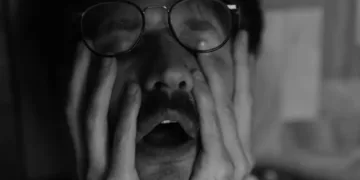
These are small accomplishments. Colin Burgess plays their inventor with the sincerity of someone making a workable life from the space available to him. Outside, a gigantic version of his own head waits to eat him. Cory Santilli’s In the Mouth lets the household arrangements become familiar before asking what such familiarity has cost.
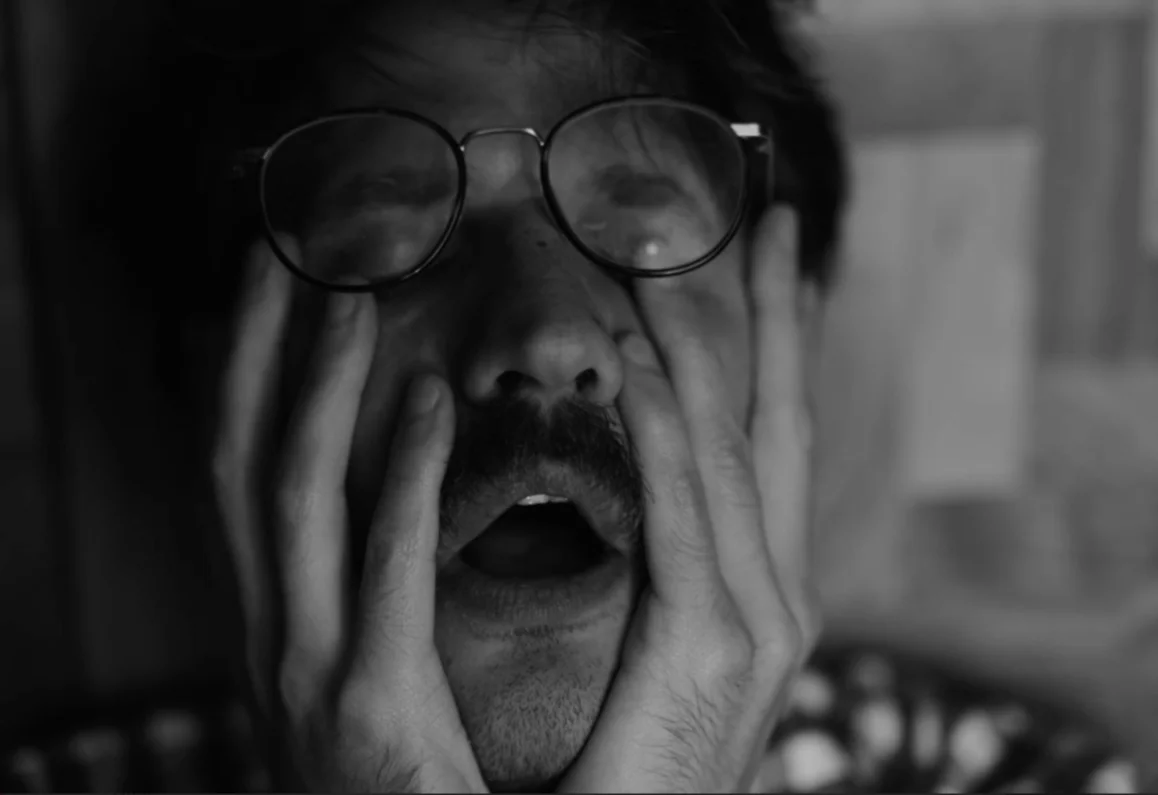
The head announces itself through yawns and guttural noises, sounds that pass into the house without permission. Merl can keep his body indoors, but he cannot keep the presence outside from reaching him. Santilli’s black-and-white images tighten around this imperfect shelter: shadows occupy the rooms, close framing restricts their apparent dimensions, and canted angles give the familiar architecture a slight, persistent instability. Following the opening prison escape, the camera rushes toward Merl’s sleeping face with a loud whoosh. Even sleep offers little privacy. The intrusion makes his face feel exposed before its enormous counterpart has acquired any clear explanation.
There is something painfully recognizable in Merl’s insistence that a visitor remove their shoes. Asked about his own footwear, he explains that these are indoor shoes. The distinction matters to him, and Burgess allows it to matter without demanding that we share its urgency.
His earnestness gives the comedy a footing separate from ridicule. A man frightened of being swallowed by himself still has preferences about his floors. Santilli allows those preferences to occupy the scene, preserving the ordinary person inside the extraordinary predicament. The giant head is an obvious invitation to interpretation, yet the footwear tells us something the symbol cannot: Merl has habits, standards, and a life he wishes to continue.
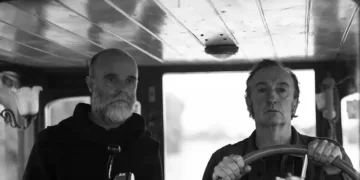
That life requires rent. The landlady’s threatened eviction exposes the financial weakness of his arrangements, and the roommate advertisement brings Larry, an escaped prisoner played by Paul Rothery, into the house. Each man needs the address for a different kind of concealment. News reports identify Larry for the audience while Merl remains preoccupied, receiving the information without making the connection.
The television’s account of danger competes with a danger already large enough to fill his attention. This gap gives the scenes their uneasy comedy, but it carries a quieter loneliness too. Merl has access to the news and little ability to use it; the person sitting near him remains less legible than the threatening likeness outside.
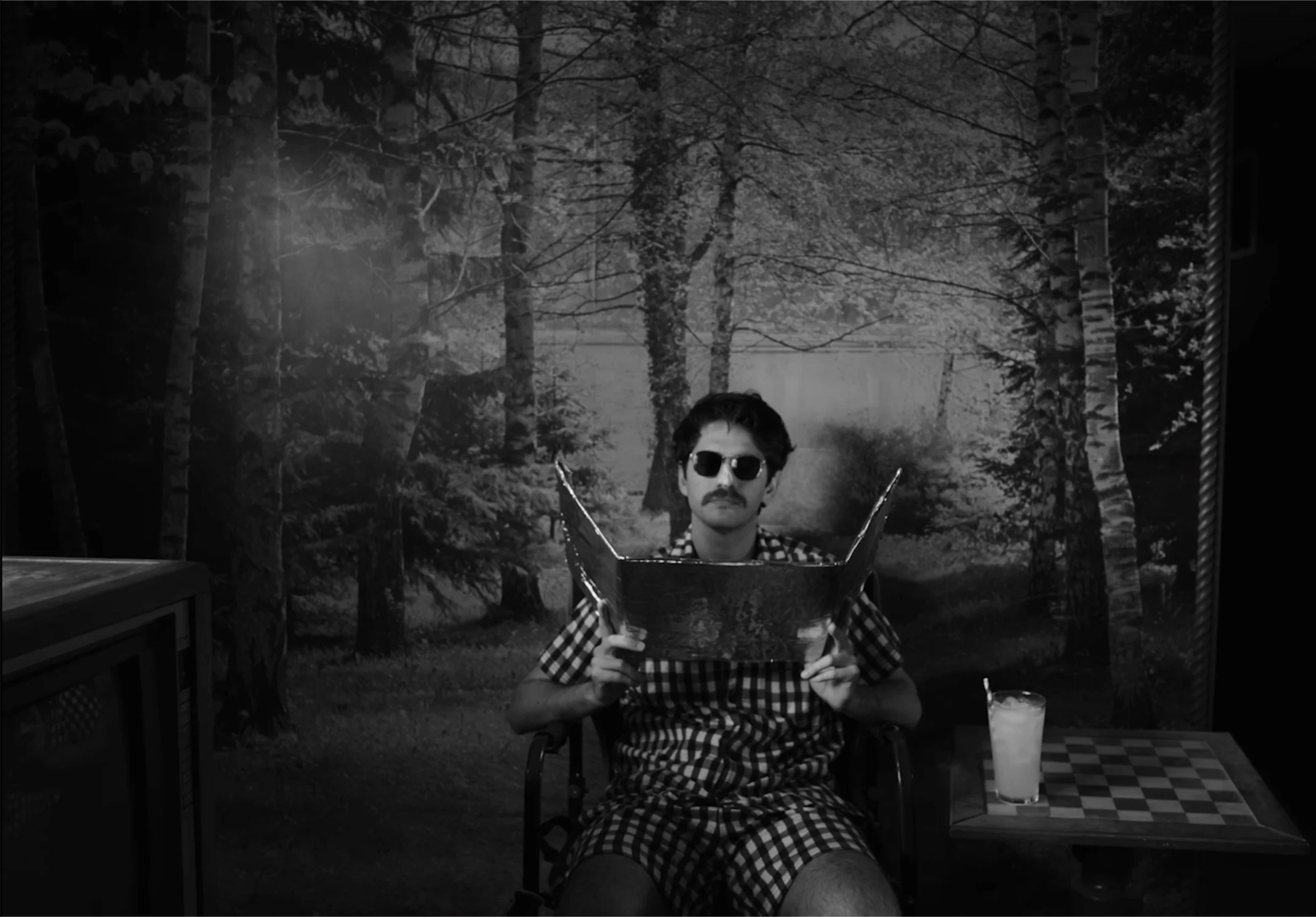
Larry’s invitation to call him “Lah” meets Merl’s literal skepticism about the abbreviation’s convenience. Familiarity has to negotiate its way through this mind, and Rothery’s accommodation finds a temporary ease beside Burgess’s awkwardness. Their apple-picking exchange makes that ease tangible. Merl stays inside with binoculars, directing Larry toward fruit in the neighboring orchard.
His attention reaches a place his body cannot. For a few moments, the distance between the men becomes useful: one sees, the other moves, and an activity unavailable to Merl alone becomes something they can share. The scene gives companionship a practical shape without requiring a speech about loneliness or a sudden disappearance of fear.
The tenderness remains precarious because Larry reads the house through his own need to avoid discovery. Cameras concealed in Merl’s baby-headed figurines might seem another eccentric provision for safety. Described to Larry’s criminal associates, alongside his suspicion that Merl has recognized him, they become a reason to have Merl killed. The objects have not changed; the fear interpreting them has.
This is where Santilli’s crime plot presses hardest against the intimacy of the domestic scenes. Merl’s defensive ingenuity can look like surveillance to someone whose presence he has accepted. Detectives and intruders searching for money bring further demands into the rooms, leaving him unable to preserve the small protocols that once made the place manageable.
The film does not need to withdraw the orchard’s sweetness to make these threats credible. That exchange remains an instance of two people briefly helping each other inhabit the same world, even as Larry’s fear makes the arrangement dangerous. Merl’s innocence offers no dependable protection, and Larry’s capacity for warmth offers no dependable promise.
Burgess keeps the resulting confusion human by treating Merl’s limited understanding with the same seriousness he gives the indoor shoes. The comedy persists through an increasingly dreadful mismatch between what Merl can comprehend and what he has been left to handle, including money, a corpse, and the practical question of disposing of it.
Merl turns to Ask Jeeves for assistance with the body. Death enters his domestic routine as another task for which he lacks the appropriate equipment. The absurdity is grim, though it also preserves the scale of his thinking: confronted with something intolerable, he seeks an instruction. Walking into his own gigantic mouth eventually breaks with that habit of managing difficulties at a distance.
The image is potent because the threatened act of consumption becomes an act he approaches. It is also less emotionally precise than the orchard exchange. There, connection develops through an activity we can understand; here, the change depends heavily on the force of a symbol and Burgess’s willingness to inhabit it sincerely.
I can feel release in that entrance without being certain what has been released. The film’s ascending final movement encourages the feeling, but the earlier routines make a simple account of recovery difficult to accept. Merl has survived by accommodating his fear, and contact with Larry has supplied both pleasure and reasons for further withdrawal. Stepping into the mouth could undo that accommodation; it could equally carry him deeper into the self from which he has been hiding. Santilli leaves him crossing a threshold whose far side we cannot confidently name.
In the Mouth debuted on the festival circuit before its limited theatrical distribution via Antenna Releasing scheduled for late 2026. The surreal comedy follows an anxious shut-in who finds himself completely trapped inside his home after a giant version of his own head magically erupts from his front lawn.
Where to Watch In the Mouth (2026) Online


Full Credits
Title: In the Mouth
Distributor: Antenna Releasing
Release date: January 2025 (Slamdance Film Festival) / November 13, 2026 (Limited)
Running time: 1 hour 23 minutes (83 minutes)
Director: Cory Santilli
Writers: Cory Santilli
Producers and Executive Producers: Jesse Muro, Tatiana Bears
Cast: Colin Burgess, Paul Rothery, Sage Francis, Caren Lioce, Earl Fechter
Director of Photography (Cinematographer): Mike Magilnick
Editors: Cory Santilli
The Review
In the Mouth
In the Mouth is funniest and most affecting when survival takes the form of indoor shoes or apples picked by someone else. Santilli’s confined images and intrusive sounds let anxiety inhabit the house, while Burgess gives its inhabitant a tenderness the absurd premise cannot supply alone. The final turn toward release depends on symbolism that feels less precise than the earlier companionship. The film preserves an uncomfortable truth in Larry’s presence: contact can ease solitude and expose us to harm.
PROS
- Burgess’s earnest performance preserves Merl’s dignity.
- Confined photography and intrusive sound sustain unease.
- Apple-picking gives companionship a tangible form.
- Domestic absurdity keeps humor alive through mounting danger.
CONS
- The final transformation relies heavily on symbolism, losing the earlier scenes’ emotional precision.