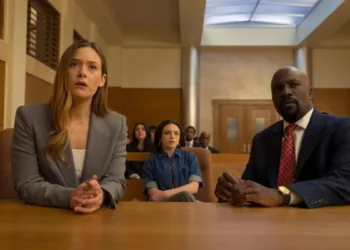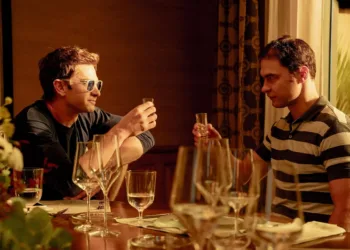









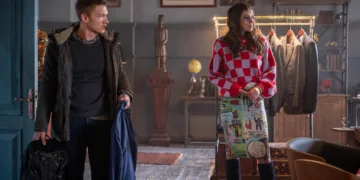

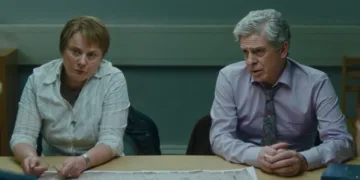

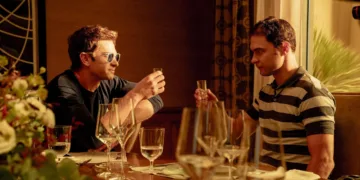






Dale turns Kate’s sighting of a strange light into dinner-table entertainment. She has already struggled to make him take it seriously; now his friends get to laugh at it. Their countryside reunion gives him an audience and leaves her trying to defend an experience nobody else witnessed.
Peter Stylianou’s The Nice Ones establishes the imbalance efficiently within this exchange. Dale can sound reassuring in private and still make Kate’s discomfort available for public inspection. Emrhys Cooper keeps the condescension ordinary enough that it belongs inside a recognizable relationship, before the film gives that relationship an extraordinary problem.
Kate’s history makes the disclosure particularly damaging. A previous mental-health crisis became a viral video in which she claimed that an earlier boyfriend was no longer human. Articles and posts introduce that incident during the credits, preparing a ready explanation for her present fears.
The repetition is a useful piece of construction: the accusation that damaged her credibility is precisely the one the current danger will make plausible. Dale was her therapist before becoming her boyfriend, which gives his dismissals authority they have not earned through observation. He has considerable faith in his professional judgment for someone who keeps declining to look.
The audience has less reason to dismiss Kate. An ominous rural prologue and reports of European power failures establish trouble beyond her perspective. Joelle Rae’s restrained performance then keeps our attention on someone noticing things while calculating the cost of mentioning them. Her quietness has a dramatic function; speaking invites another assessment of her condition.
The early driving, introductions and environmental passages are less economical. Once the reunion’s hierarchy is clear, further transitions around the house spend time without significantly changing Kate’s position. At 89 minutes, the film can afford patient preparation, but some of this preparation repeats work the dinner scene has already done.
Shelly’s trip outside changes the kind of suspense available. Initially one of the few guests receptive to Kate, she encounters a beam of light during a vape break and returns with a different manner. Ayvianna Snow makes the alteration specific through slowed speech and a high, raspy delivery.
Shelly talks about beauty and darkness while inspecting her reflection in a knife blade, then makes the weapon’s purpose unmistakable. Snow gives the reassuring language an eerie lack of ordinary responsiveness. Her performance makes it possible to recognize the same person and cease trusting the familiar behavior that previously accompanied her face.
That outbreak settles the immediate dispute about Kate’s perceptions. Thereafter, the film usually makes it clear who has changed, exchanging the hidden-replacement anxiety associated with Invasion of the Body Snatchers for the practical dangers of resistance. This is a legitimate choice.
Knowing where a threat stands can be frightening when it remains inside the house with you. The structural cost lies in the preparation: Kate’s difficulty persuading the group receives substantial setup, then relatively little sustained development before overt violence makes persuasion redundant. The attack supplies momentum while shortening the life of the film’s most distinctive initial conflict.
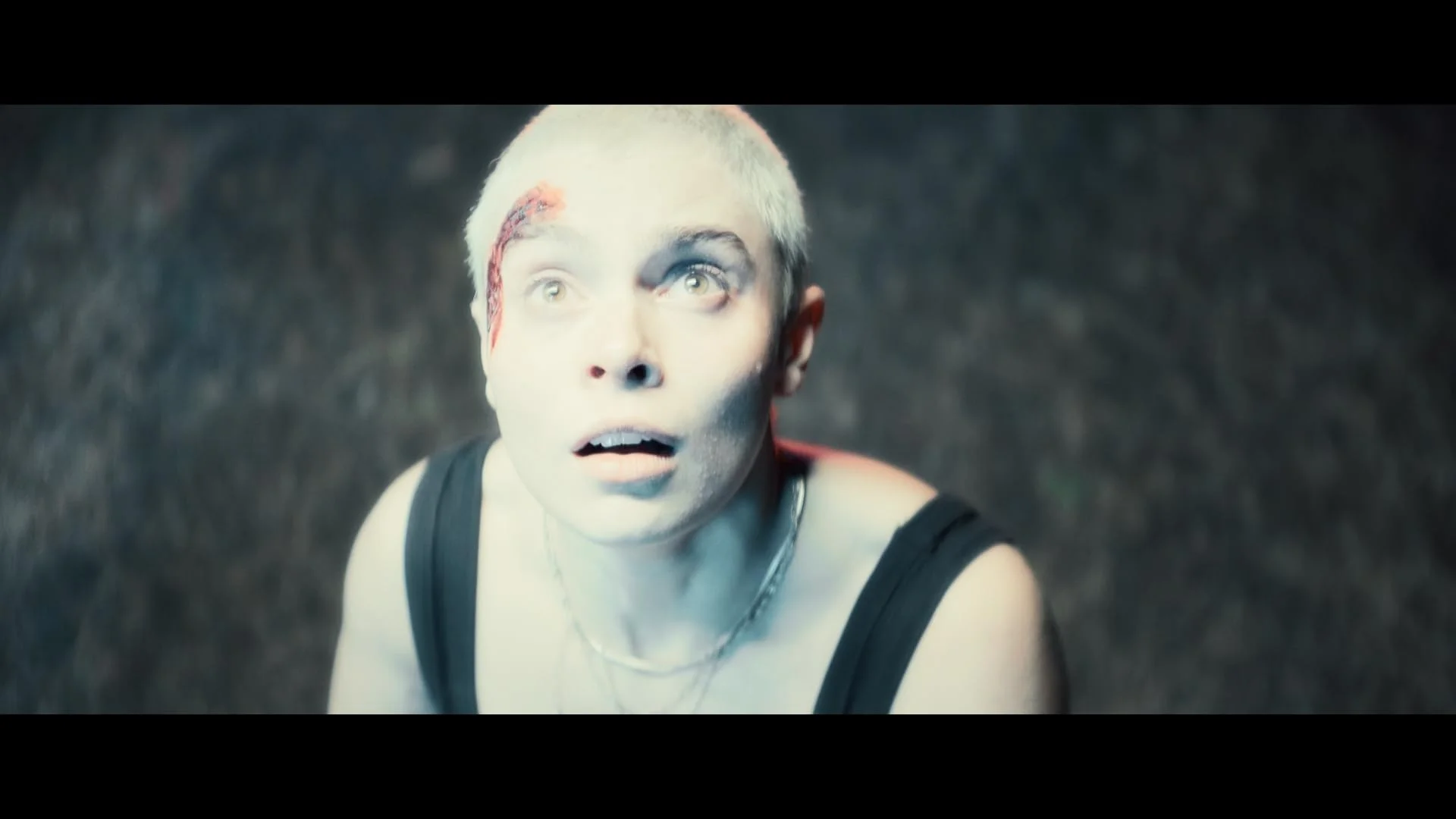
Jade provides a useful complication within that change. Daniela Norman plays someone who initially dismisses Kate, then follows her ideas when the evidence demands it. The shift gives the ensemble a response beyond continued denial and separates unpleasant manners from an inability to act sensibly.
Kate’s own adjustment is harder. Self-defense risks making her appear violent, precisely the impression her recent history has taught her to fear. Rae’s increasing urgency grows out of that hesitation, giving the survival material an obstacle belonging to this protagonist. Being right does not immediately make her comfortable taking charge, or erase the experience that made her doubt her responses.
The transformed guests offer a disturbing answer to such discomfort: surrender the darkness and become happy. Their certainty accompanies their willingness to kill anyone left unchanged, making the promised relief inseparable from coercion. A biblical quotation written in blood on a mirror gives the language of light and darkness a religious dimension without settling the phenomenon’s origin.
The film supports a reading of imposed salvation, with imperfect people treated as problems to be corrected. “It’s my darkness. I earned it” gives resistance a concrete verbal expression. The invitation is frightening because painful experience forms part of the identity the apparent cure would remove.
Alexey Korobko’s photography makes the light itself difficult to welcome. Scenes played near darkness draw attention toward faint glows and partially obscured objects, making illumination a possible warning rather than a reliable aid. Within the confined setting, that reverses the viewer’s normal desire to see clearly.
The visible light effects and some bloodshed have an uneven artificial finish, and full exposure can weaken the menace that Snow’s delivery establishes without technical assistance. The production is most persuasive when a recognizable person’s altered behavior carries the threat and the surrounding darkness leaves its reach uncertain.
Andy Fosberry’s score builds pressure through restrained passages, whispers and humming before strings and sharper sounds break through. Those changes give the violence an audible escalation, though the musical irony has a closer connection to the premise.
Upbeat lyrics about life being good sit against imagery that contradicts them, reproducing the changed characters’ refusal to acknowledge suffering. Interrupted television, malfunctioning phones and the earlier blackouts keep suggesting that the disturbance extends beyond this particular gathering. The house contains the action without containing all the evidence.
The final expansion of scale pays off those external warnings, but it arrives with the frustrating sensation of a larger story only beginning. Leaving the lights unexplained is defensible; the film has supplied enough behavior to make their promise dangerous without a scientific or theological account.
The less satisfying choice is directing its last movement toward the extent of the catastrophe after investing so heavily in Kate’s struggle to respond to it. That shift gives the ending fresh menace while loosening the focus on her particular predicament. The retreat becomes one affected location within a spreading event, and getting beyond its walls ceases to offer an adequate definition of safety.
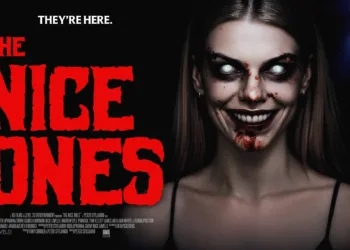
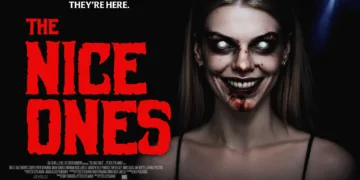
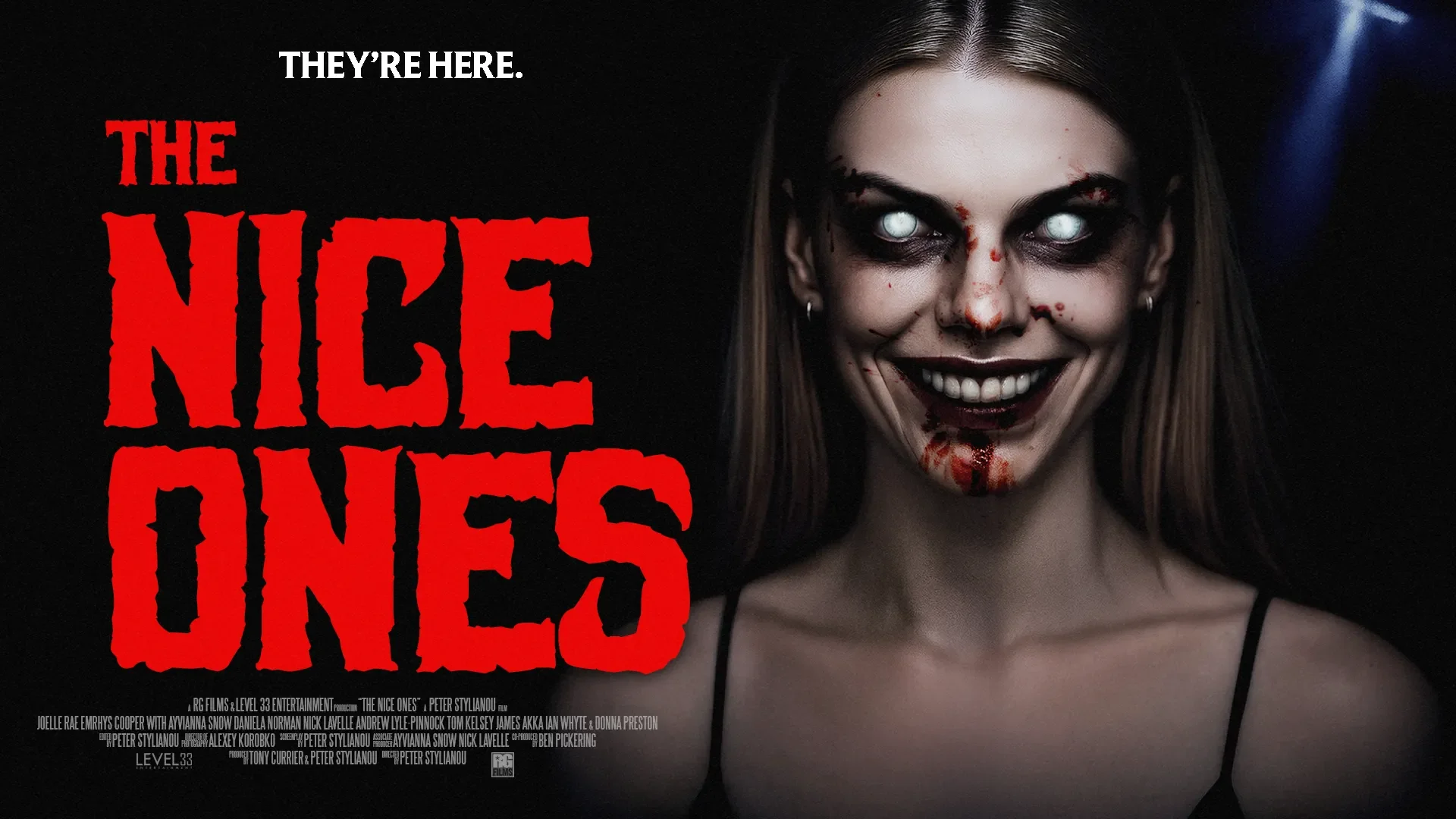
The Nice Ones released on digital platforms on September 29, 2026, with physical media availability coming via Level 33 Entertainment. The science fiction horror film follows a woman who realizes something sinister is affecting her friends after strange lights appear in the sky during a remote countryside retreat.
Where to Watch The Nice Ones (2026) Online







Full Credits
Title: The Nice Ones
Distributor: Level 33 Entertainment
Release date: September 29, 2026
Rating: TV-14
Running time: 1 hour 29 minutes (89 minutes)
Director: Peter Stylianou
Writers: Peter Stylianou
Producers and Executive Producers: Ayvianna Snow
Cast: Joelle Rae, Emrhys Cooper, Ayvianna Snow, Daniela Norman, James Akka, Donna Preston, Ian Whyte
The Review
The Nice Ones
The Nice Ones builds effective horror from Kate’s struggle to be believed, with Joelle Rae’s restraint and Ayvianna Snow’s altered delivery giving the premise human weight. The move into overt violence generates urgency but cuts short the credibility conflict that received so much preparation. Repetitive early passages, uneven effects and an ending that shifts attention away from Kate limit the payoff. Its promise of happiness remains disturbing because the characters offering it have stopped listening to anyone who refuses.
PROS
- Rae makes Kate’s hesitation dramatically meaningful.
- Snow gives Shelly’s transformation a distinct menace.
- Dale’s authority creates credible interpersonal tension.
- Darkness and musical irony reinforce the threatening promise of happiness.
CONS
- Early transitions repeat established information.
- Overt violence shortens the credibility conflict.
- Some visible effects weaken the menace.
- The expanded ending loosens the focus on Kate.