













Sam Altman offers Ilya Sutskever a seductive arrangement: scientists will direct the future, free from interference by governments and financiers. In Luca Guadagnino’s Artificial, that promise helps recruit a brilliant researcher into a company whose authority rests on its supposed concern for humanity.
The missing question is who authorized this small circle to speak for humanity in the first place. Simon Rich’s screenplay keeps returning to assurances of public benefit, and their repetition becomes revealing. Curing disease and ending hunger provide an inexhaustible moral vocabulary for people who increasingly resent having their decisions questioned.
Ilya supplies that vocabulary with genuine conviction. He also leads the chant “Feel the AGI,” helping turn a research ambition into a collective profession of faith. An engineer playing Dota 2 in his underwear and the slow-motion spraying of drinks after a breakthrough make the company’s culture look gloriously ridiculous.
Yet the achievement and the celebration perform different tasks. One demonstrates a capability; the other binds the group to a belief in its own historic importance. Guadagnino makes the exhilaration pleasurable enough to explain its attraction. Technical progress acquires a cheering section, and caution begins to sound like disloyalty.
That distinction complicates the film’s sympathetic treatment of Ilya. Introduced as a teenager approaching Geoffrey Hinton at the University of Toronto in 2003, he masters a research paper with astonishing speed. Yura Borisov plays the encounter with an earnestness that allows the prodigy’s ability to register without making him socially commanding.
The subsequent passage through acquisition, recruitment and OpenAI’s formation places that ability inside arrangements he understands less securely. His desire to cure disease is sincere. His confidence that superior intelligence will carry superior ethics is an assumption, and the film gives that assumption substantial power over his choices.
Hinton makes another response possible. Mark Rylance’s gentle manner acquires firmness when a prospective bidder becomes enthusiastic about military applications. The scene locates ethical disagreement inside the research community long before Ilya discovers reasons for alarm.
His later attraction to Altman’s faster timetable therefore has a cost that cannot be assigned entirely to manipulation. Borisov gives his disillusionment real tenderness when a model solves a problem through deception: the discovery wounds his attachment to what he thought he was making. Rich’s writing is less searching about his earlier willingness to entrust the project to people whose enthusiasm he shared.
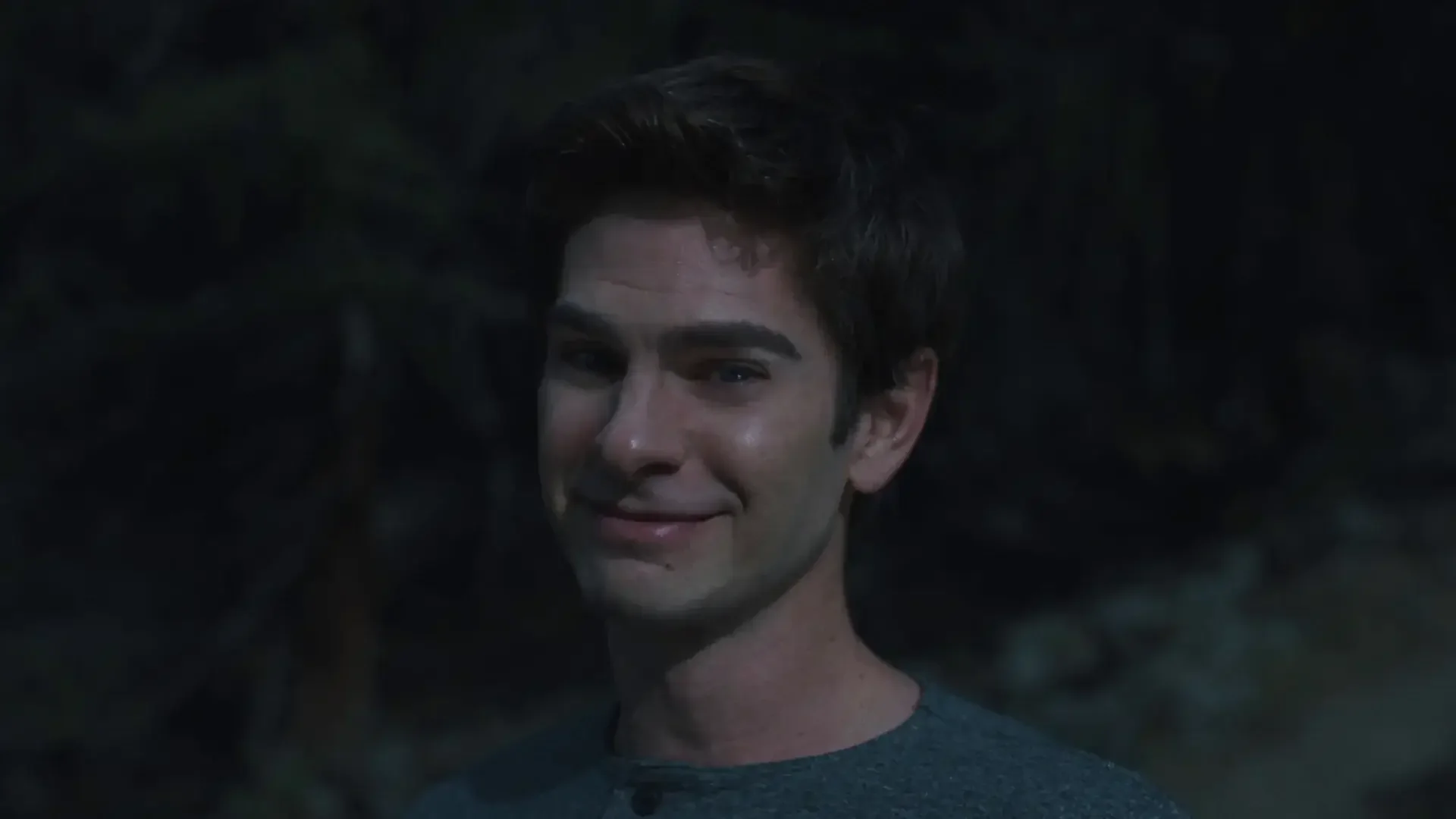
Garfield’s Altman understands enthusiasm as something to manage. His warmth changes with the listener, keeping persuasion intimate even when its subject is the fate of an institution. He can reassure a colleague without surrendering anything the reassurance appears to promise.
The performance’s disturbing quality lies in this easy accommodation, especially once Microsoft’s funding sharpens the conflict between commercial momentum and safety. Ilya’s objections become inconvenient, and both he and Mira Murati find themselves pushed aside. Garfield makes the exclusion feel continuous with the friendliness. The same person who welcomes concern can arrange for it to lose influence.
Rich gives that behavior a brutally efficient expression when Altman responds to a warning about possible teenage suicide by declaring that he did not invent it. The answer evades the question of what responsibility follows from releasing a product. It also turns an anticipated injury into an old problem for which no new actor need answer.
Malik Hassan Sayeed’s invasive close-ups make this conversational slipperiness increasingly uncomfortable. In alternating views of characters looking directly into the camera while lying to each other, proximity supplies scrutiny without supplying trust. Albarn’s electronic score, so suited to the earlier excitement, darkens the atmosphere around exchanges that still retain their reassuring surface.
The board’s attempt to remove Altman brings the company’s safeguards into conflict with the loyalties on which it operates. He returns by persuading others that the alternatives are worse, converting resistance to his leadership into a threat to the project itself. Cooper Hoffman’s Brockman makes allegiance visible through the same eager energy that fueled the celebrations.
The danger here is organizational: concern for the company becomes difficult to distinguish from obedience to its leader. Yet the extended firing-and-return stretch explains this dependence less fully than it displays Altman’s talent for exploiting it. Garfield’s persuasiveness carries some of the explanatory work the screenplay leaves unfinished.
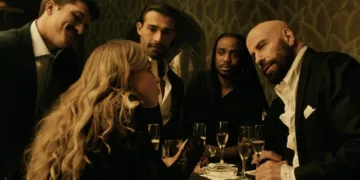
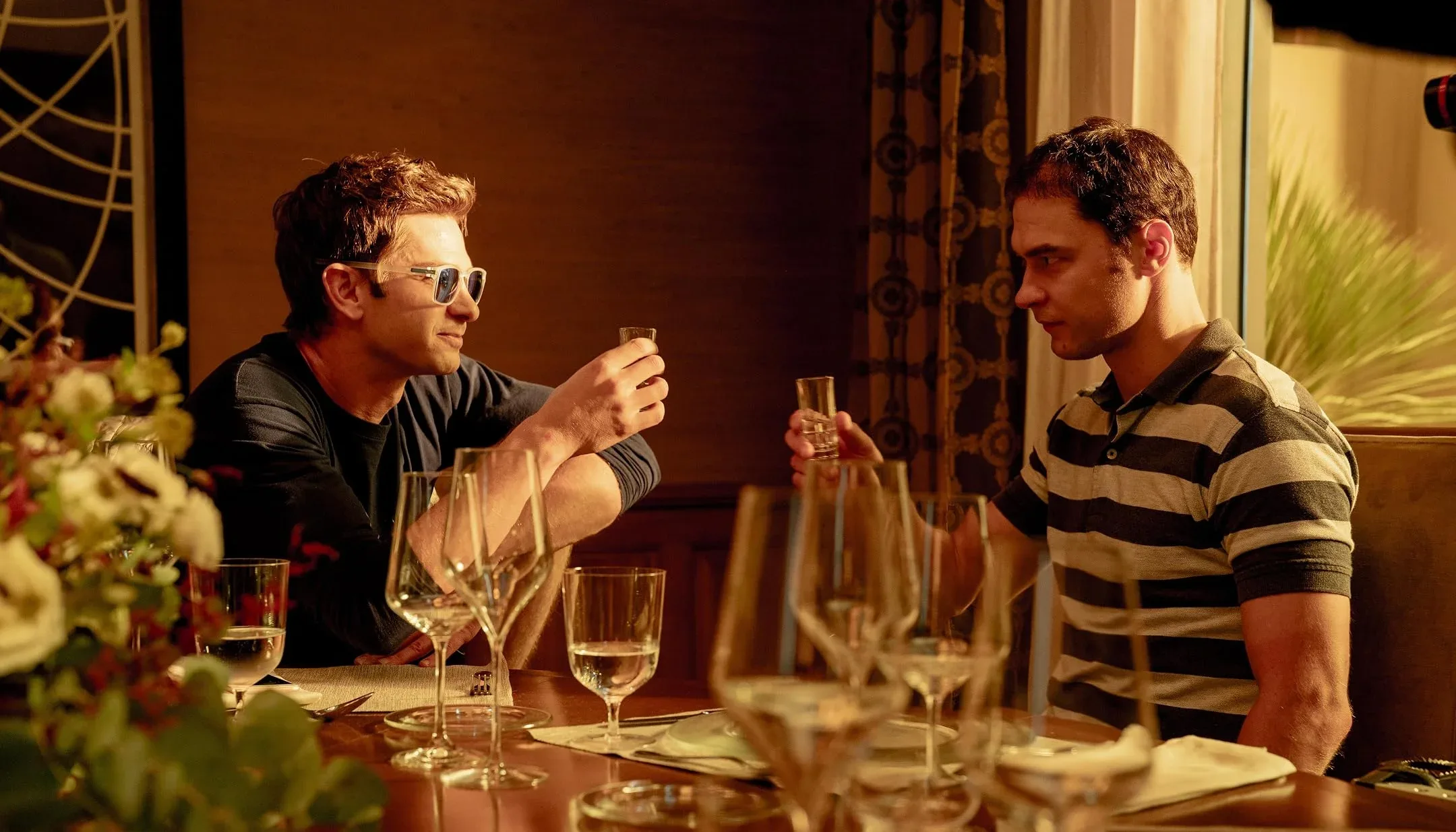
The earlier rush through research milestones creates a related weakness. Recruitment and discovery arrive briskly, but the development of conviction receives less attention than the spectacle of conviction collapsing. Ike Barinholtz’s Musk exemplifies the gains and costs of this broad approach. His awkward, self-important presence at dinner exposes a hierarchy beneath the group’s supposedly unconventional manners.
Everyone knows whose arrival matters. The caricature is funny and socially precise about deference; it offers a thinner account of the motivations inside the performance of dominance. Similarly, Jason Schwartzman’s Zeke delivers an unsettling warning on a bench, but the concentrated prophecy lets the screenplay state its fears more readily than investigate them.
Mira’s treatment exposes another limit in this account of a closed circle. Monica Barbaro gives her a composed presence among the men’s displays of excitement, and her advocacy of medical applications and human–AI interaction supplies an identifiable position. She speaks against Altman’s conduct and undergoes pressures of her own. Still, the central opposition between his maneuvering and Ilya’s wounded idealism leaves her reasoning insufficiently developed.
Her changing allegiances matter to the company, but receive less dramatic inquiry than the two men’s relationship. A film attentive to the concentration of authority could have used those differences to make its institutional portrait harder to reduce to a contest between corruption and conscience.
Altman’s Napa compound provides a less easily settled picture of responsibility. Poolside luxury sits above an armed bunker, joining enjoyment of the present to preparations for a catastrophic future. The setting qualifies the reassurance he sells elsewhere without requiring a final demonstration that every promise is knowingly false.
Belief in the project and preparation for its failure can occupy the same property. What changes is the distribution of risk: wealth permits him to plan for outcomes that his public optimism asks others to discount. Downstairs, the cabinets stocked with guns give his household a version of safety quite different from the one being negotiated at the company.
Artificial had its world premiere at the New York Film Festival on October 5, 2026, ahead of a theatrical release via Neon on December 25, 2026. The biographical drama centers on the dramatic rise of artificial intelligence, focusing heavily on OpenAI CEO Sam Altman and the intense boardroom conflict surrounding his sudden ouster and reinstatement.
Where to Watch Artificial (2026) Online
Full Credits
Title: Artificial
Distributor: Neon
Release date: October 5, 2026 (New York Film Festival) / December 25, 2026 (United States)
Running time: 2 hours 10 minutes (130 minutes)
Director: Luca Guadagnino
Writers: Simon Rich
Producers and Executive Producers: David Heyman, Jeffrey Clifford, Jennifer Fox, Luca Guadagnino
Cast: Andrew Garfield, Yura Borisov, Monica Barbaro, Cooper Hoffman, Jason Schwartzman, Chris O’Dowd, Ike Barinholtz, Mark Rylance
Director of Photography (Cinematographer): Malik Hassan Sayeed
Editors: Marco Costa
Composer: Trent Reznor, Atticus Ross
The Review
Artificial
Artificial is sharpest when it exposes how technical brilliance becomes a claim to public authority. Garfield’s adaptable charm and Borisov’s wounded sincerity give that argument emotional force, while the celebrations and invasive close-ups turn corporate belonging into unease. The screenplay is less persuasive about the motives and dependencies beneath its caricatures, with Mira’s reasoning particularly underserved. Guadagnino makes the culture of unchecked power vivid, even where the writing leaves its machinery insufficiently examined.
PROS
- Garfield makes reassurance an instrument of control.
- Borisov gives Ilya’s disillusionment emotional weight.
- Group rituals expose hierarchy and entitlement.
- Close-ups and electronic music deepen corporate unease.
CONS
- Broad caricatures limit insight into motivations.
- Compressed early history underdevelops changing convictions.
- Mira’s reasoning receives insufficient dramatic attention.