




















![Kingdom Hearts Collection [I-III] Review](https://gazettely.com/wp-content/uploads/2026/10/Kingdom-Hearts-Collection-I-III-1-360x180.webp "Kingdom Hearts Collection [I-III] Review: KHII Holds Steady as Newer Entries Fluctuate 35")





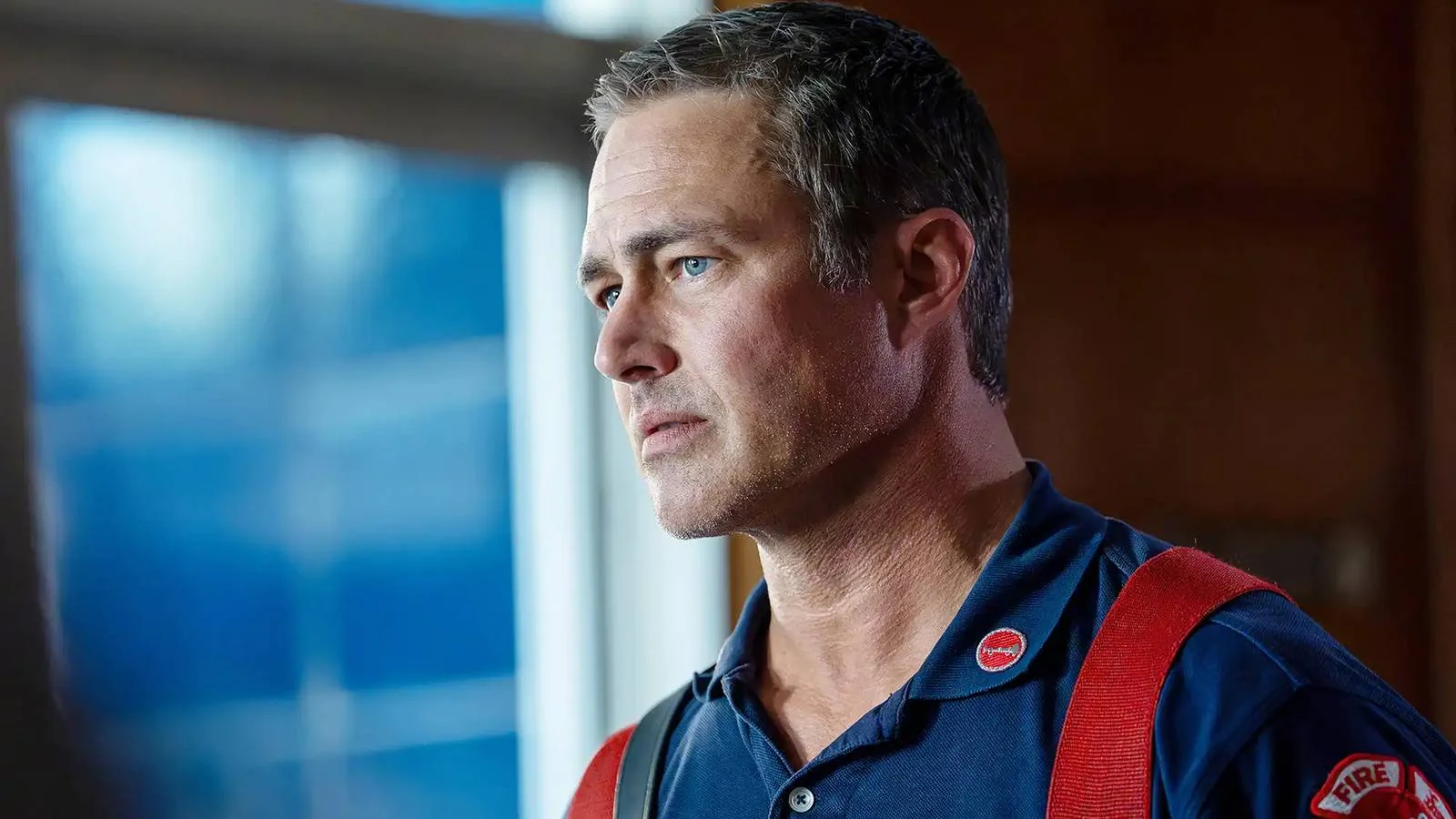

The ladder crew survives the fireball, and the radio immediately finds another reason to panic. Mayday calls pull attention back inside the warehouse; banging leads Cruz toward trapped civilians; a breached wall offers an escape until the ceiling comes down on him. Chicago Fire’s Season 15 premiere, “New Blood,” keeps transferring danger rather than letting the first rescue discharge it. Cruz sending Herrmann out before attempting to reach the last two victims gives the collapse a painful dramatic hinge. Help is leaving just as he needs it.
After the commercial break, the episode changes its delivery system. A catch-up montage folds Severide’s motorcycle ride and hints of romantic activity into Herrmann passing the warehouse memorial, Chloe clutching Cruz’s CFD shirt, and Mouch wiping away tears outside the neuro-spinal unit. Those details make the time jump useful: routines have resumed, but something remains badly unsettled. Christian Stolte gives Mouch’s brief hospital moment enough weight to make an explanation unnecessary. Then Archer asks Cruz to lift his left leg, and the episode replaces its crowded rescue logistics with one movement he cannot make.
That transition is the premiere’s strongest piece of construction. Nobody from 51 dies in the fire, yet survival does not supply the comfortable reset a returning ensemble might expect. The opening offers a familiar cliffhanger solution and then changes the terms of relief. Getting everyone out has left the show with a harder question than getting everyone back to work.
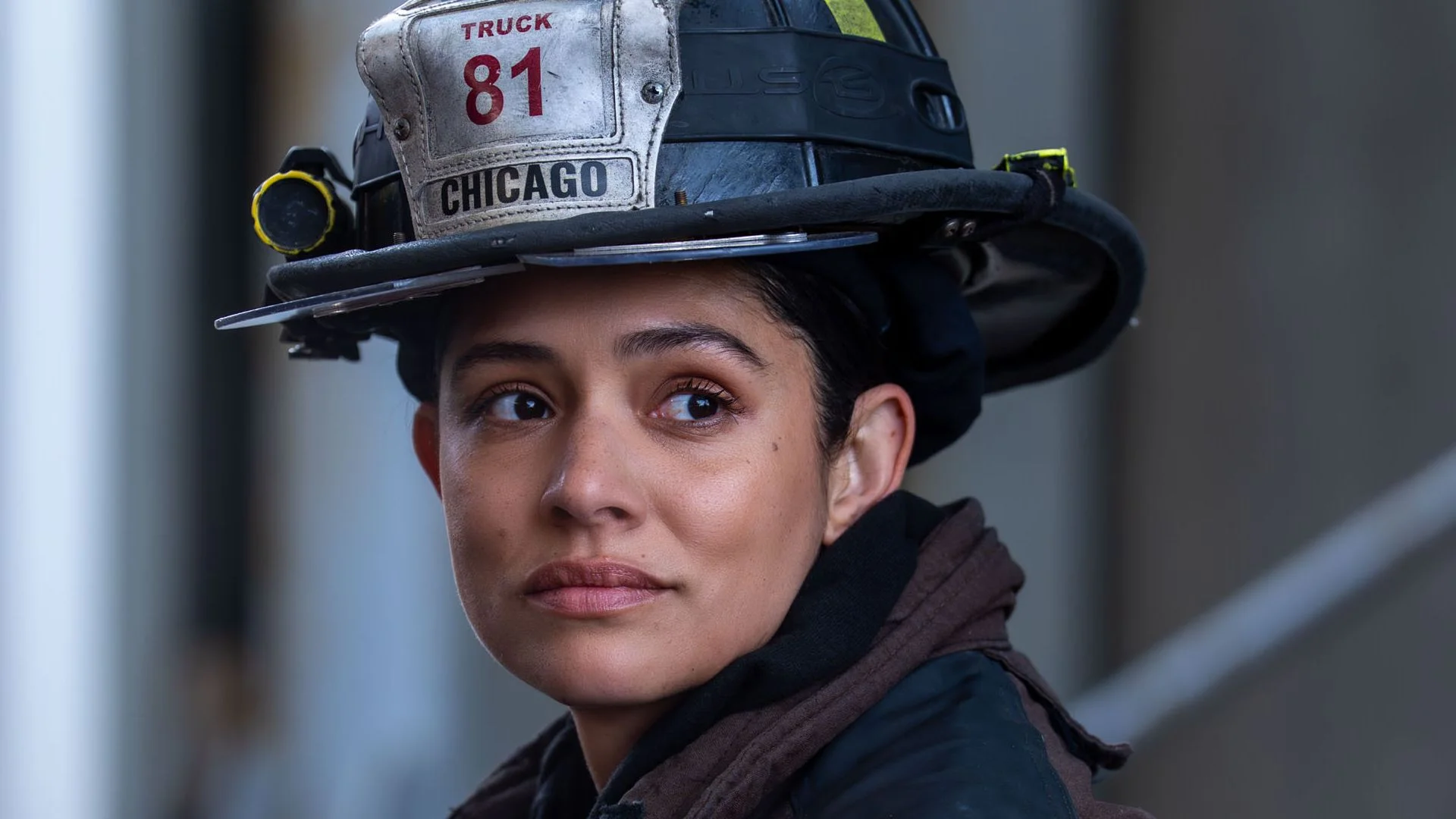
Severide responds by finding a problem with an answer. Now captain of 51, he becomes consumed with clearing Cruz of responsibility for the collapse, while journalist Jacob Morales presses for information about the two civilians who died. The episode gives their collision useful friction because Morales has a reasonable case for asking. Three months have passed without answers for the families. Mouch finds his questions straightforward; Kidd suggests seeking clearance to respond. Severide’s preferred communications policy is apparently to let the phone ring until journalism goes away.
The investigation becomes personal at the right moment. Severide brings Morales’s questions to Cruz as evidence of an attack on the department, but Cruz recognizes that the inquiry concerns his decision to breach the wall. That exchange changes the stakes without requiring another emergency.
The injured firefighter is now being asked to defend the act that left him injured. Severide’s loyalty acquires urgency, and his new rank becomes an obstacle: Kidd correctly points out that conducting his own investigation would constitute interference. Their disagreement grows from the responsibilities they now carry, giving their marriage something useful to negotiate beyond another manufactured relationship crisis.
The solution is satisfyingly legible. Investigators reconstructed the beams’ positions using the original architectural plans; revised plans establish a different orientation, allowing Severide to challenge the conclusion drawn from the burn patterns. His warehouse visit and video call with Cruz give the discovery groundwork.
Yet Pascal’s intervention makes the outcome a little too comfortable. He carries the findings to the review board while warning Severide that his actions can rebound on the whole house. The warning makes sense, but the episode arranges protection before delivering it. Severide receives a lesson in accountability with the difficult part handled by a guest speaker.
Kidd’s training assignment has a less accommodating problem. Five highly ranked candidates arrive determined to distinguish themselves, and their rope drills reveal how quickly a personal best can become somebody else’s headache. Burke and McCaffrey then argue over traffic-control duties at a nearby accident, leaving Novak exposed to a passing car that sideswipes her. The progression from competitive drill to dangerous call is clear and effective. Their behavior has an immediate cost, so Kidd’s frustration needs no explanatory speech.
Severide’s account of the placement stakes supplies the missing logic: these candidates are competing for desirable assignments, carrying individual incentives into a job that requires coordination. Kidd’s decision to assess them collectively answers the actual failure the episode has shown.
It is a stronger introduction to her training role than any claim that she commands respect. The recruits themselves remain thinner. Burke’s rivalry and flirtation establish activity, but offer limited reason to care about him separately from the disruption he causes. The premiere has made the candidates a convincing training problem before making them convincing people.
The romantic threads are efficiently attached to that disruption, sometimes too efficiently. Vasquez’s response to Novak’s accident connects professional danger to their unresolved feelings, while her interest in Burke gives the trainee story another route into the existing ensemble. Violet’s school connection with Morales helps move the report into Severide’s hands, then becomes a possible relationship over drinks at Molly’s.
The links keep the hour moving, but the ease with which a corrected accusation becomes flirtation makes the investigation’s anger feel lightly packed away. Kidd and Severide’s changed situation with Isaiah is similarly briskly dispatched. He is back with his mother; their domestic uncertainty yields to the next assignment.
Herrmann’s story benefits from resisting that hurry. He organizes meals and changes to Cruz’s home while finding reasons to avoid Cruz himself. The tasks are genuine acts of care, and their usefulness makes his absence sharper. Mouch has to press past the supposed emergency before Herrmann admits that he believes he should have stayed inside. The episode lets guilt express itself through behavior before naming it. Herrmann can arrange dinner. Visiting requires him to arrive without a solution.
That distinction pays off when he finally reaches Cruz. David Eigenberg and Joe Miñoso are given an exchange whose force comes from the mismatch between encouragement and information: Herrmann wants to help Cruz stay positive, while Cruz explains what the MRI has established.
Walking remains uncertain. Firefighting will not be possible again. Severide has cleared his name, but the procedural victory cannot return the future he expected. Placing this conversation after the investigation’s success denies the hour its usual permission to relax. Herrmann has finally shown up; now he has to learn how to stay when reassurance fails.
Chicago Fire Season 15 premiered on NBC on October 7, 2026, with next-day streaming available on Peacock. The long-running action drama returns to follow the firefighters, rescue squad, and paramedics of Firehouse 51 as they handle intense emergencies and navigate major structural changes within the house.
Where to Watch Chicago Fire Season 15 Online










Full Credits
Title: Chicago Fire Season 15
Distributor: NBC, Peacock
Release date: October 7, 2026
Rating: TV-14
Running time: 42–45 minutes per episode
Director: Reza Tabrizi, Joe Chappelle, Sanford Bookstaver, Lisa Robinson
Writers: Michael Brandt, Derek Haas, Andrea Newman
Producers and Executive Producers: Dick Wolf, Michael Brandt, Todd Arnow, Andrea Newman, Michael Gilvary, Arthur W. Forney, Peter Jankowski
Cast: Taylor Kinney, David Eigenberg, Joe Miñoso, Christian Stolte, Miranda Rae Mayo, Hanako Greensmith, Jocelyn Hudon, Dermot Mulroney
Director of Photography (Cinematographer): Lisa Wiegand, Jayson Crothers, William Eichler
Editors: Megan D’Arco, Micky Blythe, Adam Stilestein
Composer: Atli Örvarsson
The Review
Chicago Fire Season 15
“New Blood” handles its biggest emergency better than its busiest introductions. The rescue-to-aftermath transition is sharp, Herrmann’s avoidance gives guilt a concrete shape, and Cruz’s final hospital scene keeps the investigation’s success from becoming easy reassurance. The recruits arrive with plenty of friction and little individuality, while Pascal conveniently handles the consequences of Severide’s leadership lesson. Still, this premiere finds lasting dramatic weight after the flames are out.
PROS
- Strong transition from rescue suspense to lasting consequences.
- Efficient, emotionally effective catch-up montage.
- Herrmann’s guilt expressed through practical help and avoidance.
- Final hospital exchange complicates the procedural victory.
CONS
- Pascal’s intervention cushions Severide from accountability.
- New recruits lack individuality beyond rivalry and flirtation.
- Romantic transitions pack away serious conflict too quickly.