



















Sending a healing item through ANOMALITH’s portals removes it from your inventory and your options. It reaches the workshop safely, but you cannot retrieve it during the same dive. Every deposit therefore asks you to estimate what the unexplored part of the map might demand. Guns, ammunition, medical supplies, and research materials compete for carrying space. Taking something home can mean surrendering something useful now, and the early hospital’s conveniently placed portals let you make that decision without turning every collection trip into a lengthy commute.
That calculation changes when a hidden doorway leads into an enclosed space and the exits seal. Supplies owned elsewhere cannot help with the enemies arriving here. Larger backpacks ease the restriction, while the automatic inventory arrangement occasionally wastes space that manual packing can recover. The distinction matters: deciding how much medicine to carry creates anticipation; correcting the game’s inefficient packing creates housekeeping. ANOMALITH has a workable survival structure, though it sometimes makes the player maintain the machinery that should be sustaining the tension.
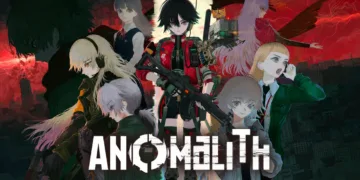
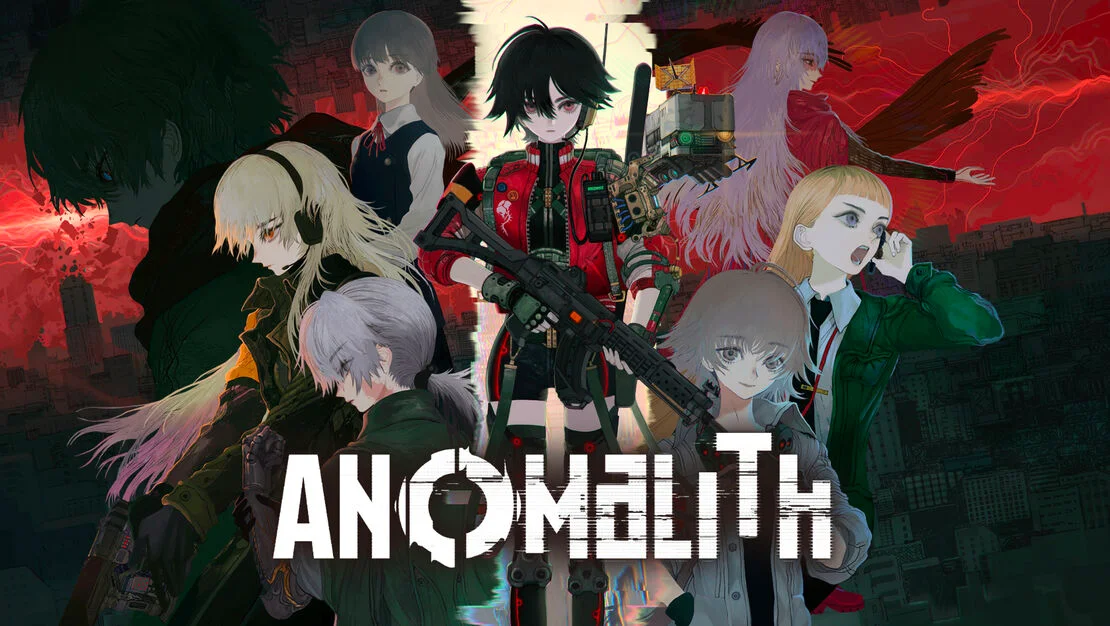
Those expeditions also finance their successors. Reona Minazuki, a 17-year-old survivor of the disasters warping areas of Japan, works as a government Diver while searching for her missing friend, Arisa. Materials and data recovered from the Zones expand the office workshop’s capabilities, feeding equipment development and preparation for the next assignment. Exploration has an understandable rhythm: venture further, collect something useful, decide what can be deposited, return better equipped. Side missions investigating new anomalies or the aftermath of earlier Zones give revisiting these spaces a purpose beyond filling another backpack.
Enemy rules can complicate that routine effectively. The Gaze remains inactive while watched, but its visible manifestation cannot simply be shot until it falls over. You must find and destroy its separate main body. Add other attackers and the encounter becomes a problem of divided attention: looking toward one threat permits you to control it, while searching elsewhere exposes you to its movement. Weapon strength alone cannot perform the necessary observation. This is the kind of enemy that makes a supernatural setting function through play, because understanding its behavior changes what your hands need to do.
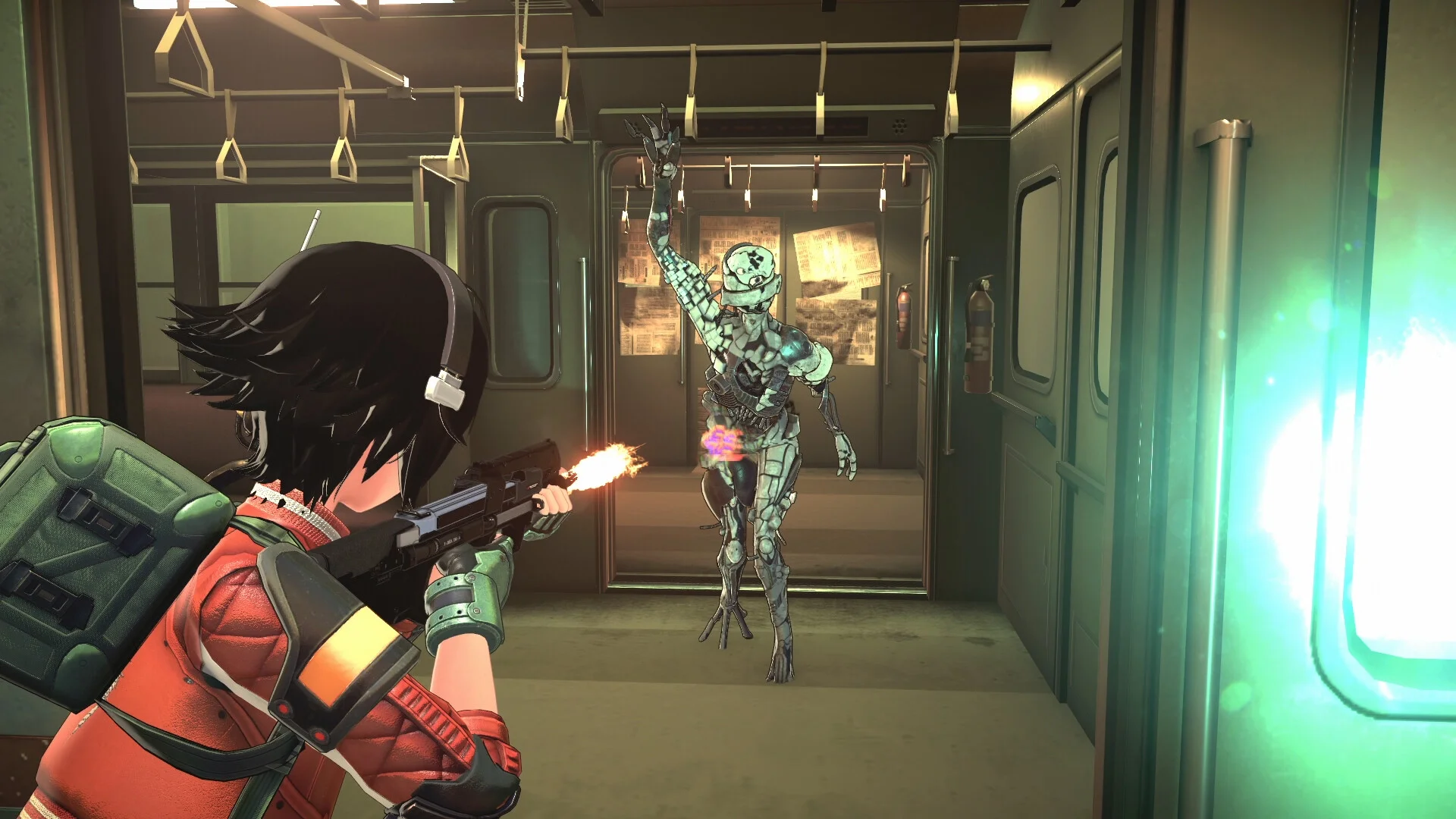
Ordinary gunfights have their own satisfying demands. Aiming slows Reona, and holding aim improves accuracy, asking you to spend time and mobility on a cleaner shot. Weak points and aligned piercing shots reward careful positioning with ammunition saved. Shotguns and sniper rifles deliver enough impact to stagger substantial enemies, so a successful hit supplies immediate feedback as well as damage. Aim assist is less helpful when it steers attention away from the weak point you actually want. Switching it off can make the game’s precision incentives easier to pursue.
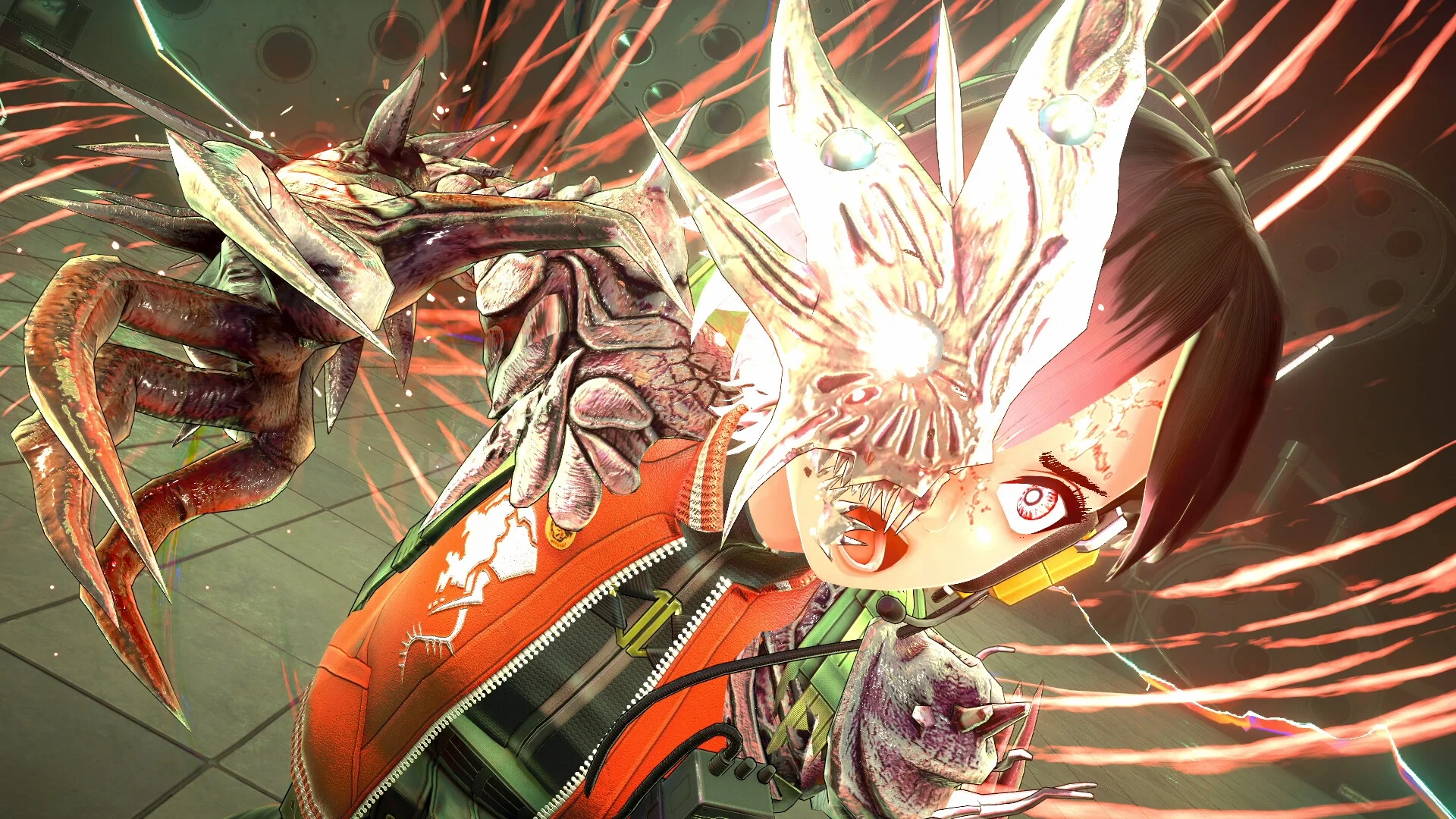
Mutation should widen the decisions available under that pressure. Reona’s altered arm supplies a parry and slash, with further development adding a counter after a successful parry. Gravity Storm briefly immobilizes enemies; Spike attacks an area. These abilities provide defensive timing and crowd control alongside firearms, with MP limiting their use. Recovering MP through damage introduces a cost to replenishing that resource, while a regeneration chip offers a different arrangement. There is enough here for a build to change how Reona handles a crowded room.
The larger economy gradually reduces the need to consider those options. Crafting yields generous ammunition for its material costs, and frequent checkpoints make gathering trips convenient. Higher-tier guns can compensate for the reduced offensive investment of a collection-focused build. Better gathering buys stronger weapons; stronger weapons require fewer bullets per kill; cheap crafting replaces those bullets. Each improvement is individually rewarding, yet their combined effect is to weaken the shortage that should keep different responses relevant.
Health-based bonuses reinforce that direction. Combine passive healing with increased ranged damage at high health and a weapon bonus tied to health, and recovery starts supporting sustained firearm power. A separate chance to fire without consuming ammunition can reduce expenditure further.
Mutation remains available, but the practical argument for spending MP becomes harder to make when shooting already resolves the encounter efficiently. The pleasure survives in recoil, stagger, and successful targeting. The tension loses some of its foundation because improving the build increasingly means removing reasons to use its alternatives.
This does not produce uniformly easy combat. Teleporting enemies and invisible attackers inside a debris-filled subway carriage can inflict sudden damage without supplying the readable pressure of the Gaze encounter. An abundance of bullets cannot clarify an attack you struggle to anticipate. Later stretches that allow Reona to run past enemies offer a legitimate conservation tactic, though they can leave the combat systems with little work to do. The game moves between efficient extermination, abrupt punishment, and avoidance without consistently making those changes feel like demands on different skills.
Sound sometimes compounds that uncertainty. A side mission involving a ringing phone exposes how difficult it can be to identify a source’s direction, and enemy noises can be similarly unhelpful. Uneasy music gives the spaces atmosphere; locating an approaching threat requires information the mix does not reliably supply. Boss checkpoints make a better decision about frustration, preserving phase progress after death so another attempt can focus on the next pattern. Reducing repeated work helps the pace without requiring the player to abandon learning the fight.
The story gives all that repeat labor an uglier institutional meaning. Survivors face quarantine or service, and ordinary Divers must establish hostility before defending themselves. The office’s research pipeline depends on people accepting risks its regulations make worse.
Reona’s search for Arisa supplies an objective she can claim for herself, while her usefulness gives her some leverage over the people issuing orders. The supporting material does not always develop these relationships far enough. Kyoka Sudo’s history as a Diver and her personal connection to Reona’s past carry substantial potential, but brief recollections and secondhand accounts leave some consequences underexplored.
Yuiga Koda receives the stronger development. Traumatized by the expedition she survives with Reona, she becomes an operator rather than face another dive or return to quarantine. Learning what Reona’s apparent returns conceal changes her understanding of the job, and the institution answers that knowledge with imprisonment.
Reona then threatens to withdraw her cooperation to secure Yuiga’s reinstatement. The confrontation changes the relationship attached to every later assignment. Yuiga returns to a position that serves the office’s need for continued expeditions, now working with a desperate personal interest in limiting what each expedition does to Reona.
The Review
ANOMALITH
ANOMALITH makes preparing for danger rewarding, then lets crafting and weapon upgrades weaken the need for that preparation. Accurate shooting, forceful weapon feedback, and enemies like the Gaze keep combat engaging, but generous ammunition reduces the practical value of mutation. Uneven ambushes and unreliable directional audio introduce frustration where readable pressure would serve better. Reona and Yuiga’s relationship gives repeated expeditions a human cost that the combat economy struggles to preserve.
PROS
- Satisfying gunplay with meaningful weak-point targeting.
- Enemy rules that reward observation and divided attention.
- Exploration feeds useful workshop development.
- Yuiga’s development gives expeditions personal stakes.
CONS
- Generous crafting and firearm bonuses weaken tactical alternatives.
- Some later ambushes provide poorly readable threats.
- Directional audio makes locating sounds difficult.
- Kyoka’s relationship with Reona remains underdeveloped.