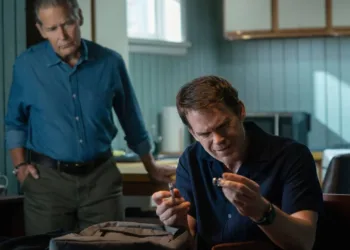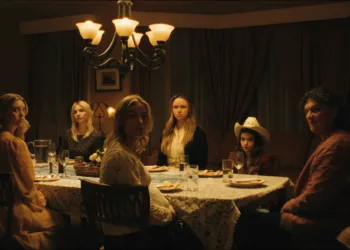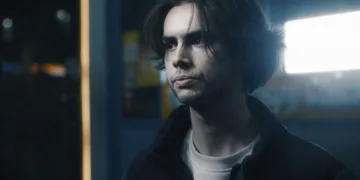

























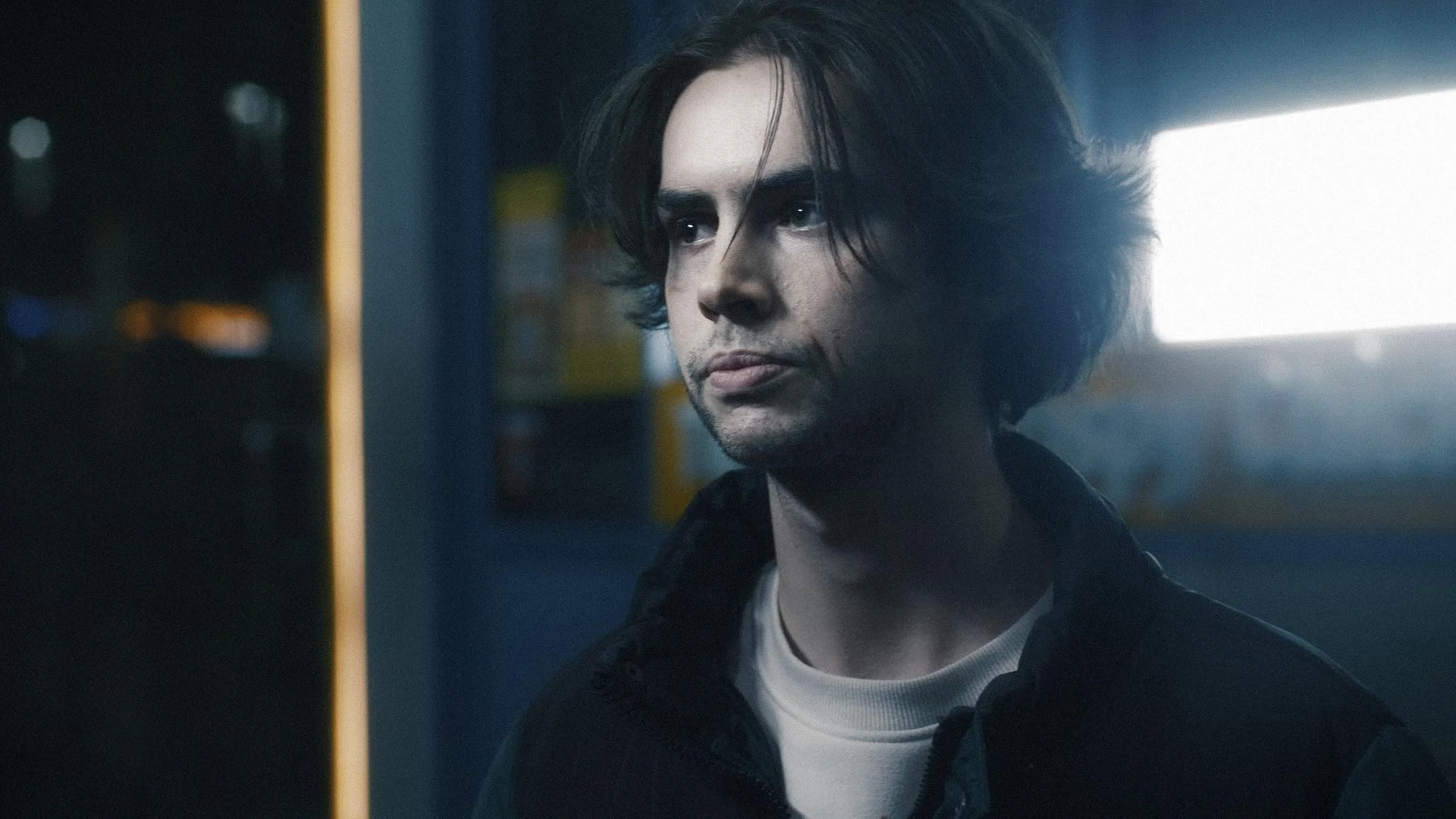

Ayden mentions university while Jesse talks about selling drugs. He might study business; he might step away from their current arrangements. Jesse wants another night out. Their conversation gives Pure Scum an initially legible distribution of influence, with one young man proposing an exit and the other persuading him to stay. Then a brief title screen gives way to glossy interviews about the pair. The change in presentation is abrupt. Before we have much opportunity to assess these men, writer-director Gideon Aroni introduces the apparatus through which they will be explained.
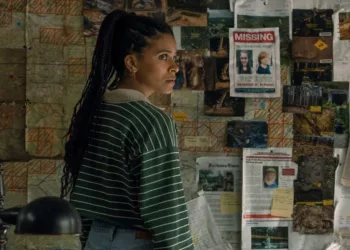
The interviews, conducted by a journalist played by Jess Zuker, possess a visual composure conspicuously absent from the night they reconstruct. That polish carries an implied promise: terrible events can be organized into intelligible accounts.
Aroni makes the promise suspect through intercutting. Returning from disorder to a controlled interview setting can feel reassuring, even though a presentable image establishes very little about the adequacy of an explanation. The film asks us to examine that reassurance while exploiting our appetite for the event still being disclosed. Its fictional true-crime format puts the spectator in an awkward position: scrutinizing the packaging, waiting for the next revelation.
The material being packaged is a drug-fueled car crash and the increasingly violent flight of two privileged private-school graduates through Melbourne. Ayden, played by Will Hutchins, and Jesse, played by Nikita Chronis, abandon the scene and enter the city’s nightlife as if continued activity might suspend accountability.
Aroni’s debut feature belongs to a recognizable thriller tradition in which retrospective reconstruction casts a fatalistic shadow over decisions still unfolding. Here, however, the retrospective passages cannot make the friends’ behavior coherent. The interviews keep offering the possibility of explanation; the night keeps producing conduct that explanation struggles to contain.
Hutchins and Chronis give that difficulty a persuasive human basis. Their opening negotiation establishes an imbalance without exhausting either character. Jesse’s insistence makes him the obvious source of pressure, while Ayden’s tentative educational plans supply an attractive alternative identity.
Business studies makes a serviceable character reference. Yet wanting a respectable future tells us little about how someone will behave when preserving it becomes inconvenient. Hutchins allows Ayden’s apparent reluctance to coexist with the guarded, manipulative behavior that emerges under pressure. The wish to leave remains meaningful, but it cannot carry the moral weight we might initially assign it.
Chronis supplies the charisma necessary to make Jesse’s influence plausible. His comfort with risk helps explain why the invitation to continue can operate as persuasion rather than a simple command. As the night deteriorates, the balance between the actors becomes less secure: Jesse’s impulsiveness and Ayden’s increasing calculation complicate the easy division between instigator and follower. Their performances keep fear connected to attempts at control. Panic does not suddenly purify either man. Aroni’s interest lies in watching the friends respond differently to danger while repeatedly arriving at the same immediate solution: keep moving.
Jazz, an increasingly distant friend of Ayden’s played by Morgan Godfrey, supplies the sharpest challenge to explanations centered on drugs. She identifies wealth, boredom, and entitlement as the relevant combination. Her intervention matters because intoxication offers such a convenient account of the night’s behavior.
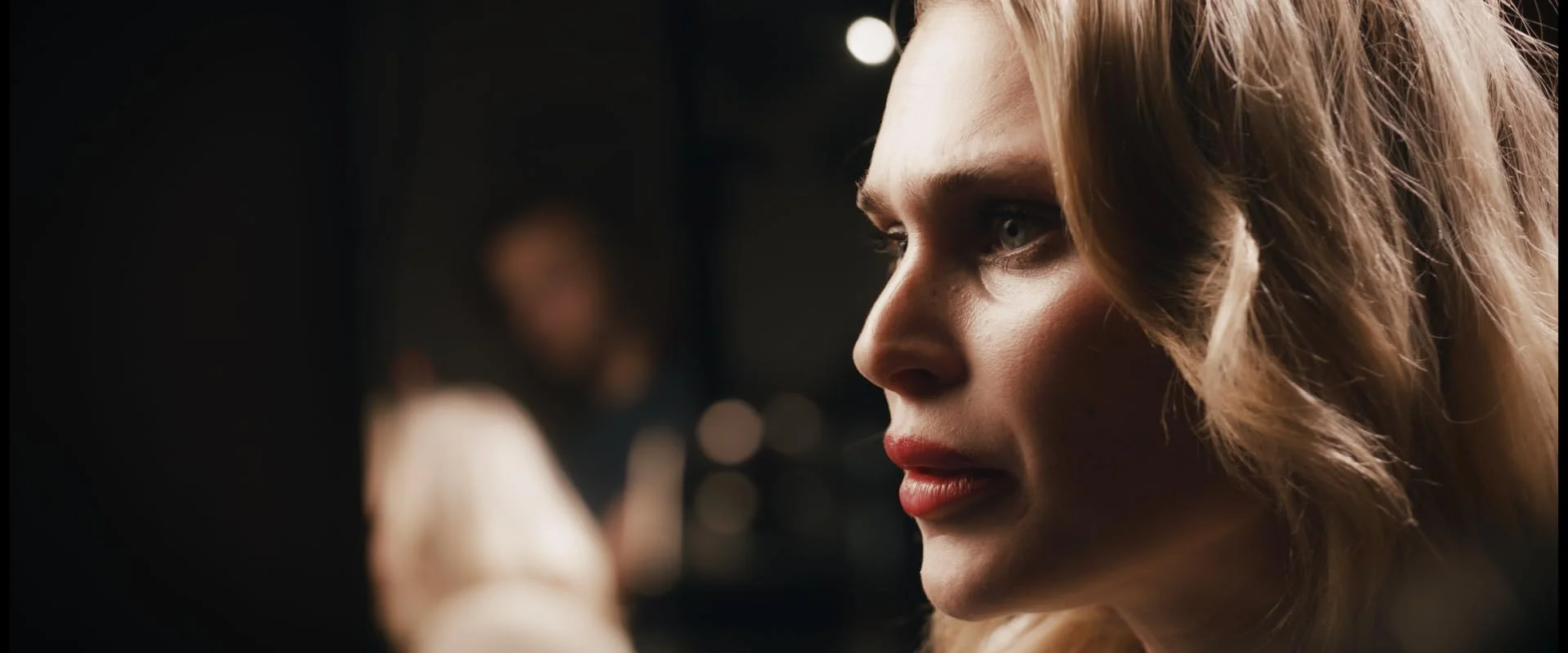
It places responsibility in a temporary condition, one that might wear off. Jazz points toward an expectation that predates the crash: the assumption that their dissatisfaction deserves an outlet and that other people can absorb the cost. The private-school background acquires dramatic force through that expectation, without needing to explain every act the men commit.
Aroni’s location work makes their evasions physically immediate. Clubs, bars, and Melbourne streets remain recognizable social spaces even as the friends turn them into successive places of escape. The camerawork’s proximity to public nightlife gives their panic something solid to collide with.
Noisy clubs, fights, speeding cars, and gunshots crowd the experience with competing demands on attention. There is little opportunity to settle into detached judgment. Each fresh disturbance makes the next few seconds urgent, and that urgency brings the spectator uncomfortably close to the men’s habit of postponing everything beyond immediate survival.
The interviews interrupt this sensory pressure, although they never quite release it. Every return to the aftermath reminds us that the night has become a story worth assembling, which makes the remaining action feel charged with undisclosed significance. For much of its 93 minutes, the film sustains a productive friction between immersion and examination.
We experience the friends’ restricted attention, then encounter the composed business of making sense of them. Aroni understands how strongly those different modes can work on an audience. His control becomes less convincing when the action itself begins demanding ever larger shocks.
Further accidental deaths and grave incidents accumulate before earlier consequences have had sufficient time to register. Once the friends separate and each becomes involved in another appalling event, the symmetry makes the construction difficult to ignore.
The actors remain persuasive within individual situations, but the succession of situations strains belief. This changes the source of dread. Anxiety about what these men will choose gives ground to anticipation of the next catastrophe the screenplay will arrange. The violence stays forceful; its ability to expose character weakens as the pattern becomes conspicuous.
Their repeated decisions to flee still preserve an important element of agency. Neither man becomes an innocent passenger simply because the plot grows excessive. Yet the escalation creates a peculiar ethical problem for a film so alert to self-exculpation. Stopping would require attending to what has already happened, and the film keeps making the next threat louder, granting the men a temporary excuse that the rest of the film has worked hard to deny them.
Pure Scum was released in US theaters by Chroma on August 19, 2026, following festival screenings. Directed by Gideon Aroni, the crime drama follows two former private schoolboys who plunge into a night of escalating violence and debauchery in the Melbourne CBD after fleeing a fatal car crash.
Where to Watch Pure Scum (2026) Online



Full Credits
Title: Pure Scum
Distributor: Chroma
Release date: August 19, 2026 (US Theatrical)
Rating: MA 15+
Running time: 1 hour 33 minutes (93 minutes)
Director: Gideon Aroni
Writers: Gideon Aroni
Producers and Executive Producers: Gideon Aroni, Amelia Nemet, Leigh Schilling
Cast: Will Hutchins, Nikita Chronis, Gideon Aroni, Jess Zuker, Lachlan Sproul, Rebecca Howell, Joe Petruzzi, Paul Moder
The Review
Pure Scum
Pure Scum finds its sharpest moral argument in the cut between a chaotic night and the composed interviews that make it presentable. Hutchins and Chronis keep the friendship unstable and persuasive, while Melbourne’s nightlife supplies abrasive immediacy. Aroni’s appetite for catastrophe eventually strains credibility and crowds out the choices he wants us to examine. An assured, unsettling debut whose dramatic excess sometimes compromises its ethical precision.
PROS
- Interview framing questions the authority of polished images.
- Strong leads sustain shifting manipulation and control.
- Melbourne locations give the panic physical immediacy.
- Class critique remains connected to individual responsibility.
CONS
- Accumulated catastrophes strain credibility.
- Rapid escalation leaves earlier consequences insufficient time to register.