




























Switching from a moderate swing to a power swing changes the batting marker in eBaseball: PRO SPIRIT, while the button used to swing stays the same. The distinction places the decision before the execution: aim to reach base or try to send the ball out of the park, then work through a familiar input. A beginner can understand those intentions without first learning two separate control schemes. The game gives the batter something to decide before demanding much to remember.
Pitching places that decision on the opposite side of the encounter. The right stick selects the pitch, the left directs its placement, and a speed indicator supplies another piece of information. Choosing a delivery and locating it outside the strike zone lets the pitcher attempt to draw a swing at an undesirable ball. The controls are quickly explained, but their purpose survives that simplicity. Getting the ball to a location and giving the opponent a reason to chase it remain different problems.
Konami’s free baseball game for PS5 and PC lets players adjust how many responsibilities they carry at once. Batting and pitching can take priority while other actions are automated; manual baserunning can enter the picture once those fundamentals feel comfortable.
Runners can receive instructions together or individually through stick-and-button combinations associated with the bases. This is a useful division of attention. Someone learning to recognize pitches need not simultaneously manage every movement elsewhere on the diamond. Taking control of the runners later adds another decision to the play, though assistance itself cannot teach all the habits that responsibility requires.
Tutorials establish the basic interactions clearly, and responsive controls make those lessons easy to put into practice. The limited input vocabulary may feel restrictive to players seeking elaborate execution systems, but counting control methods is a poor substitute for examining the decisions they permit.
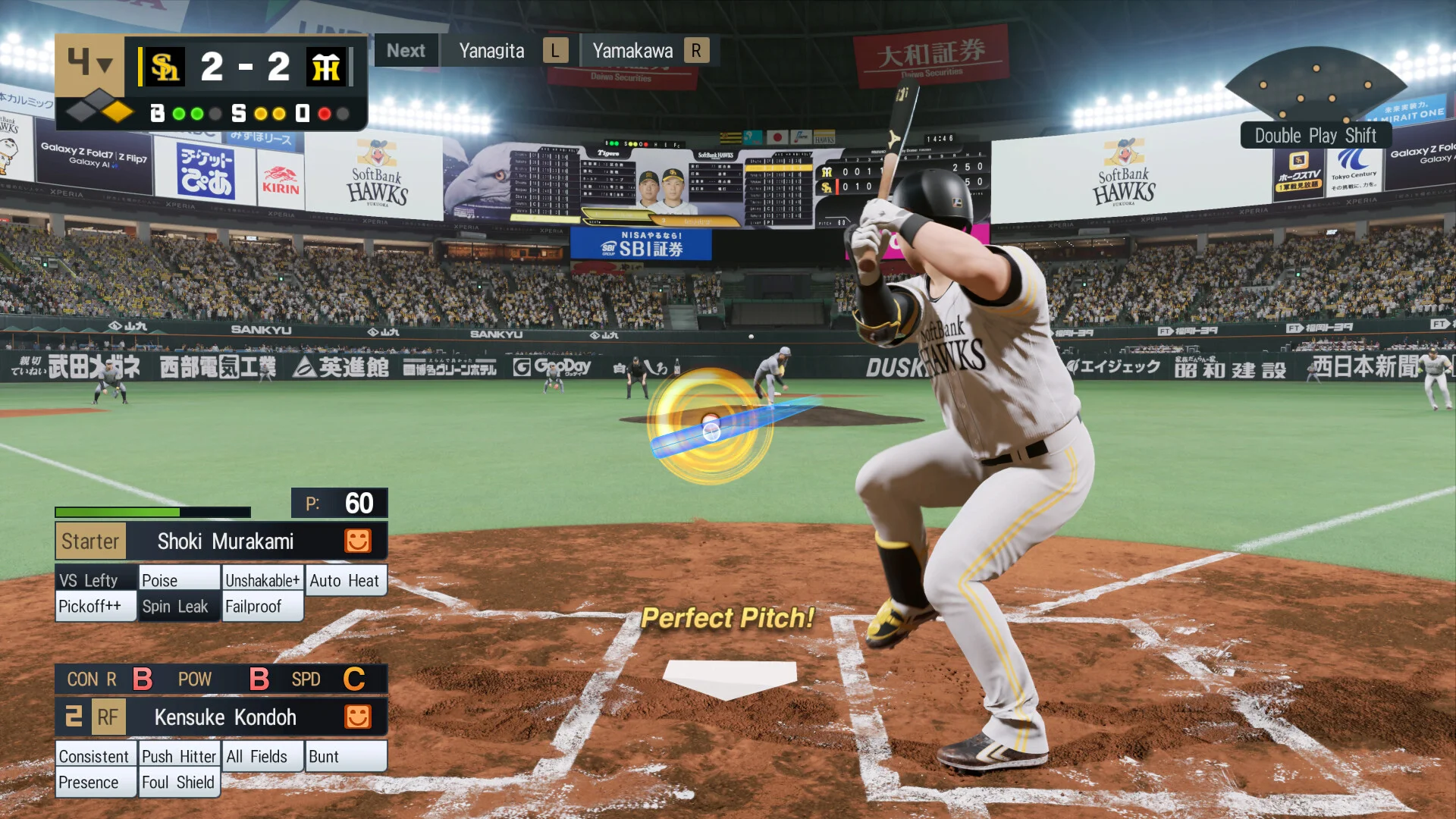
The presentation helps the action feel substantial. Smooth performance keeps the movement easy to follow, while detailed stadiums and enthusiastic crowds give even a quick match a convincing setting. The crowd supplies energy that the fictional rosters cannot bring through familiar names alone. Awkward menu navigation makes a less persuasive contribution. Moving through the interface has a stiffness that the on-field controls largely avoid, putting friction between the player and the part of the game that responds most readily.
World Championship shifts some of the decision-making into roster construction. Its recurring online tournaments draw from a pool of 120 athletes, with regulations restricting which combinations can enter. Total team cost, pitcher cost, and fielder cost each have their own ceiling. Exceed any one and the squad is ineligible, even if the other totals remain acceptable. A team must also contain the required numbers of pitchers and fielders. These restrictions make assembling a legal roster a separate task from collecting players.
The interesting consequence is that an acquisition does not automatically become an addition to the lineup. Another athlete expands the available combinations, but fitting that player into a tournament still requires attention to the limits. Their existence alone cannot establish that every athlete has a worthwhile role or that competing squads are evenly matched. They do, however, preserve a reason to reconsider selection after an unlock, instead of treating acquisition as the end of the decision.
Championship Points connect those matches to further rewards. Earning CP unlocks athletes who can be added through Team Edit, alongside some initially unavailable appearance and equipment options. The loop directs players back into online competition to expand both their roster and parts of their customization toolkit. On PS5, that carries a practical qualification: online play requires PS Plus. The download is free, but a player without the subscription cannot follow this reward path simply by continuing to play locally.
Team identity needs some attention because the starting selections do little to establish it. There are 14 generic national teams, and Brazil, Venezuela, and Australia share the same lilac-and-white uniform. That makes the national labels feel thin. Without recognizable professionals or distinctive kits, the roster offers few immediate points of attachment for someone arriving with an interest in baseball’s existing teams. The problem is specific to how little separates these selections at a glance; fictional players can still become familiar through repeated play.

The editor gives those players and clubs considerably stronger identities. Names, logos, uniforms, and caps can be changed, while individual athletes can receive different batting stances, pitching motions, routines, and celebrations. A chosen stance gives a batter a recognizable manner before the pitch arrives. A custom uniform gives a collection of fictional athletes a shared appearance. These are useful forms of ownership, though producing them requires time that a player seeking a quick match may prefer to spend on the field.
Local play supports up to four participants, making that quick-match use perfectly reasonable. Responsive baseball can justify an evening without a career attached. The limitation appears when a carefully edited club invites a longer commitment: creating another team expands the cast, but supplies no equivalent expansion in offline development. Some new athletes and editing options sit along the World Championship reward path. A player who becomes attached to a locally created team therefore has a practical decision to make about taking it online, where further opportunities to shape it are earned.
The Review
eBaseball: PRO SPIRIT
eBaseball: PRO SPIRIT makes batting and pitching approachable while preserving decisions about intent, placement, and responsibility. Responsive play and a substantial editor give quick matches staying power, though generic starting teams and awkward menus weaken the invitation. Roster cost limits give online selection a purpose beyond collecting athletes, but limited offline development leaves locally created clubs with fewer ways to grow. It suits players seeking accessible baseball, particularly those willing to take their teams online.
PROS
- Accessible controls preserve tactical decisions.
- Adjustable automation lets players manage their workload.
- Extensive editing gives fictional teams personality.
- Smooth play and lively stadium presentation.
CONS
- Generic national teams lack distinct identities.
- Awkward menu navigation.
- Limited sustained offline development.