























The apparent embarrassment in Blue Planet III’s dugong sequence belongs to the editing. Fish feed at the animal’s rear; cuts to other marine creatures supply something resembling a scandalised audience. An ecological relationship acquires the timing of a comedy sketch, complete with witnesses who seem to wish they had looked elsewhere.
The joke is funny precisely because the construction is so recognisable. Nothing establishes that these animals share our squeamishness, yet a few well-placed cuts recruit them into it. For a moment, the seabed becomes a social gathering at which someone has committed an unfortunate breach of etiquette.
There is an easy objection to this sort of filmmaking: animals have been dressed in human attitudes to make them entertaining. But the sequence also makes an unglamorous feeding relationship worth attending to, without disguising what the fish are doing. Across the opening three episodes, that negotiation between observation and entertainment gives the series much of its character.
David Attenborough’s narration moves comfortably between explanation and amusement, offering continuity through encounters that might otherwise seem alien. His weathered voice carries a peculiar reassurance. The familiar guide remains available even as the world he describes becomes less secure.
The most remarkable animal intelligence on display, however, needs little help from comic editing. In Shark Bay, a pregnant bottlenose dolphin named Gambara uses a sea sponge to obstruct an escape route used by fish. The sequence matters.
She registers where the prey take shelter, blocks the opening after they have left, then benefits when they seek the same refuge during another pursuit. Simply calling her clever would skip the interesting part: the relationship between an earlier observation and a later intervention. The footage gives the viewer a specific problem to understand, along with the dolphin’s practical solution. The sponge becomes intelligible through its place in the hunt.
That access required specialised fixed cameras, developed after existing equipment flooded or could not record for long enough. Technical ingenuity earns its place here through the behaviour it makes observable. Underwater photography is often admired as an achievement of proximity, a means of bringing strange bodies close enough to inspect.
This sequence offers a different kind of intimacy: access to an animal’s dealings with its surroundings. It also exposes a limitation in the familiar language of relatability. Gambara deserves attention without having to become a miniature person, and her hunting strategy remains interesting beyond its usefulness as evidence that dolphins resemble us.
Elsewhere, the visual pleasures are easier to recognise. Sardine shoals turn in coordinated silver masses; turtle hatchlings make their precarious passage towards the water. These subjects carry the familiarity of an established wildlife repertoire. Familiarity does not empty them of interest, though it makes novelty an insufficient standard for judging the programme.
The dolphin sequence is exceptional because it develops an explanation, not simply because it delivers an unfamiliar sight. The feeding spectacles work through scale, movement, and the unstable relation between many bodies and a single apparent shape. They ask for a different kind of attention.
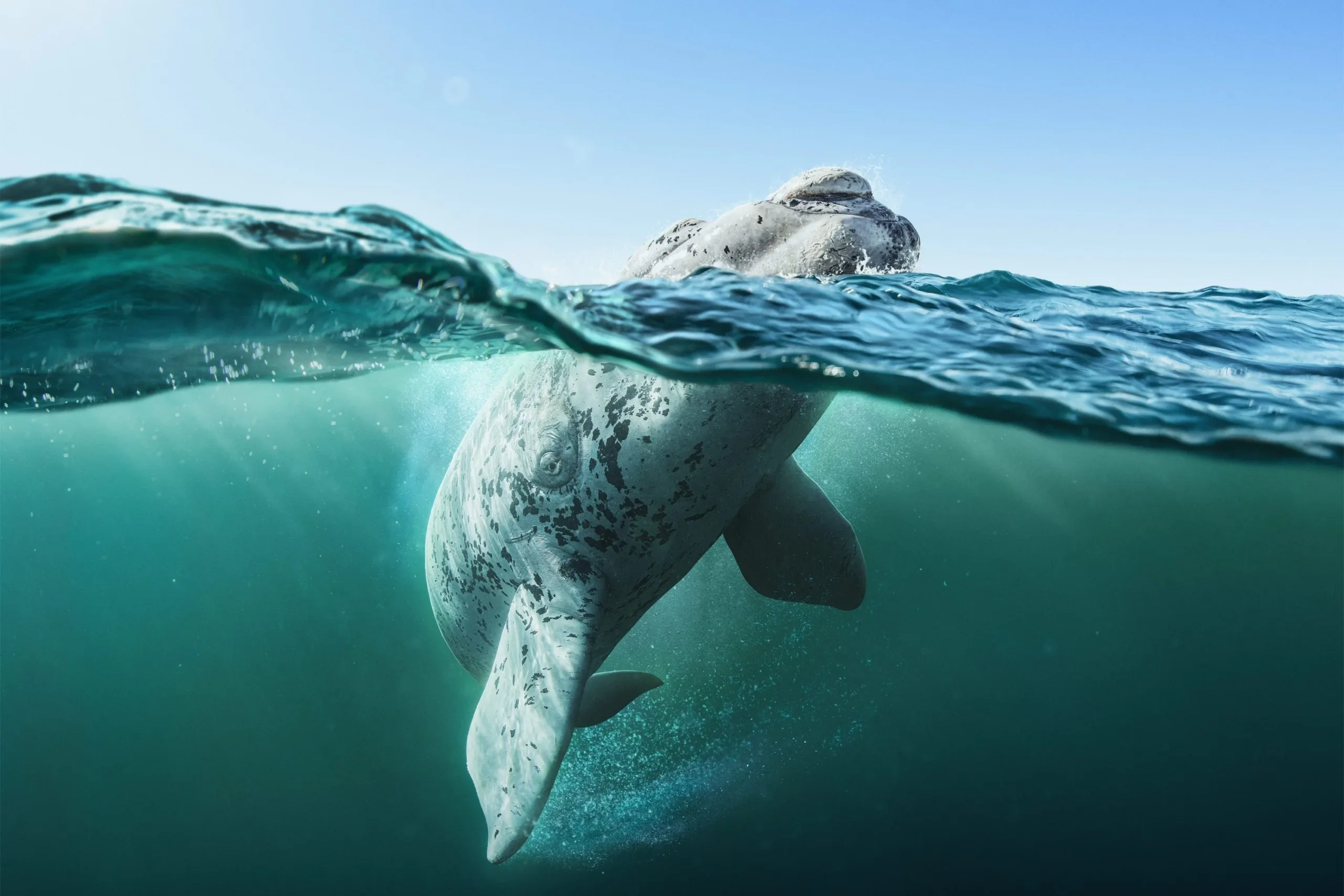
A sick humpback whale draws the camera towards a less comfortable relationship between the individual and the multitude. Remoras cling to her body. Then the drone shot widens, revealing hundreds of sharks around her. The change of scale alters the scene’s meaning without cancelling the distress of the animal within it.
What first appears to be a portrait of suffering becomes an encounter with the lives gathering around an approaching death. Her body will sustain other creatures. The sequence allows that ecological account to coexist with the difficulty of watching her, rather than demanding that understanding make the sight painless.
That distinction becomes essential when the series turns to warming seas. A clownfish family’s sheltering anemone bleaches during a marine heatwave, and the intimate scale of the story makes habitat damage immediately legible. The animal has already given the place a use and a meaning: it is somewhere to live.
Its deterioration changes the conditions of an existing life. Treating this passage as an unwelcome interruption to the beauty would require overlooking what made the beauty interesting. The clownfish’s dependence on its surroundings was present before the bleaching. The environmental information makes that dependence harder to regard as secure.
The whale’s death and the bleached anemone also resist being absorbed into one reassuring account of nature’s harshness. The whale feeds an ecosystem through her death; bleaching threatens the living relationships that sustain one. Both can be photographed beautifully, but their causes and consequences demand different explanations.
“Seasonal Seas” extends this attention to damaged surroundings through a Portuguese seahorse crossing bare sand after the loss of seagrass. The exposed passage gives habitat loss a practical consequence. An animal seeking a mate must now contend with a landscape stripped of the cover that once made its life possible.
Such sequences give the programme an emotional force that should be distinguished from any claim about its power to change human behaviour. Concern is a response; conservation requires changes outside the viewing experience.
The return of sharks, dolphins, and humpback whales around New York supplies a useful counterweight to the images of depletion because the recovery is linked to conservation measures. Hope acquires a cause. New York’s continued presence beside those waters makes the recovery especially suggestive: marine life can recover alongside human habitation when human activity changes enough to permit it.
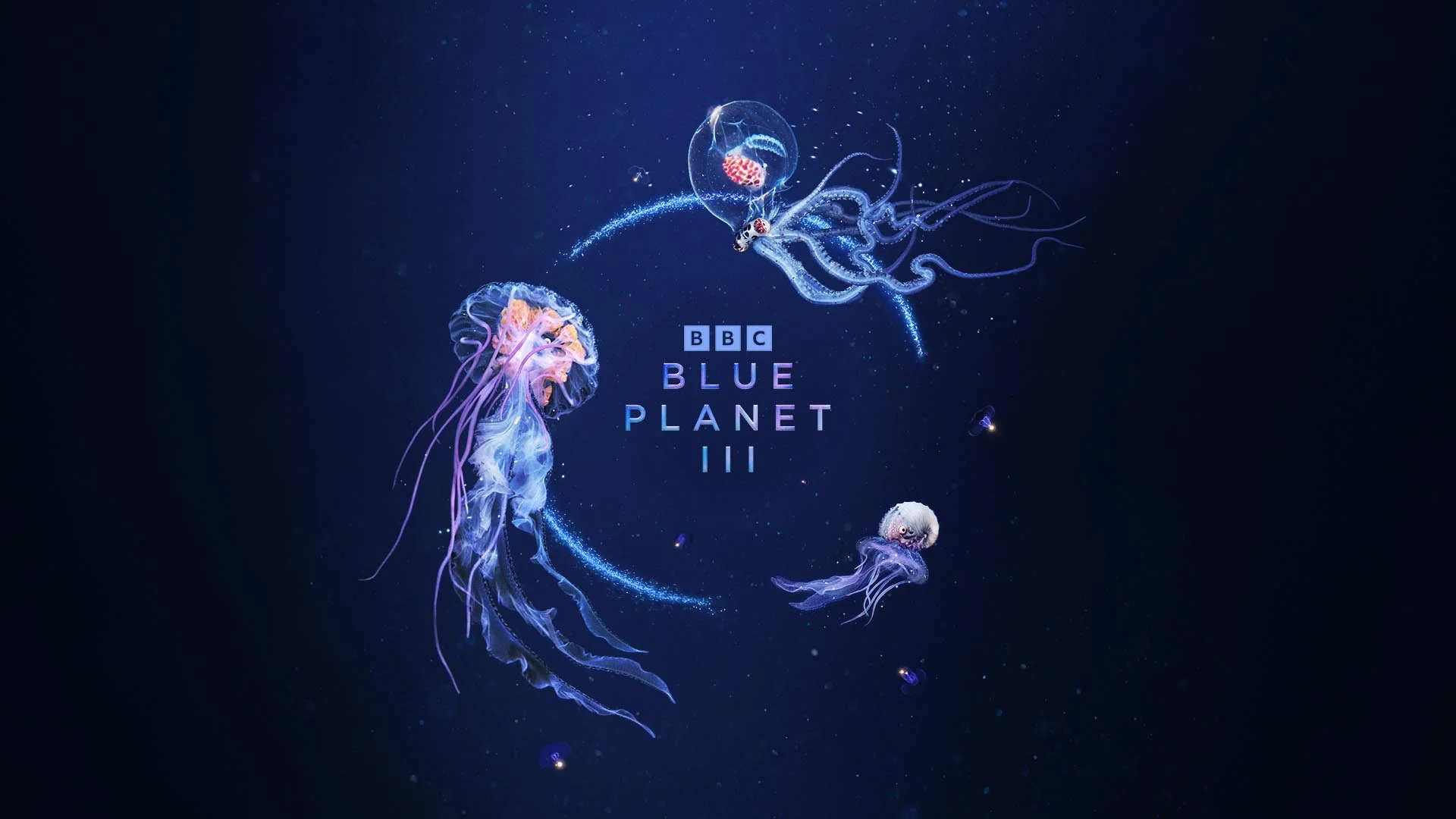
Blue Planet III premiered on BBC One and BBC iPlayer on November 1, 2026. Narrated by Sir David Attenborough, the landmark natural history documentary series explores Earth’s key underwater habitats and marine wildlife behavior.
Full Credits
Title: Blue Planet III
Distributor: BBC Studios
Release date: November 1, 2026 (BBC One / BBC iPlayer)
Rating: TV-G
Running time: 50 minutes per episode
Director: Jo Haley, Yolly Bosiger, Natasha Fellows, Eva Spielvogel, Sarah Conner, Rosie Gloyns
Producers and Executive Producers: Matt Cotton, Dulcie Arnold
Cast: David Attenborough
Director of Photography (Cinematographer): Dan Beecham
Composer: Hans Zimmer, Thom Lukas, Laurentia Editha
The Review
Blue Planet III
Blue Planet III’s opening three episodes turn marine spectacle into an absorbing examination of intelligence, dependence, and survival. Gambara’s sponge-assisted hunting gives technical ingenuity a purpose, while the bleaching of a clownfish’s home makes environmental damage painfully specific. Comic editing occasionally recruits animals into human attitudes, and some subjects are familiar, but the series rewards close attention with genuine discoveries. Its strongest passages make affection for wildlife inseparable from understanding the conditions that sustain it.
PROS
- Animal behaviour explained through precise observation.
- Underwater technology serves genuine discovery.
- Environmental damage grounded in individual lives.
- Attenborough’s warmth and comic timing.
CONS
- Occasional reliance on anthropomorphic shorthand.
- Some familiar wildlife set pieces.