

























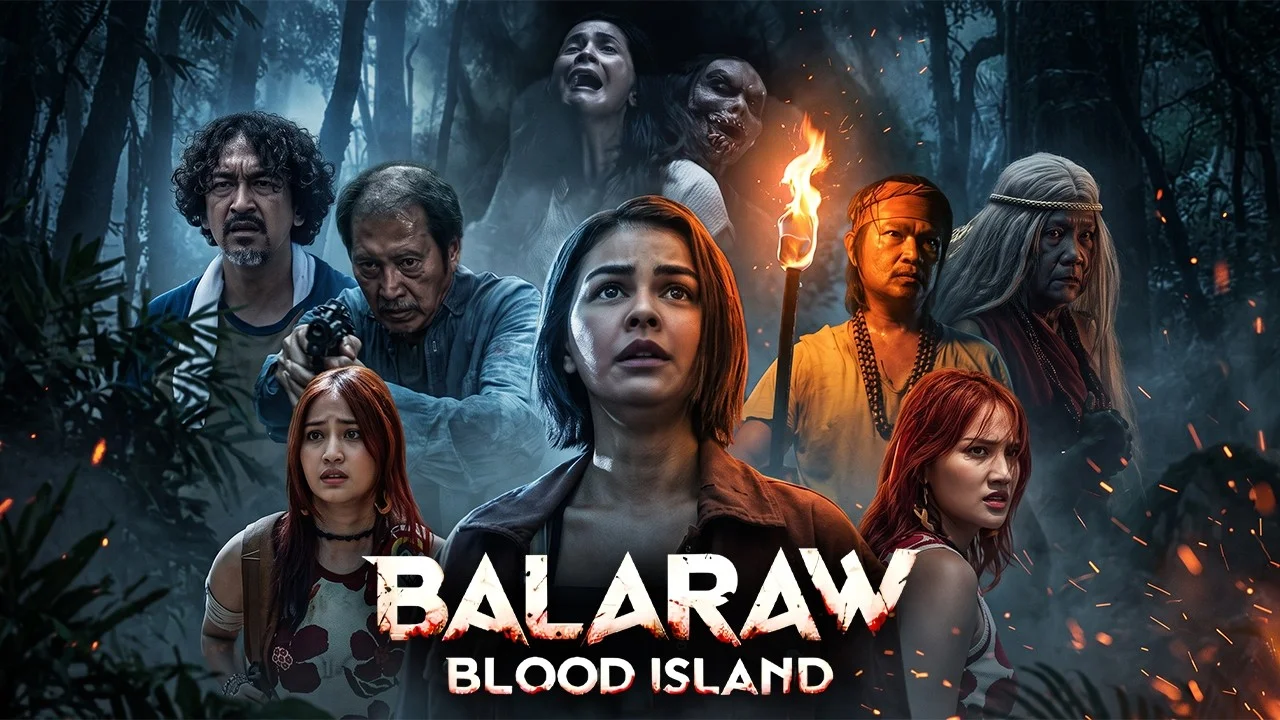

The religious man on Balaraw believes he has arrived for a purpose. This purpose involves teaching the island’s inhabitants how they ought to live, which is convenient for him and considerably less convenient for them. In Rae Red’s Filipino horror series Balaraw: Blood Island, spiritual certainty supplies a familiar permission slip for domination. Having survived an encounter with the inexplicable, he decides he is qualified to explain everything to everyone else. The island has acquired a missionary without requesting one.
I initially wanted to read the outsiders simply as invaders. Their arrival complicates that reading. These people reach the hidden island through shipwrecks and crashes, delivered by a massive wave, with little understanding of what has happened. They begin in dependence. Their subsequent exploitation of the inhabitants and suppression of local powers make the ethical failure sharper: people who needed refuge establish their own right to rule. Vulnerability has taught them remarkably little about the vulnerability of others.
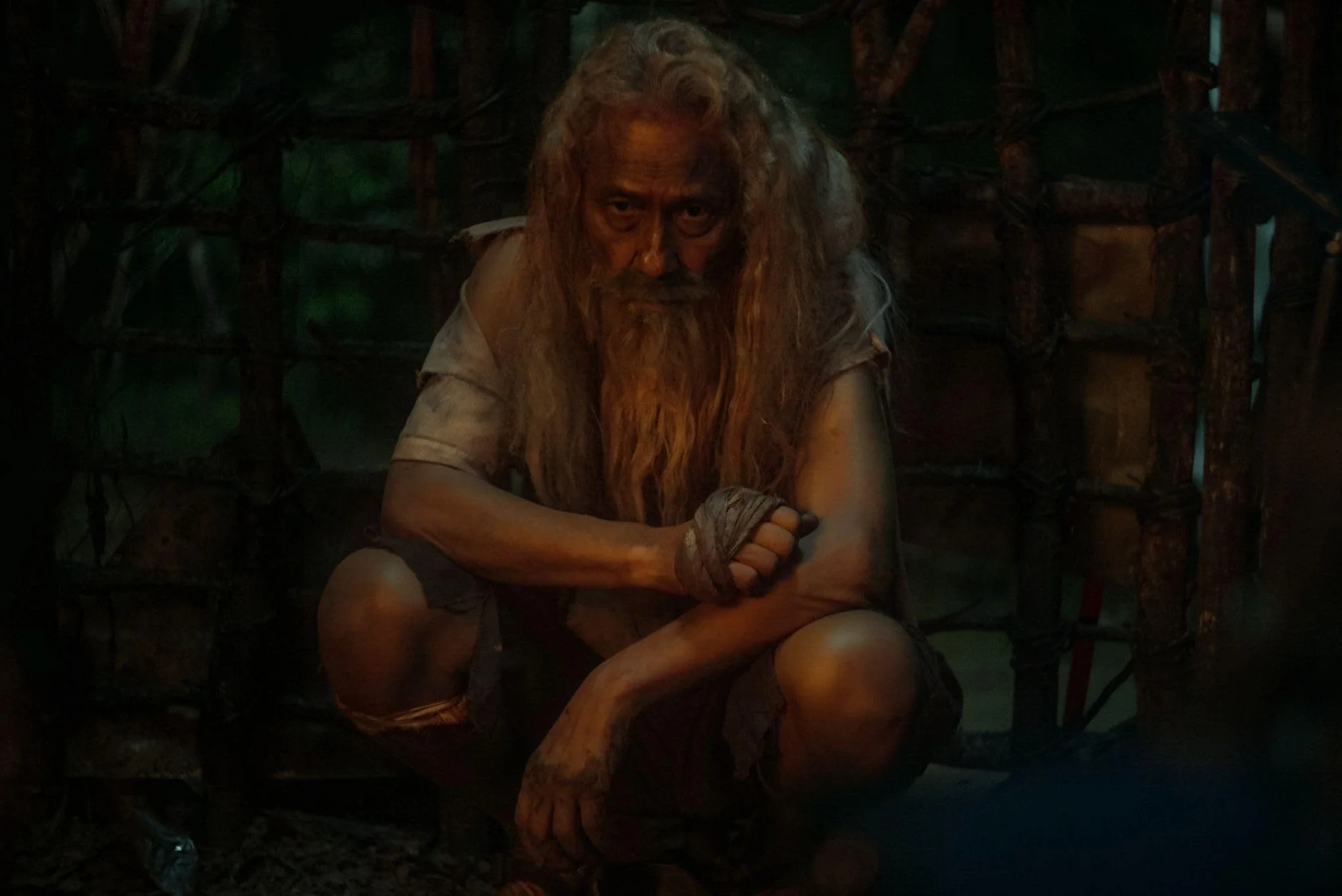
The colonial pattern emerges through imposed belief and control of local life. The opening captivity sequence gives that hierarchy a physical shape. Two men occupy a wooden cage; one is taken away to be tortured and killed, while the other escapes only to discover that geographic isolation extends the prison. Getting through the door changes the dimensions of his confinement.
Sabina Tejeros arrives with a different claim upon the place. Played by Janine Gutierrez, she has spent four years searching for her mother, Rebecca (Agot Isidro), who disappeared during a meal after questioning her about recurring island dreams. Sabina keeps examining surveillance footage and paying investigators until the search consumes her remaining resources. A recording of Rebecca boarding a bus finally supplies a direction. The destination barely qualifies as one: Balaraw is absent from maps and appears under conditions its visitors cannot command. Sabina is attempting to follow evidence into a place that refuses ordinary verification.
Gutierrez’s determined pursuit gives the mystery a useful stubbornness. Sabina’s persistence is understandable, yet the accumulation of lost earnings, employment trouble, and unanswered questions makes devotion difficult to separate from self-destruction. The series gains emotional weight by allowing that cost to enter her relationship with Bulak. Worried about Sabina’s mental health, Bulak nevertheless offers financial help. Her support is practical, expensive, and exposed to disappointment. Love has to participate in the search’s consequences. She is helping someone who may be unable to stop.
The relationship benefits from the series’ unforced treatment of Sabina’s sexuality. Her girlfriend occupies the ordinary, demanding position of a partner trying to help without knowing how much help is enough. Their intimacy gives the supernatural investigation something immediate to endanger. It also prevents Sabina’s attachment to her absent mother from swallowing every other obligation in her life. Rebecca’s disappearance has left a vacancy, but Sabina still lives among people who need her attention.
Her uncle Arturo (Ronnie Lazaro) makes those competing obligations harder to settle. He knows Rebecca’s destination and conceals it because she did not want to be found. His loyalty honors one person’s wishes while prolonging another’s distress. That is a substantial moral problem for a missing-person story: the person being sought may have exercised a choice that the searcher cannot bear to recognize. Rebecca’s anxiety about Sabina’s dreams gives her departure a possible protective purpose, yet protection does little to explain itself to the daughter left behind.
There is an echo here of the island’s larger struggle over who gets to decide for someone else. The scale and violence differ enormously; Arturo is no miniature colonizer. Still, the series becomes interesting when benevolent explanations cease to settle an argument. Bulak offers assistance that Sabina can accept. Arturo controls information that would let her choose. These particular actions develop the question of care with a precision the supernatural mythology sometimes lacks.
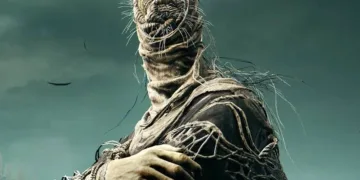
Once the island’s creatures demand attention, the series becomes less assured about how to give its ideas a felt presence. A winged being opens its chest to expose teeth, then the sequence cuts away before the attack. Feeding appears later. The interruption leaves a peculiar gap: the anatomy has already supplied the discovery, while the delayed violence has lost the immediate pressure of the encounter. Showing the creature has spent part of the scene’s uncertainty without securing an equally strong anticipation of what happens next.
The difficulty concerns timing, not the quantity of blood. Holding something back can make a threat expand in the imagination. Here, the separation between revelation and attack makes the staging feel cautious after its creature design has been unusually direct. Red’s inverted camera imagery creates disorientation, too, but turning the image does not necessarily change our relationship to the danger inside it. I can register the disturbance without becoming anxious about where to look.
The six-episode format keeps the adventure accessible, though it leaves several ideas competing for development. Settlement, ecological destruction, family secrets, witchcraft, and supernatural inheritance all require different kinds of attention. Sabina’s repeated scrutiny of footage makes her need for an answer tangible. The island’s larger history often has to carry its significance through explanation. The material moves, but movement sometimes allows the story to pass a question before its implications have become difficult.
That limitation matters most when characters describe the island as alive. Its dense woodland offers beauty and concealment, and its strange accessibility suggests a place resistant to human ownership. Yet the disorienting imagery and interrupted creature encounters give it less perceptible agency than that description promises. A living island could complicate even the sympathetic visitors’ assumptions about what it needs. Without a stronger sense of its will, the defense of the place risks becoming another conversation conducted by humans who feel entitled to speak for it.
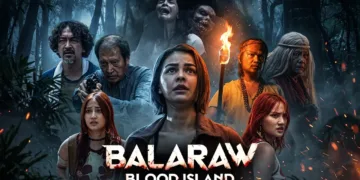
Balaraw: Blood Island premiered globally on Netflix on October 29, 2026. Directed by Rae Red, the Filipino horror-thriller series follows a young woman tracking a mysterious clue to an uncharted island in search of her missing mother, only to uncover dark secrets regarding her own family.
Where to Watch Balaraw: Blood Island Online


Full Credits
Title: Balaraw: Blood Island
Distributor: Netflix
Release date: October 29, 2026
Rating: TV-MA
Running time: 45 to 50 minutes per episode
Director: Rae Red
Writers: Rae Red, Natts Bugay
Producers and Executive Producers: Not publicly specified
Cast: Janine Gutierrez, Charlie Dizon, Agot Isidro, Onyl Torres, John Arcilla
The Review
Balaraw Blood Island
Balaraw: Blood Island gives its family mystery a sharp ethical question: who gets to decide what protection requires? Sabina’s exhausting search, Bulak’s practical care, and Arturo’s secrecy make that question matter. The island’s coercive rulers extend it into colonial horror, though the suspense rarely matches the ideas. I remained invested in the people while waiting for their surroundings to acquire an equally forceful presence. Its six episodes offer emotional substance, with too much mythology competing for room.
PROS
- Family secrecy creates meaningful ethical conflict.
- Bulak’s practical support grounds the romance.
- Colonial themes emerge through concrete acts of control.
- Sabina’s persistence gives the mystery emotional stakes.
CONS
- Creature reveals weaken the timing of suspense.
- Crowded mythology receives uneven development.
- The island’s supposed agency lacks a strong visual presence.